
Home buyer grants and assistance programs can give eligible single mothers more ways to manage the upfront cost of buying a home in 2026. Depending on where you live and your financial situation, you may find down-payment assistance, closing-cost help, affordable mortgage financing, rural home loan programs, or specialized homeownership programs.
What home buyer grants and assistance can single moms get in 2026? There is no single federal grant available to every single mother. Instead, the best options usually come from state and local housing programs, mortgage assistance programs, rural housing programs, housing authorities, nonprofits, and specialized programs for buyers who meet additional requirements.
Your eligibility can depend on your income, household size, first-time-buyer status, location, property, mortgage qualifications, and the specific rules of the program. Being a single mother does not by itself guarantee approval or a grant.
This guide focuses specifically on home buyer assistance for single moms. If you want to compare the broader first-time-buyer landscape first, use the First-Time Home Buyer Grants and Assistance Programs guide. If you already know which type of program you want to pursue, use the site’s five-step home buyer grant application guide for the application process.
Are There Home Buyer Grants Specifically for Single Moms?
Some housing programs may help households that include single parents, but there is no universal federal home buyer grant simply for being a single mother.
In practice, many programs focus on factors such as income, household size, first-time-buyer status, property location, purchase price, mortgage qualification, occupation, or participation in another housing program.
That distinction is important because online articles sometimes describe every form of homebuyer assistance as a “grant.” A program may instead provide a mortgage, forgivable assistance, deferred assistance, a second loan, a discount, or another benefit.
For example, FHA-insured financing is a mortgage option rather than a single-mother grant. USDA homeownership programs are also loan programs rather than general cash grants. Some state and local programs may provide actual grants or assistance with conditions attached.
For this reason, the most useful question is not simply “Where can I get free money as a single mom?” It is “Which legitimate homeownership assistance programs match my situation, and what will the benefit actually require?”
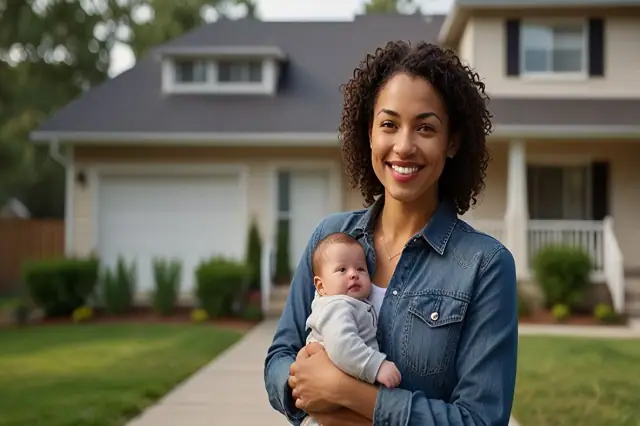
What Types of Home Buyer Help Can Single Moms Investigate?
Different programs solve different parts of the home-buying process. Before applying, identify the expense or financing problem you need to solve.
| If you need… | Start by investigating… | Check first |
| Help with the down payment | State or local down-payment assistance | Income limits, first-time-buyer rules, purchase-price limits, repayment conditions |
| Help with closing costs | State, local, lender, or nonprofit assistance | Eligible costs, participating providers, application timing |
| A lower-down-payment mortgage | FHA-insured financing or other eligible mortgage programs | Credit, income, debt, lender requirements, mortgage insurance, fees |
| No-down-payment rural financing | USDA home loan programs | Eligible rural area, income, property, occupancy, lender requirements |
| Homeownership help through an existing voucher | Housing Choice Voucher Homeownership Program | Whether the local public housing authority operates the program |
| Occupation-based assistance | Programs such as Good Neighbor Next Door | Occupation, property availability, location, occupancy requirements |
If your main concern is the amount of cash needed at closing, the site’s down payment grants for home buyers resource can provide additional background. Verify the current program terms with the actual administrator before relying on any assistance.
How Does Being a Single Mom Affect Eligibility?
Your household situation can matter because some programs use household size when determining income eligibility or other program requirements. However, single-parent status is not a universal qualification category.
For many programs, you may need to satisfy several requirements at the same time. For example, you could meet an income limit but still fail to qualify because the property is outside the eligible area or because the program requires a participating lender.
Before applying, check these factors:
- First-time-buyer status: Use the definition provided by the specific program.
- Household income: Check the current income calculation and limit.
- Household size: Some programs use household size when determining income eligibility.
- Property location: Some assistance is limited to a state, county, city, neighborhood, or rural area.
- Property type: The program may restrict the types of homes that qualify.
- Purchase price: Some programs impose maximum purchase prices.
- Primary residence: Many homeownership programs require the property to be your primary residence.
- Mortgage qualification: Mortgage-connected assistance may require you to qualify for the underlying loan.
- Education or counseling: Some programs require it, while others do not.
- Lender participation: Some assistance programs can only be used through approved lenders.
State and Local Home Buyer Grants for Single Moms
State and local housing programs are often an important starting point because they can be designed around local housing prices, income limits, participating lenders, and community homeownership goals.
Depending on the location, assistance may include down-payment help, closing-cost assistance, forgivable assistance, deferred assistance, affordable mortgage programs, or other homeownership benefits.
The program may be administered by a state housing finance agency, city, county, nonprofit organization, housing authority, or participating lender.
How to Find Programs in Your State
Start with your state’s official housing finance agency or housing department. Look for programs using terms such as:
- First-time home buyer assistance
- Down-payment assistance
- Closing-cost assistance
- Homeownership assistance
- Affordable mortgage programs
- First-generation or targeted homebuyer programs
Then check the program’s current income limits, first-time-buyer definition, property requirements, participating lender rules, education requirements, and application status.
For buyers in Texas, the site’s Texas first-time home buyer grants resource can be used as a starting point for research. Verify the current program information with the relevant Texas housing agency or participating lender.
Down-Payment Assistance for Single Moms
Down-payment assistance can be useful when a buyer has enough income to manage a mortgage but needs help with the upfront cash required to complete the purchase.
The assistance may take different forms. Depending on the program, it can be a grant, forgivable loan, deferred loan, second mortgage, or another type of assistance.
The difference matters because an amount that reduces your upfront cost may still create a future repayment obligation.
| Funding type | How it may work | What to verify |
| Grant | Provides funding for an eligible purpose under the program’s rules | Eligible expenses and any program conditions |
| Forgivable assistance | May become non-repayable after specified conditions are satisfied | Occupancy period, sale, refinance, and other conditions |
| Deferred assistance | Repayment is postponed until a specified event | When repayment becomes due |
| Loan-based assistance | Provides financing that generally must be repaid | Interest, repayment terms, lien, and fees |
Before accepting assistance, read the actual agreement. Ask whether the benefit must be repaid if you sell the home, refinance, move, stop occupying the property, or otherwise fail to satisfy the program conditions.
FHA Home Buying Options for Single Moms
The Federal Housing Administration does not operate a general grant program for single mothers. Instead, FHA provides mortgage insurance that can make qualifying mortgage financing available with a relatively low down payment.
The U.S. Department of Housing and Urban Development’s Federal Housing Administration (FHA) explains that eligible FHA borrowers may qualify for down payments as low as 3.5%, subject to the applicable requirements.
FHA financing is therefore different from a grant. The mortgage must still be repaid, and the borrower must meet applicable lender and FHA requirements.
A single mother may also be able to use a separate down-payment assistance program alongside a mortgage when the specific assistance program and lender allow that combination.
USDA Home Loans for Single Moms in Eligible Rural Areas
A single mother planning to purchase a home in an eligible rural area should also investigate USDA Rural Development programs.
The U.S. Department of Agriculture Single Family Housing Guaranteed Loan Program (USDA Guaranteed Loan) can provide 100% financing to qualifying applicants purchasing eligible properties in eligible rural areas through approved lenders.
That can mean no down payment is required for an eligible borrower, but the program is still a mortgage program rather than a general first-time home buyer cash grant.
USDA also operates the Single Family Housing Direct Home Loan Program for eligible low- and very-low-income applicants in eligible rural areas.
The U.S. Department of Agriculture Single Family Housing Direct Home Loan Program (USDA Direct Loan) can provide payment assistance based on adjusted family income for qualifying applicants.
Neither USDA program is limited to single mothers. Your eligibility must be determined under the current USDA rules for income, property, occupancy, and other requirements.
Housing Choice Voucher Homeownership for Single Moms
If you already receive Housing Choice Voucher assistance, investigate whether your local public housing authority operates a homeownership option.
The U.S. Department of Housing and Urban Development’s Housing Choice Voucher Homeownership Program (HCV Homeownership Program) allows some participating families to use voucher assistance toward eligible homeownership expenses.
This program is not available through every public housing authority. HUD also lists requirements relating to factors such as first-time-homeowner status, counseling, income, and other program conditions.
If you already receive a Housing Choice Voucher, contact your local public housing authority and ask whether it operates an HCV homeownership program before assuming that this option is available.
Good Neighbor Next Door for Eligible Single Moms
A single mother who works in a qualifying occupation may have another specialized homeownership option to investigate.
The U.S. Department of Housing and Urban Development Good Neighbor Next Door Sales Program (Good Neighbor Next Door) is designed for eligible teachers, law enforcement officers, firefighters, and emergency medical technicians who meet the program’s requirements.
HUD states that eligible participants can receive a 50% discount from the list price of qualifying HUD homes in designated revitalization areas, subject to the program’s rules and availability. Participants must agree to occupy the property as their principal residence for 36 months.
This is not a single-mother program. Your eligibility comes from meeting the occupation and other program requirements.
If you are a teacher, the site’s home buyer grants for teachers resource may provide additional research ideas, but current HUD requirements should be checked before applying.
Nonprofit Homeownership Programs for Single Moms
Nonprofit organizations can provide another route to investigate, particularly when a household needs more than a conventional mortgage.
Habitat for Humanity is one example of a nonprofit homeownership organization with locally administered programs. Eligibility, application procedures, property availability, and homeowner requirements vary by local affiliate.
Do not assume that a nonprofit program is automatically a grant. Ask whether the organization provides a purchase opportunity, affordable financing, home construction, counseling, or another type of assistance.
Before providing sensitive information, verify that you are dealing directly with the organization or its authorized local affiliate.
What Documents Should a Single Mom Prepare?
The exact document checklist depends on the program, but preparing common financial and household records can make the application process easier.
| Document or information | Why it may be requested |
| Government-issued identification | To verify identity |
| Recent income records | To evaluate income eligibility or mortgage qualification |
| Employment information | To verify employment and income history when required |
| Bank or asset statements | To document financial resources when required |
| Tax documents | May be used to verify income |
| Credit and debt information | May be needed for mortgage or program qualification |
| Household information | May be used to determine household size or eligibility |
| Purchase agreement | May be required after selecting a property |
| Property information | To determine whether the home meets program requirements |
| Homebuyer education certificate | Required only when the selected program specifies it |
| Program-specific forms | To complete the actual application and certifications |
Do not send sensitive financial information to an unofficial website simply because it appears in a search result. Use the actual program administrator, participating lender, housing authority, or verified nonprofit.
Do Single Moms Need Homebuyer Education or Counseling?
Not every first-time buyer or single mother must complete the same education or counseling. The requirement depends on the program, lender, housing authority, or assistance provider.
The U.S. Department of Housing and Urban Development (HUD) maintains a network of participating housing counseling agencies and HUD-certified counselors. Housing counseling can include pre-purchase counseling and homebuyer education.
If your selected program requires counseling, use the provider specified by the program. Completing a general course does not automatically satisfy every program’s education requirement.
How to Apply for Home Buyer Grants as a Single Mom
Once you have identified a suitable program, organize the application around the program’s actual requirements.
Choose the Right Program
Start with the benefit you need rather than applying to every program that mentions first-time buyers. Decide whether your priority is down-payment help, closing-cost assistance, mortgage financing, rural financing, or another benefit.
Check Your Eligibility
Review the current first-time-buyer definition, income limits, household requirements, property rules, purchase-price limits, mortgage requirements, and other conditions.
Confirm Who Administers the Program
Determine whether the application goes through a state housing agency, local government, housing authority, nonprofit, USDA Rural Development office, participating lender, or another designated organization.
Complete Required Education or Counseling
If the program requires education or counseling, complete it through the approved provider and keep your certificate or other documentation.
Prepare the Required Documents
Gather the requested identification, income, employment, household, financial, property, and program-specific documents.
Submit the Application
Follow the administrator’s current application instructions. Keep copies of your application and supporting documents, and respond promptly if additional information is requested.
If you already have a program in mind, the site’s five-step application guide provides a more detailed application-focused workflow.
How Can Single Moms Prepare a Stronger Application?
No legitimate program can promise approval simply because an applicant follows a checklist. Good preparation can, however, reduce avoidable application problems.
- Read the current program rules before applying.
- Use the latest income limits supplied by the administrator.
- Confirm that your property meets the location and property requirements.
- Confirm whether your lender participates in the program.
- Complete required education or counseling through the correct provider.
- Make sure your application information is accurate and consistent.
- Keep copies of every document you submit.
- Ask whether assistance must be approved before closing.
- Ask whether the assistance can be combined with another program.
- Read all repayment, occupancy, lien, and forgiveness conditions.
Can Single Moms Combine Home Buyer Assistance Programs?
Sometimes, but there is no universal rule allowing every program to be combined.
A state down-payment program may have rules about which mortgages it can work with. A lender may also need to approve the financing structure. Another program may prohibit using its funds for an expense already covered by another benefit.
Before combining programs, ask each administrator:
- Can this benefit be used with my mortgage?
- Can it be combined with another down-payment assistance program?
- Can both programs cover the same closing expense?
- Does one program need approval before the other?
- Will either benefit create a lien?
- Could I have to repay the assistance if I sell or refinance?
What Home Buyer Programs May Not Cover
Home buyer assistance is not a universal source of money for every cost associated with purchasing a home.
Depending on the program, assistance may not cover:
- A property outside the eligible geographic area.
- A property above the applicable purchase-price limit.
- Expenses outside the approved assistance category.
- An ineligible property type.
- Costs incurred before required program approval.
- Amounts above the program’s maximum benefit or financing limit.
- A transaction involving a borrower who does not meet the program’s requirements.
- Expenses that the program agreement specifically excludes.
Always read the current program agreement before making a financial commitment based on expected assistance.
Best Home Buyer Assistance Route for Your Situation
There is no single best program for every single mother. The best starting point depends on your location, income, household, property, mortgage needs, and the type of assistance you need.
| Your situation | First route to investigate | What to check first |
| You have limited savings for upfront costs | State or local down-payment assistance | Income limits, assistance type, purchase-price limits, repayment rules |
| You need a lower-down-payment mortgage | FHA-insured financing | Lender requirements, credit, debt, mortgage insurance, closing costs |
| You are buying in an eligible rural area | USDA home loan programs | Rural eligibility, income, property, occupancy, lender requirements |
| You already receive Housing Choice Voucher assistance | HCV Homeownership Program | Whether your local public housing authority operates the option |
| You are a qualifying teacher, firefighter, EMT, or law enforcement officer | Good Neighbor Next Door | Occupation, property availability, location, occupancy requirements |
| You need help understanding your options | HUD-approved housing counseling | Whether the counselor provides the service you need |
| You are comparing state and federal options | State housing agency plus federal program review | Eligibility, lender participation, assistance type, repayment rules |
For buyers in New York, the site’s New York housing assistance programs for single moms resource can provide another state-specific research path. For buyers in Florida, the site’s Florida home buyer grants resource can help identify related topics to investigate.
What Should Single Moms Check Before Applying?
- ☐ Check the program’s current first-time-buyer definition.
- ☐ Check the current income limits for your household.
- ☐ Confirm that the property qualifies.
- ☐ Confirm whether a participating lender is required.
- ☐ Determine whether education or counseling is required.
- ☐ Identify whether the benefit is a grant, forgivable assistance, deferred assistance, or loan.
- ☐ Read the repayment and occupancy conditions.
- ☐ Prepare the requested documents.
- ☐ Check the current application status or deadline.
- ☐ Verify important information with the actual program administrator.
Frequently Asked Questions
Are there free home buyer grants specifically for single moms in 2026?
There is no universal federal home buyer grant available simply because someone is a single mother. Some programs may benefit single mothers because of their income, household size, location, occupation, or other eligibility factors. The specific program rules determine whether assistance is available.
Can a single mom get down-payment assistance?
Potentially. State and local housing agencies, nonprofits, lenders, and other organizations may offer down-payment assistance to eligible buyers. The assistance may be structured as a grant, forgivable assistance, deferred assistance, second mortgage, or another benefit.
Does FHA give grants to single mothers?
No. FHA provides mortgage insurance rather than a general single-mother grant. Eligible FHA borrowers may qualify for a lower down payment, subject to FHA and lender requirements.
Can a single mom get a USDA home loan with no down payment?
Potentially. The USDA Guaranteed Loan Program can provide 100% financing to qualifying applicants purchasing eligible properties in eligible rural areas through approved lenders. USDA also operates a Direct Home Loan Program for eligible low- and very-low-income applicants in eligible rural areas.
Does being a single mother increase home buyer grant eligibility?
Not automatically. Some programs consider household circumstances or household size, but the eligibility rules of the specific program control whether single-parent status affects qualification.
Do single moms need homebuyer education?
Not for every program. Some assistance programs require homebuyer education or housing counseling, while others do not. Check the current requirements of the selected program or lender.
What documents should a single mom prepare?
Depending on the program, you may need identification, income records, employment information, bank or asset statements, tax documents, household information, property details, a purchase agreement, education documentation, and program-specific forms.
Can a single mom combine two home buyer assistance programs?
Sometimes. Each program has its own rules about combining benefits. Confirm compatibility with both administrators and your participating lender before relying on multiple assistance programs.
What if my home buyer assistance application is not approved?
Ask the program administrator why the application was not approved and whether additional documentation or another program may be appropriate. You can then investigate other state, local, mortgage, rural, or nonprofit homeownership options that match your circumstances.
Why You Should Trust This Guide
Last Updated: September 2026
Reviewed By: HomePropertyGrants Editorial Team
- Experience: The guide follows the practical path from identifying assistance to checking eligibility and preparing an application.
- Expertise: Grants, down-payment assistance, mortgages, rural financing, voucher homeownership, and occupation-based programs are treated as separate pathways.
- Authoritativeness: Major federal program information is checked against current USDA and HUD resources.
- Trustworthiness: The guide does not describe loans or conditional assistance as guaranteed free money and explains important eligibility and repayment conditions.
- Helpful Decision Support: Situation-based guidance and comparison tables help single mothers determine which type of assistance to investigate first.
Conclusion
Home buyer assistance can give eligible single mothers more options when planning a first home purchase in 2026. The strongest approach is to match your circumstances with the right type of program rather than applying based only on the phrase “single mom grant.”
Start by checking state and local down-payment assistance, then consider FHA financing, USDA programs if you are purchasing in an eligible rural area, Housing Choice Voucher homeownership if you already receive qualifying voucher assistance, and specialized programs if your occupation makes you eligible.
Before applying, verify the current eligibility rules, property requirements, participating lender or administrator, required documents, and repayment conditions. If you need the broader program comparison, continue to the First-Time Home Buyer Grants and Assistance Programs pillar. If you already have a program in mind and need application guidance, use the five-step application guide.

Arthur Pendelton is a senior housing policy researcher and public welfare analyst with over eight years of experience tracking federal, state, and non-profit residential repair programs. He specializes in statutory grant frameworks, including USDA Section 504 Rural Housing, the Department of Energy’s Weatherization Assistance Program (WAP), and municipal HUD Community Development Block Grants (CDBG). Arthur systematically audits Federal Register publications and Title 7/42 CFR regulatory updates to provide low-income homeowners, seniors, and military veterans with accurate, barrier-free application guidance.