When cold outdoor air blows through drafty door frames and rainwater rots the wooden floorboards underneath, an old exterior door becomes a serious problem. Energy testing shows that a single damaged entryway can leak up to 15% of your home’s heated or cooled air. This drives up monthly power bills and leaves your house less secure. Paying a private builder to remove the rotted frame, level the floor sill, rebuild the rough wall opening, and install an insulated slab costs between $1,200 and $3,500. For low-income families, disabled residents, and older adults living on fixed retirement checks, paying that cash upfront is nearly impossible. Navigating approved
door replacement grants helps homeowners get free repairs through verified public housing programs without taking on expensive bank debt.Getting help through public home repair programs requires meeting clear government rules. Records show that more than 40% of first-time applications are delayed because applicants ask for decorative changes, turn in bids from unlicensed workers, or fail basic home air tests. Government housing agencies never send cash directly to personal bank accounts. Instead, funding moves through local city halls, state energy offices, and Community Action agencies that hire licensed contractors and inspect the work once finished. Homeowners can also use our free
home repair grants guide to discover how local repair programs protect their housing equity.Approved public programs focus on whole-house weather protection, home safety, and physical accessibility. Work orders pay for durable insulated steel entry doors, heavy-duty fiberglass doors, aluminum storm doors, smooth zero-step wheelchair thresholds, and safe lead paint cleanup on older properties. Priority intake lines make sure that rural seniors, mobility-impaired residents, and low-income families receive essential entryway repairs quickly.
Access Official State Weatherization Intake Directory (WAP)
How Inspectors Test Entry Doors for Grant Approval
Unlike retail remodeling where anyone can buy a new door, qualifying for public grant assistance requires real proof of damaged framing, home security risks, or heavy heat loss. Agency intake workers evaluate your door based on physical wear and whole-house energy efficiency.Under federal weatherization rules, certified home auditors use a large blower-door fan placed in an outside doorway to measure air leakage throughout the building. Using infrared cameras and pressure gauges, inspectors pinpoint drafts leaking around worn weatherstripping, rotted side jambs, and sunken thresholds. If testing proves that your home loses substantial conditioned air through the door, the program pays to replace the whole unit under federal energy savings rules. Property owners facing heavy drafts can also read our
home repair grants guide for broader house sealing options.
| Defect Category | Observed Physical Problem | Inspection Standard | Grant Approval Viability |
| Severe Air Leaks | Daylight showing around frame edges, loose weatherstripping, drafts | Blower-door test proves energy waste | 100% Free (DOE Weatherization Program) |
| Rotten Wood Framing | Soft subfloor under door, termite damage in studs, sunken sill | Structural framing breakdown | Priority Help (USDA 504 / City Grants) |
| Safety & Lock Hazards | Cracked door frame, broken deadbolts, kicked-in latch plate | Local Housing Quality Standards | Fast Emergency Approval |
| Mobility Barriers | Door opening under 32 inches, high raised threshold steps | ADA Accessibility Guidelines | Approved (Disability Modification Grants) |
| Cosmetic Wear | Peeling surface paint, small scratches, outdated appearance | No drafts or structural damage | Immediate Application Denial |
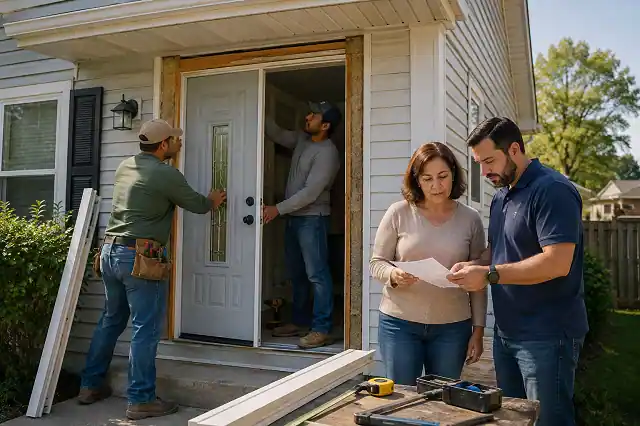
When diagnostic testing proves an entryway qualifies for
door replacement grants, local housing agencies issue formal work orders. Instead of just adding caulk, approved builders install a brand-new pre-hung unit with fresh insulation, durable flashing, and solid timber framing.
Federal and State Programs Offering Free Door Replacements
Public repair money flows through specific federal and state laws. Understanding which agency manages your local area helps prevent paperwork mix-ups and shortens your waiting time:
| Funding Agency | Federal Program Law | Local Office to Contact | Grant Terms & Amounts |
| Weatherization Assistance Program (WAP) | 10 CFR Part 440 | Local Community Action Agencies | 100% Free installation by licensed builders; zero repayment required. |
| USDA Section 504 Home Repair Program | 7 CFR Part 3550 | USDA Rural Development County Offices | Direct cash grants up to $10,000 for rural seniors 62+; 1% loans up to $40,000. |
| Community Development Block Grants (CDBG) | 42 U.S.C. 5301 | City and Town Hall Housing Departments | Forgivable loans or direct emergency repair grants up to $25,000. |
| HOME Investment Partnerships | 24 CFR Part 92 | County Housing Authorities | Deferred soft loans forgiven completely over 5 to 10 years of primary residency. |
| LIHEAP Emergency Heating Aid | 45 CFR Part 96 | County Social Service Departments | Emergency repair or replacement during extreme winter cold emergencies. |
When city and county housing departments approve home repair projects, they follow clear compliance rules. Pure grant funds require zero repayment as long as you live in the property as your primary residence. For larger repair contracts that include roofing, plumbing, or multiple doors, cities often use a deferred forgivable note. A percentage of that loan balance is forgiven each year you remain in the home, disappearing completely after 5 to 10 years.
Door Quality Standards: Energy Star, Flashing, and Lead Safety
Public housing offices do not purchase flimsy, hollow interior doors for exterior openings. Government standards require durable, commercial-grade units designed to block bad weather, eliminate drafts, and follow lead-safe building codes.
Energy Star Thermal Standards
New doors installed through public programs must meet strict insulation benchmarks under
Energy Star guidelines. In cold northern areas, solid exterior doors must have high insulation ratings with thick foam cores to keep cold winter air outside. In southern regions, glass inserts must include special solar coatings to block heavy summer heat. Insulated steel doors and heavy fiberglass composite doors are the most common units funded by government programs.
| Climate Region | Door Glass Style | Maximum Permissible Heat Loss | Solar Heat Resistance Rating |
| Northern States | Solid Door (No Glass) | High Insulation Standard | No Rating Needed |
| Northern States | Half-Glass Door or Less | Double-Pane Argon Glass | Stops Winter Drafts |
| Central States | Full-Glass Decorative Doors | Insulated Double-Glazed Glass | Balances Summer and Winter Air |
| Southern States | All Glass Door Types | Reflective Glass Coating | Blocks Direct Hot Sunlight |
Moisture Barriers and Metal Sill Flashing
To ensure home repairs last for decades, programs enforce strict installation methods based on
ASTM building standards. Unskilled installers often place doors directly on bare wood, causing hidden rot inside wall framing and subfloors. Agency-approved contractors must place a rigid, sloped metal or composite pan underneath the bottom sill. They must also install waterproof flashing tape along rough timber openings and add an exterior metal drip cap across the top casing to channel rainwater safely away from your house.
Lead-Safe Rules for Homes Built Before 1978
If your house was constructed before 1978, the existing door frames, wooden jambs, and outside trim likely contain old lead paint. Under federal safety rules (
24 CFR Part 35) and the
EPA Lead RRP program, workers must hang heavy plastic sheeting, run HEPA vacuums, and avoid sanding or scraping dry paint. Contractors must hold active EPA lead-safe licenses before removing old wooden door frames to keep your indoor air safe from poisonous lead dust.
2026 Household Income Caps and HUD Income Limits
Qualifying for free public repair assistance depends directly on your total family earnings. Federal rules set maximum income caps using HUD Area Median Income (AMI) charts or the Federal Poverty Guidelines updated each year by the Department of Health and Human Services. Intake specialists count earnings from all adult household members aged 18 and older, including base salaries, Social Security checks, disability payments, and monthly retirement pensions.
| Family Size | Extremely Low Income (30% AMI) | Very Low Income (50% AMI – USDA Cap) | Low-Income Limit (80% AMI – City Cap) | Weatherization Cap (200% Poverty Line) |
| 1 Person | $19,250 | $32,050 | $51,300 | $31,300 |
| 2 People | $22,000 | $36,650 | $58,600 | $42,400 |
| 3 People | $24,750 | $41,200 | $65,950 | $53,500 |
| 4 People | $27,500 | $45,800 | $73,250 | $64,600 |
| 5 People | $29,700 | $49,500 | $79,150 | $75,700 |
| 6 People | $31,900 | $53,150 | $85,000 | $86,800 |
| 7 People | $34,100 | $56,800 | $90,850 | $97,900 |
| 8 People | $36,300 | $60,500 | $96,700 | $109,000 |
To verify your family income, you must provide your last two years of signed tax returns, two months of recent pay stubs, and official bank statements. Fast-track approvals are given to households currently receiving Supplemental Security Income (SSI), food assistance (SNAP), or Temporary Assistance for Needy Families (TANF). Review complete application steps in our guide on
home repair grants for low-income families.Official staff also check your cash savings during income reviews. While your home equity and official retirement accounts (such as 401k or IRA balances) do not count against you, having more than $5,000 to $10,000 in personal checking or savings accounts might require you to pay a small share of the repair bill.
Special Rules for Mobile Homes and Manufactured Housing
Replacing exterior doors on manufactured and factory-built homes requires completely different building materials than traditional site-built houses. Standard residential entry doors bought at retail home improvement stores cannot be installed directly into mobile homes without causing serious leaks and frame damage.
-
Outswing Configurations and Sizing: Most manufactured homes use specialized exterior doors measuring 32 by 76 inches or 34 by 76 inches, rather than standard 36 by 80-inch residential doors. In smaller mobile home floor plans, entry doors frequently swing outward to preserve inside living space and meet HUD factory housing fire safety codes.
-
Mounting Fin Construction: Factory-built home frames lack traditional 2×6 timber studs. Instead, contractors must install manufactured housing doors that feature built-in exterior mounting flanges. These flanges screw directly into the home’s exterior aluminum or vinyl siding, sealed with industrial butyl tape to block wind-driven rain.
-
Combination Door Units: In many factory-built homes, the primary door and exterior storm door are manufactured as one single pre-assembled unit. Government weatherization programs pay to replace the complete assembly, ensuring an airtight seal against subfloor water rot.
State-by-State Door Replacement Assistance Programs
State housing agencies often combine federal funds with local state repair programs. The types of grants, funding levels, and regional offices depend on where you live:
California Residential Rehabilitation (CalHome & CSD WAP)
In California, the Department of Housing and Community Development runs the CalHome program alongside regional weatherization providers. Low-income homeowners can receive forgivable loans and free grants to replace rotted doors, install fire-rated entry doors in wildfire hazard zones, and stop indoor drafts. Learn more through our guide on
California home repair assistance.
Texas Housing Trust Fund & Amy Young Barrier Removal
The Texas Department of Housing and Community Affairs manages accessibility and home repair programs through regional development councils. Families with disabled household members can secure direct grants up to $22,500 through the Amy Young Barrier Removal Program to install wide entryways, zero-step thresholds, and easy-open lever handles. Check our full manual on
Texas home repair assistance programs.
Florida State Housing Initiatives Partnership (SHIP)
Florida’s SHIP program provides direct repair funding to all 67 counties for low-income homeowners. In coastal regions, exterior doors paid for with public grants must meet strict hurricane building codes. Doors must be impact-rated composite fiberglass units built to withstand heavy winds up to 140 miles per hour. Read our localized review in our
Florida home repair grants guide.
New York RESTORE & Access to Home Initiatives
New York State Homes and Community Renewal funds the RESTORE emergency repair program. Managed by local non-profit groups, RESTORE covers emergency repairs, including broken or unsafe exterior doors, for low-income seniors aged 60 and older. Our detailed report on
New York senior home repair programs provides regional intake contacts.
Maine Home Accessibility and Repair Program (HARP)
Run by MaineHousing and local Community Action agencies, HARP assists low-income homeowners with urgent safety and heating repairs. Due to severe sub-zero winter weather in Maine, the program prioritizes heavily insulated, weather-stripped entry doors to prevent interior water pipes from freezing and bursting. Review program guidelines in our
Maine home repair guide.
North Carolina Urgent Repair Program (URP)
North Carolina provides assistance through municipal housing authorities and planning councils. The Urgent Repair Program helps families earning below 50% of the county median income, prioritizing elderly homeowners and military veterans who need door replacements to remove safety hazards, stop drafts, or fix rotten floors. Review state requirements in our
home repair grants guide.
Pennsylvania Weatherization and Crisis Heating Programs
In Pennsylvania, the Department of Community and Economic Development oversees weatherization providers across all 67 counties. The state pairs LIHEAP Crisis funds with federal weatherization money to fix damaged doors during freezing weather emergencies. When an older homeowner needs immediate help because an exterior door is broken, rotted, or leaking cold air, emergency funds fast-track a free insulated replacement.
Ohio Home Weatherization Assistance Program (HWAP)
The Ohio Department of Development oversees regional Community Action Agencies that manage HWAP funding. Ohio focuses on eliminating wood rot and stopping drafts in older houses. Energy auditors run computerized calculations to measure fuel savings, paying 100% of material and installation costs for qualifying families earning at or below 200% of the federal poverty line.
Targeted Priority Help: Seniors, Veterans, and Rural Families
Government housing rules give first priority to vulnerable homeowners who cannot safely fix or replace broken doors on their own:
Senior Citizens Aged 62 and Older
The USDA Section 504 program provides outright
door replacement grants up to $10,000 for rural homeowners aged 62 or older who live in houses with verified health or safety hazards under
federal program guidelines. Loose locks, rotten floor frames, and drafty doors qualify for help. Seniors unable to afford a repair loan receive free grants that require zero monthly payments. Read more in our
home repair grants for senior citizens resource and our
Section 504 home repair grants guide.
Disabled Homeowners and Accessibility Modifications
Homeowners with physical mobility challenges can get accessibility grants to remove architectural barriers. Public accessibility programs pay to widen doorway openings to at least 32 inches of clear passage width, install flush thresholds under 1/2 inch, and mount easy lever door handles that comply with
ADA accessibility standards. Program evaluators regularly approve wheelchair threshold ramps and offset swing hinges. Check full rules in our
home repair grants for disabled homeowners manual and our directory on
home improvement grants for disabled people.
Military Veterans and Surviving Spouses
Veterans managing service-connected physical disabilities can combine local home repair funds with VA Specially Adapted Housing (SAH) and HISA grants to install automated entry systems. Keyless digital locks, heavy reinforced fiberglass impact slabs, and widened secondary doorways qualify for full funding. Read our manual on
home repair grants for veterans for specific VA grant details.
Rural Communities and Agricultural Districts
Property owners living in small farming towns and rural areas face intense weather damage. Through USDA Rural Development service centers, rural families can access repair grants to fix damaged storm doors, drafty kitchen entryways, and rotted basement cellar doors. Explore regional rules in our guide to
home repair grants for rural homeowners.
Building Permits and Local Housing Code Inspections
Every exterior door installation financed through public grant funds must strictly comply with local municipal building codes. Homeowners cannot simply hire an unlicensed worker to install a door without pulling formal permits:
-
Mandatory City Permits: Replacing an entire door frame, changing rough wall opening dimensions, or altering structural framing studs requires a valid municipal building permit. The approved contractor must pull this permit through your city or county building department before any demolition begins.
-
Egress and Emergency Exit Dimensions: Building safety codes require at least one primary exterior door in your home to provide a minimum clear opening width of 32 inches and a clear height of 78 inches when open at a 90-degree angle. This ensures safe passage for residents and emergency rescue teams during a house fire.
-
Final Code Sign-Off: Once work is finished, an official city building inspector visits the property. The inspector checks whether the door latches securely, tests deadbolt alignment, verifies flashing installation, and signs the official building permit before the grant agency releases final payment to the builder.
Step-by-Step Application Roadmap for Door Replacement Grants
Getting public money through
door replacement grants requires completing an organized application process:
-
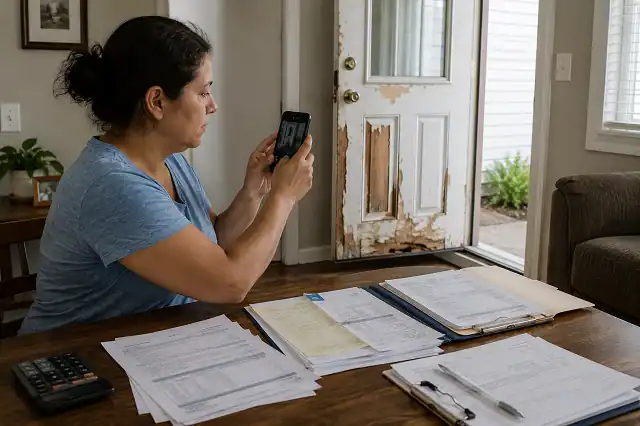
Document Structural and Security Hazards: Take clear photographs showing timber rot, daylight shining through closed edges, broken locks, and soft subflooring under the sill.
-
Assemble Financial Documentation: Gather two months of recent pay stubs, your last two years of signed tax returns, your recorded property deed, and recent utility bills.
-
Submit Formal Intake to Local Agency: Turn in your application forms to your local Community Action Agency for weatherization aid or your county USDA office for Section 504 rural repair grants.
-
Facilitate On-Site Diagnostic Audit: Allow certified home inspectors to run a blower-door air test, check for lead paint on older pre-1978 houses, and evaluate framing damage.
-
Select Licensed and Compliant Builders: Work with your agency staff to review bids from licensed, insured, and EPA lead-safe contractors registered in the federal System for Award Management (SAM.gov) database.
-
Sign Grant Documents and Await Authorization: Sign your formal grant contract or forgivable loan agreement. Construction begins only after the agency sends an official Written Notice to Proceed.
-
Pass Final Building Code and Closeout Inspection: Walk through the completed project with your program coordinator and city building inspector to confirm code compliance before contractor checks are released.
Affordable Loan Alternatives for Higher-Income Families
If local grant reserves are temporarily empty or your family earnings sit slightly above the 80% AMI low-income cap, these low-cost government loan options prevent you from turning to high-interest credit cards:
-
FHA Title I Home Improvement Loans: Insured by the federal government, FHA Title I loans offer up to $25,000 for essential home repairs without requiring large home equity. Terms run up to 20 years with fixed interest rates.
-
FHA 203(k) Home Renovation Loans: Allows property owners to bundle home repair costs and door modernizations directly into their primary home mortgage payment.
-
Power Company Cash Rebates: Regulated electric and gas companies offer instant rebates between $100 and $500 per unit when you install certified Energy Star exterior doors.
-
Non-Profit Housing Charities: Groups like Rebuilding Together and Habitat for Humanity help low-income families and seniors repair doors and ramps using volunteer labor and donated building supplies.
How to Spot and Avoid Home Improvement Grant Scams
Homeowners searching for government repair assistance are frequently targeted by dishonest contractors and online scammers. Protect your family by remembering these core truths:
-
Real Grants Never Charge Upfront Fees: Legitimate government housing programs never ask for application fees, registration deposits, or filing charges. Anyone asking for cash upfront is running a scam.
-
Agencies Do Not Wire Cash to Personal Accounts: Public programs disburse payments straight to licensed builders after the finished work passes official city inspection. Agencies never wire cash directly to your personal checking account.
-
Contractors Must Hold State Licenses: Public grant programs never permit unverified handymen. All contractors must hold active state licenses, liability insurance, and federal SAM.gov registration.
-
Verify Official Government Portals: Confirm that you are applying through official `.gov` agency websites or accredited 501(c)(3) non-profit housing partners.
Frequently Asked Questions About Door Replacement Grants
Can I get completely free door replacement grants in 2026?
Yes. Low-income homeowners, seniors aged 62 and older, and disabled residents can receive 100% subsidized door replacements through the Department of Energy’s Weatherization Assistance Program (WAP) and USDA Section 504 grants, requiring zero matching funds.
Does USDA Section 504 pay for exterior door replacements?
Yes. USDA Section 504 provides non-repayable door replacement grants up to $10,000 for rural homeowners aged 62 or older living at or below 50% AMI, provided the door repair eliminates verified security risks, rotted framing, or weather exposure.
Does the Weatherization Assistance Program replace broken front doors?
Yes. If a certified energy audit proves that an exterior door leaks excessive conditioned air and replacing it satisfies federal energy savings rules, WAP covers 100% of material and contractor installation costs.
Can renters receive door replacement grants?
Renters qualify for weatherization assistance if their household meets income guidelines. However, the landlord must sign a binding legal agreement authorizing the work and agreeing not to raise rents or terminate the lease due to the completed property improvements.
Can disabled homeowners receive grants to widen narrow doorways?
Yes. Accessibility grants fund widening door frames to at least 32 inches of clear passage width, installing flush low-profile thresholds, and mounting commercial-grade ADA lever hardware.
Can I choose my own contractor or install the door myself?
No. Public grant rules prohibit DIY installations and unverified labor. Work must be completed by licensed, bonded, insured general contractors registered in the federal System for Award Management (SAM.gov) database.
What happens if grant funds run out in my county?
Local agencies maintain rolling waitlists. Submitting an approved application secures your priority ranking when new fiscal year federal appropriations are released.
Are storm doors covered under federal weatherization grants?
Yes, but only when installed in severe climate zones where the addition of an exterior storm door significantly improves the primary door thermal barrier and satisfies DOE energy savings benchmarks.
Why You Should Trust This Guide
Last Updated: September 27, 2026
Reviewed By: HomePropertyGrants.com Editorial TeamExperience: Our housing research desk specializes in auditing statutory public assistance programs, federal weatherization initiatives, USDA rural development funding, and municipal housing rehabilitation frameworks across all 50 states.
Expertise: Content is compiled directly from federal statutes, including Title I of the Housing and Community Development Act (42 U.S.C. 5301), USDA 7 CFR Part 3550 directives, Department of Energy 10 CFR Part 440 guidelines, and EPA Lead Renovation, Repair, and Painting (RRP) standards.
Authoritativeness: We reconcile eligibility criteria against published federal poverty thresholds, HUD Area Median Income databases, and Energy Star architectural performance standards to ensure absolute regulatory precision.
Trustworthiness: HomePropertyGrants.com is completely independent. We accept zero financial kickbacks, sponsored contractor placements, or lead-generation commissions from home renovation companies or door manufacturers. All evaluations are published solely to assist homeowners in accessing verified public aid.
Helpful Decision Support: This guide provides actionable steps, direct statutory links, official application forms, and objective financial criteria to help homeowners navigate complex public bureaucracies and avoid common application rejections.
Next Action: Navigating Your Intake Pathway
Replacing an inefficient, rotted, or broken exterior door protects your home’s structural integrity, lowers heating bills, and eliminates dangerous accessibility hazards. Start by requesting a diagnostic energy audit through your local Community Action Agency for weatherization funding. Rural homeowners should immediately submit USDA Form RD 410-4 to their regional Rural Development service center.Connect your project with broader emergency assistance by utilizing our interactive
home repair program finder to locate verified county and municipal programs currently accepting intake applications for
door replacement grants.
Arthur Pendelton is a senior housing policy researcher and public welfare analyst with over eight years of experience tracking federal, state, and non-profit residential repair programs. He specializes in statutory grant frameworks, including USDA Section 504 Rural Housing, the Department of Energy’s Weatherization Assistance Program (WAP), and municipal HUD Community Development Block Grants (CDBG). Arthur systematically audits Federal Register publications and Title 7/42 CFR regulatory updates to provide low-income homeowners, seniors, and military veterans with accurate, barrier-free application guidance.
Related


3 thoughts on “Free Door Replacement Grants 2026: Official PDF Application”