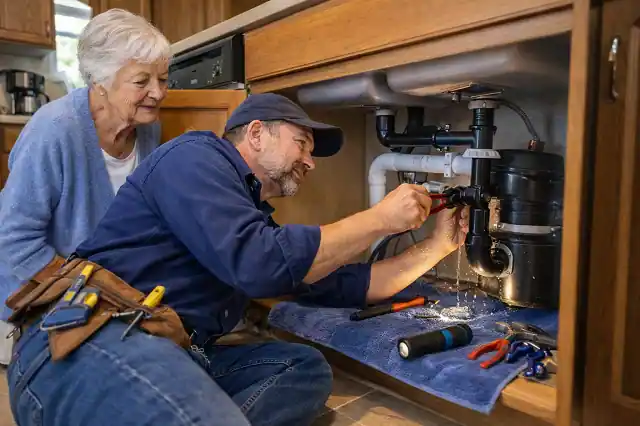
For many older homeowners, the hardest part of a major home repair is not finding the problem. It is finding the right program for that problem. A leaking roof, unsafe electrical system, poor insulation, difficult bathroom access, or failing heating equipment can become much harder to manage when household income is limited.
The question is not simply whether a senior can get a grant. The useful question is which program fits the homeowner’s situation, what that program is designed to pay for, and what the homeowner should verify before applying.
What makes this article different?
This is a senior-focused decision resource. It does not try to rank for every repair type or homeowner category. Instead, it helps an older homeowner decide which major funding pathway to investigate first, why that pathway fits, what it does not cover, and what to verify before applying.
What Home Repair Grants Are Available for Seniors?
There is no single federal home repair grant that every senior can receive. The best first option depends on the repair, household income, homeownership, location, and circumstances such as veteran disability or qualifying disaster damage. If you are comparing broader home improvement grants for seniors, review the dedicated resource before choosing a program.
The U.S. government also warns that websites promising “free money” for personal home repairs can be scams. Legitimate programs have specific eligibility rules and application procedures. Government home repair assistance programs should be verified through the responsible agency before you provide documents or pay anyone.
Best Program for Your Situation
| Your Situation | Best First Program to Investigate | Why It May Fit | What to Verify |
| Age 62+, very-low income, homeowner, eligible rural property, qualifying safety problem | USDA Section 504 | The grant component is designed for qualifying elderly homeowners to remove health and safety hazards | Age, income, ownership, rural address, credit availability, and eligible hazard |
| Low-income senior with high energy costs, drafts, insulation or heating concerns | Weatherization Assistance Program | Its purpose is improving residential energy efficiency while addressing related health and safety conditions | Income route, state rules, local provider, home assessment, and eligible measures |
| Senior homeowner in a city or county | Local housing rehabilitation | Some communities use federal or local housing funds for eligible owner-occupied rehabilitation | Local program availability, income rules, property rules, repair scope, and funding |
| Veteran with a qualifying service-connected disability and home-adaptation need | VA Housing Grants | VA has specialized housing adaptation benefits for qualifying disabilities | Service-connected disability, ownership or planned ownership, and adaptation requirements |
| Home damaged by a qualifying declared disaster | FEMA Individual Assistance | Eligible disaster-caused housing repairs may qualify under the applicable disaster program | Declared disaster, cause of damage, inspection, insurance, ownership, and occupancy |
| Main problem is accessibility or safe independent living | VA or local accessibility programs | Accessibility pathways may address mobility barriers and home adaptations | Whether the exact modification is eligible and whether a local program is available |
| No federal pathway fits | State, county, city, nonprofit, or utility programs | Local programs can have different income, property, repair, and funding rules | Current local funding, application window, administrator, and eligible repairs |
Do this first: Identify the exact repair, determine whether it is a safety, health, accessibility, energy, or disaster problem, then match your situation to the program whose official purpose fits that problem. Do not choose a program because it advertises the largest dollar amount.
For the broader national topic, see Home Repair Grants 2026: Complete Guide to Free Home Repair Assistance.

How Seniors Should Choose the Right Funding Path
The strongest first choice comes from matching four facts: the homeowner’s age and income, the type of property, the reason for the repair, and any special eligibility such as veteran disability or disaster damage. If the problem is urgent and affects basic safety or habitability, compare emergency home repair grants before waiting for a routine repair program.
The U.S. Census Bureau reported that the U.S. population age 65 and older reached 61.2 million in 2024, or 18% of the population, after growing 3.1% from 2023 to 2024.
That growing older population makes safe and functional housing increasingly important. A repair that removes a safety hazard, reduces an energy burden, restores habitability after a disaster, or makes a home easier to navigate may be more relevant to a program than a cosmetic renovation. If household income is also a major concern, free home improvement grants for low-income families may provide another research path.
Application tip: Describe the actual problem accurately. If a repair affects safety, health, mobility, energy use, or habitability, explain that connection. Do not describe a necessary repair as a cosmetic upgrade.
USDA Section 504 Home Repair Grants for Qualifying Seniors
For a senior who is 62 or older, owns and occupies an eligible rural home, has very-low household income, cannot obtain affordable credit elsewhere, and needs qualifying health or safety repairs, USDA Section 504 is one of the most important federal pathways to investigate first.
The U.S. Department of Agriculture Single Family Housing Repair Loans and Grants program (USDA Section 504) provides loans to eligible very-low-income homeowners and grants to qualifying elderly homeowners to remove health and safety hazards. USDA states that grant applicants must generally be at least 62 and meet the program’s other requirements.
For a dedicated Section 504 resource, see Section 504 home repair grants for seniors.
Who Should Check USDA Section 504 First?
- You are age 62 or older.
- You own and occupy the home.
- Your household income falls within the applicable very-low-income limit.
- You cannot obtain affordable credit elsewhere.
- Your property is in an eligible rural area.
- The requested grant work addresses an eligible health or safety hazard.
USDA provides an address-based eligibility process for determining whether a property is in an eligible rural area.
What Kind of Need Does This Program Address?
USDA states that the grant component is intended to remove health and safety hazards. The exact work must be reviewed under the program rules and approved scope; the senior should describe the underlying safety or health problem rather than treating the program as a general remodeling fund.
USDA Section 504 Funding Limits
| Benefit | Official Maximum | Purpose |
| Section 504 grant | Up to $10,000 | Removing eligible health and safety hazards |
| Section 504 loan | Up to $40,000 | Repairing, improving, modernizing, or removing hazards |
| Section 504 grant for a home damaged in a presidentially declared disaster area | Up to $15,000 under the standard Section 504 disaster provision | Applicable eligible disaster-related health and safety repairs |
USDA’s current Section 504 materials confirm the $10,000 standard grant maximum, $40,000 loan maximum, and $15,000 maximum for the applicable presidentially declared disaster provision. These are program limits, not guaranteed awards.
Important funding distinction: USDA also operates separate disaster assistance authorities and has announced special disaster grants above the standard Section 504 limits in specific circumstances. Do not assume the standard $15,000 Section 504 disaster maximum is the ceiling for every USDA disaster program. Verify the specific disaster program and current USDA notice before applying.
Separate USDA Disaster Repair Funding
USDA also operates the USDA Disaster Assistance Fund Program for eligible homeowners whose homes were damaged in qualifying declared disasters. USDA currently lists a maximum grant of $32,420, with applications accepted through September 30, 2026, while funding remains available. This is a separate disaster pathway from the standard Section 504 grant rules.
What USDA Section 504 Does NOT Cover
- Age alone does not create eligibility.
- The grant does not automatically pay for every home improvement.
- The property must meet applicable rural eligibility requirements unless a specific disaster authority changes them.
- The grant component is for eligible health and safety hazards, not ordinary cosmetic remodeling.
- The published maximum is not a guaranteed award.
- Starting work before required approval can create problems; confirm the program’s instructions first.
How to Start With USDA
Check the property address, confirm the household income and age requirements, document the health or safety problem, and contact the appropriate USDA Rural Development office or home loan specialist before committing to the repair.
If rural location is your main question, see home repair grants for rural homeowners.
Weatherization Assistance Program for Low-Income Seniors
If the main problem is high energy use, poor insulation, drafts, heating or cooling efficiency, or related health and safety conditions, the Weatherization Assistance Program may be a better first pathway than a general home repair grant.
The U.S. Department of Energy Weatherization Assistance Program (WAP) is administered at the state and local level. DOE states that households at or below 200% of the poverty income guidelines or households receiving Supplemental Security Income are considered eligible under federal WAP guidelines, while states and territories may use additional approved eligibility routes. Priority is given to elderly people, people with disabilities, families with children, high-energy users, and households with a high energy burden.
Who Should Check WAP First?
- Your main problem is energy efficiency rather than general remodeling.
- Your household meets the applicable income or SSI eligibility route.
- You have high energy costs, a high energy burden, drafts, insulation problems, or inefficient systems.
- You are willing to have the home assessed by the local weatherization provider.
What Kind of Need Does WAP Address?
DOE describes WAP as a whole-house energy-efficiency program. Depending on the assessment and state plan, measures can involve insulation, air sealing, heating and cooling systems, duct or pipe insulation, water heating, and related health and safety work. The local provider determines which measures are appropriate.
For a heating-specific resource, see heating repair grants for seniors.
What WAP Does NOT Cover
- WAP is not a general cash payment for any home project.
- It does not guarantee a complete roof replacement.
- It does not guarantee replacement of every window.
- It does not fund every cosmetic renovation.
- The local provider decides which measures are appropriate after assessment.
For a window-specific pathway, see window replacement grants for senior citizens.
How to Start With WAP
Identify your state weatherization administrator, locate the local provider, prepare proof of income or SSI when required, and complete the provider’s application process. DOE specifically directs applicants to state and local weatherization contacts.
Local HUD-Funded Home Rehabilitation
Senior homeowners often search for a nationwide “HUD senior repair grant,” but HUD-funded housing rehabilitation is frequently administered through states, cities, counties, and local organizations rather than through one universal senior grant application.
The U.S. Department of Housing and Urban Development Community Development Block Grant Program (HUD CDBG) can support eligible community development activities, including qualifying residential rehabilitation. Local programs establish their own eligibility, application, repair, and funding rules.
USAGov also directs homeowners to local and state government housing departments because repair programs can be available at the state or county level.
Who Should Check Local Rehabilitation First?
Check local housing rehabilitation when you live in a city or county and need repairs that may fit an owner-occupied rehabilitation, emergency repair, accessibility, or housing-condition program.
For senior-specific context, see HUD home improvement grants for seniors.
What Local Rehabilitation May Cover
Eligible work depends on the local program. Possible categories can include health and safety rehabilitation, accessibility improvements, housing-condition repairs, and other approved rehabilitation activities.
What Local HUD-Funded Programs Do NOT Guarantee
- There is no single nationwide CDBG grant amount for every senior.
- Every city and county does not offer the same program.
- HUD does not personally approve every local homeowner application.
- Local income, property, occupancy, repair, and funding rules can differ.
- A local program may use a grant, deferred loan, forgivable loan, or another funding structure.
How to Start Locally
Contact the city or county housing department and ask whether it currently operates an owner-occupied repair, rehabilitation, accessibility, or emergency repair program. Ask for the written eligibility rules and eligible repair list.
For the broader HUD topic, see HUD home improvement grants.

VA Housing Grants for Qualifying Disabled Veterans
Senior veterans with qualifying service-connected disabilities should investigate VA housing adaptation benefits separately from age-based programs. The important eligibility factor is the qualifying disability and the type of home adaptation needed, not age alone.
The U.S. Department of Veterans Affairs Disability Housing Grants program (VA Housing Grants) provides specialized housing adaptation benefits for eligible veterans and service members. VA confirms the FY 2026 maximums below.
Who Should Check VA Housing Grants First?
Investigate VA housing grants if you are a veteran or service member with a qualifying service-connected disability and the proposed work is related to an eligible housing adaptation.
FY 2026 VA Housing Grant Maximums
| VA Benefit | FY 2026 Maximum | Primary Purpose |
| Specially Adapted Housing (SAH) | $126,526 | Qualifying home adaptations for veterans and service members meeting specified disability requirements |
| Special Home Adaptation (SHA) | $25,350 | Qualifying home adaptations for veterans and service members meeting the applicable disability requirements |
VA states that these are current FY 2026 total maximum amounts. An eligible applicant may use as much or as little of the available grant as needed, subject to the program rules and the applicable lifetime-use provisions.
What Kind of Need Does VA Address?
VA describes qualifying adaptations for specific service-connected disabilities. Examples can include modifications that improve independent living, but eligibility depends on the exact disability and VA requirements.
For broader veteran options, see home repair grants for veterans.
What VA Housing Grants Do NOT Cover
- Age alone does not qualify a veteran.
- They are not general grants for routine home maintenance.
- The disability must meet the applicable VA requirements.
- The requested work must relate to an eligible housing-adaptation purpose.
- The published maximum is not an automatic payment.
How to Start With VA
Review the official disability requirements, confirm the home-ownership requirement that applies to your benefit, and use VA’s current housing-grants application pathway before arranging the adaptation work.
If disability is part of your broader eligibility profile, see home repair grants for disabled homeowners.
FEMA Home Repair Assistance After a Qualifying Disaster
FEMA becomes relevant when the repair problem was caused by a qualifying declared disaster. It should not be treated as a general senior home repair grant for normal aging, deferred maintenance, or cosmetic remodeling.
The Federal Emergency Management Agency Individuals and Households Program (FEMA Individual Assistance) can provide eligible disaster-related housing assistance when the applicant and property meet the applicable requirements.
Who Should Check FEMA First?
Check FEMA when your primary residence is in a declared disaster area and a disaster damaged or caused an eligible component to stop functioning. FEMA’s current policy requires the component to have been functional immediately before the disaster, although a component that needed maintenance may still qualify if the disaster caused it to cease functioning, subject to the program’s other requirements.
What Kind of Need Does FEMA Address?
FEMA Home Repair Assistance is intended to address disaster-related conditions that are necessary for the home’s safety, health, or functionality. FEMA evaluates the damage and applies the disaster-specific eligibility rules; the program is not a general senior remodeling benefit.
What FEMA Does NOT Cover
- Ordinary aging and deterioration unrelated to the disaster.
- Routine maintenance unrelated to the disaster.
- Cosmetic remodeling unrelated to disaster damage.
- Repairs with no qualifying connection to the declared disaster.
- Covered damage that is already payable through insurance, subject to FEMA’s rules.
Warning: A normal maintenance problem is not automatically eligible. FEMA evaluates whether the disaster caused the component to cease functioning and whether the other program requirements are met.
How to Start With FEMA
Confirm that the disaster was declared, document the disaster-related damage, file an insurance claim when applicable, and use the official FEMA application process for the specific disaster. Do not pay a third party to “unlock” FEMA funds.
What Senior Home Repair Programs Do NOT Cover
This page focuses on choosing among the major funding pathways available to senior homeowners. Detailed repair-specific rules belong on the dedicated pages linked below when you need deeper information about a particular project.
Understanding exclusions is as important as knowing what may qualify. A homeowner can meet the age or income profile and still have an ineligible project. If the planned work is broader than a necessary repair, you can compare government grants for home renovations as a separate research path.
| Potential Problem | Why It Can Cause Trouble | Better Approach |
| Cosmetic remodeling | The program may focus on safety, health, energy, accessibility, or habitability | Describe the genuine functional or safety problem if one exists |
| Wrong property location | Some programs have rural or local geographic limits | Verify the address before preparing the full application |
| Wrong income category | Programs use different income standards and eligibility routes | Ask the administering agency which income test applies |
| Work started too early | Some programs require inspection, approval, or a defined scope before work | Get instructions from the administrator before starting |
| Unapproved contractor | A program may require a particular contractor or procurement process | Follow the program’s contractor requirements |
| Duplicate funding | Insurance or another award can affect eligible costs | Disclose other funding when required |
| Assuming a maximum is guaranteed | Program limits are not promises of individual awards | Verify the approved amount and current funding |
Why Applications Are Denied
A rejection does not always mean that no help is available. It may mean that the wrong program was selected, a document was missing, the property did not qualify, or the requested work fell outside the program’s purpose.
- Income does not meet the applicable standard.
- The property is outside the program’s geographic area.
- The repair is not an eligible use of the funding.
- The homeowner does not meet the program’s ownership or occupancy rules.
- Required documentation is missing.
- Insurance or another funding source covers the same eligible damage.
- Work began before required approval.
- Available funding is insufficient or the program is not accepting applications.
What to Do If You Are Denied
Ask the administering agency for the specific reason for the decision and the rule that applies. Correct missing documentation if possible. Then ask whether another program, local provider, or repair pathway is more appropriate. Do not pay a private company that claims it can guarantee an approval.
Seven Steps to Apply for the Right Senior Home Repair Grant
Step 1: Define the Exact Repair
Write down what is wrong, where it is located, and how it affects safety, health, accessibility, energy use, or habitability. Take clear photographs. If the project mainly involves exterior work, you can also compare grants for exterior home improvements.
Step 2: Confirm Your Eligibility Profile
Record your age, household income, homeownership, primary residence, location, veteran status, disability status where applicable, SSI status where relevant, and whether the damage resulted from a qualifying disaster. If you need a broader explanation of how these factors are evaluated across programs, see home repair grant eligibility requirements.
Step 3: Select One Primary Program to Investigate First
Use the decision table above. Start with the program whose official purpose most closely matches the repair instead of applying blindly to every program you find online. If you are still comparing broader homeowner options, review home improvement grants for homeowners before moving to a specialized program.
Step 4: Gather the Required Documents
Senior Home Repair Application Checklist
- ☐ Proof of age
- ☐ Proof of homeownership
- ☐ Primary-residence information when required
- ☐ Household income records
- ☐ Social Security or SSI records when requested
- ☐ Property information
- ☐ Photos of the repair problem
- ☐ Inspection or professional assessment when required
- ☐ Contractor estimate when required
- ☐ Insurance information when relevant
- ☐ Disability documentation when required
- ☐ Disaster documentation when applicable
Step 5: Contact the Official Administrator
Use USDA Rural Development, your state or local WAP provider, your city or county housing department, VA, FEMA, or another verified administrator identified by the official program.
For a detailed application resource, see how to apply for home repair grants without getting rejected.
Step 6: Ask These Questions Before Work Begins
- Does my property qualify?
- Does this exact repair qualify?
- Is an inspection required?
- Is a specific contractor required?
- Must I receive written approval before starting?
- Can insurance or another funding source affect the application?
- What documents are still missing?
Step 7: Keep Every Application Record
Save applications, emails, letters, inspection reports, estimates, award notices, contractor documents, and receipts or other records required by the program.
How to Find Local and State Programs
Federal programs are only one part of the search. If USDA, WAP, VA, or FEMA does not fit, local or state programs may still be available.
Start with:
- City housing departments
- County housing departments
- State housing agencies
- Area Agencies on Aging
- Community Action Agencies
- Local nonprofit housing organizations
- Utility energy-efficiency programs
- Tribal housing organizations where applicable
The Administration for Community Living Area Agencies on Aging (AAAs) can connect older adults with local aging services. The Administration for Community Living Eldercare Locator (Eldercare Locator) can help identify local resources.
If federal programs do not fit, see nonprofit home repair grants.
For location-specific research, start with state home repair grants to identify the programs available in your state. You can then review Texas home repair grants for senior citizens, New York home repair grants for seniors, or Alabama home repair grants for senior citizens when applicable.
How to Avoid Senior Home Repair Grant Scams
USAGov warns that promises of “free money from the government” for personal needs are often scams. Legitimate programs have eligibility requirements and application procedures.
Grant Scam Warning Signs
- Guaranteed approval
- A guaranteed payment amount for every senior
- An upfront fee to “release” or “unlock” a grant
- Pressure to provide bank information immediately
- Requests for sensitive documents before the organization is verified
- Claims that a federal agency selected you without a legitimate application
- A contractor demanding payment before official program approval
For a legitimate starting point, use the official government “free money” scam guidance and verify the program through its administering agency.
Official Sources to Verify Before Applying
Program rules, income limits, funding availability, application procedures, and local implementation can change. Verify the current requirements directly with the administering agency before submitting sensitive documents or beginning work.
- U.S. Department of Agriculture Single Family Housing Repair Loans and Grants (USDA Section 504)
- U.S. Department of Energy Weatherization Assistance Program (Weatherization Assistance Program (WAP))
- U.S. Department of Housing and Urban Development Community Development Block Grant Program (HUD CDBG)
- U.S. Department of Veterans Affairs Disability Housing Grants (VA Housing Grants)
- Federal Emergency Management Agency Individuals and Households Program (FEMA Individual Assistance)
- Administration for Community Living Area Agencies on Aging (Area Agencies on Aging (AAAs))
- Administration for Community Living Eldercare Locator (Eldercare Locator)
- U.S. Census Bureau Older Population Estimates (Census Bureau)
- U.S. government home repair assistance information (USA.gov Home Repair Information)
Frequently Asked Questions About Senior Home Repair Grants
What is the best home repair grant for seniors?
There is no universal best grant. A qualifying senior in an eligible rural area should investigate USDA Section 504 first. A low-income household with an energy-efficiency problem should investigate WAP. A qualifying disabled veteran with a home-adaptation need should investigate VA Housing Grants. A homeowner with qualifying disaster damage should investigate FEMA.
Can a senior get a $10,000 home repair grant?
A qualifying elderly homeowner may be eligible for up to $10,000 under the standard USDA Section 504 grant program. The amount is a program maximum, not a guaranteed award.
Do seniors automatically qualify for home repair grants?
No. Age is only one possible eligibility factor. Programs may also consider income, homeownership, property location, repair type, disability status, veteran status, disaster damage, and other program-specific requirements.
Can senior homeowners get help with a roof?
Potentially. A qualifying rural senior may investigate USDA Section 504, a local rehabilitation program may address eligible housing conditions, and FEMA may apply when qualifying disaster damage caused the problem. See roof replacement grants for seniors.
Can seniors get window replacement help?
Some homeowners may qualify for weatherization or local rehabilitation work involving windows. Senior status alone does not guarantee free window replacement. Eligibility depends on the program, the home’s condition, and the proposed work.
Does SSI automatically qualify a senior for every repair grant?
No. SSI is recognized as an eligibility route under federal WAP guidelines, but receiving SSI does not automatically qualify a homeowner for USDA, HUD, VA, FEMA, or every local program.
Where should I start if I do not know which program fits?
Start with the repair. Then check your age, income, homeownership, location, veteran or disability status, and whether the damage was caused by a qualifying disaster. Use the Best Program for Your Situation table to choose the most relevant first pathway.
About This Article
Last Updated: August 16, 2026
Reviewed By: Home Property Grants Research & Editorial Team
Editorial and evidence note
This article uses official federal sources for major program purposes, eligibility rules, and published funding limits. Dollar figures shown are program maximums unless the text specifically says otherwise. Local programs can have separate rules and funding availability.
Because government programs can change, verify the current requirements with the administering agency before applying, spending money, or starting work.
Final Senior Home Repair Grant Checklist
Before you apply:
- ☐ Identify the exact repair.
- ☐ Explain why the repair affects safety, health, accessibility, energy efficiency, or habitability.
- ☐ Confirm your age and household income.
- ☐ Confirm homeownership and primary-residence status when required.
- ☐ Verify rural eligibility if considering USDA Section 504.
- ☐ Check WAP if energy efficiency is the main issue.
- ☐ Check VA Housing Grants if you have a qualifying service-connected disability.
- ☐ Check FEMA if qualifying disaster damage caused the repair problem.
- ☐ Contact your city or county housing department about local rehabilitation programs.
- ☐ Contact an Area Agency on Aging or Eldercare Locator when you need local senior-service referrals.
- ☐ Gather ownership, income, repair, inspection, insurance, and supporting documents.
- ☐ Ask whether inspection or written approval is required before work begins.
- ☐ Keep copies of every application and official communication.
- ☐ Never pay an unknown company to unlock a government grant.
Conclusion
The best home repair grant for a senior is not necessarily the program with the largest advertised amount. It is the program whose official purpose, eligibility rules, and approved repairs match the homeowner’s actual situation.
For a qualifying senior homeowner in an eligible rural area, USDA Section 504 may be the strongest first federal pathway. When energy efficiency is the main concern, WAP may be more appropriate. City and county homeowners should investigate locally administered rehabilitation programs. Qualifying disabled veterans should check VA Housing Grants, while homeowners with qualifying disaster damage should investigate FEMA and the applicable disaster program.
If none of those pathways fit, move to state, county, city, nonprofit, utility, and aging-service resources. Local rules can differ substantially, so verify the current requirements instead of relying on a generic grant amount found elsewhere.
Most importantly, start with the repair, match it to the right program, verify the rules with the official administrator, gather the required documents, and do not begin work until you know whether approval is required.
If you need a broader overview, use the national home repair grant guide linked earlier in this article.