
Older homeowners facing ceiling water stains and rotted roof boards can claim free roof replacement grants for seniors. A complete residential roof tear-off costs between $8,000 and $16,000. For seniors living on fixed Social Security, paying cash out of pocket is impossible. Several public programs give direct grants to fix damaged roofs. Homeowners can evaluate local program terms across the directory of free home repair grants for seniors before signing private builder bids.
Statutory standards operate under Title 7 CFR Part 3550, Title 10 CFR Part 440, and Title 24 CFR Part 570. These initiatives fund emergency hazards, energy retrofits, and local structural rehabilitation. Qualifying repairs, occupancy retention terms, and official intake procedures follow strict statutory guidelines.
Checking household eligibility against local funding limits takes only a moment through our calculation tool.
Program: Roof Replacement Grant
Focus: Senior Citizen (60+)
Public programs distribute between $10,000 and $25,000 on a first-come, first-served basis. Over 40% of first-time applications face delays from missing builder bids, unverified tax returns, or unrecorded deeds. Review the income rules below and gather your ownership records early before yearly municipal pools run dry.
| Assistance Program | Maximum Grant Cap | Eligible Age | Income Limit Basis | Repayment & Lien Terms |
|---|---|---|---|---|
| USDA Section 504 | $10,000 cash grant ($15,000 disaster) | 62 years or older | Under 50% Area Median Income | No repayment if you stay 3 years |
| Weatherization (WAP) | 100% fully funded repairs | All ages (priority for 60+) | Under 200% of the Federal Poverty Line | Zero repayment and zero property lien |
| HUD CDBG City Grants | $15,000 to $25,000 | Varies (priority for 62+) | Under 80% Area Median Income | Forgivable lien over 5 years |
| Area Aging Agencies | $2,000 to $5,000 urgent aid | 60 years or older | Flexible local hardship rules | Direct grant gift with no lien |
USDA Section 504: Direct Cash Relief for Rural Properties
Rural communities and farming towns rely heavily on USDA Section 504 funding. The USDA awards direct cash grants up to $10,000 to remove verified health hazards. In designated disaster zones, this direct grant cap rises to $15,000. Homeowners can verify address eligibility through the USDA rural map tool. Rural housing criteria align with standards explained in Section 504 home repair grants for rural seniors.
Applicants must be at least 62 years old to claim grant money. The homeowner must hold a recorded deed or life estate on the property. The house must sit in an approved rural area with under 35,000 residents. Total household income cannot exceed 50 percent of the county median income.
Section 504 grants cover complete roof replacements. Program funds pay for stripping old shingles down to bare wood. Grants also cover new plywood decking, synthetic underlayment, and Class 4 impact shingles. If your total contractor quote exceeds $10,000, grant officers can add a low-interest loan. This 1 percent fixed-rate loan offers up to $40,000 across 20 years. Combining both programs provides up to $50,000 in total repair aid.
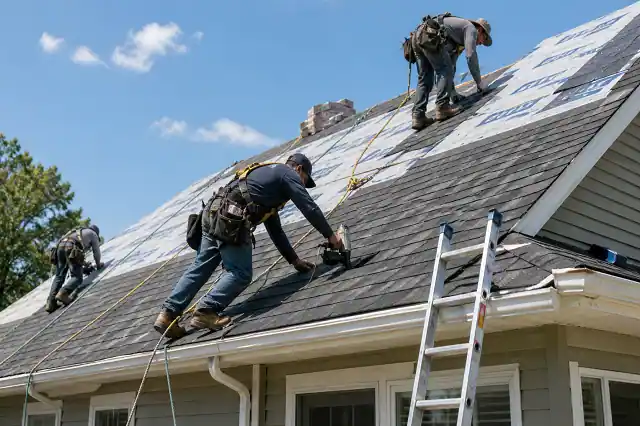
Weatherization Assistance Program (WAP): Zero-Cost Energy Fixes
The U.S. Department of Energy funds the national Weatherization Assistance Program. Complete administrative directives remain published on the official Department of Energy site. WAP lowers heating and cooling costs for low-income homes. The program does not offer general roof remodeling on every house. However, it pays for roof repairs when active leaks destroy attic insulation.
Auditors evaluate weather barriers using thermal imaging and blower-door testing equipment. Technical scopes and building science requirements follow protocols established in grants for weatherproofing older homes. To qualify, household earnings must sit at or below 200 percent of the federal poverty line. Seniors receiving Supplemental Security Income (SSI) qualify automatically under federal rules.
All contracted work approved under WAP is 100 percent free. The local agency never records a property lien against your title. You never pay back a single dollar. However, regional offices face heavy application volume. Most senior applicants experience waiting periods of four to eight months before contractors arrive.
HUD CDBG Grants: Municipal Urban Programs
Seniors residing in urban areas cannot access USDA rural funding. City homeowners access structural aid through local allocations of HUD CDBG grants. HUD distributes annual community block grants to cities and urban counties. Local municipal housing divisions then manage roof replacement programs for seniors.
Urban municipal funds provide substantial capital assistance. Many cities award between $15,000 and $25,000 to replace decayed residential roofs. Household earnings must stay below 80 percent of the Area Median Income. Priority queues favor seniors aged 62 and older, veterans, and individuals with disabilities. Urban program frameworks follow benchmarks cataloged under roof replacement grants for low-income homeowners.
If an occupant requires physical accessibility adaptations, specialized scopes apply. Barrier-free requirements follow directives explained under roof repair assistance for disabled homeowners. Municipalities structure these awards as five-year deferred forgivable loans. The city records a soft mortgage on your title. The loan balance drops by 20 percent each year. If you occupy the home for five full years, the debt dissolves completely into a grant.
Area Agencies on Aging: Emergency Shingle Patching
Severe seasonal storms frequently trigger urgent roof leaks that require immediate action. In emergency scenarios, seniors should contact their local Area Agency on Aging. You can locate your regional office through the national Eldercare Locator portal. These agencies receive funding through Title III-B of the Older Americans Act.
Emergency assistance ranges between $1,500 and $5,000. These funds do not cover a full roof replacement. Instead, they quickly pay for chimney flashing fixes, tarp installations, and missing shingle patches. Homeowners addressing early water intrusion can reference criteria in grants and aid for leak repairs to prevent framing rot.
Applicants must be at least 60 years old to claim emergency shingle aid. The home must present an immediate health or safety hazard. Income verification rules remain flexible, and intake evaluators approve emergency work orders within two to three weeks. These urgent grants carry zero repayment obligations.
Watch out for two common pitfalls. First, USDA Section 504 grants carry a three-year retention rule under 7 CFR § 3550.111. If you sell or transfer the title within 36 months, you must repay the grant from your sale proceeds. Second, never sign documents for door-to-door solicitors. Legitimate public grant programs pay licensed builders directly only after city inspectors sign off on the finished roof.
State-Specific Fast-Track Roofing Programs
Several states maintain dedicated housing trust funds to assist seniors when federal program reserves run dry:
- Texas Housing Assistance: The Texas Department of Housing administers the Amy Young Barrier Removal Program and local CDBG set-asides. Regional offices award up to $22,500 for roof and structural repairs. Intake dates and county rules align with parameters detailed in Texas roof replacement grants for senior homeowners.
- California CalHome Initiative: The California Department of Housing provides local nonprofit agencies with CalHome capital. These programs offer up to $20,000 in forgivable deferred loans for low-income seniors. County allocation desks follow standards listed in roof replacement grants in California.
- Florida Weatherization and Safety: The Florida Housing Finance Agency and My Safe Florida Home program award grants to install hurricane-rated roofs. Qualifying projects require secondary water barriers and impact-resistant architectural shingles.
Federal guidelines require all applicants to prepare official government intake forms before an inspector visits the property. You can download the direct form here: Download Official Weatherization & Roof Intake Guide (PDF).
Real-World Case Study: How a $14,500 Roof Job Is Funded
To understand how free roof replacement grants for seniors operate in practice, consider a 68-year-old retired homeowner in rural Pennsylvania:
- Total Contractor Quote: $14,500 for a complete 22-square roof tear-off, rotten decking replacement, and wind-rated asphalt shingles.
- USDA Section 504 Grant Award: $10,000 maximum direct cash grant applied straight to the builder’s project invoice.
- Remaining Project Balance: $4,500 left on the construction total.
- USDA Section 504 1% Loan Solution: The remaining $4,500 is financed through a 20-year loan at a fixed 1 percent interest rate.
- Final Monthly Payment: Exactly $20.70 per month for the retired senior.
This blended structure eliminates active ceiling leaks without high-interest bank debt. It preserves the senior’s monthly retirement budget while protecting long-term home equity.

Mandatory Building Standards for Grant Approvals
Municipal and federal building inspectors inspect structural details before releasing final grant funds. Homeowners must ensure all contractor bids include these five required building specifications:
- Complete Decking Inspection: Contractors must strip all old roofing layers down to bare wood. Damaged or rotted decking must be replaced with CDX plywood sheets.
- Ice and Water Shield Membranes: Workers must install self-adhering rubberized asphalt membranes along eaves and valleys to prevent ice-dam leaks under ASTM D1970 standards.
- Synthetic Roof Underlayment: Standard organic felt paper is prohibited. Builders must install tear-resistant synthetic underlayment across the entire wood deck.
- Class 4 Architectural Shingles: Projects require fiberglass asphalt shingles carrying a 110-mph wind rating. Energy efficiency measures can be cross-referenced with energy-efficient roofing costs and materials.
- Attic Ventilation Integration: Installers must include continuous ridge vents and clear soffit intake vents to ensure balanced attic airflow.
Step-by-Step Guide to Applying for Roof Grants
Securing fast approval for free roof replacement grants for seniors requires organized documentation. Following these five steps moves your file through administrative review smoothly:
- Document Roof Damage: Take date-stamped photos of missing shingles, sagging decking, and ceiling water stains. Keep a written log of every active leak during rainfall.
- Verify Property Title: Locate your recorded house deed and recent county property tax receipts to prove clear owner occupancy.
- Compile Income Statements: Gather your current Social Security award letter, pension statements, and two consecutive months of checking records.
- Obtain Written Contractor Estimates: Request itemized quotes from two licensed, insured roofing companies. Quotes must separate labor hours, tear-off costs, and dumpster fees.
- Submit to Your Local Office: Deliver completed paperwork to your nearest USDA service center, city housing division, or Community Action Agency.
Frequently Asked Questions About Senior Roof Grants
Do I need a good credit score to get a free roof grant?
No. Free roof grants do not require a credit check. They are direct public aid awards rather than bank loans. However, if you combine a grant with a USDA 1 percent loan, the agency verifies that you can handle the small monthly payment.
Can grant money pay for a metal roof?
Most public programs only fund asphalt shingles because they meet building codes at a lower cost. Metal roofs are often classified as non-essential luxury items. However, areas facing extreme wildfire hazards may permit metal roofing if local fire codes require non-combustible materials.
How long does the roofing work take once approved?
Once building permits are issued, tearing off old shingles and installing a new roof takes one to three days. An agency building inspector examines flashing, vents, and fasteners before the program pays the contractor.
Can I hire my own roofer and request reimbursement later?
No. Public housing programs strictly prohibit retroactive reimbursements. Any construction started before receiving official written authorization from the grant agency remains the sole financial responsibility of the homeowner.
Does receiving a roof grant impact Social Security benefits?
No. Government repair grants pay licensed contractors directly through escrow vouchers. Because funding does not pass through your personal checking account as liquid cash, it does not count as taxable income or reduce monthly Social Security checks.
The grant limits ($10,000 to $25,000) and regulatory standards cited in this guide are governed directly by federal statutory directives: USDA Section 504 Field Directives (7 CFR Part 3550), Department of Energy Weatherization Rules (10 CFR Part 440), and HUD CDBG guidelines (24 CFR Part 570).
Your Next Steps and Easy Filing Checklist
Installing a durable roof protects your home equity and keeps your living space dry. Before reaching out to regional housing offices, run through this simple preparation checklist:
- Check Property Zoning: Confirm whether your residence sits in an eligible USDA rural zone or inside a HUD entitlement boundary.
- Avoid Advance Fees: Legitimate public grant programs never charge application fees or request money up front.
- Compare Contractor Bids: Ensure all builder bids specify identical shingle warranties, ice barriers, and complete decking tear-off scopes.
- Flag Immediate Safety Hazards: If active rain leaks threaten ceilings or electrical panels, notify your intake evaluator immediately to request expedited emergency processing.
Taking action early helps older homeowners secure reliable free roof replacement grants for seniors, fix dangerous ceiling leaks, and remain safe without taking on expensive bank debt.
Why You Can Trust This Guide
Last Updated: October 2026
Reviewed By: Arthur Pendelton, Senior Public Housing Policy Analyst
Experience: Our research team tracks federal housing directives, weatherization guidelines, and municipal roof preservation programs across all 50 states.
Expertise: All funding limits and income caps cited in this manual match Title 7 of the Code of Federal Regulations, Title 10 CFR Part 440, and the Older Americans Act.
Authority: All Fiscal Year 2026 funding caps ($10,000 for USDA Section 504 and 200% FPL for WAP) are verified against official Federal Register publications.
Trustworthiness: HomePropertyGrants is an independent research desk. We accept no fees, kickbacks, or promotional sponsorships from commercial roofing manufacturers or private lenders.
Helpful Decision Support: We explain complex statutory housing laws in plain language with direct links to official government portals.

Arthur Pendelton is a senior housing policy researcher and public welfare analyst with over eight years of experience tracking federal, state, and non-profit residential repair programs. He specializes in statutory grant frameworks, including USDA Section 504 Rural Housing, the Department of Energy’s Weatherization Assistance Program (WAP), and municipal HUD Community Development Block Grants (CDBG). Arthur systematically audits Federal Register publications and Title 7/42 CFR regulatory updates to provide low-income homeowners, seniors, and military veterans with accurate, barrier-free application guidance.