

Emergency home repair grants can give eligible homeowners a valuable way to find funding for urgent repairs that affect the safety, habitability, or essential condition of their homes. In 2026, homeowners may find funding opportunities through federal, state, local, tribal, and community programs, depending on their location and circumstances.
This article explains where to look for emergency home repair grants, which types of urgent repairs may qualify, how different programs work, and what steps you can take to find the most suitable funding option. You will also learn how to check eligibility, prepare the required documents, and contact the organization responsible for each program.
What Are Emergency Home Repair Grants?
Emergency home repair grants are financial assistance programs that can help eligible homeowners address urgent health, safety, habitability, accessibility, or disaster-related repair needs. The assistance may be offered as a grant, a loan, a combination of grant and loan assistance, direct repair services, or other forms of support.
Many programs are administered locally rather than through a single federal application. That means the best place to start can depend on your city, county, state, rural eligibility, household income, age, disability status, veteran status, or the cause of the damage.
If you are looking for general assistance rather than an emergency-specific program, see our Home Repair Grants 2026 guide for the broader federal, state, local, and nonprofit landscape.
What Counts as an Emergency Home Repair?
An emergency repair is generally a repair needed to address a serious health, safety, habitability, accessibility, or property-damage problem. The exact definition depends on the program administering the assistance.
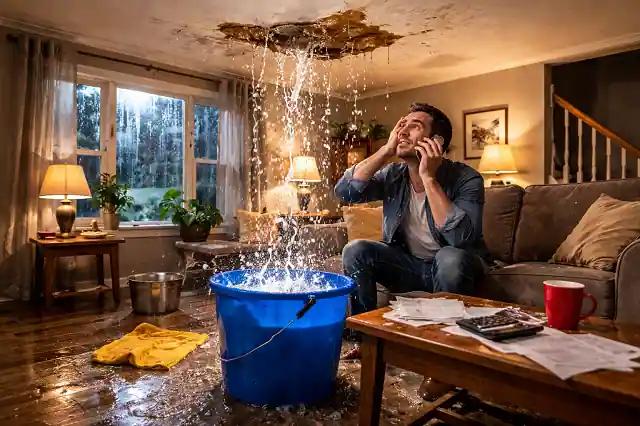
A major roof leak can become an emergency when water is entering living areas or threatening the structure. A burst pipe can become urgent when it is causing flooding or substantial water damage. Exposed electrical wiring can create a fire or shock hazard. A failed heating system can become a serious safety concern during extreme cold, particularly for vulnerable household members.
Disaster-related damage is another important category. FEMA may provide Home Repair Assistance to eligible homeowners whose homes are damaged by a qualifying disaster in a designated area. FEMA assistance can help pay for repairs needed to make a disaster-damaged home safe to live in, subject to the program’s eligibility requirements. FEMA should therefore be treated as disaster assistance rather than a general emergency repair grant for ordinary maintenance.
Roof Damage
Roof leaks, storm damage, missing shingles, and other failures can allow water to enter the home and cause additional damage. Homeowners needing roof-specific information can read our roof repair and roof replacement grants guide.
Plumbing Problems
Burst pipes, major leaks, sewer problems, and flooding can require immediate attention. For plumbing-specific assistance, see our guide to home repair assistance for leaking water pipes.
Electrical Hazards
Exposed wires, unsafe electrical components, and other hazards should be handled by qualified professionals. Emergency assistance may be available when the repair meets the requirements of a local housing or rehabilitation program.
Heating and Cooling Problems
A failed heating system can create a serious problem during cold weather, while some programs may also support energy-efficiency improvements. The Department of Energy’s Weatherization Assistance Program helps eligible low-income households improve energy efficiency and health and safety, but it is not a general emergency repair grant. You can learn more about heating and cooling assistance and the official Weatherization Assistance Program (WAP).
Structural and Foundation Problems
Foundation movement, damaged structural components, and unsafe walls can create serious safety concerns. Assistance is highly program-specific, so homeowners should obtain a professional assessment when appropriate and review our foundation repair assistance guide.
Water and Mold Damage
Water intrusion can damage walls, floors, ceilings, and other building components. Disaster-related water damage may qualify for assistance when the damage results from an eligible declared disaster and the homeowner meets the applicable requirements. For repair-specific information, see our water-damaged interior repair guide.
What Emergency Home Repair Programs May Cover
Covered work varies by program. A housing rehabilitation program may focus on health and safety deficiencies, while a disaster program may focus on damage caused or worsened by a declared disaster. A weatherization program focuses mainly on energy efficiency and related health and safety improvements.
Possible eligible work can include roof repairs, plumbing repairs, electrical corrections, heating-system work, structural repairs, accessibility modifications, weatherization improvements, and disaster-related repairs when the work meets program rules.
Routine cosmetic improvements are less likely to qualify as emergency assistance. Painting for appearance, luxury remodeling, decorative upgrades, and nonessential improvements should not be assumed to qualify simply because a homeowner needs financial help.
Who Offers Emergency Home Repair Assistance?
| Assistance Source | Best For | Important Requirement |
| Local and State Housing Programs | Emergency housing repairs and rehabilitation | Rules, income limits, and funding vary by location |
| USDA Section 504 | Eligible rural homeowners needing repairs or health and safety improvements | Very-low income, rural eligibility, ownership, and other program requirements |
| HUD HOME | Locally administered affordable housing rehabilitation | Participating jurisdictions determine eligible activities and assistance |
| Weatherization Assistance Program | Energy-efficiency and related health and safety improvements | Income and state/local program requirements apply |
| FEMA | Eligible disaster-damaged homes | Qualifying disaster, designated area, inspection, and other FEMA requirements |
| Nonprofit Organizations | Community-specific repair and housing assistance | Eligibility and service area vary by organization |
Local and State Housing Programs
Local governments and state housing agencies often administer housing rehabilitation, emergency repair, or community development programs. These programs may have income limits, owner-occupancy requirements, property standards, geographic restrictions, and funding limits.
Our State Home Repair Grants guide can help you identify the state-level starting point before you search for a city or county program.
USDA Section 504 Home Repair Loans and Grants
The USDA Section 504 Home Repair program provides loans to very-low-income homeowners in eligible rural areas and grants to eligible homeowners age 62 or older who cannot afford to repay a loan and need to remove health and safety hazards. USDA also requires applicants to meet other program conditions, including ownership and occupancy requirements.
The USDA Rural Development program can therefore be an important option for eligible rural homeowners, but it should not be described as a universal emergency grant. Read our Section 504 Home Repair Grants guide and our rural home repair grants guide for more information.
HUD and Local Housing Rehabilitation Programs
HUD’s HOME Investment Partnerships Program provides funding to states and localities that can use HOME funds for activities including rehabilitation of affordable housing. Because participating jurisdictions administer these funds, homeowners should not assume that a national HUD application will provide a direct emergency repair grant.
For broader information, see our government home renovation grants guide and the official HUD HOME program information.
Weatherization Assistance Program
The Department of Energy’s Weatherization Assistance Program is administered through states and local organizations. It helps eligible low-income households improve energy efficiency while addressing related health and safety concerns. It can be useful for qualifying heating, insulation, and building-envelope needs, but it should not be presented as a general emergency repair grant. Learn more from the official Weatherization Assistance Program and its application guidance.
FEMA Disaster Assistance
FEMA may provide home repair assistance to eligible homeowners whose homes are damaged by an eligible disaster in a designated area. FEMA’s requirements can include ownership, occupancy, identity verification, a qualifying disaster declaration, inspection findings, and the absence of insurance coverage for the applicable damage.
For disaster-related assistance, use the official FEMA website and the Disaster Assistance portal rather than relying on third-party claims that every emergency repair automatically qualifies.
Nonprofit Organizations
Nonprofit organizations may provide repairs, labor, materials, accessibility modifications, or other forms of housing assistance. Availability can vary sharply by community, and many organizations have their own eligibility rules and service areas.
See our Nonprofit Home Repair Grants guide for more options.
Who Can Qualify for Emergency Home Repair Assistance?
There is no single eligibility rule for every emergency repair program. Common factors include household income, homeownership, owner occupancy, property location, the type and severity of the repair, age, disability, veteran status, rural eligibility, and whether the problem creates a health or safety risk.
Our Home Repair Grant Eligibility Guide explains the general qualification factors in more detail.
Low-Income Homeowners
Many housing repair programs prioritize households with limited income because the purpose of the assistance is to address housing conditions that the homeowner cannot reasonably afford to correct. Read our home repair grants for low-income families guide for income-based assistance.
Senior Homeowners
Some programs provide assistance specifically for older homeowners, particularly when the goal is to remove health and safety hazards. USDA Section 504 is one example, but the grant is limited to eligible homeowners age 62 or older who meet the program’s other requirements and cannot afford to repay a loan.
You can also read our home repair grants for senior citizens guide.
Disabled Homeowners
Homeowners with disabilities may qualify for assistance that addresses urgent repairs as well as accessibility needs. Potential modifications can include ramps, wider doorways, bathroom safety improvements, and other work when permitted by the program.
See our home repair grants for disabled homeowners guide for disability-focused assistance.
Veterans
Veterans may have access to dedicated federal, state, nonprofit, or VA-related housing resources depending on their circumstances and the type of repair. Read our home repair grants for veterans guide for more information.
Rural Homeowners
Homeowners in eligible rural areas may have access to programs that are not available in the same form in urban areas. USDA Section 504 is one of the most important rural repair programs to investigate.
Basic Eligibility Requirements
Income is a common eligibility factor, but it is not the only one. Programs may also require the applicant to own and occupy the property, live within an eligible service area, meet property standards, and demonstrate that the repair fits the program’s purpose.
Some programs require the repair to address a health or safety hazard. Disaster programs can impose additional rules connected to the declared disaster and the condition of the home.
Do not assume that receiving SSI, being a senior, being a veteran, or living in a rural area automatically guarantees an emergency repair grant. Those factors may help with eligibility for some programs, but every program has its own rules.
Where to Apply for Emergency Home Repair Grants
Choose your starting point based on the cause of the problem. If the damage resulted from a qualifying declared disaster, start with FEMA and other disaster-recovery programs. If you live in an eligible rural area and need health or safety repairs, check USDA Rural Development. For ordinary housing emergencies, contact your city, county, or state housing agency. If government programs are unavailable, also check nonprofit organizations serving your area.
Nonprofit organizations can be another route when government funding is unavailable, fully committed, or not suitable for the repair. Our nonprofit assistance guide can help you identify this category of help.
How to Apply for Emergency Home Repair Assistance
Step 1: Identify the Emergency
Write down exactly what is wrong, when the problem started, and how it affects the safety or habitability of the home. Take clear photographs from safe locations and keep any inspection reports, contractor estimates, or disaster documentation you already have.
Step 2: Gather Your Documents
Prepare government identification, proof of income, proof of homeownership, proof of residence, photographs of the damage, and repair estimates when available. A program may request additional documents based on its eligibility rules.
Step 3: Find Matching Programs
Search for programs based on your location, income, homeownership, repair type, and the cause of the damage. Our Home Repair Program Finder 2026 can help you organize where to look first.
Step 4: Contact the Administering Agency
Ask whether the program currently accepts applications, whether emergency cases receive priority, whether an inspection is required, whether the work must be approved before construction begins, and whether the program pays contractors directly.
Step 5: Submit the Application
Complete the application carefully and provide every document requested. If the program allows online applications, save a copy of your submission and confirmation number. If you apply in person, keep copies of everything you submit.
Step 6: Complete the Inspection
Some programs require an inspection before approving assistance. Make the property available as instructed and provide the inspector with relevant information about the emergency without exaggerating the condition.
Step 7: Start Approved Repairs
Do not assume that you can begin work and receive reimbursement later. Some programs require prior approval, approved contractors, specific repair standards, or other conditions. Follow the program’s instructions before signing a major repair contract.
Documents You May Need
Common documents may include:
- Government-issued identification
- Proof of income
- Proof of homeownership
- Proof of residence
- Photographs of the emergency
- Repair estimates
- Insurance information
- Disaster documentation, when applicable
How to Improve Your Chances of Approval
Apply to programs that actually match your circumstances rather than submitting the same application everywhere. Explain the safety or habitability problem clearly, provide complete documentation, and follow up through the agency’s normal contact process.
If your repair is connected to a declared disaster, keep all disaster-related records. If your repair is connected to income-based housing assistance, keep current income and household information available.
Do not pay a person who promises guaranteed government grant approval. Government and nonprofit programs can have limited funding, waiting lists, inspections, and eligibility requirements.
How Fast Can Emergency Home Repair Help Arrive?
There is no reliable nationwide timeline such as 24 to 72 hours for all emergency repair grants. Response time depends on the agency, funding source, repair severity, inspection requirements, application volume, location, and whether the program is designed for emergencies.
Local nonprofits may sometimes respond faster than larger government programs, but homeowners should not assume a specific approval period without confirming it with the administering organization.
If the home is unsafe, protect the occupants first. Emergency financial assistance should not be treated as a substitute for immediate safety measures or emergency services when there is a serious danger.
What If You Do Not Qualify for a Grant?
A grant denial does not necessarily mean that no help is available. Depending on your situation, you may be able to consider a low-interest repair loan, nonprofit assistance, local charity support, payment arrangements with a contractor, insurance coverage, disaster assistance, or another housing program.
HUD provides information about financing options for home repairs, including FHA-insured programs and Title I property improvement loans. Review financing carefully and understand interest, fees, repayment terms, and the consequences of using your home as collateral before accepting a loan.
You can also read our guide on how to fund a $10,000 home repair project for a broader funding strategy.
Emergency Repair Help by State
Emergency repair assistance can vary substantially by state and local jurisdiction. State agencies may administer housing rehabilitation funds, while cities and counties may operate their own emergency repair programs.
Start with our State Home Repair Grants 2026 guide, then check your city or county housing department for programs that specifically accept emergency repair applications.
Emergency Home Repair Costs
Emergency repair costs vary widely by location, material prices, labor rates, damage severity, and the size of the home. A minor plumbing repair can cost far less than a major roof, foundation, electrical, or structural repair.
Because repair costs change over time, homeowners should obtain a current written estimate instead of relying on a generic national cost range. A written estimate can also help an assistance agency understand the scope of the requested work.
If you are concerned about the financial effect of delaying repairs, see our cost of delayed home repairs statistics guide.
Emergency Home Repair Grants: Key Takeaways
Emergency home repair assistance is designed to help eligible homeowners address serious repair problems, but there is no single program that guarantees free money to every homeowner.
The strongest starting point is to identify the emergency, document the damage, determine whether the problem is related to ordinary housing deterioration or a declared disaster, and then search for programs that match your income, location, homeownership status, and repair needs.
USDA Section 504 can be important for eligible rural homeowners, HUD-funded housing rehabilitation may be administered locally, DOE’s Weatherization Assistance Program can help eligible households with energy-efficiency and related health and safety improvements, FEMA can assist eligible homeowners after qualifying disasters, and nonprofit organizations may provide additional repair support.
Why You Should Trust This Guide
Last Updated: September 3, 2026
Reviewed By: HomePropertyGrants Editorial Team
Experience: This article focuses on emergency home repair funding and the types of programs homeowners can explore when an urgent repair affects the safety or condition of a home.
Expertise: Program descriptions and application guidance are organized around official federal program information and the eligibility factors commonly used by government and local funding programs.
Authoritativeness: Major federal program information is supported by official government sources, including federal agencies responsible for the programs discussed.
Trustworthiness: Funding availability, eligibility, and covered repairs can vary by program and location. Readers should confirm current requirements with the administering agency or organization before applying.
Helpful Decision Support: The article compares different emergency repair funding sources, explains which situations may fit them, and gives homeowners practical steps for identifying the most relevant program.
Frequently Asked Questions
How fast can I get emergency home repair help?
There is no universal approval time. Local programs may sometimes respond quickly, while programs that require inspections, income verification, or other reviews can take longer.
Are emergency home repair grants really free?
A true grant generally does not have to be repaid when the recipient follows the program rules. However, some emergency repair assistance is provided as a loan or a combination of grant and loan assistance.
Can I apply online?
Some programs accept online applications, while others require an application through a local housing agency, nonprofit organization, USDA office, or disaster assistance system.
What repairs may qualify?
Depending on the program, eligible work may include repairs involving roofs, plumbing, electrical systems, heating, structural safety, accessibility, weatherization, or disaster damage. The repair must meet the program’s specific requirements.
How do I find emergency repair help near me?
Start with your city or county housing department, state housing agency, USDA Rural Development if you live in an eligible rural area, FEMA if the damage resulted from a qualifying declared disaster, and local nonprofit organizations.
What if I do not have every document?
Contact the administering agency and ask which documents are required before submitting the application. Do not assume that missing documentation automatically makes you ineligible because requirements differ between programs.
Can veterans, seniors, disabled homeowners, or low-income families receive emergency repair assistance?
They may qualify for programs that give priority or provide specialized assistance, but eligibility is never automatic. Applicants still need to satisfy the specific program’s income, ownership, location, repair, and other requirements.
Final Conclusion: Find the Right Emergency Repair Funding
An emergency home repair can become more expensive when a serious problem is left unresolved. If your home has an urgent roof, plumbing, electrical, heating, structural, accessibility, or disaster-related problem, document the condition and begin looking for assistance as soon as it is safe to do so.
Start with programs that match your situation instead of applying randomly. Check local and state housing resources, USDA Section 504 when rural eligibility applies, FEMA after qualifying disasters, DOE weatherization assistance for eligible energy-related needs, and nonprofit organizations that serve your community.
Use the Home Repair Program Finder 2026 to decide where to apply first, and keep complete records of every application, inspection, estimate, and communication.

Arthur Pendelton is a senior housing policy researcher and public welfare analyst with over eight years of experience tracking federal, state, and non-profit residential repair programs. He specializes in statutory grant frameworks, including USDA Section 504 Rural Housing, the Department of Energy’s Weatherization Assistance Program (WAP), and municipal HUD Community Development Block Grants (CDBG). Arthur systematically audits Federal Register publications and Title 7/42 CFR regulatory updates to provide low-income homeowners, seniors, and military veterans with accurate, barrier-free application guidance.