
Free Home Elevation Grants For Homeowners in 2026: Funding & Eligibility
Home Elevation Grants for Homeowners in 2026 help eligible communities pay to lift up houses that flood a lot. This helps keep houses from getting ruined in the future. The government does not usually hand this money directly to the homeowner. Instead, states, tribes, counties, and cities ask for the money first. Then, homeowners join the town’s big project.
Lifting a house is not like fixing a normal broken window. The goal is to stop future floods from ruining your things. Workers raise the whole house higher. They make the foundation stronger. They protect the power box and pipes. They also make sure the work follows the city flood rules.
This guide explains how house lifting grants work in 2026. You will learn which federal programs pay for these jobs. We will show you what money is open right now and what is closed. You will also learn who can get the money, what papers to get ready, and exactly where to start.
A big program called FMA Swift Current is open right now on Grants.gov. It has $600 million to give out. It closes on January 31, 2028. The government gives this money to towns, not straight to you. Two other big programs (the normal FMA and BRIC) closed in the summer of 2026.
What Are Home Elevation Grants?
Home elevation grants are special money programs that pay to lift up houses sitting in flood zones. Instead of just paying to clean up a muddy mess after a storm, this money tries to stop the mess from happening again.
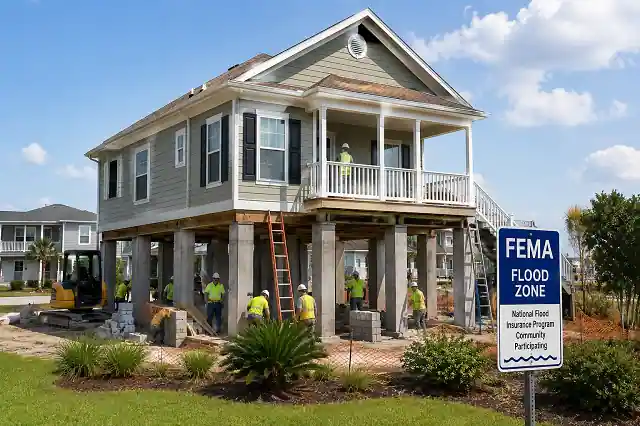
Approved lifting jobs can include raising the house higher than its old foundation. Builders can make a brand new foundation or fix the old one. Workers also have to hook the power and water back up safely. They must fix the yard and follow all the strict city flood rules.
Federal flood money is usually handled by your local town leaders. If you want to lift your house, you must start by calling your local city hall, the town flood office, the emergency desk, or your state office.
If your house just needs normal repairs that have nothing to do with flooding, you should read our home repair grants guide. Flood lifting money and normal repair money are two totally different things.
A house lifting grant tries to stop future storm damage. It is totally different from emergency disaster money that helps you buy food or fix immediate damage right after a bad flood.
Why Lifting Your House Matters
Dirty floodwater can ruin your house foundation, electric wires, heaters, air conditioners, floors, and walls. If your house floods over and over, you end up fixing the same things again and again. This does not fix the real danger.
Lifting the house changes where the water goes. When the house is high enough, the dirty floodwater just flows underneath the living rooms. It does not go inside where your family sleeps.
FEMA says that lifting your house can also change how much you pay for flood insurance. But you should not assume your insurance bill will automatically drop. Insurance companies look at many different things before they set your price.
| Why It Helps | What It Means For You |
|---|---|
| Less Danger | Your living rooms sit way higher than the dirty floodwater. |
| Less Future Damage | Water cannot reach your important house parts or your bedrooms easily. |
| Stronger House | Your house is much safer for the next big storm. |
| Insurance Help | A higher house might drop your insurance bill, depending on your home. |
| Following City Rules | An approved job meets all the strict city flood safety rules. |
Flood Danger Facts Homeowners Should Know
The government says that 99% of all counties in America have flooded in the last 20 years. They also say that people asking for flood insurance money got about $68,000 between 2016 and 2021. This shows how crazy expensive a bad flood can be. But these numbers do not mean you automatically get money to lift your house.
- 99% of all U.S. counties had a flood in the last 20 years.
- $68,000 was the normal insurance payout between 2016 and 2021.
- Flood insurance and lifting grants are totally different things. You need to understand both before planning a huge house project.
If you want to know what happens when you wait too long to fix your house, read our cost of delayed home repairs guide. It shows the real dangers of waiting to fix problems.
Federal House Lifting Grant Programs in 2026
Several federal programs can help stop flood danger, but they all have different rules and deadlines. You should never guess that a program is open just because you read an old article online.
| Program Name | Main Goal | 2026 Status or Big Fact |
|---|---|---|
| Flood Mitigation Assistance (FMA) | Drop flood danger for allowed houses and towns. | The normal FY2024 program closed on August 6, 2026. |
| FY2024 FMA Swift Current | Move flood money faster after a huge disaster. | It is open and closes on December 30, 2026. |
| FY2026 FMA Swift Current | Move flood money fast after bad floods. | It is open with $600 million and closes on January 31, 2028. |
| Hazard Mitigation Grant Program (HMGP) | Helps fix things for the long term after a huge disaster. | It is only open if the President declares a major disaster. |
| Building Resilient Infrastructure and Communities (BRIC) | Makes towns stronger before a disaster hits. | The FY2024-2025 program closed on July 23, 2026. |
| CDBG Disaster Recovery (CDBG-DR) | Helps towns rebuild long-term using HUD money. | It is only open if your town gets a special disaster budget. |
The FY2024 FMA Swift Current program is very important to watch. The official page says it closes on December 30, 2026. Homeowners should call their state, tribe, or local town office to see if their house fits the rules for this specific disaster money.
The newer FY2026 FMA Swift Current program is open right now with $600 million. Grants.gov says states and Native American tribes are the ones who can apply for this money. Local towns have to ask the state first. There is also a rule about sharing the cost. You should check the official FY2026 FMA Swift Current page before trusting any old rules.
The normal FY2024 FMA program closed on August 6, 2026. It paid to lift houses if they met the rules. You can review FEMA’s Flood Mitigation Assistance facts for the newest rules.
The FY2024-2025 BRIC program closed on July 23, 2026. Because it is closed, you cannot send in a form right now unless the government announces a brand new opening. Check the official BRIC page to see if the status changes.
FEMA money programs open and close all year long. Never trust an old deadline, money limit, or rule without checking the real FEMA and Grants.gov websites first.
Flood Mitigation Assistance and Lifting Houses
Flood Mitigation Assistance, or FMA, is one of the biggest federal programs for stopping flood danger. FEMA says this program pays to lift houses, rebuild safely, or buy land to turn into open space.
FMA is not a simple check handed to a homeowner. Allowed towns and states make a huge project plan first. Then, homeowners can ask to join the town’s big plan.
FEMA also says you might have to share the cost of the job. The exact rules depend on which program is open at the time.
Homeowners must call their local office. Ask if the town is collecting houses for an FMA project right now. Ask if your house fits the rules.
FMA Swift Current in 2026
FMA Swift Current is a super important program to watch in 2026. The FY2026 opening says it runs until January 31, 2028. This program tries to move money much faster after a flood disaster.
The government runs this program through approved towns and states, not straight to homeowners. You must call your state or local emergency desk to see if your house can join their approved project.
Call your county, city, tribe, or state emergency desk and ask: “Is our town collecting homeowner lifting projects for FMA Swift Current or any other FEMA program right now?”
Hazard Mitigation Grant Program and Lifting Houses
The Hazard Mitigation Grant Program, or HMGP, helps pay for long-term safety fixes after the President declares a major disaster. FEMA rules clearly say that lifting a house is an allowed job.
HMGP forms are sent in by towns or states, not by you alone. FEMA rules say local towns can gather homeowner projects and send them up to the state office.
Because HMGP only happens after a major disaster, there is no one deadline for the whole country. The deadline depends on the exact storm, the state, the tribe, and the local town rules.
If a bad storm just hit your house, you should also read our emergency home repair grants guide. This helps if you need fast fixes right now while you wait for long-term funding.
What Happened to BRIC in 2026?
We must be very careful when talking about the BRIC program. The FY2024-2025 BRIC opening had $1 billion to spend, but it officially closed on July 23, 2026.
This means we cannot tell homeowners that BRIC is taking forms right now. The government must announce a brand new opening before we can say the program is active again.
The smartest thing to do is use the official FEMA BRIC page and Grants.gov to check for new BRIC openings in the future.
Who Can Get House Lifting Money?
The rules change for every program. A homeowner must pass rules about owning the house, the true flood danger, and city rules. They must also pass insurance, building, and natural hazard safety rules before a lifting project gets a “yes.”
For FMA projects, what kind of house you have and your flood insurance really matter. This is because the FMA program works closely with the National Flood Insurance Program. You must always read the newest grant rules to see the exact demands.
HMGP works differently because it is only used after a major disaster. It focuses on long-term safety planning after a storm hits.
Local and state programs might also look at other things to pick who goes first. They might look at how many times your house flooded, how bad the damage was, and what flood zone you live in. They also look at whether the job is worth the money, if you live in a struggling town, and what safety goals the city wants to fix first.
- You must own the house.
- You must live in a town that is approved or is joining the program.
- You must have proof of flood danger or past flood damage.
- You might need flood insurance if the program demands it.
- The building plan must make sense and be safe.
- The job must pass nature and history safety rules.
- The job must match what the city and state want to fix.
- A government office must agree to sponsor your house.
For a bigger list of rules about income, ownership, age, disabilities, and location, read our home repair grants eligibility guide. Just remember that normal house repair rules and FEMA flood safety rules are not the same.
Do Low-Income Families Get Picked First?
FEMA flood programs do not use one simple income rule for the whole country. But state and local programs might use income to give some houses a better score. Some money programs give extra help to struggling or poor neighborhoods.
Low-income families should ask their local flood office if family income changes their project score. They should also ask if the city can help pay for the homeowner’s share of the bill.
Homeowners looking for normal house repair money based on income can also read our home repair grants for low-income families guide.
What Papers Should Homeowners Get Ready?
Getting your papers ready early makes things much easier when the city asks for them. The exact papers you need change depending on the program and your house.
- Proof that you own the house.
- House address and land facts.
- Flood insurance papers if you have them.
- Old flood insurance claim papers.
- Photos showing old flood damage.
- A current elevation certificate, if you have one.
- Land measurements or building papers when they ask.
- Early guesses on how much the job will cost.
- Old disaster money and repair receipts.
- City permits or inspection papers when needed.
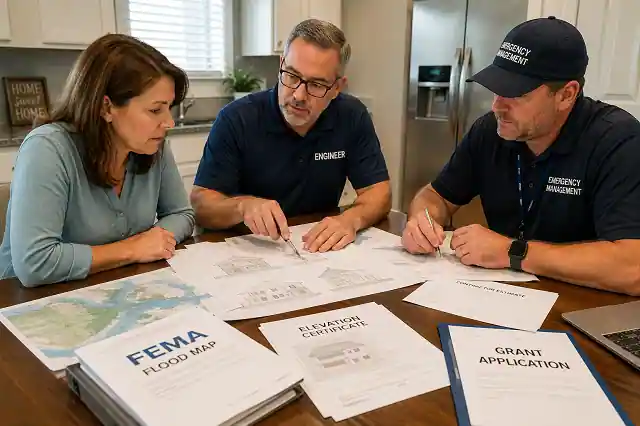
An elevation certificate is a special paper showing how high your house sits and facts about your flood zone. FEMA says you can ask your local flood boss if the city already has one for your house. If they do not, and the program demands one, a trained surveyor, engineer, or architect can make one for you.
How to Check Your Flood Zone
Before paying an engineer, homeowners should learn about their real flood danger. You must understand the local flood rules that could change how you lift your house.
The FEMA Flood Map Service Center is the real government place to find flood danger facts. Homeowners can type in their address to find flood maps and other facts for their exact house.
You should also call your local flood boss. City workers can tell you if the town has extra rules for lifting, extra height demands, or strict building permit rules that are not on the big federal map.
- Search for your house on the FEMA Flood Map Service Center.
- Write down your current flood zone and map facts.
- Ask the local flood boss about the Base Flood Elevation rules.
- Ask if the city already has an elevation certificate for your house.
- Ask if the city has extra height or major repair rules.
How Much Money Can Lifting Grants Give?
There is no one magic number for house lifting grants. The money you get depends on the program, the building plan, allowed costs, engineering rules, the federal share, how much money is left, and if the job is worth the high cost.
Possible job costs can include engineers, house designers, land measuring, fixing the foundation, actually lifting the house, fixing pipes and wires, fixing the yard, permits, inspections, and other costs the program says yes to.
| Possible Cost | Will They Pay For It? |
|---|---|
| Engineers and planning | Maybe, if the program says yes. |
| Land measuring | Maybe, if the job demands it. |
| Lifting the house | Yes, for approved lifting jobs. |
| Foundation fixes | Maybe, depending on the approved plan. |
| Moving or hooking up pipes | Maybe, when the job demands it. |
| Fancy remodeling | No, this is not part of flood safety. |
| Building without a “yes” | Never think they will pay you back. |
Homeowners who need to pay for repairs that are not part of grants can read our guide on how a $10,000 home repair project can be funded. It shows a bigger list of grants, help, loans, and other money sources.
Never think they will pay you back for work done before they said yes. Ask the office about early costs, nature checks, buying parts, permits, building rules, and allowed costs before signing a big contract.
Checking if the Cost is Worth the Benefit
Making sure the job is worth the money is a huge deal for FEMA. They look at whether the money they spend now will save them from paying for future flood damage.
This means a homeowner cannot just look at the building price. The office also looks at old flood damage, what future floods will destroy, whether the plan makes sense, what the engineers say, and other rules in the grant.
Having a perfect stack of papers helps the office understand your house’s history and how much lifting will actually help.
- Write down old flood events.
- Keep insurance claim papers.
- Save photos and repair receipts.
- Keep correct ownership papers.
- Get real builder estimates when they ask.
- Keep engineer papers neat and organized.
- Answer the office fast when they call or write.
How State and City Offices Run Lifting Grants
Federal house lifting money usually gets to homeowners through state, tribe, county, or city programs. It rarely comes straight from a federal form you fill out. The local office decides how they find houses, how they score projects, what papers they demand, and when they collect your forms.
Start by calling your county or city emergency desk, your local flood boss, or the state emergency office. Ask if your town is making a plan for Flood Mitigation Assistance (FMA, Swift Current, HMGP, or any other open flood money.
| Office or Agency | What to Ask Them |
|---|---|
| County or city emergency desk | Are you collecting homeowner lifting forms for a FEMA grant right now or soon? |
| State emergency office | Which FEMA flood programs are open, and how does our town send in a project? |
| Local flood boss | Does my house pass the local flood, height, and permit rules? |
| Housing or community office | Is there disaster rebuilding or housing money to fix normal things outside the lifting job? |
| Tribal government or emergency desk | Do any Tribal flood or housing programs fit my house? |
Do not wait for a homeowner grant form to pop up online. Call the local or state flood office and ask if they are collecting houses for a new federal flood plan.
How to Apply for House Lifting Grants in 2026
Applying to lift your house means you must work closely with the town office. It is not like a simple homeowner form. FEMA flood projects move through a government office and require long checks for building rules, natural hazards, engineering, and cost math.
- Check your flood danger. Use the FEMA Flood Map Service Center and talk to your local flood boss.
- Find the right program. Ask if FMA, FMA Swift Current, HMGP, CDBG-DR, or another local program fits your house.
- Call the local sponsor. Talk to your county, city, Tribal government, or state emergency office.
- Gather your papers. Get your ownership, insurance, flood damage, house facts, and engineer papers ready.
- Finish the hard checks. Give them land measurements, height facts, engineer reports, nature papers, or anything else they demand.
- Send it through the town. Follow the exact steps the town office tells you to take.
- Wait for a written “yes”. Do not start any big construction until the program and town give you a real, written approval.
Call the local office even if there is no active grant open right now. Towns often collect house information early to get ready for future FEMA grants.
If you need general grant advice, our home repair grant application guide explains normal ways to prepare. But remember, FEMA flood projects demand a lot more difficult building papers.
Common Reasons House Lifting Jobs Get Delayed
Lifting projects take a long time because they are much harder than normal house repairs. Engineering, flood rules, nature checks, house papers, cost math, hiring builders, and waiting for money can all slow things down.
| Possible Problem | How to Stop It |
|---|---|
| Missing ownership papers | Have current house ownership papers ready. |
| Missing old flood damage proof | Keep insurance claims, photos, bills, and repair notes. |
| Engineering problems | Use trained, smart engineers when the job demands it. |
| Nature and safety checks | Answer the office super fast when they ask for things. |
| Confusing building plan | Make a very clear plan with a real, honest cost estimate. |
| Not enough money | Keep calling the local office about future money openings. |
Homeowners who have bad water damage can also read grants to fix water-damaged walls and ceilings. This helps you find money just for repairs. If your house has other huge safety dangers, check out our home hazard removal grants guide.
Never pay a company that promises they can get you FEMA money. Always check real program names, deadlines, and rules on real government websites like FEMA, Grants.gov, or your city office.
Lifting Your House and Flood Insurance
Lifting your house can change how much you pay for flood insurance. But you should not guess how much money you will save before the job is done.
The government sets insurance prices using many different facts about your house. FEMA says they look at the house height, the first-floor height, how close you are to the water, the kind of flood, what the house is made of, and how much it costs to rebuild.
An elevation certificate gives you exact facts about your house height. FEMA says you do not always need this paper to buy insurance anymore. But it is still very helpful for city rules. It might also help your insurance agent find out if a higher house means a cheaper bill.
Ask your flood insurance agent to check your real flood danger and price after the house is lifted. Do not guess that lifting the house by a few feet automatically makes your bill super cheap.
More Help for Seniors, Veterans, Disabled People, and Country Families
FEMA gives money mostly based on how bad the flood danger is. They do not just give money because of your age, income, or if you are a veteran. But state and local towns might give you extra points if your family really struggles.
Older homeowners who need normal repair money can read home repair grants for seniors. Homeowners with disabilities can read home repair grants for disabled homeowners if they need walking access fixes outside the big lifting job.
People getting SSI can check our home repair grants for SSI recipients guide for other money choices. Veterans can read home repair grants for veterans for normal repair money.
Disabled veterans with walking access or repair needs can read home repair grants for disabled veterans. Country homeowners can also check out home repair grants for rural homeowners when they need money outside the flood project.
Native American homeowners should ask if Tribal flood and housing programs cover their house. Our home repair grants for Native American homeowners guide talks about normal repair money. This is totally different from FEMA flood money.
| Homeowner Type | Good Question to Ask |
|---|---|
| Senior homeowner | Does the local flood program give extra points for age or struggling families? |
| Disabled homeowner | Can my walking access needs be added to the job, or do I need a different grant? |
| Veteran | Is there separate veteran money for repairs outside the big flood job? |
| Low-income family | Does my family income give me extra points or help me pay the homeowner share? |
| Country homeowner | Is there state, Tribal, USDA, or local country housing money I can use? |
Smart Fixes to Stop Flood Damage
Lifting your house works much better when the rest of the yard is ready for a flood. Homeowners should talk about smart fixes with trained engineers, builders, and city officials.
- Lift the heaters and air conditioners if you can.
- Protect or move the electrical boxes so they stay dry.
- Use special building materials that do not easily absorb water.
- Put in special flood vents if the city demands it.
- Protect the water pipes and big house machines.
- Follow the strict city height and flood zone rules.
- Keep paying for good flood insurance.
- Check the foundation and pipes right after a huge storm.
Homeowners planning normal house repairs should not think they can just add those to the FEMA flood-damage job. You usually need totally different money for unrelated work.
If you need to find money from many different programs, use the Home Repair Program Finder. It is a great starting place to see all the different repair money out there.
How to Avoid House Lifting Grant Scams
Flood money brings out bad scammers, especially after a huge disaster. Be very careful if a company promises you will get approved, asks for a huge upfront fee, or says they have secret access to federal grant money.
FEMA flood money is handled through real, official government steps. Homeowners must check the program name, the city sponsor, the deadlines, and the rules themselves.
- Promising 100% FEMA approval.
- Asking for big cash fees before they fill out the form.
- Pushing you hard to sign a building contract right now.
- Asking for your secret passwords or numbers through a random text message.
- Giving you a deadline that is nowhere on FEMA, Grants.gov, or any real government page.
Real Government Places for House Lifting Grants
Because flood programs and deadlines change all the time, you must only trust real government websites.
- FEMA Hazard Mitigation Assistance — real federal flood programs and rules.
- Grants.gov — real federal money openings and official notes.
- National Flood Insurance Program and FloodSmart — real flood insurance and safety facts.
- FEMA Flood Map Service Center — the real, official flood maps.
- HUD Community Development Block Grant Disaster Recovery — long-term rebuilding money handled by states and cities.
Common Questions About House Lifting Grants in 2026
Does FEMA hand house lifting money right to me?
Rarely. FEMA gives the money to the approved town, state, or tribe. You must join the town’s project to get the money.
Who can get house lifting help?
It depends on the exact program. It can involve your real flood danger, your house facts, your town’s rules, insurance demands, engineer checks, cost math, and what the city wants to fix first.
Is the FY2026 FMA Swift Current program open?
Yes. The current FY2026 FMA Swift Current program says it is open on Grants.gov until January 31, 2028. It has very strict rules on who can ask and how to share the cost. You must call your town office to see if your house can join.
Is the normal FY2024 FMA program still taking forms?
No. The FY2024 normal FMA program closed on August 6, 2026. Future FMA programs will have totally new deadlines and rules.
Is the BRIC program open right now?
The FY2024–2025 BRIC program closed on July 23, 2026. Homeowners must wait for a brand new official opening before thinking BRIC is taking forms again.
How much money can I really get?
There is no one magic number for the whole country. The money changes based on the program, the building plan, allowed costs, the federal share, how much money is left, and the engineer’s review.
Does my house have to be in a flood zone?
Not every program uses the exact same rules. But flood danger is the main point of flood money. The program will probably demand proof of flood danger or other specific damage facts.
Will lifting my house drop my flood insurance bill?
Maybe. FEMA says the house height and other facts can change the price. But you should not guess exactly how much money you will save before the job is done.
Do I really need an elevation certificate?
Not for everything. An elevation certificate gives exact height facts. It is very helpful for city rules and insurance questions. Call your local flood boss to see if you already have one or if you need to buy one.
Where is the best place to start?
Start by calling your county or city emergency desk, your local flood boss, or the state emergency office. Ask if the town is collecting houses for current or future lifting projects.
Why You Can Trust This House Lifting Grants Guide
Last Updated: August 10, 2026
Reviewed By: HomePropertyGrants Editorial & Research Team
- Real Government Research: Federal program facts are checked against FEMA, Grants.gov, the National Flood Insurance Program, and HUD.
- 2026 Money Checks: We tell you exactly what is open and what is closed. We do not pretend every program has money all year long.
- Homeowner Focus: The guide tells you exactly what steps you can take before calling the city office.
- No Fake Promises: Rules, money, cost sharing, and picking houses all depend on the exact program and the time of year.
- Always Double Check: Homeowners must check the newest rules and deadlines with the real government office before paying any money or signing a contract.
Conclusion
Lifting a house is a great long-term plan to stop flood damage, but it is rarely a simple grant handed right to you. Most federal flood projects move through the state, tribe, county, or city. You must join the local town’s project to get the help.
In 2026, homeowners must pay close attention to what is actually open. The FY2026 FMA Swift Current program says it is open right now. The normal FY2024 FMA program and the FY2024–2025 BRIC program are both closed. Always check the official federal page before trusting a deadline or a money amount.
Get your ownership papers, old flood damage proof, insurance papers, house records, and engineer papers ready before calling the town office. Most importantly, check the newest program rules with FEMA, Grants.gov, your state emergency office, or your city desk before paying an engineer or signing a big building contract.

Arthur Pendelton is a senior housing policy researcher and public welfare analyst with over eight years of experience tracking federal, state, and non-profit residential repair programs. He specializes in statutory grant frameworks, including USDA Section 504 Rural Housing, the Department of Energy’s Weatherization Assistance Program (WAP), and municipal HUD Community Development Block Grants (CDBG). Arthur systematically audits Federal Register publications and Title 7/42 CFR regulatory updates to provide low-income homeowners, seniors, and military veterans with accurate, barrier-free application guidance.