
Door Replacement Grants 2026: Qualification and How to Apply
When cold air blows through bad door frames and rain rots the wood floors, an old front door becomes a big problem. Energy tests show that one broken door can leak 15% of your home’s hot or cold air. This makes your power bill go up and makes your house unsafe. Paying a builder to take out the old frame, fix the wood, and put in a new door costs between $1,200 and $3,500. For low-income families, disabled people, and older adults, paying that cash is very hard. Finding approved door replacement grants helps homeowners get free repairs from safe public programs without bad bank loans.
Getting help from public home repair programs means following strict government rules. Records show that over 40% of first applications are delayed. This happens when people ask for pretty doors, use builders without a license, or fail the house air test. Government offices never send cash straight to your bank account. Instead, the money goes through city halls or Community Action offices. They hire real builders and check the work when it is done. You can use our free home repair grants guide to see how local programs protect your home.
Approved programs fix the whole house, make it safe, and make it easy to walk through. The money pays for strong steel doors, heavy fiberglass doors, metal storm doors, flat wheelchair doorways, and safe clean-up of old lead paint. The offices help rural seniors, disabled people, and low-income families first.
Free doors are paid for by the U.S. Department of Energy Weatherization Assistance Program (WAP), the USDA Section 504 Rural Housing Repair Program, and city HUD Community Development Block Grants (CDBG). To get money, you must prove you have bad drafts, rotten wood, or broken locks. Never take off your old door or sign a paper with a builder before you get a real approval letter from the office.
Find Your State Weatherization Office
How Workers Test Doors to Give You a Grant
You cannot just ask for a grant to buy a pretty new door. You must prove your door has a broken frame, is not safe, or loses a lot of heat. Office workers check how bad the door is and how much energy the house loses.
Under federal energy rules, trained home checkers put a big fan in your doorway to see how much air leaks out. They use heat cameras and tools to find drafts around bad seals, rotten side wood, and a sunken bottom step. If the test shows your house loses a lot of air through the door, the program pays for a whole new door. If you have really bad drafts, read our home repair grants assistance guide to learn about sealing the whole house.
| Defect Category | Observed Physical Problem | Inspection Standard | Grant Approval Viability |
|---|---|---|---|
| Severe Air Leaks | Light showing around edges, bad seals, drafts | Fan test proves energy waste | 100% Free (DOE Weatherization Program) |
| Rotten Wood Framing | Soft floor under door, bug damage in wood, sunken step | Structural framing breakdown | Priority Help (USDA 504 / City Grants) |
| Safety & Lock Hazards | Cracked door frame, broken locks, kicked-in latch plate | Local Housing Quality Standards | Fast Emergency Approval |
| Mobility Barriers | Door opening under 32 inches, high raised step | ADA Accessibility Guidelines | Approved (Disability Modification Grants) |
| Cosmetic Wear | Peeling paint, small scratches, old look | No drafts or broken wood | They Will Say No Right Away |
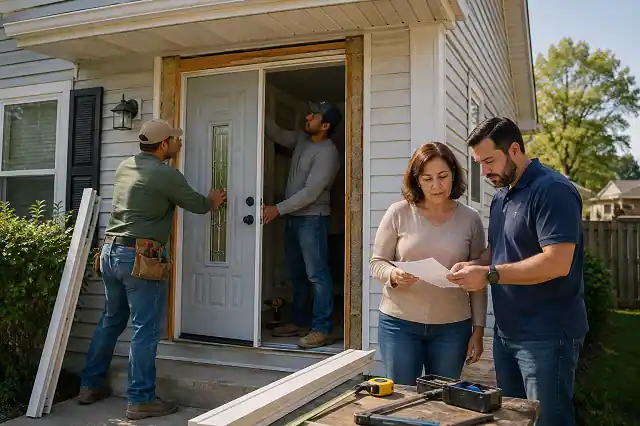
When the test proves your door qualifies for a door replacement grant, local housing offices give a real work order. They do not just add cheap glue. Approved builders put in a brand-new door with fresh insulation, strong metal covers, and solid wood frames.
Federal and State Free Door Programs
Public repair money comes from specific federal and state laws. Knowing which office handles your town stops mixed-up paperwork and cuts down your wait time:
| Funding Agency | Federal Program Law | Local Office to Contact | Grant Terms & Amounts |
|---|---|---|---|
| Weatherization Assistance Program (WAP) | 10 CFR Part 440 | Local Community Action Agencies | 100% Free installation by licensed builders; zero repayment required. |
| USDA Section 504 Home Repair Program | 7 CFR Part 3550 | USDA Rural Development County Offices | Direct cash grants up to $10,000 for rural seniors 62+; 1% loans up to $40,000. |
| Community Development Block Grants (CDBG) | 42 U.S.C. 5301 | City and Town Hall Housing Departments | Forgivable loans or direct emergency repair grants up to $25,000. |
| HOME Investment Partnerships | 24 CFR Part 92 | County Housing Authorities | Loans forgiven completely over 5 to 10 years if you stay in the home. |
| LIHEAP Emergency Heating Aid | 45 CFR Part 96 | County Social Service Departments | Emergency repair or replacement during extreme winter cold. |
When city and county offices approve home repair jobs, they follow clear rules. Pure grant money is totally free as long as you live in the house as your main home. For big jobs like roofing, plumbing, or multiple doors, cities often use a special loan. A part of that loan disappears each year you stay in the house, going away completely after 5 to 10 years.
Door Quality Rules: Energy Star, Metals, and Lead Safety
Public housing offices do not buy cheap, hollow inside doors to put on the outside of your house. Government rules demand strong, heavy-duty doors made to block bad weather, stop drafts, and follow safe building codes.
Energy Star Insulation Rules
New doors paid for by public programs must pass strict insulation tests under Energy Star guidelines. In cold northern areas, solid outside doors must have high insulation ratings with thick foam insides to keep freezing winter air out. In hot southern areas, glass parts must have special coatings to block heavy summer heat. Strong steel doors and thick fiberglass doors are the most common ones paid for by the government.
| Climate Region | Door Glass Style | Maximum Permissible Heat Loss | Solar Heat Resistance Rating |
|---|---|---|---|
| Northern States | Solid Door (No Glass) | High Insulation Standard | No Rating Needed |
| Northern States | Half-Glass Door or Less | Double-Pane Argon Glass | Stops Winter Drafts |
| Central States | Full-Glass Pretty Doors | Insulated Double-Glazed Glass | Balances Summer and Winter Air |
| Southern States | All Glass Door Types | Reflective Glass Coating | Blocks Direct Hot Sunlight |
Moisture Barriers and Metal Sill Flashing
To make sure home repairs last a long time, programs follow strict building rules. Untrained workers often put doors right on bare wood, which causes hidden rot inside the walls and floors. Approved builders must put a tough, angled metal or plastic pan under the bottom of the door. They must also use waterproof tape around the wood opening and add a metal piece on top to push rainwater away from your house.
Lead-Safe Rules for Homes Built Before 1978
If your house was built before 1978, the old door frames and wood trim probably have old lead paint on them. Under federal safety rules and the EPA Lead RRP program, workers must hang heavy plastic sheets, use special vacuums, and not scrape dry paint. Builders must have a real EPA lead-safe license before they take out old wood frames to keep your indoor air safe from lead dust.
2026 Household Income Caps and HUD Income Limits
Getting free public repair help depends on your total family income. Federal rules set income limits using HUD Area Median Income (AMI) charts or the Federal Poverty Guidelines updated every year. Office workers count the money from all adults 18 and older living in the house. This includes paychecks, Social Security, disability money, and monthly pensions.
| Family Size | Extremely Low Income (30% AMI) | Very Low Income (50% AMI – USDA Cap) | Low-Income Limit (80% AMI – City Cap) | Weatherization Cap (200% Poverty Line) |
|---|---|---|---|---|
| 1 Person | $19,250 | $32,050 | $51,300 | $31,300 |
| 2 People | $22,000 | $36,650 | $58,600 | $42,400 |
| 3 People | $24,750 | $41,200 | $65,950 | $53,500 |
| 4 People | $27,500 | $45,800 | $73,250 | $64,600 |
| 5 People | $29,700 | $49,500 | $79,150 | $75,700 |
| 6 People | $31,900 | $53,150 | $85,000 | $86,800 |
| 7 People | $34,100 | $56,800 | $90,850 | $97,900 |
| 8 People | $36,300 | $60,500 | $96,700 | $109,000 |
To prove your family income, you must show your last two years of tax returns, two months of pay stubs, and real bank statements. Fast approvals go to homes that already get Supplemental Security Income (SSI), food stamps (SNAP), or Temporary Assistance for Needy Families (TANF). You can read all the steps in our guide on home repair grants for low-income families.
Office workers also check your cash savings during the income review. They do not count your house value or official retirement accounts. But if you have more than $5,000 to $10,000 in personal checking or savings, you might have to pay a small part of the repair bill.
Special Rules for Mobile Homes and Trailer Houses
Changing outside doors on mobile and factory-built homes takes completely different materials than regular houses. You cannot buy a normal door from a store and put it right into a mobile home without causing bad leaks and broken wood.
- Opening Out and Sizes: Most mobile homes use special doors that are 32 by 76 inches or 34 by 76 inches, not normal 36 by 80-inch doors. In smaller mobile homes, doors often open outward to save inside space and pass fire safety rules.
- Special Metal Edges: Factory-built homes do not have normal thick wood walls. Builders must put in special mobile home doors that have metal edges built in. These edges screw right into the outside of the home and are sealed with strong tape to block rain.
- Two Doors in One: In many factory-built homes, the main door and the outside storm door are made together as one big piece. Weather programs pay to replace the whole piece, making sure it seals tight against water damage.
Door Help Programs by State
State housing offices often mix federal money with local repair programs. The types of grants, the amount of money, and the local offices depend on where you live:
California Home Repair Programs
In California, the state runs the CalHome program with local energy offices. Low-income homeowners can get forgivable loans and free grants to replace rotten doors, add fire-safe doors in wildfire areas, and stop inside drafts. Learn more in our guide on California home repair grants and assistance.
Texas Housing Trust Fund & Amy Young Program
Texas manages repair programs through local councils. Families with a disabled member can get direct grants up to $22,500 through the Amy Young program. This money pays for wide doors, flat doorways, and easy-open handles. Read our full guide on Texas home repair assistance programs.
Florida State Housing Help (SHIP)
Florida’s SHIP program gives direct repair money to all 67 counties for low-income homeowners. Near the ocean, outside doors paid for with public grants must pass strict hurricane rules. The doors must be strong fiberglass made to block high winds up to 140 miles per hour. Read more in our Florida home repair grants guide.
New York RESTORE Emergency Program
New York pays for the RESTORE emergency repair program. Run by local charity groups, RESTORE fixes urgent problems, like broken outside doors, for low-income seniors aged 60 and older. Our report on New York senior home repair programs gives local contact numbers.
Maine Home Repair Program (HARP)
Run by MaineHousing and local Community Action offices, HARP helps low-income homeowners with urgent safety and heating fixes. Because Maine gets very cold, the program focuses on thick, well-sealed front doors to stop inside water pipes from freezing. Read the rules in our Maine home repair grants guide.
North Carolina Urgent Repair Program (URP)
North Carolina gives help through city housing offices. The Urgent Repair Program helps families making below 50% of the county average. They help older homeowners and military veterans first when they need new doors to fix safety hazards, stop drafts, or replace rotten floors. Read the state rules in our home repair grants guide.
Pennsylvania Weather and Emergency Heat Programs
In Pennsylvania, the state watches over energy offices in all 67 counties. The state uses LIHEAP Crisis money and federal weather money to fix bad doors during freezing cold weather. When an older homeowner needs fast help because an outside door is broken, rotten, or leaking cold air, emergency money pays for a quick, free new door.
Ohio Home Weather Program (HWAP)
The Ohio Department of Development watches local Community Action Agencies that manage HWAP money. Ohio works hard to stop wood rot and block drafts in old houses. Workers use computers to check how much fuel you will save, and they pay 100% of the parts and labor for families making at or below 200% of the poverty line.
Priority Help: Seniors, Veterans, and Rural Families
Government rules put vulnerable homeowners first when they cannot safely fix broken doors themselves:
Senior Citizens Aged 62 and Older
The USDA Section 504 program gives free door replacement grants up to $10,000 for rural homeowners aged 62 or older. The house must have a real health or safety danger under federal rules. Loose locks, rotten floor wood, and drafty doors qualify for help. Seniors who cannot pay for a loan get free grants with no monthly bills. Read more in our home repair grants for senior citizens guide and our Section 504 home repair grants page.
Disabled Homeowners and Accessibility Changes
Homeowners with physical problems walking can get grants to remove barriers. Public programs pay to make doorways at least 32 inches wide, put in flat bottoms under 1/2 inch, and add easy lever handles that follow ADA rules. Office workers often say yes to wheelchair ramps and special door hinges. Check the full rules in our home repair grants for disabled homeowners manual and our list of home improvement grants for disabled people.
Military Veterans and Surviving Spouses
Veterans dealing with physical injuries from their service can mix local repair money with VA SAH and HISA grants to put in automatic door systems. Digital locks without keys, thick fiberglass doors, and wide second doors can be fully paid for. Read our manual on home repair grants for veterans for specific VA details.
Rural Towns and Farm Areas
People living in small farming towns deal with bad weather damage. Through USDA Rural offices, rural families can get repair grants to fix broken storm doors, drafty kitchen doors, and rotten basement doors. Explore the local rules in our guide to home repair grants for rural homeowners.
Building Permits and Local Housing Checks
Every outside door paid for with public grant money must pass strict local building rules. You cannot just hire an untrained worker to put in a door without getting official papers:
- Required City Permits: Taking out a whole door frame, making the hole in the wall bigger, or changing the wood inside the wall needs a real city building permit. The approved builder must get this permit from your city or county before they tear anything down.
- Safe Fire Exits: Building safety rules say at least one main outside door in your house must be at least 32 inches wide and 78 inches high when open. This makes sure people and firefighters can get in and out safely during a fire.
- Final Sign-Off: When the job is done, a real city inspector visits the house. They check if the door closes tight, test the locks, check the metal covers, and sign the official paper before the grant office pays the builder the last bit of money.
Step-by-Step Guide to Get a Door Replacement Grant
Getting public money for door replacement grants means you must follow a clear list of steps:
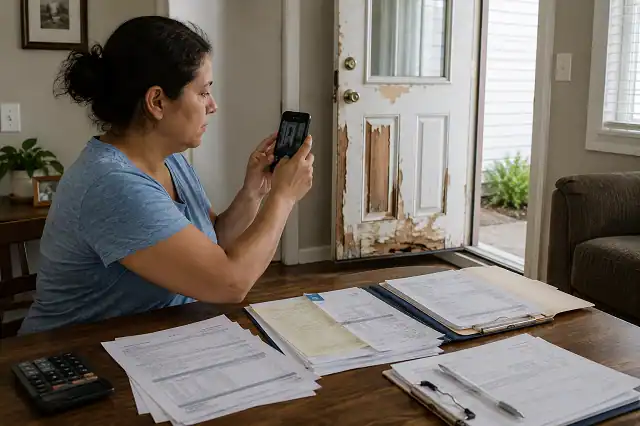
- Take Pictures of the Problem: Take clear photos of rotten wood, light shining through closed doors, broken locks, and soft floors under the doorway.
- Gather Money Papers: Get two months of your recent pay stubs, your last two years of tax returns, your house deed, and your recent power bills.
- Send the Form to the Local Office: Turn in your forms to your local Community Action office for energy help, or your county USDA office for a rural repair grant.
- Let the Office Check Your Home: Let trained workers run a fan test on your door, check for lead paint on old houses, and look at the rotten wood.
- Pick an Approved Builder: Work with the office to check prices from builders who have a real license, insurance, lead-safe training, and are on the federal SAM.gov list.
- Sign Papers and Wait for the Go-Ahead: Sign your grant contract or loan papers. The builder can only start work after the office sends a real letter saying they can begin.
- Pass the Final Check: Walk through the finished job with your case worker and a city inspector. They make sure the job follows the rules before they pay the builder.
Cheap Loans If You Make a Little Too Much Money
If the local grant money is gone, or if your family makes a little more than the 80% low-income limit, these cheap government loans can stop you from using bad credit cards:
- FHA Title I Home Improvement Loans: Backed by the government, FHA Title I loans give up to $25,000 for important home fixes. You do not need to own your home free and clear, and the loan can last up to 20 years with a fixed interest rate.
- FHA 203(k) Home Renovation Loans: This loan lets you add home repair and new door costs right into your main house payment.
- Power Company Money Back: Power and gas companies give you back between $100 and $500 when you put in approved Energy Star outside doors.
- Charity Builder Groups: Groups like Rebuilding Together and Habitat for Humanity help low-income families and seniors fix doors using volunteer workers and donated parts.
How to Spot and Stop Grant Scams
Homeowners looking for government help are often targeted by bad builders and internet scammers. Keep your family safe by remembering these true facts:
- Real Grants Never Ask for a Fee: Real government housing programs never ask you to pay a fee to apply, register, or send a form. Anyone asking for cash first is trying to scam you.
- Offices Do Not Send Cash to Your Bank: Public programs pay licensed builders straight from a safe account after the city checks the finished work. The office will never send cash straight to your checking account.
- Builders Must Have a License: Public grant programs never use unverified handymen. All builders must have an active state license, insurance, and be on the federal SAM.gov list.
- Check for Real Government Websites: Make sure you only apply on official `.gov` agency websites or safe, approved charity websites.
Common Questions About Door Replacement Grants
Can I get totally free door replacement grants in 2026?
Yes. Low-income homeowners, seniors 62 and older, and disabled people can get 100% free door replacements through the Weatherization Assistance Program (WAP) and USDA Section 504 grants. You do not have to pay anything.
Does USDA Section 504 pay for outside doors?
Yes. USDA Section 504 gives free grants up to $10,000 to rural seniors 62 or older making very low income. The new door must fix a real security danger, rotten wood, or bad weather drafts.
Does the Weatherization Assistance Program replace broken front doors?
Yes. If a trained worker tests your house and proves a door leaks too much air, and a new door saves enough energy, WAP pays 100% of the cost for parts and builder labor.
Can renters get a door replacement grant?
Renters can get weather help if their family meets the income rules. But, the landlord must sign a real legal paper saying the work is okay. The landlord must also promise not to raise the rent or kick the renter out because the home was fixed.
Can disabled homeowners get grants to make doorways wider?
Yes. Programs for disabled people pay to make doorways at least 32 inches wide, put in a flat threshold, and add easy-to-use door handles.
Can I choose my own builder or put the door in myself?
No. Public grant rules say you cannot do the work yourself or hire a random person. The work must be done by licensed, insured builders who are listed in the federal SAM.gov database.
What happens if the grant money runs out in my county?
Local offices keep a waiting list. Sending your approved form locks in your spot in line when the new federal money comes in next year.
Are storm doors paid for by federal weather grants?
Yes, but only in places with really bad weather. Adding a storm door must help the main door block cold air and save a lot of energy to get approved.
Why You Can Trust This Guide
Last Updated: September 27, 2026
Reviewed By: HomePropertyGrants.com Editorial Team
Experience: Our housing team studies public help programs, federal weatherization rules, USDA rural money, and city housing plans in all 50 states.
Expertise: The facts in this guide come straight from federal laws, like Title 42, USDA Title 7, Department of Energy Title 10, and EPA lead safety rules.
Authoritativeness: We check income rules against federal poverty charts, HUD limits, and Energy Star building rules to make sure everything is exactly right.
Trustworthiness: HomePropertyGrants.com works alone. We do not take money, favor builders, or get paid by door companies. We only write this to help homeowners find real public help.
Helpful Decision Support: This guide gives you clear steps, real government links, official forms, and hard money rules to help you get through confusing offices and avoid getting denied.
Next Steps: Starting Your Application
Replacing a bad, rotten, or broken outside door keeps your house standing, lowers heating bills, and makes it safer to walk through. Start by asking for an energy test from your local Community Action office for weatherization funding. Rural homeowners should send USDA Form RD 410-4 to their local Rural Development office right away.
You can also find emergency help by using our interactive home repair program finder. It helps you locate city and county programs taking forms for door replacement grants right now.

Arthur Pendelton is a senior housing policy researcher and public welfare analyst with over eight years of experience tracking federal, state, and non-profit residential repair programs. He specializes in statutory grant frameworks, including USDA Section 504 Rural Housing, the Department of Energy’s Weatherization Assistance Program (WAP), and municipal HUD Community Development Block Grants (CDBG). Arthur systematically audits Federal Register publications and Title 7/42 CFR regulatory updates to provide low-income homeowners, seniors, and military veterans with accurate, barrier-free application guidance.
One Comment