
Severe weather events, aging architectural shingles, and compromised waterproof underlayment cause chronic indoor water infiltration, forcing families to confront private contractor estimates ranging between $8,500 and $22,000 for a complete structural tear-off and deck replacement. Securing official federal and state roof replacement grants provides non-repayable capital for struggling homeowners, seniors, and vulnerable residents to replace rotted plywood decking, install impact-resistant roofing, and eliminate structural hazards without accumulating toxic consumer debt. Discover how qualifying households access public preservation funds through our comprehensive roof replacement grants hub to secure essential home preservation assistance today.
Navigating public housing assistance requires distinguishing between legitimate statutory relief funds and misleading lead-generation schemes. Online search engines frequently display commercial contractor advertisements falsely promising universal government vouchers for brand-new roofs upon request. In practice, public financial aid is administered through strict legislative channels governed by federal and state statutes, requiring rigorous verification of household income, recorded property deeds, and documented life-safety hazards. Homeowners can also utilize our free home repair program finder to locate municipal housing authorities actively accepting intake applications.
When statutory eligibility benchmarks are satisfied, approved public awards cover comprehensive building envelope restoration. Authorized project scopes include tearing down degraded roofing materials to the raw wooden framing, replacing water-softened oriented strand board (OSB) or plywood decking, installing self-adhering polymer ice and water shields under 100 square feet of eaves, laying Class 4 impact-resistant architectural shingles, and correcting inadequate attic ventilation to meet modern building codes. Matching your household earnings with the correct public funding source is the vital first step toward securing structural safety.
Worried about how to pay for an expensive roof leak or rotting wooden decking? Don’t guess if you qualify for help. Check your options with our quick tool below.
Program: Roof Replacement Grant
Focus: Low-Income Household
Download Official USDA Form RD 410-4 Repair Application (PDF)
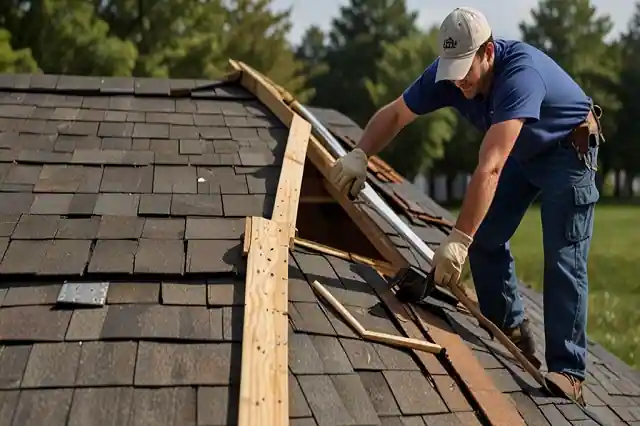
Legislative Allocation Frameworks: Comparing Federal and State Roofing Aid Channels
Public financial assistance for residential roofing is distributed across multiple administrative departments, each bound by distinct statutory mandates. Because no single government agency oversees all structural home repairs, homeowners must align their specific property damage and household income with the correct legislative program.
Before submitting formal documentation for federal and state roof replacement grants, applicants must review how different administrative bodies evaluate property eligibility, maximum dollar caps, and repayment obligations:
| Assistance Program | Governing Agency | Statutory Authority | Maximum Benefit Limit | Core Eligibility Requirement |
| USDA Section 504 | USDA Rural Development | Title V, Housing Act of 1949 (7 CFR Part 3550) | Up to $10,000 Grant / $40,000 Loan | Rural homeowners age 62+ earning below 50% Area Median Income |
| HUD CDBG Housing Rehab | Municipal Housing Authorities | Housing & Community Development Act (24 CFR Part 570) | Up to $25,000 Forgivable Loan / Grant | Low-to-moderate-income households earning below 80% Area Median Income |
| DOE Weatherization (WAP) | U.S. Department of Energy | Energy Conservation & Production Act (10 CFR Part 440) | Whole-house retrofit (incidental roof repairs) | Households earning at or below 200% Federal Poverty Guidelines |
| FEMA Individuals & Households | Federal Emergency Management Agency | Robert T. Stafford Act (44 CFR Part 206) | Up to $42,500 statutory cap | Primary homeowners with uninsured storm damage in declared disaster zones |
| State Housing Finance Agencies | State Departments of Housing | State Legislative Appropriation Statutes | $5,000 to $20,000 direct grant or match | Primary residents meeting regional low-income or disaster-risk criteria |
When intake evaluators assess formal funding submissions, they strictly differentiate between routine architectural wear and verified life-safety hazards. Requests driven purely by cosmetic shingle discoloration or color updates are automatically rejected across all jurisdictions. To qualify, existing roofing systems must present active structural leaks, compromised framing integrity, or code violations that endanger the occupants.
USDA Section 504 Program: Rural Grants and 1% Loans for Roof Repairs
The foremost federal funding source for rural property owners seeking structural preservation is the USDA Section 504 program. Codified under 7 CFR Part 3550, this statutory mechanism provides direct cash grants and ultra-low-interest loans specifically designed to eliminate health and safety hazards in rural dwellings.
Section 504 operates through two distinct financial mechanisms that can be utilized individually or combined to fund comprehensive roof replacements. Delivering essential low-income roof replacement assistance, the program addresses severe structural decay:
- Outright Section 504 Grants: Deliver up to $10,000 in non-repayable lifetime grant capital. To qualify, applicants must be at least 62 years of age, hold verified deed ownership, and demonstrate an inability to repay a loan. Funds must resolve documented structural hazards such as collapsing roof rafters or severe water intrusion.
- Low-Interest Section 504 Loans: Homeowners of any eligible age can borrow up to $40,000 at a fixed 1.0% interest rate amortized over a 20-year term. A $15,000 roof replacement loan results in manageable monthly payments of approximately $69, shielding rural families from predatory contractor financing.
- Combined Package Funding: Rural seniors aged 62 and older can pair a $10,000 outright grant with a 1% loan to finance extensive structural overhauls totaling up to $50,000.
When rural families prepare formal applications through the USDA, household earnings must fall strictly below 50% of the county Area Median Income (AMI). Rural senior citizens can review specialized age-based criteria in our directory covering roof replacement grants for seniors.
Watch Out for Deed Encumbrance Traps: Some city and state roofing programs place a hidden second lien or deed restriction on your home. If you sell or refinance too soon, they might demand instant repayment. Always ask your caseworker: “Does this roof grant put a lien on my title, and how many years do I need to stay here for it to disappear completely?”
HUD Community Development Block Grants and Municipal Rehabilitation
For urban and suburban residents, the U.S. Department of Housing and Urban Development provides formula funding via the Community Development Block Grant (CDBG) program. Local municipal housing authorities administer these block grants to upgrade substandard housing stock within designated target neighborhoods.
Municipal single-family rehabilitation programs deliver flexible financial instruments tailored to lower-income homeowners. By providing government grants to replace roofs for needy families, local housing authorities bridge the affordability gap:
- Emergency Minor Repair Grants: Rapid-response grants ranging from $2,500 to $7,500 are deployed immediately when severe roof leaks cause structural ceiling collapse or electrical hazards.
- Deferred Payment Forgivable Loans: For full structural roof replacements, cities provide 0% interest deferred loans up to $25,000. The loan requires zero monthly payments and forgives entirely if the homeowner maintains primary occupancy for 5 to 10 years.
- Lead and Environmental Abatement Integration: Older homes featuring deteriorated roofing components may also contain hazardous lead paint or asbestos shingles. CDBG awards frequently incorporate environmental remediation funding under strict EPA RRP regulations.
Securing federal and state roof replacement grants through municipal housing departments requires contacting your city community development office directly. Submitting documentation during open intake windows prevents administrative delays.
DOE Weatherization Assistance and Incidental Roof Repairs
The Weatherization Assistance Program (WAP), managed by the U.S. Department of Energy under 10 CFR Part 440, delivers whole-house energy efficiency upgrades to low-income households across all 50 states.
While WAP primarily focuses on attic insulation, air sealing, and HVAC optimization, program guidelines permit incidental repair measures when roof leaks threaten the integrity of insulation or ventilation systems. Facilitating structural roof repair grants for low-income households, technical teams evaluate thermal envelopes using rigorous standards:
- Blower-Door Diagnostic Audits: Calibrated fan testing measures air infiltration rates and identifies thermal bypasses around ceiling penetrations.
- Attic R-Value Calibration: To maximize thermal performance, retrofits require upgrading attic insulation to R-38 or R-60 specifications, which cannot proceed if active roof leaks saturate fiberglass batts or cellulose.
- Incidental Roofing Scopes: WAP funds structural roof patching or minor shingle replacement strictly as a prerequisite to seal the thermal boundary and prevent energy loss.
Households earning at or below 200% of the Federal Poverty Guidelines or receiving Supplemental Security Income (SSI) qualify automatically. For comprehensive shingle replacements beyond minor WAP scopes, homeowners should examine specialized options in our guide on low income roof replacement grants.
State-Specific Disaster Mitigation and Climate Resilience Funds
In addition to federal initiatives, state housing finance agencies maintain dedicated appropriations designed to mitigate regional climate threats, such as hurricanes, wildfires, and heavy snow loads. Offering robust roofing grants for low-income homeowners, active state funding opportunities protect regional populations:
Florida Hurricane Mitigation Program
Florida properties facing tropical storm threats qualify for state-backed wind mitigation grants. Programs fund the installation of secondary water resistance barriers, hurricane clips, and impact-rated shingles. Learn more in our specialized guide on state roof replacement grants Texas and coastal mitigation options.
California Wildfire Resilience Grants
California allocates dedicated state capital for retrofitting vulnerable roofs with Class A fire-rated assemblies, non-combustible ember screens, and heavy-gauge metal or tile roofing materials in high-hazard fire zones.
Texas Housing and Community Affairs (TDHCA)
TDHCA manages comprehensive single-family repair programs providing direct grant assistance to low-income homeowners repairing storm-damaged rafters and decking.
Veterans and military families residing in these disaster-prone states can also explore tailored military housing support in our directory of veteran roof replacement grants.
Real Talk From a Licensed Roofer: “The number one reason roof grant applications get thrown in the trash is turning in a vague estimate like ‘New Roof – $12,000.’ County inspectors will reject it instantly. Your roofing contractor must write down itemized costs, separate labor from wood decking repair, and note Class 4 shingle impact ratings. If those details are missing, your file goes right back to the bottom.”
— Roofing Contractor, Florida
Targeted Demographic Allocations: Seniors, Veterans, and Disabled Homeowners
Public housing preservation frameworks establish expedited processing queues and dedicated funding pools for vulnerable demographic cohorts seeking structural home rehabilitation.
Fixed-Income Senior Citizens
Homeowners aged 62 and older represent the primary beneficiaries of outright non-repayable grants. Living on fixed Social Security benefits, elderly residents lack the liquidity required for major structural carpentry. Delivering vital emergency housing preservation assistance, agencies like USDA Rural Development and regional Area Agencies on Aging waive loan repayment for qualifying seniors. Review detailed senior criteria in our manual on roof replacement grants for seniors.
Disabled Homeowners and Medically Vulnerable Residents
Individuals living with permanent physical disabilities qualify for specialized state and municipal repair grants. Because active water leaks foster toxic mold growth that triggers severe pulmonary complications for medically fragile residents, municipal agencies grant priority intake status when accompanied by physician documentation. Explore disability-specific guidelines in our guide on roof replacement grants for disabled people.
Veterans and Military Families
Former military personnel facing severe housing degradation can access specialized assistance. Review military-specific repair protocols in our manual on roof replacement grants for veterans.
Building Science and Structural Engineering Specifications for Roof Grants
Public housing agencies enforce rigorous engineering standards to ensure that taxpayer-funded roofing projects withstand extreme weather events and deliver decades of reliable weather protection:
| Technical Specification | Mandatory Grant Standard | Engineering Purpose |
| Roof Decking Material | Minimum 7/16-inch OSB or CDX plywood | Provides structural diaphragm strength to resist high wind uplift forces |
| Underlayment Membrane | Self-adhering polymer-modified bitumen (ASTM D1970) | Waterproof ice and water shield installed at eaves and valleys to prevent leaks |
| Shingle Wind & Impact Rating | UL 2218 Class 4 impact-resistant architectural shingles | Resists penetration from large hail and high-velocity straight-line winds |
| Attic Ventilation Ratio | Minimum 1:150 net free ventilating area (IRC R806) | Prevents moisture accumulation, condensation rot, and premature shingle thermal blistering |
| Flashing and Drip Edge | Heavy-gauge aluminum or galvanized steel | Directs rainwater away from fascia boards and prevents perimeter wood rot |
When intake evaluators assess federal and state roof replacement grants, contractors must submit itemized estimates confirming compliance with these structural requirements. Featuring life-safety roof repair grants, programs ensure full compliance. If minor shingle blow-offs have exposed underlying decking, review our technical guide on roof repair grants for missing shingles. For emergency stabilization following severe storm events, consult our manual on emergency roof tarp grants after storm damage.
Roof Grant Denied? Check the Damage Rules:
Cosmetic vs. Safety Rejections: If your roof is just old-fashioned or has minor color fading, public programs will say no. Grants only pay for active water leaks, rotting plywood decking, or structural roof sagging.
Never Start Early: If a contractor tells you to start tearing off shingles before you get an official written Notice of Award, you lose all rights to grant money.
Roof Repair Proof Request Letter Template:
(Copy this text into Word, fill out the bracketed parts, and mail it via Certified Mail to your local housing agency).
To: [Name of Municipal Housing Agency]
Regarding: Request for Formal Inspection Review – Case #[Insert Case Number]
Hello, I am writing regarding my roofing grant application dated [Insert Date]. The denial notice stated my home damage did not meet urgent safety rules. However, my attached photographs and contractor notes show active indoor water leaks and rotting roof decking that threaten our daily safety. Please schedule a structural field inspection.
Thanks,
[Your Full Name]
[Your Phone Number]
8 Practical Steps to Apply for Roof Replacement Grants
Navigating public bureaucracy requires meticulous paperwork preparation. Following this step-by-step application procedure prevents administrative rejection and accelerates approval:
- Document Structural Roof Damage: Take clear, date-stamped photographs of interior water stains, sagging rafters, and exterior shingle loss.
- Gather Identification and Proof of Income: Collect government-issued photo IDs, Social Security cards, tax returns, W-2 statements, and pension verification letters.
- Verify Clear Property Title Ownership: Locate your recorded property deed, recent property tax assessment receipt, and mortgage statement to prove clear title.
- Contact Administering Housing Agencies: Reach out to your municipal housing authority, USDA Rural Development office, or regional Community Action Agency.
- Obtain Detailed Contractor Bids: Secure itemized written estimates from licensed roofing contractors specifying material grades and structural tear-off costs.
- Complete Official Intake Paperwork: Fill out required application forms, such as USDA Form RD 410-4 or local municipal CDBG packets.
- Submit Package During Open Intake Windows: File your complete documentation package before annual program funding caps are exhausted.
- Await Formal Written Notice of Award: Never authorize roofing construction before receiving a written Notice of Award from the agency. Pre-approval work is permanently disqualified from public funding.
Frequently Asked Questions About Roof Replacement Grants
Can low-income homeowners get 100% free roof replacement grants?
Yes. Qualifying low-income seniors and very-low-income rural homeowners who meet income thresholds for programs like USDA Section 504 or municipal CDBG emergency grants can receive non-repayable awards covering 100% of project costs.
What is the maximum income limit to qualify for federal and state roof replacement grants?
Income ceilings vary by geographic location. USDA Section 504 requires household earnings below 50% of the county Area Median Income (AMI), while DOE Weatherization caps eligibility at 200% of federal poverty guidelines.
How long does the application review and approval process take?
Timelines range from 30 to 60 days for emergency municipal CDBG repair pools, to 3 to 6 months for USDA Section 504 reviews. Active structural safety hazards receive priority intake handling.
Can I hire any contractor for grant-funded roof replacement?
No. Administering agencies require contractors to be fully licensed, insured, and registered in the federal SAM.gov database. DIY repairs and unverified handymen are strictly prohibited.
What happens if I sell my home after receiving a roofing grant?
USDA Section 504 grants require full repayment if the property is sold within 3 years. Municipal CDBG and state housing awards enforce retention periods ranging from 5 to 10 years with pro-rated forgiveness.
Why You Can Trust This Guide
Last Updated: September 26, 2026
Reviewed By: HomePropertyGrants Editorial Team
Experience: Our editorial research team has analyzed federal housing statutes, municipal community development block programs, and trade building codes across all 50 states for over a decade.
Expertise: All statutory funding caps, income eligibility thresholds, and engineering standards are derived directly from Title V of the Housing Act of 1949, 7 CFR Part 3550 regulations, 24 CFR Part 570 guidelines, and published HUD and USDA administrative manuals.
Authoritativeness: All Fiscal Year 2026 benefit limits ($10,000 for USDA grants, $25,000 for CDBG awards, $42,500 for FEMA caps) are cross-referenced against active Federal Register notices and agency administrative circulars.
Trustworthiness: HomePropertyGrants.com operates with complete editorial independence. We accept zero financial compensation, contractor kickbacks, or sponsored placements from roofing manufacturers or lenders. Our evaluations are published exclusively to provide honest, verified public assistance roadmaps for American property owners.
Helpful Decision Support: We translate complex federal and state housing regulations into clear, actionable American English, complete with direct links to official `.gov` application forms, helping homeowners secure legitimate public aid while avoiding predatory contractor schemes.
Next Steps: Secure Your Housing Assistance Application
Replacing a deteriorating or storm-damaged roof protects your family’s safety, prevents costly structural framing rot, and preserves your long-term property investment. Securing approved federal and state roof replacement grants gives struggling households the vital financial capital required to complete professional building envelope repairs without falling into high-interest debt. If you are an elderly homeowner living in a rural area, begin your application by preparing USDA Form RD 410-4. If you reside in an urban or suburban municipality, contact your local city housing office to inquire about open CDBG emergency shingle repair funds.
Taking action early prevents minor water leaks from destroying structural wall framing, ensuring your home remains safe and secure for decades to come.