
Unsafe decks can lead to serious falls, injuries, and costly property damage. Loose railings, rotten boards, weak support posts, and unstable stairs are common problems that many homeowners face. If your deck is showing signs of wear and tear, fixing it quickly is important for your family’s safety. The good news is that there are grants and financial assistance programs available that can help cover the cost of deck repairs, railing replacement, structural reinforcement, and even accessibility ramps.
In this updated guide, you will learn how to get grants for deck repair and safety upgrades, who qualifies for assistance, and how much funding you may receive. We will also explain the application process step by step and share tips to improve your chances of approval. All information is based on recent program updates, so you can confidently start applying for the help you need.
What grants help with deck repair and safety upgrades?
Homeowners can get deck repair grants through programs like the USDA Section 504 Home Repair Program, local Community Development Block Grants (CDBG), and nonprofit groups like Rebuilding Together. These programs help fix rotten boards, replace railings, and improve safety. Grants can go up to $10,000–$15,000, and some programs combine grants with low-interest loans.
Quick Overview-Who Can Get Help and How Much
The USDA Section 504 Home Repair Grant offers up to $10,000 for low-income rural homeowners to remove health and safety hazards; in declared disaster areas, the grant can be up to $15,000. Loans up to $40,000 are also available and can be combined with grants.
Community Development Block Grants (CDBG) give money to states, cities, and counties. Local programs often use CDBG funds to pay for owner-occupied home repairs, including deck safety upgrades. Grant amounts vary by locality.
National nonprofits like Rebuilding Together and foundations such as The Home Depot Foundation fund critical home repairs for low-income, senior, disabled homeowners, and veterans. Award sizes vary; nonprofit programs usually repair homes directly or give grants to local groups.
Why deck repair and safety upgrades matter now
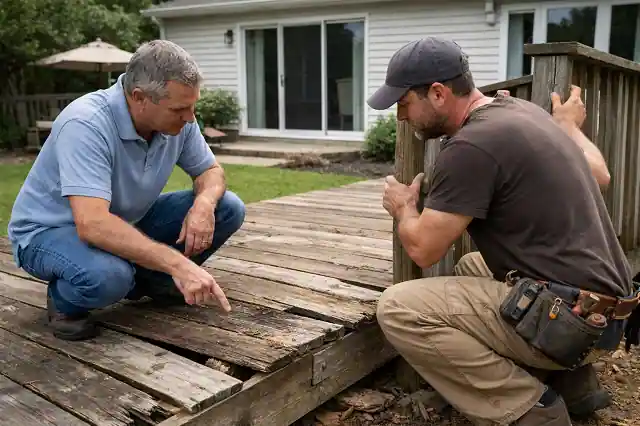
Deck problems often start small: a soft board, loose railings, or rusted fasteners. If left alone, these can become big safety risks. Repairing early can save money and stop injuries. Many grant programs exist because local and federal agencies want to keep homes safe and prevent accidents.
Types of grants that can pay for deck repairs
Below are common types of programs that help with deck repair and safety upgrades:
Federal repair grants and loans (USDA Section 504)
This program helps low-income rural homeowners fix health and safety issues. It can pay to replace rotten deck boards, strengthen joists, add or replace railings, and install ramps for accessibility. Key numbers: grant up to $10,000 (or $15,000 in a presidentially declared disaster area); loan up to $40,000 at about 1% interest over 20 years; grants and loans may be combined.
Community Development Block Grant (CDBG) programs
CDBG funds go to states, cities, and counties. Local housing rehab programs often use CDBG money to pay for small repairs, including deck repairs, railings, and ramps. Amounts and rules change by city or county, so check your local housing or community development office.
State and local home repair grants
Many states run targeted programs that give grants or forgivable loans. Some programs cover up to $10,000–$50,000, depending on the state and project (for example, recent state programs awarded up to $50,000 for essential repairs in some counties). Check your state housing agency site for current rounds and amounts.
Nonprofit repair programs (Rebuilding Together, Habitat, local groups)
Organizations like Rebuilding Together repair homes for low-income, older, or disabled homeowners. They often do the work directly or pay a local contractor. Apply to your local chapter; eligibility usually depends on income and home ownership. Rebuilding Together had active programs and recent local application openings in 2026.
Read- Free Home Repair Grants For Low-Income Disabled Homeowners
Foundation and corporate grants (Home Depot Foundation, others)
Large foundations fund nonprofits that repair homes for veterans, seniors, or people with disabilities. The Home Depot Foundation gives large grants to nonprofits for veteran housing and critical repairs (awards can be six-figures to organizations, while local critical repairs are funded through partners). These programs typically serve specific groups (veterans, seniors).
Read- Free Home Improvement Grants For Low Income Veterans
Realistic repair costs (so you know what grants can cover)
- Replace rotten deck boards (material + labor): $1,200–$4,500, depending on deck size.
- Replace railing system: $800–$3,000 for a standard deck railing.
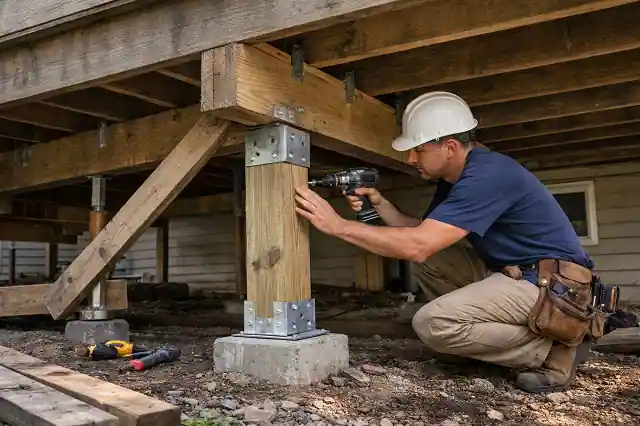
- Structural reinforcement (joists, posts): $1,000–$6,000+ depending on damage.
- Add an accessibility ramp: $1,500–$10,000 depending on slope and materials.
Because USDA grants can be up to $10,000 (or $15,000 in disaster areas) and some local programs offer larger awards or combinations with loans, they can cover many of these common repairs or reduce what you pay out of pocket.
Who usually qualifies for deck repair grants?
Each program has its own rules, but common qualifying conditions include:
Income limits — many programs are for low- to moderate-income households (often under 80% of the area median income).
Homeowner requirement- most grants require you to own and occupy the home as your primary residence.
Location- USDA grants require the home to be in an eligible rural area. CDBG and state grants depend on the city/county where you live.
Type of repair- grants usually cover health and safety repairs (rotten boards, loose railings, stairs, accessibility ramps), not cosmetic upgrades.
Priority groups- seniors, disabled homeowners, veterans, and very low-income families often get priority.
Read- Free Bathroom Repair and Renovation Grants For Low Income Homeowners
Step-by-Step: How to Apply for Deck Repair Grants
Step 1: Make a clear list of the problems
Write down all issues like rotten boards, loose railings, and weak structures, and take clear photos.
Step 2: Get at least 1–3 contractor estimates
Ask contractors for itemized estimates including materials and labor.
Step 3: Check federal programs first
Apply for USDA Section 504 if you live in a rural area.
Step 4: Search local programs and CDBG funds
Visit your city or county website for home repair grants.
Step 5: Contact nonprofits and foundations
Reach out to organizations like Rebuilding Together or local housing groups.
Step 6: Collect documents
Prepare income proof, ID, ownership papers, estimates, and photos.
Step 7: Fill out and submit the application
Complete the application carefully and explain the safety hazard clearly.
Common mistakes that delay or block grant approval (and how to avoid them)
Missing paperwork- gather income proof, ID, and ownership papers before you apply.
Incomplete contractor estimates- ask for itemized quotes with labor and materials.
Starting repairs before approval- many grants refuse to pay for started work. If a temporary fix is needed, get approval in writing.
Not checking local building codes- some programs require that repairs meet local code and inspection. Get a building permit if required.
Avoid these mistakes, and your approval time will be smoother.
If you do not qualify, other funding options for deck repair
If you do not meet grant rules, consider these alternatives:
USDA Section 504 loan- if you do not qualify for the grant portion but are low-income in a rural area, the low-interest loan option (up to $40,000 at 1%) is very affordable.
HUD Title I or 203(k) rehabilitation loans- HUD-insured products can finance repairs when grants are not available. These are loans, not grants.
Local revolving loan funds- some cities offer low-interest loans for small home repairs.
Charity and volunteer programs- local churches, veterans groups, or charities sometimes provide labor or materials for repairs.
Contractor financing- many contractors offer payment plans; compare interest rates carefully.
Tips to improve your chance of getting a grant
Show clear safety hazards (photos help).
Get multiple contractor quotes and itemize work.
Apply to multiple programs (USDA + local + nonprofit). Combining small grants or a grant + a low-interest loan can cover most costs.
Highlight priority needs (senior, disabled, veteran status) in your application. Many programs give priority to these groups.
Recent updates and what is new in 2026
USDA’s Single Family Housing Repair Loans & Grants program details (amounts and loan terms) remain a key national source for rural homeowners in 2026. The official guidance still shows a maximum grant of $10,000 ($15,000 in disaster areas) and a loan of $40,000, with the ability to combine assistance. Always confirm details with your local USDA office.
Local CDBG rounds continue to support owner-occupied rehab programs. Cities and counties award funds each fiscal year, and amounts and application windows change, so checking your local government site is important. Recent local news shows towns using CDBG funds for repairs and homeowner assistance in 2025 and 2026.
Nonprofit programs remain active. Rebuilding Together posted community project updates and accepted applications in 2026. Corporate foundations such as the Home Depot Foundation announced multi-million dollar investments for veteran and critical home repairs in recent years, and they fund work through nonprofit partners. These groups can be a good path if you are a veteran, senior, or very low-income.
Frequently Asked Questions
1. What is the USDA Section 504 Home Repair Grant?
The USDA Section 504 Home Repair Grant offers up to $10,000 ($15,000 in disaster areas) to low-income rural homeowners to fix health and safety hazards like unsafe decks.
2. Can deck repairs be covered under CDBG programs?
Yes, Community Development Block Grant (CDBG) programs often cover deck repairs, railing replacement, and safety upgrades through local housing programs.
3. Who qualifies for deck repair grants?
Low- to moderate-income homeowners, seniors, disabled individuals, and veterans usually qualify, especially if the repairs are for safety hazards.
4. What types of deck repairs do grants cover?
Grants usually cover rotten boards, loose railings, weak structures, stairs, and accessibility ramps.
5. Do I need contractor estimates before applying?
Yes, most programs require 1–3 contractor estimates with detailed costs for labor and materials.
6. Can I start repairs before grant approval?
No, most programs will not pay for work that has already started before approval.
7. What documents are required for application?
You typically need proof of income, ID, homeownership documents, photos of damage, and contractor estimates.
EEAT & Content Transparency
Last Updated: April 2026
Reviewed By: Home Repair Grant Experts Team
- Accurate Program Data
All information is based on verified updates from USDA and local housing programs. - Real Grant Eligibility Details
We explain real qualification rules used by federal, state, and nonprofit programs. - Expert-Reviewed Guidance
Content is reviewed by housing assistance experts and grant researchers. - Up-to-Date 2026 Information
Latest funding limits, eligibility, and program changes are included. - User-Focused Safety Advice
We focus on real safety risks like loose railings and weak decks to help prevent injuries.
Conclusion- Act early to protect your home and family
Deck problems grow over time. If your deck is soft, wobbly, or the railing is loose, it is a safety hazard that can often be fixed with a grant or low-cost loan. Start by gathering photos and estimates, and then check federal, state, local, and nonprofit options. Combining programs is common and can cover most of the bill.

Arthur Pendelton is a senior housing policy researcher and public welfare analyst with over eight years of experience tracking federal, state, and non-profit residential repair programs. He specializes in statutory grant frameworks, including USDA Section 504 Rural Housing, the Department of Energy’s Weatherization Assistance Program (WAP), and municipal HUD Community Development Block Grants (CDBG). Arthur systematically audits Federal Register publications and Title 7/42 CFR regulatory updates to provide low-income homeowners, seniors, and military veterans with accurate, barrier-free application guidance.