
When a roof leak soaks attic insulation, the repair is not simply an insulation upgrade. The first question is whether the roof problem has been corrected, whether the damaged insulation needs to be removed, and which assistance program actually matches the homeowner’s situation. For some low-income households, the Weatherization Assistance Program may be the best starting point. Rural homeowners may have another option through USDA Section 504, while homeowners whose damage came from a federally declared disaster may need to start with FEMA. Local housing rehabilitation programs can provide another path.
This article takes a different approach from a general home improvement grants list. It focuses on one practical question: how can a homeowner get legitimate assistance for insulation damaged by a roof leak? You will see what each program can do, what it cannot do, which program fits different situations, what evidence to collect, and how to apply without relying on unsupported grant amounts.
Quick answer: There is no single nationwide grant that automatically pays to replace insulation after a roof leak. Eligible low-income households may receive weatherization services through the U.S. Department of Energy’s Weatherization Assistance Program (WAP), while eligible rural homeowners may qualify for USDA Section 504 assistance. Disaster-related damage may qualify for Federal Emergency Management Agency (FEMA) assistance, and local housing rehabilitation programs funded through HUD may provide additional help. Each program has different rules, and roof damage often needs to be corrected before weatherization work can proceed.
What Happens When Roof Water Reaches Attic Insulation?
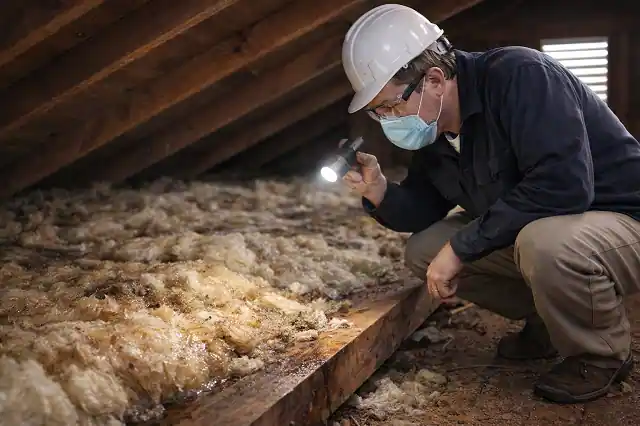
Insulation works best when its designed thermal properties are maintained. A roof leak can introduce water into fiberglass, cellulose, or other insulation materials and create a larger problem than the visible ceiling stain suggests.
Water can travel beyond the point where it first entered the roof. Insulation may become compressed, displaced, contaminated, or unable to perform as intended. Moisture can also affect roof decking, framing, drywall, fasteners, and ventilation pathways.
The U.S. Environmental Protection Agency (EPA) recommends prompt attention to wet building materials because damp materials can support mold growth. EPA guidance notes that wet materials should be dried or addressed within roughly 24 to 48 hours when possible to reduce the opportunity for mold growth.
Warning: Do not assume that insulation is safe simply because the visible ceiling stain has dried. A qualified contractor or building professional should determine whether insulation, roof decking, framing, drywall, or other materials remain wet or damaged.
If you are dealing with interior ceiling or wall damage as well as attic insulation, see our article on water-damaged interior drywall repair. If the problem involves the roof itself, our coverage of roof repair and replacement assistance provides a more appropriate next step.
Why the Roof Usually Comes Before New Insulation
Replacing insulation while the roof continues to leak can simply create another damaged layer. The U.S. Department of Energy’s whole-house weatherization guidance explains that minor roof and wall leaks should be repaired before attic or wall insulation is installed. When a roof leak prevents safe or durable weatherization, the home may be deferred until the underlying problem is corrected.
That distinction is important when applying for assistance. A homeowner should document the roof problem and ask the program administrator whether the roof repair must be completed before insulation work can be approved.
Best Program for Your Situation
The best program is not necessarily the one advertising the largest possible amount. The better question is which program’s purpose matches the condition of your home.
| Your Situation | Best Place to Start | Why It Fits | Important Limitation |
| Low-income household with insulation and energy-efficiency problems | Weatherization Assistance Program (WAP) | Designed to improve energy efficiency while addressing eligible health and safety issues | The local provider determines eligible work, and active moisture problems may need to be addressed first |
| Very-low-income homeowner in an eligible rural area who is age 62 or older | USDA Section 504 | Can provide grant assistance to qualifying homeowners for eligible health and safety hazards | Income, rural-area, ownership, occupancy, credit, and other requirements apply |
| Roof and insulation damage caused by a qualifying declared disaster | Federal Emergency Management Agency (FEMA) | May provide eligible disaster-related housing assistance | The disaster and homeowner must meet FEMA requirements, and benefits cannot duplicate other assistance |
| Low- or moderate-income homeowner needing broader rehabilitation | Local HUD-funded housing program | Community Development Block Grant (CDBG) funds can support eligible residential rehabilitation through local governments | Local governments administer these programs; HUD does not normally give CDBG assistance directly to individual homeowners |
| Homeowner who does not meet federal low-income requirements | State, utility, or local energy programs | Some local programs use different eligibility requirements | Availability, funding, income limits, and eligible work vary by location |
If your primary concern is the roof rather than the insulation, continue with our more focused roof replacement assistance information. If your household has limited income and needs several essential repairs, our low-income home repair assistance article provides broader eligibility information.
Weatherization Assistance Program for Damaged Insulation
The Weatherization Assistance Program is often the most logical federal starting point when the main problem is energy efficiency and insulation rather than disaster recovery.
The U.S. Department of Energy (DOE) says WAP reduces energy costs for low-income households by improving energy efficiency while protecting health and safety. DOE reports that WAP provides weatherization services to approximately 32,000 homes each year using DOE funds and that a national evaluation found average annual energy savings of $372 or more for participating households.
Those figures are national program statistics, not a promise that every homeowner receives $372 in savings or a specific dollar amount of repair work.
Important distinction: WAP is a weatherization service program, not a universal cash grant sent directly to homeowners. Local and state providers determine eligibility, inspect homes, perform energy audits, and determine the appropriate work scope under program rules.
Who Can Qualify for WAP?
DOE states that households at or below 200% of the federal poverty guidelines, or households receiving Supplemental Security Income, are considered eligible under DOE guidelines. States and territories may also use other permitted eligibility criteria, including certain LIHEAP-based rules.
DOE gives priority to groups that can include older adults, households with a member who has a disability, families with children, high-energy users, and households with a high energy burden.
Because eligibility is administered locally, do not treat 200% of poverty as a universal application guarantee. Your state, territory, tribal program, or local provider determines how the rules are implemented.
DOE’s WAP application process explains that homeowners should identify their state weatherization administrator, locate a local provider, submit income documentation, and prepare for an energy audit if selected.
Can WAP Help With Insulation After a Roof Leak?
Potentially, yes—but the answer depends on the condition of the home and the local program’s approved work scope.
DOE’s whole-house weatherization guidance lists attic insulation as a building-shell measure and explains that minor roof or wall leaks should be repaired before attic or wall insulation is installed. The program also evaluates moisture hazards and may address limited moisture-related source-control work when allowed under the grantee’s health-and-safety plan.
That means a homeowner should not approach WAP by simply saying, “I need a free insulation replacement.” A better application explains the complete chain:
- There was a documented roof leak.
- The roof leak caused documented insulation or moisture damage.
- The source of the water intrusion has been corrected or is being addressed.
- The home needs an energy assessment.
- The damaged insulation affects the home’s energy performance or the safe installation of weatherization measures.
For homeowners whose main goal is ordinary attic insulation rather than water-damage recovery, see our more focused article on attic insulation assistance.
What the Weatherization Assistance Program Does NOT Cover
This section is essential because many online grant articles make WAP sound like a general home-repair fund. It is not.
DOE’s Weatherization Program Notice 22-7 establishes required, allowable, and prohibited health-and-safety activities. The official guidance states that DOE WAP health-and-safety funds cannot be used for mold cleanup or mold testing. It also restricts major roof repairs, building rehabilitation, and certain other work.
Do not assume WAP will pay for:
• Professional mold remediation as a general cleanup service
• Mold testing using WAP health-and-safety funds
• Major roof replacement or major roof rehabilitation
• General building rehabilitation
• Lead abatement
• General asbestos abatement outside activities permitted under applicable WAP health-and-safety requirements
• Work that is unrelated to an eligible weatherization purpose
DOE guidance does allow certain limited water-damage repairs and moisture source-control measures when they are necessary to weatherize the home and preserve the durability of weatherization measures. It also allows limited roof repairs under defined conditions. That is very different from promising a homeowner a free roof replacement.
For major roof work, use a dedicated roofing assistance resource instead of treating WAP as a roofing grant.
Why This Limitation Matters
Suppose a homeowner has a severely damaged roof, mold-contaminated insulation, and deteriorated roof decking. WAP may not be able to solve every part of that problem. A local provider may defer the home until conditions that prevent safe weatherization are corrected.
This is why combining the correct assistance sources can be more realistic than searching for one program that pays for everything.
USDA Section 504 for Rural Homeowners
The USDA Single Family Housing Repair Loans and Grants Program, commonly called the Section 504 Home Repair Program, can be particularly important for eligible rural homeowners.
The U.S. Department of Agriculture Rural Development (USDA) states that the program provides loans to very-low-income homeowners to repair, improve, or modernize homes. Grants are available to elderly very-low-income homeowners to remove health and safety hazards.
| Section 504 Item | Current Official Rule | What It Means for a Roof-Leak Case |
| Maximum loan | Up to $40,000 | May help finance eligible repair, improvement, or modernization work |
| Maximum grant | Up to $10,000 | Grant funds are intended to remove qualifying health and safety hazards |
| Disaster-area grant limit | Up to $15,000 | Applies to qualifying repairs for eligible homes in presidentially declared disaster areas |
| Loan interest rate | 1% fixed | This is financing rather than free grant assistance |
| Grant age requirement | 62 or older | Applies to the grant portion along with the other USDA eligibility requirements |
USDA also states that applicants must own and occupy the home, meet the very-low-income limit for the county, be unable to obtain affordable credit elsewhere, and satisfy rural-area requirements. The USDA grant is therefore not a general insulation benefit available to every homeowner.
If the roof leak created a health or safety hazard and the home is rural and otherwise eligible, Section 504 deserves serious consideration. The USDA program should be evaluated alongside any local housing rehabilitation options available in your area.
Important: A USDA Section 504 grant is not automatically approved because a roof leaks or insulation is wet. The repair must fit the program’s purpose, the applicant must meet the eligibility rules, and the local USDA Rural Development office makes the program determination.
FEMA Assistance When a Declared Disaster Caused the Damage
FEMA belongs in a different category because its assistance is tied to disaster recovery rather than ordinary home maintenance.
The FEMA Individuals and Households Program can provide financial assistance and direct services to eligible disaster survivors. FEMA’s official fact sheet explains that the financial maximum for housing assistance and other needs assistance changes each fiscal year.
For that reason, this article does not publish a fixed “2026 maximum” for FEMA home repairs. Using a static dollar figure without confirming the applicable fiscal-year rule can mislead homeowners.
FEMA assistance can include eligible home repair or replacement assistance after a qualifying disaster. FEMA may require a home inspection, and applicants may need documentation showing ownership, occupancy, or other eligibility information.
FEMA also states that its assistance cannot duplicate benefits received from insurance or other sources for the same need.
Best use of FEMA: If a hurricane, tornado, flood, wildfire, severe storm, or another event has resulted in a presidentially declared disaster with Individual Assistance available, check FEMA first for disaster-related housing needs. Do not describe FEMA as a general roof-leak grant for ordinary maintenance.
If the damage is storm-related but your primary concern is replacing the entire roof, also review our roof replacement assistance information. If the repair is urgent but not necessarily disaster-related, see our emergency home repair assistance coverage.
HUD-Funded Local Home Rehabilitation
The U.S. Department of Housing and Urban Development (HUD) is another important source of housing rehabilitation funding, but homeowners need to understand how the money reaches them.
HUD’s Community Development Block Grant program can fund rehabilitation of residential structures and activities related to energy conservation. However, HUD states that it does not provide CDBG assistance directly to individual homeowners. Local governments determine which projects and local programs receive funding.
This makes your city, county, state housing agency, or local community development department an important part of the search.
| Question | What Official HUD Information Says |
| Does HUD directly give CDBG repair money to homeowners? | No. Local governments administer CDBG-funded activities and determine local projects. |
| Can CDBG support residential rehabilitation? | Yes. Rehabilitation of residential structures can be an eligible CDBG activity when program requirements are satisfied. |
| Are there universal homeowner grant amounts? | No. Local governments design and administer their own programs and funding priorities. |
| Where should a homeowner apply? | Start with the appropriate municipal, county, housing, or community development office. |
If you want a deeper explanation of HUD-funded home rehabilitation, our HUD home improvement assistance article provides broader context. Eligibility is determined by the specific program and local administrator, so review the requirements before applying.
What to Document Before Applying
A strong application should prove both the problem and the reason the requested work is necessary.
Application document checklist
- Photos of the roof leak and visible water damage
- Contractor inspection or written repair estimate
- Photos of wet, damaged, displaced, or deteriorated insulation
- Moisture readings or other professional documentation when available
- Proof of homeownership
- Proof that the property is your primary residence when required
- Income documentation required by the selected program
- Insurance claim number, adjuster report, or coverage decision when applicable
- Disaster declaration information if the damage is disaster-related
- Separate estimates for roof work, insulation, structural repairs, and other major components
Do not exaggerate the damage. If only part of the insulation is wet, document that accurately. If the roof is already repaired, keep the invoice and before-and-after photographs. Accurate records make it easier for an agency to understand what happened and what remains to be repaired.
For other water-related repairs, our article on foundation and structural damage assistance may be useful when roof water has affected framing or other structural areas.
Seven Steps to Apply for Insulation Assistance
Step 1: Stop the Water Source
Repair or stabilize the active roof leak before installing new insulation. If the roof requires major work, determine whether a roofing assistance program, insurance, disaster assistance, or local rehabilitation program should address that part of the project.
Step 2: Document the Insulation Damage
Take clear photographs from several angles. Ask a qualified professional to identify whether insulation is wet, compressed, contaminated, displaced, or otherwise unsuitable for continued use.
Step 3: Separate the Repair Into Work Categories
Ask for separate estimates for:
- Roof leak repair
- Insulation removal and replacement
- Moisture-source correction
- Ventilation or air-sealing work
- Structural repairs
- Any mold or hazardous-material work
This separation helps the program administrator determine which parts fit its rules.
Step 4: Choose the Correct Program
Use the decision table in this article rather than applying randomly to every program you find online. If the home is low-income and the main issue is weatherization, start with WAP. If it is rural and you meet Section 504 requirements, contact USDA. If a declared disaster caused the damage, check FEMA. If broader rehabilitation is needed, contact your local HUD-funded housing office.
Step 5: Submit Complete Documentation
Use the agency’s application process exactly as instructed. DOE says WAP applicants generally begin with their state weatherization administrator and local provider. USDA applicants can contact their local Rural Development office. HUD-funded CDBG applicants need to contact the relevant local government because HUD does not directly administer those homeowner applications.
Step 6: Prepare for Inspection or Energy Assessment
WAP uses professional energy audits to assess energy use and identify cost-effective measures. The assessment may include analysis of energy bills, blower-door testing, and inspection of the home’s attic and other areas. FEMA may also require a home inspection for certain assistance.
Step 7: Confirm the Approved Scope Before Work Begins
Do not assume every item in a contractor’s estimate has been approved. Ask the program administrator which work is eligible, who selects the contractor, whether you must wait for written approval, and whether insurance or another funding source must be resolved first.
Insulation Standards, Costs and What Funding May Actually Pay
One reason this article does not publish generic insulation replacement prices is that roof-leak projects vary dramatically. The cost depends on attic size, insulation type, access, disposal requirements, contamination, roof condition, structural damage, ventilation, local labor rates, permits, and the amount of material that must be removed.
Instead of relying on a national “average grant” figure, obtain a written project estimate.
| Work Item | What the Estimate Should Show | Why It Matters for Assistance |
| Roof leak repair | Location and cause of the leak, materials, labor, and permits when applicable | Shows whether the moisture source is being corrected |
| Insulation removal | Affected area and insulation material | Documents the extent of the damaged insulation |
| New insulation | Material, R-value, area, and installation method | Allows the program to evaluate the proposed energy-efficiency measure |
| Ventilation or air sealing | Specific proposed measure and reason for the work | Helps distinguish eligible weatherization work from unrelated improvements |
| Structural repair | Separate description and professional estimate | Major structural work may require another funding source |
How Much Insulation Should Be Installed?
Do not use a single national R-value as the answer for every home. ENERGY STAR publishes recommended insulation levels based on climate zone and the location of the insulation in the home.
The U.S. Environmental Protection Agency’s ENERGY STAR program (ENERGY STAR) shows that recommended attic insulation levels vary substantially by climate zone. The appropriate target should therefore be determined using the home’s location, existing insulation, building characteristics, applicable program requirements, and professional assessment.
Insurance, Multiple Programs and Funding Coordination
Insurance and public assistance should be treated as separate pieces of the same repair plan rather than automatically interchangeable sources of money.
If insurance covers the roof leak, keep the adjuster’s report, coverage decision, estimate, photographs, receipts, and payment records. If insurance excludes a portion of the insulation or related work, keep the written explanation.
FEMA specifically warns against duplication of benefits. Other programs can also have their own rules about insurance proceeds, so never assume that two programs can automatically pay the same expense.
Funding coordination rule: Before accepting money from more than one source, ask each program administrator whether the proposed expense can be combined with another benefit. Keep separate records for every payment and every approved work item.
A practical sequence may look like this:
- Document the damage.
- File an insurance claim if applicable.
- Determine whether a declared disaster is involved.
- Check WAP eligibility if energy efficiency and insulation are central to the project.
- Check USDA Section 504 if the home is rural and the household meets its requirements.
- Contact the local housing or community development office for rehabilitation programs.
- Do not start grant-funded work before the program gives the required approval.
For homeowners with broader repair needs, our nonprofit home repair resources can help identify additional local options.
Who Is Most Likely to Benefit From These Programs?
Different programs serve different groups, so demographic status should be used as a filter rather than treated as an automatic qualification.
| Homeowner Profile | Where to Look First | Why |
| Low-income household | Weatherization Assistance Program (WAP) and local housing programs | Income-based weatherization and rehabilitation programs may be relevant |
| Rural homeowner age 62 or older | USDA Section 504 | The grant portion is designed for qualifying elderly very-low-income rural homeowners |
| Disaster survivor | Federal Emergency Management Agency (FEMA) and local disaster recovery programs | Disaster-related housing assistance may apply when the event and location qualify |
| Veteran homeowner | General housing programs and applicable veteran-specific resources | Veteran status does not automatically make roof-leak insulation eligible, but additional housing resources may be available |
| Disabled homeowner | WAP, local rehabilitation, and applicable accessibility programs | Some programs prioritize households with disabilities, while others focus on accessibility rather than insulation |
Veterans can also review our veteran roof assistance resource. Disabled homeowners may find our roof assistance for disabled homeowners article useful. If your situation involves windows damaged by moisture, see our window-frame rot assistance resource.
Related Repairs That May Need a Different Funding Route
A roof leak can create a chain of repairs. Keeping those issues separated helps prevent the article from promising that one program will cover everything.
- For manufactured or mobile homes, confirm that the specific housing type is eligible before applying.
- For energy-efficient window replacement, use programs specifically designed for windows rather than assuming an insulation program will pay for them.
- For homeowners with disabilities, see our disabled homeowner window assistance resource when window damage is part of the project.
This separation also helps keep this article distinct from the broader home improvement grants pillar. That broader page covers the larger universe of repair and upgrade programs, while this article focuses specifically on the funding decision created by a roof leak damaging insulation.
EEAT and Evidence Review
Last Updated: August 18, 2026
Reviewed By: Housing Assistance & Energy Efficiency Research Team
Evidence and limitations
- WAP eligibility and application information is based on current U.S. Department of Energy program materials.
- WAP’s treatment of roof leaks, insulation, moisture, mold, and health-and-safety work is based on DOE weatherization guidance.
- USDA Section 504 limits and eligibility requirements are taken from current USDA Rural Development information.
- FEMA information is based on the agency’s Individuals and Households Program materials, including its current fact sheet explaining annual financial maximums and documentation requirements.
- HUD information is based on the official Community Development Block Grant program description and its explanation of local administration.
- Insulation recommendations are based on ENERGY STAR’s climate-zone-specific guidance rather than a single nationwide R-value.
- Mold and moisture timing information is based on EPA guidance concerning wet building materials.
- Local program availability, application windows, income limits, inspections, contractor rules, and approved work scopes can change. The administering agency always makes the final eligibility and funding determination.
For additional general eligibility context, see our article on who qualifies for home repair assistance. Homeowners with limited income can also review our low-income home improvement resources.
Frequently Asked Questions About Water-Damaged Insulation Assistance
Can I get a grant to replace insulation damaged by a roof leak?
Possibly. There is no universal federal insulation-replacement grant. Eligible low-income households may receive weatherization services through WAP, qualifying rural homeowners may use USDA Section 504, disaster survivors may qualify for FEMA assistance, and local housing rehabilitation programs may provide additional help. The exact work must meet the rules of the program involved.
Does WAP pay to replace insulation after a roof leak?
It may support eligible insulation and weatherization work, but the local provider determines the approved scope. DOE guidance also makes clear that an active roof leak should be corrected before attic insulation is installed and that major roof rehabilitation is not a normal WAP health-and-safety expense.
Will WAP pay for mold removal from wet insulation?
Do not assume it will. DOE’s WPN 22-7 specifically prohibits using DOE WAP health-and-safety funds for mold cleanup and mold testing. A separate funding source may be necessary for professional mold remediation.
Can USDA Section 504 help with roof and insulation problems?
Potentially, if the homeowner meets USDA’s rural, income, ownership, occupancy, credit, and other requirements. The grant portion is intended to remove health and safety hazards and is available to qualifying homeowners age 62 or older. USDA currently lists a maximum $10,000 grant and a maximum $40,000 loan, with a higher grant limit for qualifying repairs in presidentially declared disaster areas.
Does FEMA have a fixed 2026 home-repair grant amount?
Do not rely on a fixed amount copied from an older article. FEMA states that the financial maximum for relevant Individuals and Households Program assistance changes each fiscal year. Eligibility, the type of assistance, the disaster, and the applicant’s documented unmet needs all matter.
Can I use insurance and a government program for the same roof leak?
Possibly, but you must avoid duplicate benefits. Keep the insurance decision and payment records and tell each assistance program about other benefits received or expected. FEMA specifically states that it cannot duplicate benefits available from insurance or other sources for the same need.
What should I do if my home is not eligible for WAP?
Check whether you qualify for USDA Section 504 if the property is rural, contact your local housing or community development department about rehabilitation programs, and investigate state or utility energy programs. If the damage resulted from a qualifying declared disaster, check FEMA as well. If the project involves broader repairs, our home repair assistance guide provides a wider starting point.
Final Takeaway: Match the Damage to the Program
The most reliable way to seek help for insulation damaged by a roof leak is to stop thinking in terms of one generic “free insulation grant.” Instead, match the repair to the program’s actual purpose.
WAP is the strongest federal starting point when the household is eligible and the project is primarily about weatherization and energy efficiency. USDA Section 504 is especially relevant to qualifying very-low-income rural homeowners who need health-and-safety repairs. FEMA belongs at the front of the process when an eligible declared disaster caused the damage. HUD-funded local rehabilitation may help when a city, county, or state operates an eligible housing repair program.
Final application checklist
- Stop and document the roof leak
- Determine whether the damage is disaster-related
- Obtain a written roof and insulation assessment
- Document moisture and insulation damage
- Check WAP eligibility and contact the local provider
- Check USDA Section 504 if the home is rural and you meet its requirements
- Check FEMA if the damage resulted from a qualifying declared disaster
- Contact the local housing/community development office about HUD-funded rehabilitation
- Confirm the approved scope before starting grant-funded work
The goal is not simply to find the largest advertised dollar amount. The goal is to find the program whose rules match the actual cause of damage, the homeowner’s circumstances, and the work that still needs to be completed.
If you need the broader picture of federal, state, and local home-improvement assistance, return to the site’s main home improvement grants pillar. If your immediate problem is the roof itself, use the roofing assistance resource linked earlier in this article.

Arthur Pendelton is a senior housing policy researcher and public welfare analyst with over eight years of experience tracking federal, state, and non-profit residential repair programs. He specializes in statutory grant frameworks, including USDA Section 504 Rural Housing, the Department of Energy’s Weatherization Assistance Program (WAP), and municipal HUD Community Development Block Grants (CDBG). Arthur systematically audits Federal Register publications and Title 7/42 CFR regulatory updates to provide low-income homeowners, seniors, and military veterans with accurate, barrier-free application guidance.