
Replacing inefficient or damaged windows can be difficult for a disabled homeowner, especially when household income is limited, and the home also needs other repairs. The good news is that several government and local assistance pathways may help, but the right program depends on why the windows need work, household income, property location, homeownership, disability status, age, and veteran status.
There is no single federal program that automatically gives every disabled homeowner free replacement windows. Instead, assistance is usually delivered through weatherization services, rural home-repair programs, locally administered housing rehabilitation, veteran housing benefits, state programs, utilities, or nonprofits. The most important step is therefore to match the window problem with a program that is actually allowed to pay for that type of work.
The practical starting point: If you are a low-income disabled homeowner and your main problem is energy loss, start by checking the Weatherization Assistance Program. If you are 62 or older and live in an eligible rural area, investigate USDA Section 504. If you are a disabled veteran, review VA housing benefits separately because their rules are different from ordinary home-repair programs.
This article focuses specifically on the disabled-homeowner window replacement question. For the broader program landscape, see Free Window Replacement Grants For Low Income Homeowners 2026.
How Disability Changes the Search for Window Assistance
Disability can matter to a home-improvement application in more than one way. Some weatherization programs give priority to households with a person with a disability. A disability can also create a need for accessibility or medically necessary modifications. Veterans with qualifying service-connected disabilities may have access to specialized VA housing benefits.
But disability by itself does not make a window replacement eligible.
The strongest application usually connects three things:
- The household situation: income, disability, age, veteran status, or another qualifying circumstance.
- The actual window problem: severe air leakage, damaged glass, water intrusion, deterioration, unsafe conditions, or another documented issue.
- The program purpose: energy efficiency, health and safety, housing rehabilitation, or an approved disability-related modification.
This distinction is important because a program may decide that insulation, air sealing, heating equipment, or another repair provides a better result than replacing the windows.
Homeowners looking for broader disability-related repairs can also review Free Home Repair Grants For Disabled Homeowners.
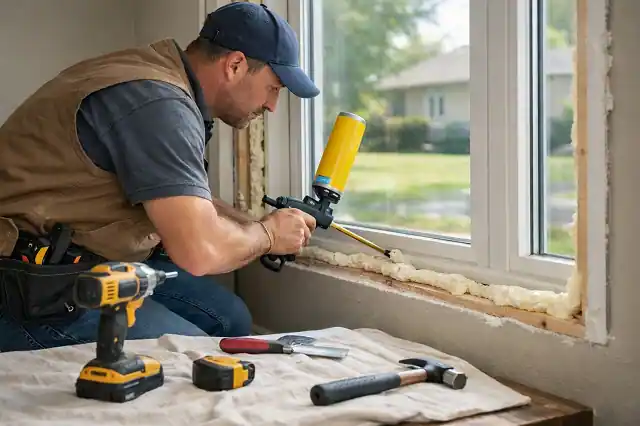
Which Programs Can Help With Windows?
The following programs are worth investigating, but they do not work in the same way. Some provide grant-funded services, some provide actual grants, and some provide funding to local governments that then operate housing programs.
| Program | Best fit | How windows may relate | Important limitation |
| Weatherization Assistance Program (WAP) | Low-income households with energy, health, or safety needs | Window work may be considered after the home’s assessment | No guaranteed window replacement or fixed cash award |
| USDA Section 504 | Very-low-income rural homeowners; grants are generally for homeowners age 62+ | Possible when the repair addresses an eligible health or safety hazard | Strict rural, income, ownership, age, and repair-purpose rules |
| Community Development Block Grant (CDBG) | Eligible households served by participating state or local programs | May support local housing rehabilitation | Rules, funding, and application process are local |
| HOME Investment Partnerships Program (HOME) | Low-income housing rehabilitation through participating jurisdictions | May support eligible owner-occupied rehabilitation where the local program permits it | No nationwide homeowner window application |
| Home Improvements and Structural Alterations (HISA) | Eligible veterans and service members needing medically necessary home modifications | Not a general window-replacement benefit | Medical justification and VA requirements apply |
| Specially Adapted Housing (SAH) | Veterans and service members with qualifying service-connected disabilities | May support eligible home adaptation projects | Strict disability and housing-adaptation requirements |
| Special Home Adaptation (SHA) | Veterans and service members meeting applicable disability requirements | May support eligible home adaptation projects | Not a general energy-efficiency window grant |
| State, utility, and nonprofit programs | Homeowners who do not fit one federal pathway | Can vary from weatherization to critical repairs or rebates | Availability and rules depend on location and provider |
Weatherization Assistance Program for Disabled Homeowners
The Weatherization Assistance Program is usually the most logical first stop for a low-income disabled homeowner whose main concern is energy efficiency.
The U.S. Department of Energy (DOE) says WAP reduces energy costs for low-income households by improving energy efficiency while addressing applicable health and safety concerns.
WAP is particularly relevant to disabled homeowners because federal program instructions require grantees to establish priority procedures that address persons with disabilities, along with elderly persons, households with children, high residential energy users, and households with a high energy burden.
Income eligibility is generally based on federal poverty guidelines, with DOE identifying households at or below 200% of the federal poverty guidelines as an eligibility pathway. States and territories can use other approved eligibility criteria, so homeowners should check the rules used by their local provider.
Verified WAP statistics
- DOE says approximately 32,000 homes receive weatherization services each year using DOE funds.
- More than 7.2 million families have benefited from weatherization services since the program began.
- The program supports approximately 8,500 jobs.
- A national evaluation reports average annual household energy savings of $372 or more.
These are program-wide statistics. They are not a promise that a particular homeowner will receive replacement windows or a specific dollar amount.
The U.S. Department of Energy (DOE) directs applicants to the appropriate state, territory, Tribal, or local weatherization provider.
Can WAP replace windows?
Possibly, but the important point is that WAP does not operate as a standard $10,000 or $15,000 window grant.
A participating provider assesses the home and determines which eligible weatherization measures should be completed. Window work may be considered when it meets program requirements and the assessment supports it.
If the assessment shows that air sealing or insulation will provide a better result, the program may prioritize those measures instead.
For related energy-efficiency assistance, see Home Energy Assistance Programs For Low Income Families and Free Attic Insulation Installation Grants For Low Income Homeowners.
USDA Section 504 Home Repair Assistance
The U.S. Department of Agriculture Rural Development (USDA) operates the Single Family Housing Repair Loans and Grants program, commonly known as Section 504.
This program is important for rural homeowners, but disability alone does not create eligibility for the grant.
USDA states that Section 504 provides loans to very-low-income homeowners to repair, improve, or modernize their homes. The grant component is designed for elderly very-low-income homeowners age 62 or older who need to remove health and safety hazards.
| Section 504 assistance | Current federal amount or rule |
| Maximum repair loan | $40,000 |
| Maximum regular repair grant | $10,000 |
| Maximum combined loan and grant | $50,000 |
| Regular grant age requirement | Generally age 62 or older |
| Grant purpose | Removal of health and safety hazards |
| Property requirement | Eligible rural property |
| Ownership requirement | Applicant must own and occupy the home |
USDA also states that regular Section 504 applications are handled through local Rural Development offices and that approval timing depends on funding availability and local processing.
When could windows fit Section 504?
A window project needs to be connected to an eligible repair purpose. A severely deteriorated or unsafe window may be more relevant than a window that is simply old or cosmetically outdated.
For example, the applicant may need to demonstrate that the condition creates a qualifying health or safety hazard. The local USDA office makes the final determination.
For additional rural repair information, see USDA Section 504 Home Repair Assistance.
HUD-Funded Local Housing Rehabilitation
HUD is another important source of funding, but homeowners should understand the difference between federal funding and a local homeowner application.
The U.S. Department of Housing and Urban Development (HUD) explains that Community Development Block Grant funds can support community development activities including housing rehabilitation and homeowner assistance.
The U.S. Department of Housing and Urban Development (HUD) also states that the HOME Investment Partnerships Program provides formula grants to states and localities that can be used for activities including housing rehabilitation.
Do not search for a universal “HUD window grant.” A homeowner normally needs to find the city, county, state, or local housing organization that operates the specific rehabilitation program. That local program decides which homeowners and repairs qualify.
How to find a HUD-funded window program
- Find your city or county housing department.
- Look for owner-occupied rehabilitation or home-repair programs.
- Ask whether the program uses CDBG or HOME funds.
- Ask whether replacement or repair of deteriorated windows is an eligible activity.
- Ask whether disability creates any local priority or preference.
- Confirm the income, property, and occupancy requirements.
For broader HUD assistance, see HUD Home Improvement Grants.
VA Options for Disabled Veterans
Disabled veterans should investigate VA programs separately from ordinary low-income home-repair programs. VA benefits have their own disability, medical, property, and adaptation requirements.
Home Improvements and Structural Alterations (HISA)
The U.S. Department of Veterans Affairs (VA) states that HISA provides medically necessary improvements and structural alterations to a Veteran’s or Servicemember’s primary residence.
The listed purposes include improving entrance or exit, access to essential sanitary facilities, accessibility to kitchen or bathroom sinks and counters, permanent ramping, and certain plumbing or electrical changes required for home medical equipment.
| HISA category | Lifetime benefit | Key requirement |
| Qualifying higher-level category | $6,800 | Must meet the applicable VA disability and medical-necessity rules |
| Other qualifying disability category | $2,000 | Must meet the applicable VA disability and medical-necessity rules |
| Medical justification | Required | Project must be medically justified |
| Residence | Primary residence | Project must meet VA residence requirements |
Important: HISA should not be marketed as a general window-replacement grant. VA’s official HISA description does not list ordinary energy-efficient window replacement as a standalone benefit. A homeowner should contact the local VA Prosthetic and Sensory Aids Service before assuming that a proposed window project qualifies.
Veterans researching broader assistance can also see Home Repair Grants For Veterans and Home Repair Loans For Disabled Veterans.
Specially Adapted Housing and Special Home Adaptation
The U.S. Department of Veterans Affairs (VA) provides Specially Adapted Housing and Special Home Adaptation benefits for Veterans and service members who meet specific disability requirements.
| VA benefit | FY 2026 maximum | Purpose |
| Specially Adapted Housing (SAH) | $126,526 | Qualifying home purchase, construction, or adaptation for eligible disabilities |
| Special Home Adaptation (SHA) | $25,350 | Qualifying home adaptation for eligible disabilities |
These figures are the maximum benefit amounts, not automatic window awards. A window project should not be described as eligible simply because a veteran qualifies for SAH or SHA. The project must fit the applicable VA housing-adaptation rules.
For a narrower veteran window resource, see Free Window Replacement Grants For Disabled Veterans.
Best Program for Your Situation
The best program depends primarily on the reason the windows need work.
| Your situation | First program to investigate | Why |
| Low-income disabled homeowner with high energy use | WAP | Disability is an allowable priority category, and the home can be assessed for energy and health/safety measures |
| Disabled homeowner age 62+ in an eligible rural area | USDA Section 504 | The grant component can address eligible health and safety hazards |
| Disabled veteran with a medically necessary home modification | VA HISA | Designed for medically necessary home improvements, subject to VA requirements |
| Disabled veteran with qualifying major adaptation needs | VA SAH/SHA | Specialized housing-adaptation benefits may apply |
| Window is severely deteriorated or unsafe | Local housing rehabilitation | CDBG- or HOME-funded local programs may support eligible rehabilitation |
| Homeowner does not qualify for federal programs | State, utility, or nonprofit programs | Local programs can have different eligibility and funding rules |
| Manufactured-home owner | WAP and local/state programs | Property-type eligibility should be confirmed before applying |
Manufactured-home owners can continue their research with Mobile Home Window Replacement Grants.
What These Programs Do NOT Cover
Knowing what a program does not cover prevents wasted applications and expensive mistakes.
What WAP does not guarantee
- A cash payment directly to the homeowner.
- Replacement of every window in the home.
- A fixed window-replacement amount.
- Approval simply because the homeowner has a disability.
- Replacement when another weatherization measure is more appropriate.
What USDA Section 504 does not automatically cover
- A window replacement project merely because the windows are old.
- A grant for every disabled homeowner.
- A regular grant for a homeowner under age 62.
- Homes outside eligible rural areas.
- Cosmetic improvements unrelated to an eligible repair purpose.
What HUD-funded programs do not guarantee
- A national fixed window grant amount.
- Direct applications to HUD for every homeowner.
- Automatic eligibility based only on disability.
- Window replacement in every participating community.
What VA HISA does not cover as a general rule
- Ordinary window replacement simply to improve energy efficiency.
- Routine home maintenance.
- Projects without the required medical justification.
- Work outside the approved HISA purposes.
2026 tax-credit warning: Do not add the former federal Section 25C Energy Efficient Home Improvement Credit to a 2026 window-replacement budget. The Internal Revenue Service (IRS) states that the Section 25C credit is not allowed for property placed in service after December 31, 2025.
Why an Assessment May Approve Something Other Than Windows
Weatherization and rehabilitation programs have limited resources, so an assessment can change the recommended project.
A home may have obvious drafty windows, but the biggest source of energy loss could actually be:
- Insufficient attic insulation
- Air leakage around the building envelope
- Unsealed penetrations
- Old heating or cooling equipment
- Moisture problems
- Other health and safety conditions
This is why homeowners should describe the problem rather than demand one particular solution.
For example, saying “the windows leak air badly, and the home has unusually high heating costs” gives an energy assessor something to investigate. Saying “I need ten new windows because a website says WAP pays for them” does not establish program eligibility.
Homeowners should also compare window assistance with Window Replacement to Improve Home Insulation and Home Insulation Cost and Grants when insulation may be a larger part of the problem.
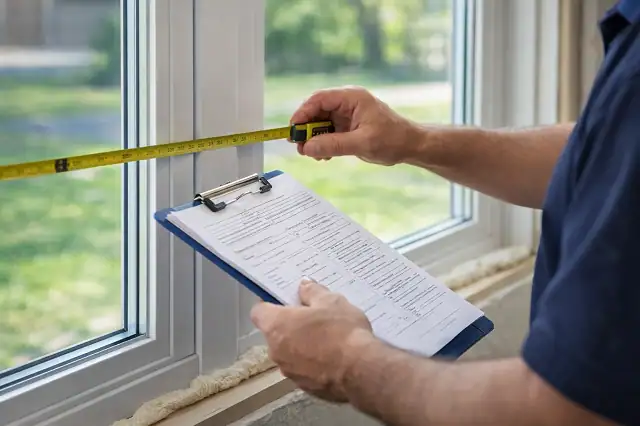
Choosing Energy-Efficient Replacement Windows
If a program approves replacement windows, product selection should be based on verified performance rather than a salesperson’s claim that a product is “government approved.”
The U.S. Environmental Protection Agency and U.S. Department of Energy’s ENERGY STAR program (ENERGY STAR) explain that residential window performance requirements vary by climate zone and include U-factor and, where applicable, Solar Heat Gain Coefficient requirements.
| Window specification | Why it matters |
| U-factor | Measures heat transfer through the window; lower values generally indicate better insulating performance |
| Solar Heat Gain Coefficient (SHGC) | Measures how much solar heat enters through the window |
| Glazing | Describes the glass configuration, such as double or triple glazing |
| Frame performance | Affects overall thermal performance and air leakage |
| Climate-zone rating | Helps identify products appropriate for the home’s local climate |
| Installation quality | Poor installation can reduce performance and create water or air-leakage problems. |
Supported statistic: ENERGY STAR reports that replacing single-pane windows with ENERGY STAR-certified windows can lower household energy bills by an average of up to 13% nationwide. Actual savings vary according to climate, existing windows, home characteristics, installation, and energy use.
For additional energy-efficient window information, see Energy-Efficient Windows and Doors.
How to Apply for Window Replacement Assistance
Once you identify the program that best fits your circumstances, follow a focused seven-step process.
Document the actual window problem
Take clear photographs of damaged glass, failed seals, water intrusion, deteriorated frames, drafts, unsafe operation, or other problems. Keep recent utility bills when energy use is relevant.
Identify your strongest eligibility pathway
Write down the facts that may matter: household income, disability status, age, rural location, veteran status, homeownership, and the reason the windows need work.
Find the agency that actually administers the program
Do not assume that the federal agency listed in an article accepts the application directly. WAP, HUD-funded programs, and many other programs are administered through state, county, city, Tribal, nonprofit, or community organizations.
If you are unsure where to begin, use the Home Repair Program Finder.
Gather your supporting documents
Documents commonly requested
- Proof of homeownership
- Proof of household income
- Government-issued identification
- Proof of primary residence when required
- Disability documentation when requested
- Veteran documentation when applicable
- Recent utility bills when energy need is relevant
- Photographs of the window condition
- Property information
- Contractor estimate when required
- Medical justification for applicable VA projects
Complete the required inspection or assessment
Allow the program administrator to determine whether replacement windows are an eligible and appropriate measure. Do not pressure an assessor to approve a particular product or number of windows.
Submit the application accurately
Use the official application channel and provide complete information. Do not use a private company merely because it promises faster approval.
Wait for approval before starting work
Ask whether written pre-approval is required. If it is, do not order the windows or begin installation before receiving authorization.
How to Strengthen a Disability-Related Application
A strong application explains the connection between the household’s circumstances and the requested repair without exaggerating the need.
Five points to document
- Household need: Explain the financial, energy, health, or safety burden.
- Window condition: Show the actual defect with photographs or inspection evidence.
- Disability relevance: Explain the effect on safe, healthy, or independent living when relevant.
- Program fit: Explain why the proposed repair matches the program’s purpose.
- Property eligibility: Provide accurate ownership, occupancy, location, and property information.
Do not invent a medical connection simply to qualify for a program. If a disability is relevant, document it accurately and let the administering agency decide how it affects eligibility.
Homeowners needing other disability-related improvements can also review Bathroom Accessibility Grants for Disabled Homeowners.
Why Applications Are Denied
Window assistance can be denied even when the homeowner is disabled or has a low income. Common reasons include:
- Income exceeds the applicable program limit.
- The property is outside the program’s service area.
- The homeowner does not meet ownership or occupancy requirements.
- The property is not eligible for a rural program.
- The applicant does not meet the age requirement for a specific grant.
- The window condition does not meet the program’s repair criteria.
- The proposed work is outside the program’s allowable scope.
- Another repair is considered a better use of limited weatherization funds.
- Required documents are missing or incomplete.
- Funding is unavailable, or the local program has a waiting list.
- The homeowner started work before required approval.
- A veteran’s proposed modification does not meet VA medical or disability requirements.
If you are denied, ask for the reason in writing. Find out whether missing documentation can be corrected, whether a waiting list exists, and whether another local program has a better eligibility match.
Can You Combine Different Sources of Assistance?
Sometimes, but never assume that two programs can pay the same expense.
A homeowner might, for example, receive weatherization services through one program and separately qualify for a different accessibility or housing-rehabilitation program. A state or utility incentive may also be available for an eligible energy-efficiency improvement.
Before combining assistance, ask each program:
- Can this benefit be combined with another grant?
- Can a utility rebate cover part of the remaining cost?
- Must other funding be disclosed?
- Is there a maximum combined benefit?
- Can two programs pay for the same window?
- Must each program approve the project before work begins?
Never conceal another grant, rebate, loan, or payment source. Duplicate funding rules vary by program.
State, Utility, and Nonprofit Options
Federal programs are only part of the search. Disabled homeowners who do not fit a federal program may find help through a state housing agency, state energy office, community action agency, utility, county rehabilitation program, or nonprofit.
These programs can differ substantially. One utility may offer an energy-efficiency rebate while a county may offer owner-occupied rehabilitation and a nonprofit may focus on urgent safety repairs.
For nonprofit-specific assistance, see Nonprofit Window Replacement Grants and Nonprofit Home Repair Grants.
For broader low-income improvement options, see Home Improvement Grants For Low Income Families.
Frequently Asked Questions
Can disabled homeowners get free window replacement in 2026?
Some disabled homeowners may receive fully funded or partially funded window work through WAP, local housing rehabilitation, state programs, utilities, nonprofits, or qualifying veteran programs. Disability alone does not guarantee free windows.
What is the best first program for a low-income disabled homeowner?
For an energy-efficiency problem, WAP is usually the first program to investigate because persons with disabilities are an allowable priority category and the home can be assessed for eligible weatherization measures.
Can USDA Section 504 provide a window replacement grant?
Potentially, but the grant has strict eligibility rules. The regular grant is generally for homeowners age 62 or older who are very-low income, own and occupy an eligible rural home, cannot obtain affordable credit elsewhere, and need to remove health and safety hazards.
Can a disabled veteran use HISA for replacement windows?
HISA is not a general window-replacement benefit. VA describes HISA as a medically necessary home-improvement and structural-alteration benefit for specified purposes. Veterans should obtain guidance from their local VA Prosthetic and Sensory Aids Service before assuming that a window project qualifies.
Can SAH or SHA pay for windows?
SAH and SHA are specialized home-adaptation benefits for Veterans and service members who meet specific disability requirements. They should not be presented as automatic window grants. Any window work would need to fit the approved adaptation project and VA requirements.
Does the federal window tax credit apply to a 2026 replacement?
No. The Internal Revenue Service states that the Section 25C Energy Efficient Home Improvement Credit is not allowed for property placed in service after December 31, 2025. State and utility incentives are separate and must be checked individually.
Should I replace my windows before applying?
Do not start work until you know the program’s rules. Many assistance programs require an inspection, assessment, or written approval before work begins. Starting too early can make the project ineligible.
Official Sources Used for This Article
The major program information in this article is based on official government and program sources rather than private websites advertising guaranteed grant amounts.
- U.S. Department of Energy (DOE) — Weatherization Assistance Program purpose, statistics, and program structure.
- U.S. Department of Energy (DOE) — WAP application information and local-provider process.
- U.S. Department of Agriculture Rural Development (USDA) — Section 504 eligibility and assistance limits.
- U.S. Department of Housing and Urban Development (HUD) — CDBG community development and housing rehabilitation.
- U.S. Department of Housing and Urban Development (HUD) — HOME-funded affordable housing and rehabilitation.
- U.S. Department of Veterans Affairs (VA) — HISA purposes, exclusions, medical justification, and benefit amounts.
- U.S. Department of Veterans Affairs (VA) — SAH and SHA eligibility and FY2026 maximum amounts.
- Internal Revenue Service (IRS) — Section 25C termination after December 31, 2025.
- U.S. Environmental Protection Agency and U.S. Department of Energy (ENERGY STAR) — residential window performance and energy-efficiency information.
Why This Information Is Trustworthy
Last Updated: August 17, 2026
Reviewed By: HomePropertyGrants.com Editorial & Research Team
Our accuracy standard
- Major federal program claims are connected to official government sources.
- Specific dollar amounts are included only when supported by current official information.
- Programs are distinguished by their actual purpose rather than being presented as interchangeable “free window grants.”
- Local program rules and funding availability are identified as limitations.
- The article separates disability-related priority from automatic eligibility.
- The former federal 2026 window tax-credit claim has been removed and replaced with the current IRS rule.
Final Checklist Before Applying
Use this checklist before submitting an application
- Confirm the reason your windows need repair or replacement.
- Check your household income against the program’s current rules.
- Confirm that you own and occupy the home if required.
- Confirm that your property is inside the program’s service area.
- Document disability status when it is relevant to eligibility or priority.
- Check rural eligibility if considering USDA Section 504.
- Check veteran and service-connected disability requirements if considering VA benefits.
- Photograph the window problem.
- Collect income, ownership, benefit, and utility documents.
- Find the actual administering agency.
- Ask whether an energy audit or property inspection is required.
- Ask whether windows are an eligible measure before choosing a product.
- Ask whether pre-approval is required.
- Do not rely on a contractor’s promise that a project is grant eligible.
- Disclose other funding sources when required.
- Keep copies of applications, approvals, estimates, and project documents.
Conclusion
Disabled homeowners can find assistance for window repairs or replacement in 2026, but the strongest strategy is to match the window problem to the program’s actual purpose. There is no universal federal grant that automatically provides free replacement windows simply because a homeowner has a disability.
For a low-income disabled household facing an energy-efficiency problem, the Weatherization Assistance Program is the most logical first place to investigate. For a qualifying rural homeowner age 62 or older who needs to remove a health or safety hazard, USDA Section 504 may be relevant. Disabled veterans should separately investigate VA programs, while homeowners with deteriorated windows should also check local housing rehabilitation programs funded through sources such as CDBG or HOME.
The most important practical step is to document what is wrong with the windows and why the repair is necessary. Let the administering agency determine whether replacement, repair, insulation, air sealing, or another improvement is the appropriate solution.
If you need help with other window conditions, see Window Frame Rot Repair and Replacement Grants or Foggy Double-Pane Window Replacement Assistance.
Bottom line: Start with the program that matches the reason for the project. Use WAP for energy-focused needs, USDA Section 504 when its rural senior health-and-safety requirements fit, VA programs for qualifying disabled veterans, and local housing rehabilitation or state and nonprofit programs for other eligible repair needs.

Arthur Pendelton is a senior housing policy researcher and public welfare analyst with over eight years of experience tracking federal, state, and non-profit residential repair programs. He specializes in statutory grant frameworks, including USDA Section 504 Rural Housing, the Department of Energy’s Weatherization Assistance Program (WAP), and municipal HUD Community Development Block Grants (CDBG). Arthur systematically audits Federal Register publications and Title 7/42 CFR regulatory updates to provide low-income homeowners, seniors, and military veterans with accurate, barrier-free application guidance.