
Water-damaged drywall can turn a small leak into a much larger home repair problem. Roof leaks, broken pipes, overflowing appliances, floods, and moisture intrusion can stain, swell, weaken, or contaminate interior wall panels. If the source of the water is not fixed quickly, the damage may spread into insulation, framing, flooring, and other parts of the home.
Financial help may be available when the repair is connected to a health or safety problem, a qualifying disaster, or a local housing rehabilitation program. However, there is no single federal “drywall grant” that automatically pays every homeowner’s repair bill. Eligibility depends on the program, location, household income, property, cause of damage, and whether other funding such as insurance is available.
This updated article focuses specifically on grants and financial assistance for water-damaged interior drywall panels. It explains which programs may help, which programs should not be treated as general drywall grants, how disaster assistance works, what documents to prepare, and how to find local repair funding without confusing a broad home-improvement program with a drywall-specific benefit.
Featured Answer: Financial assistance for water-damaged drywall may come from USDA Section 504, local housing rehabilitation programs funded through HUD, FEMA disaster assistance after an eligible declared disaster, Weatherization Assistance Program services tied to qualifying energy or health-and-safety work, nonprofit repair programs, and state or local housing agencies. The program must specifically allow the type of repair needed.
Important: A federal program may fund the agency or local government rather than giving a homeowner a direct check. Always confirm the actual local program rules, income limits, eligible repairs, funding availability, and application process before starting work.
What Happens When Interior Drywall Gets Water-Damaged?
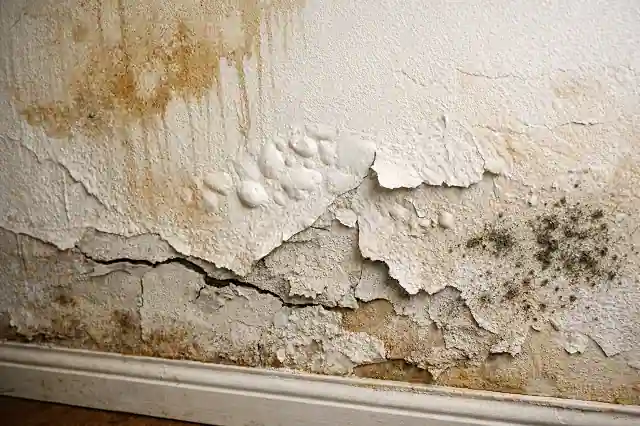
Drywall, also called gypsum board or wallboard, can absorb moisture. The longer the material remains wet, the greater the chance of staining, swelling, weakened seams, deterioration, and mold growth.
Common warning signs include:
- Yellow, brown, or spreading water stains
- Bubbling or peeling paint
- Soft, swollen, or crumbling drywall
- Damaged seams or tape
- Sagging ceiling sections
- Musty odors
- Visible mold growth
- Wet insulation behind the wall
The U.S. Environmental Protection Agency (EPA) recommends drying damp or wet surfaces within 24–48 hours when possible and fixing the source of the water problem. The Centers for Disease Control and Prevention (CDC) also recommends cleaning and drying a home quickly after flooding. These timeframes are important because moisture control is one of the main ways to reduce mold growth.
Warning: Do not simply paint over a water stain or cover visible mold with new drywall. The underlying leak or moisture source should be corrected first. If drywall is swollen, contaminated, structurally compromised, or heavily moldy, professional assessment may be appropriate.
Common Causes of Water-Damaged Drywall
The cause of the damage matters because some assistance programs focus on health and safety hazards while others are specifically tied to disasters, energy improvements, or local housing rehabilitation.
Roof leaks
A damaged roof can allow rainwater to enter the attic, ceiling, insulation, and interior walls. If the roof remains unrepaired, replacing drywall alone will not solve the problem.
For homeowners dealing with the underlying roofing problem, see grants for fixing small roof leaks or the broader roof repair and replacement grants article.
Plumbing and pipe leaks
Broken supply lines, drain leaks, failed valves, leaking appliances, and damaged water pipes can soak drywall from inside the wall cavity. The water source should be repaired before damaged wall material is replaced.
If the problem begins with a pipe or plumbing line, the article on leaking water pipe repairs provides a more focused funding path.
Water heater failures
A failed water heater can release a large amount of water quickly and damage nearby drywall, flooring, and insulation. Homeowners dealing with this type of problem can also review water heater replacement grants.
Flooding and disaster damage
Flooding may affect drywall across an entire room or multiple levels of a house. Disaster-related assistance can be different from ordinary home repair funding because FEMA eligibility depends on the disaster declaration and the specific assistance rules for that event.
Window and door leaks
Failed flashing, damaged seals, or poor drainage around windows and doors can allow water into wall cavities. The damaged wall should not be repaired permanently until the source of the intrusion has been corrected.
Basement moisture
Groundwater, seepage, poor drainage, and foundation problems can damage basement walls. Homeowners can also review assistance for leaky basements when the drywall problem is part of a larger basement moisture issue.
Which Drywall Repairs May Qualify for Assistance?
There is no universal list of repairs covered by every grant. A program may pay for one part of a project but exclude another. For example, a local rehabilitation program might cover damaged wall materials while requiring the homeowner to address an unrelated cosmetic repair separately.
| Repair or project | Potential funding relevance | What to verify |
| Replacing swollen drywall | Often relevant when the repair addresses health, safety, or qualifying rehabilitation needs | Whether the local program permits interior wall replacement |
| Repairing ceiling drywall | May be included when connected to an eligible roof, plumbing, or disaster repair | Whether the underlying cause is also eligible |
| Removing mold-damaged materials | May be relevant to health-and-safety or disaster projects | Whether mold remediation is an eligible activity |
| Replacing wet insulation | Potentially eligible under certain weatherization or rehabilitation projects | Whether the work is tied to the program’s allowable measures |
| Repairing the water source | May be necessary for a complete repair project | Whether plumbing, roofing, drainage, or other source repairs are included |
| Painting only | Usually weaker as a standalone grant request | Whether the work is part of an eligible rehabilitation project |
For a broader comparison of water-damaged walls and ceilings, see grants for fixing water-damaged walls and ceilings.
USDA Section 504 Home Repair Assistance
The U.S. Department of Agriculture Rural Development (USDA) operates the Single Family Housing Repair Loans and Grants program, commonly called the Section 504 Home Repair program.
This is one of the most relevant federal options for qualifying rural homeowners. The program provides loans to very-low-income homeowners for repairs, improvements, modernization, and removal of health and safety hazards. Grants are intended for eligible elderly very-low-income homeowners and must be used to remove health and safety hazards.
| Section 504 feature | Current federal rule |
| Maximum repair loan | $40,000 |
| Maximum standard grant | $10,000 |
| Maximum grant for a home damaged in a presidentially declared disaster area | $15,000 |
| Maximum combined loan and grant assistance | $50,000, or $55,000 in a presidentially declared disaster area |
| Loan interest rate | 1% fixed |
| Loan term | 20 years |
| Grant age requirement | Generally 62 or older |
USDA states that applicants must own and occupy the home, meet the applicable very-low-income limit, be unable to obtain affordable credit elsewhere, and live in an eligible rural area. The grant portion is specifically tied to removing health and safety hazards.
That distinction is important. A homeowner should not assume that every drywall replacement project automatically qualifies. The local USDA Rural Development office must determine whether the specific repair is eligible.
USDA example: USDA published a 2026 case in which a New Jersey family with a failing roof received a $10,000 Section 504 grant plus a $6,460 loan. The example shows how Section 504 can be used for a serious health-and-safety repair, but it does not mean every homeowner will receive the same amount.
Homeowners who want a more detailed look at the program can review Section 504 home repair assistance.
Note: USDA Section 504 is a rural housing program. Use the official USDA eligibility tools and your local Rural Development office to verify whether the property is in an eligible area before treating this as an option.
HUD Community Development Block Grant Assistance
The U.S. Department of Housing and Urban Development (HUD) administers the Community Development Block Grant program (CDBG).
CDBG is important because HUD allows eligible grantees to use CDBG funds for rehabilitation of residential structures. However, HUD does not generally send CDBG repair money directly to individual homeowners.
Instead, cities, counties, states, and other eligible grantees design local programs. A local housing rehabilitation program may use CDBG funds to help eligible homeowners repair health and safety problems, but the actual rules vary by location.
| CDBG fact | What homeowners should know |
| Federal administrator | U.S. Department of Housing and Urban Development |
| Who receives federal funds | Eligible states, cities, counties, and other grantees |
| Residential rehabilitation | Permitted as an eligible CDBG activity when program requirements are met |
| Direct homeowner application to HUD | Generally no |
| Local eligibility | Determined by the local or state CDBG program |
| Low- and moderate-income benefit | At least 70% of CDBG funds over the applicable period must benefit low- and moderate-income persons |
This makes local housing departments especially important. If your drywall damage is serious and you have limited income, ask whether your city or county operates a homeowner rehabilitation, emergency repair, healthy homes, or housing preservation program using CDBG funds.
Do not rely on a generic national CDBG grant amount. HUD does not establish one universal homeowner drywall grant amount because the local grantee determines how its funds are administered.
FEMA Assistance After a Qualifying Disaster
When water-damaged drywall results from a qualifying federally declared disaster, FEMA may be a much more relevant source of assistance than ordinary home repair grants.
FEMA’s Individuals and Households Program can provide housing assistance for eligible disaster survivors. Depending on the disaster and the applicant’s circumstances, assistance may address necessary home repairs when the damage is not fully covered by insurance or other available resources.
The federal maximum for housing assistance was $42,500 in FY2024 and is adjusted annually. FEMA’s 2025 homeowner assistance materials also state a $42,500 maximum for home repair and replacement assistance. Because the amount and program rules can change, homeowners should check the current disaster-specific information rather than treating $42,500 as a guaranteed 2026 award.
Disaster warning: FEMA assistance is not a general-purpose drywall grant. The home must be affected by an eligible disaster, the applicant must meet FEMA requirements, and the repair must qualify under the applicable disaster assistance rules. Insurance and other assistance can also affect eligibility because FEMA generally cannot duplicate benefits for the same loss.
For disaster applications, homeowners should document the condition of the home before major cleanup whenever it is safe to do so. Keep photographs, contractor estimates, insurance correspondence, receipts, inspection reports, and other evidence showing what happened.
Homeowners affected by a declared disaster can apply or check available assistance through DisasterAssistance.gov (FEMA).
Weatherization Assistance Program: What It Can and Cannot Do
The Department of Energy’s Weatherization Assistance Program (WAP) should not be described as a general drywall replacement grant.
Its primary purpose is improving energy efficiency and addressing related health and safety conditions in eligible low-income homes. However, DOE’s whole-house weatherization guidance includes evaluation of mold and moisture hazards and allows certain incidental health-and-safety measures. It also identifies minor roof and wall leak repairs before insulation work in appropriate circumstances.
This means WAP may be relevant when water or moisture problems are connected to an eligible weatherization project, but it should not be presented as a guaranteed source of money for replacing a room full of drywall.
| WAP situation | How to view it |
| Energy-efficiency work | Core purpose of the program |
| Moisture hazard evaluation | Included in DOE whole-house weatherization guidance |
| Minor wall or roof leak correction | May be addressed when necessary before eligible insulation work |
| Standalone drywall replacement | Not automatically funded simply because drywall is water-damaged |
| Program amount | Varies by state, local provider, funding source, and project |
That distinction prevents WAP from becoming a source of false expectations. If your primary problem is energy loss plus moisture around an insulated wall, WAP may be worth asking about. If your only need is replacing damaged drywall after a plumbing leak, a housing rehabilitation or emergency repair program may be more appropriate.
HUD HOME Investment Partnerships Program
The HOME Investment Partnerships Program (HOME) provides formula funding to states and local participating jurisdictions. HUD states that HOME funds can be used for a range of affordable housing activities, including rehabilitation of housing.
Like CDBG, HOME is not a universal direct-to-homeowner drywall grant. A participating jurisdiction may design a homeowner rehabilitation program that uses HOME funding, but the homeowner must qualify under that local program.
Best way to use this information: Instead of searching for a national “HOME drywall grant,” contact the local housing department or participating jurisdiction and ask whether it currently offers owner-occupied rehabilitation assistance funded through HOME.
This approach reduces wasted applications because the local agency can explain whether water-damaged drywall, plumbing repairs, mold remediation, or related work is currently eligible.
State, County, and City Repair Programs
For many homeowners, the most practical source of drywall assistance is not a federal application. It is a state, county, city, housing authority, community development office, or local nonprofit program.
Programs can have names such as:
- Owner-Occupied Rehabilitation
- Emergency Home Repair
- Critical Home Repair
- Housing Rehabilitation
- Healthy Homes
- Home Preservation
- Housing Repair Assistance
- Disaster Recovery Home Repair
Local programs may combine federal, state, county, city, nonprofit, or private funding. Because funding cycles differ, an option that was closed last year may reopen later, while another program may stop accepting applications after its annual funds are committed.
Use the home repair program finder as a starting point, then verify every program with the agency that actually administers it.
Nonprofit Assistance for Water-Damaged Homes
Nonprofits can be useful when government programs are closed, have long waiting lists, or do not cover a particular repair.
Habitat for Humanity operates local home preservation and repair programs in many communities. The work, eligibility, financing, and services vary by affiliate. Habitat explains that local families may receive repair services based on income, need, and willingness to participate.
Rebuilding Together works through local affiliates to provide home repair assistance. Its national organization states that many affiliates provide critical home repairs to homeowners, although eligibility and services differ by location.
These programs should not automatically be described as free drywall grants. Some provide repairs at no cost, while others may use affordable financing or local partnership models.
For older homeowners, Habitat’s Aging in Place program (Aging in Place) can also be relevant because participating affiliates may provide critical repairs and modifications for older adults.
Who Is Most Likely to Qualify?
Eligibility varies widely, but several factors appear repeatedly across repair assistance programs.
| Eligibility factor | Why it matters |
| Homeownership | Many repair programs are restricted to owner-occupied properties |
| Primary residence | Programs often require the damaged property to be the applicant’s primary home |
| Household income | Many programs prioritize low- or very-low-income households |
| Health or safety problem | Serious water damage may be more relevant than cosmetic damage |
| Rural location | Important for USDA Section 504 eligibility |
| Disaster declaration | Critical for certain FEMA disaster assistance |
| Age | Some programs prioritize older homeowners or have age-specific grant rules |
| Disability or veteran status | Some specialized programs may provide additional assistance for qualifying applicants |
Homeowners who fall into one of these groups can also review targeted resources for senior homeowners, disabled homeowners, veterans, and rural homeowners.
Veterans and Disability-Related Assistance
Veterans should be careful when evaluating VA housing benefits for water-damaged drywall. VA programs are generally designed around specific disability-related housing adaptations rather than ordinary home maintenance.
The Department of Veterans Affairs (VA) offers disability housing programs such as Specially Adapted Housing and Special Home Adaptation grants for qualifying veterans and service members. These benefits are focused on adapting homes for certain service-connected disabilities.
The Home Improvements and Structural Alterations benefit (HISA) can provide medically necessary home improvements and structural alterations. The current VA information lists a lifetime benefit of up to $6,800 for certain qualifying conditions and up to $2,000 for other eligible disability situations. HISA is not a general-purpose water-damage repair benefit and excludes routine maintenance such as roof replacement.
Therefore, a veteran should not apply for HISA simply because drywall is damaged. It becomes more relevant when the requested modification is medically necessary and fits the HISA rules.
How to Find the Right Program for Water-Damaged Drywall
The fastest approach is to identify the cause of the damage first, then match that cause to the appropriate funding source.
| Cause of drywall damage | First place to investigate |
| Flood or federally declared disaster | FEMA and the state/local disaster recovery system |
| Roof leak | Local emergency or rehabilitation program, USDA if eligible, insurance if covered |
| Broken pipe | Insurance, local repair programs, emergency housing assistance |
| Water heater failure | Insurance, local repair assistance, appliance or energy programs where applicable |
| Basement seepage | Local housing rehabilitation, drainage/foundation assistance, nonprofit repair programs |
| Moisture plus energy-efficiency problem | Weatherization provider and local housing agency |
| Rural health-and-safety repair | USDA Section 504 Rural Development office |
Homeowners should also review emergency home repair assistance when the damage creates an immediate health or safety concern.
Documents to Prepare Before Applying
Application checklist
- Photos of every damaged drywall area
- Photos showing the source of the water when possible
- Proof of homeownership
- Proof that the property is your primary residence
- Recent income documentation
- Recent tax or benefit records if required
- Written contractor estimates
- Insurance policy and claim information when applicable
- Disaster declaration information when applicable
- Inspection reports
- Receipts for emergency work already completed
- Any documents requested by the administering agency
Do not wait until after the wall has been completely rebuilt to start documenting the damage. A clear record can help an agency, insurer, or disaster program understand what happened and what repairs are necessary.
How to Apply for Water-Damaged Drywall Assistance
Document the damage
Photograph stains, swelling, holes, damaged seams, ceiling damage, mold, wet insulation, and the apparent source of the water. Take wide photos showing the room and close-up photos showing individual problems.
Stop the source of the water
Repair or isolate the active leak when it is safe to do so. A grant application should not be used as a reason to leave an active plumbing or roof leak untreated.
Get a written repair estimate
Ask a qualified contractor to separate the estimate into logical components such as water-source repair, drywall removal, disposal, drying, mold remediation, insulation replacement, drywall installation, finishing, and painting.
Check insurance first when appropriate
Insurance may cover certain sudden and accidental losses, depending on the policy and circumstances. Long-term maintenance problems, gradual seepage, flooding, and other exclusions may be treated differently. Review the policy and claim determination rather than assuming either insurance or a grant will pay.
Contact the correct housing agency
For local assistance, contact your city or county housing department, community development office, housing authority, or state housing agency. For rural Section 504 assistance, contact USDA Rural Development.
Submit the complete application
Follow the program’s exact documentation requirements. Missing income records, ownership documents, estimates, or disaster information can delay processing.
Wait for inspection or approval before starting major work
Some programs require an inspection, scope of work, or formal approval before eligible repairs begin. Starting work too early can create problems if the program requires prior authorization.
For more application advice, see how to apply for home repair grants.
Application tip: Ask the agency one precise question: “Does your current homeowner repair program cover replacement of water-damaged interior drywall when the underlying water source has been corrected?” This is more useful than asking generally whether the agency offers “free grants.”
How Long Can the Process Take?
There is no universal four-, eight-, or twelve-week approval period. Processing depends on the program, local funding, inspection requirements, application volume, disaster status, and whether the project needs environmental or construction review.
| Stage | What can affect timing |
| Initial inquiry | Agency workload and whether the program is accepting applications |
| Application | Completeness of income, ownership, damage, and contractor documents |
| Inspection | Inspector availability and project complexity |
| Eligibility review | Income, property, program rules, and available funding |
| Approval | Scope-of-work review, funding availability, and program requirements |
| Construction | Contractor availability, permits, materials, and the extent of water damage |
Emergency and disaster programs can operate under different timelines. Homeowners should ask the administering agency whether emergency processing exists when the property has an immediate health or safety issue.
Insurance Versus Grants for Water-Damaged Drywall
Insurance and grant assistance are not interchangeable. Insurance is based on the policy and the cause of loss. Government or nonprofit assistance is based on the rules of the specific program.
| Funding source | Best fit | Important limitation |
| Homeowners insurance | Certain covered sudden and accidental losses | Coverage depends on the policy and cause of damage |
| Flood insurance | Covered flood-related losses | Separate flood policy rules apply |
| FEMA | Eligible disaster-related housing needs | Requires an eligible disaster and applicant eligibility |
| USDA Section 504 | Qualifying rural health-and-safety repairs | Strict income, age, property, rural-area, and program rules |
| CDBG-funded local repair | Local rehabilitation and critical repair programs | Rules and funding vary by local grantee |
| HOME-funded local repair | Eligible local housing rehabilitation | Not a universal direct federal homeowner grant |
| Nonprofit repair program | Critical repairs for qualifying households | Services and eligibility vary by local affiliate |
If insurance pays for part of the loss, tell the assistance agency. Disaster programs and other public assistance generally have rules designed to prevent duplicate payment for the same eligible expense.
How to Prevent Another Drywall Water-Damage Problem
The best repair is one that also addresses the source of the moisture.
- Inspect the roof and flashing regularly.
- Repair plumbing leaks as soon as they are discovered.
- Check water heaters and appliance supply lines for leaks.
- Keep gutters and downspouts working correctly.
- Make sure water drains away from the foundation.
- Seal appropriate window and door openings.
- Control excessive indoor humidity.
- Use bathroom and kitchen exhaust fans that vent outdoors.
- Inspect damp basements and crawl spaces.
- Dry wet areas quickly after a water event.
The EPA states that moisture control is the key to controlling indoor mold and recommends drying wet areas within 24–48 hours when possible. The CDC similarly advises homeowners to dry or remove wet items within 24–48 hours after a flood or storm.
Moisture-control note: If drywall or other porous materials remain wet for an extended period, do not assume that painting or surface cleaning will solve the problem. The moisture source and the condition of the material should be evaluated first.
Frequently Asked Questions
Can I get a grant to repair water-damaged drywall?
Possibly. Assistance may be available through USDA Section 504, local housing rehabilitation programs, disaster assistance, weatherization-related services, or nonprofit repair programs. Eligibility depends on the cause of damage, property, income, location, and program rules.
Does the federal government have a specific drywall replacement grant?
There is no single nationwide federal program that automatically gives homeowners money specifically for drywall replacement. Several broader housing, disaster, rehabilitation, and weatherization programs may cover drywall work when it is part of an eligible project.
Can USDA Section 504 pay for water-damaged drywall?
It may be possible when the repair fits the program’s eligible health-and-safety requirements and the homeowner meets USDA’s income, age, rural-area, ownership, and other rules. The USDA grant is not a general-purpose drywall benefit.
Does FEMA pay for drywall after a flood?
FEMA may provide eligible housing assistance after a qualifying declared disaster. The damage, property, applicant, insurance situation, and disaster-specific rules all matter. FEMA assistance should not be treated as guaranteed reimbursement for every drywall repair.
Can CDBG pay for interior drywall repairs?
CDBG can fund rehabilitation of residential structures, but HUD provides CDBG funds to eligible grantees rather than generally paying individual homeowners directly. A city, county, or state may operate a homeowner repair program using CDBG funds.
Does Weatherization Assistance pay for drywall?
Not automatically. WAP focuses on energy efficiency and related health and safety measures. DOE guidance includes moisture and mold hazard evaluation and certain incidental repairs, but a homeowner should not assume that WAP will pay for standalone drywall replacement.
Do I have to repay a home repair grant?
Some grants do not require repayment, but the rules vary. USDA Section 504, for example, has specific repayment provisions in certain circumstances, including a requirement related to selling a property within the applicable period. Always read the actual program agreement before accepting assistance.
Why You Can Trust This Information
Last Updated: August 2026
Reviewed By: Housing Assistance Research Team
- Federal program descriptions are checked against official USDA, HUD, FEMA, DOE, VA, EPA, and CDC information where applicable.
- Program amounts are presented only when supported by an official source or clearly identified as variable.
- FEMA’s disaster assistance limits are not presented as a guaranteed 2026 award because disaster assistance amounts and rules can be adjusted.
- Weatherization Assistance is described as an energy-efficiency and health-and-safety program rather than a general drywall grant.
- CDBG and HOME are explained as funding streams administered through participating jurisdictions rather than universal direct homeowner grants.
- Internal recommendations are focused on water damage, plumbing, roofing, emergency repair, rural repair, and other closely related homeowner needs.
Final Thoughts
Water-damaged interior drywall should be treated as part of a larger moisture problem rather than as an isolated cosmetic repair. The first priority is to identify and stop the water source, document the damage, and determine whether the project involves a health or safety issue, a qualifying disaster, or another eligible rehabilitation need.
For rural homeowners, USDA Section 504 can be an important option when the household and property meet the program rules. For homeowners in cities and counties, CDBG- or HOME-funded rehabilitation programs may provide local assistance. FEMA may help after qualifying disasters, while WAP can be relevant when moisture issues intersect with eligible weatherization work. Nonprofits can provide another path when local programs are unavailable.
The most important correction is to avoid treating any of these programs as guaranteed drywall grants. The exact repair, location, household circumstances, funding source, and program rules determine whether assistance is available.
Homeowners who want to understand how the drywall topic fits within the broader site structure can also review home improvement grants for homeowners in 2026. That broader page covers the overall home-improvement funding landscape, while this article remains focused specifically on water-damaged interior drywall and the assistance paths that may apply to that problem.

Arthur Pendelton is a senior housing policy researcher and public welfare analyst with over eight years of experience tracking federal, state, and non-profit residential repair programs. He specializes in statutory grant frameworks, including USDA Section 504 Rural Housing, the Department of Energy’s Weatherization Assistance Program (WAP), and municipal HUD Community Development Block Grants (CDBG). Arthur systematically audits Federal Register publications and Title 7/42 CFR regulatory updates to provide low-income homeowners, seniors, and military veterans with accurate, barrier-free application guidance.