
Veterans may qualify for assistance with door replacement or entrance modifications in 2026 through VA housing programs, USDA Rural Development, Weatherization Assistance, HUD-funded local rehabilitation programs, and selected nonprofit or local programs. The best option depends on why the door needs to be replaced, whether the project is related to a disability or medical need, household income, property location, homeownership, and the rules of the program.
There is no single federal program that automatically provides every veteran with a free replacement door. Instead, veterans should match the door problem to the program designed for that type of need. A medically necessary accessibility modification may point toward VA HISA, while a very-low-income homeowner in an eligible rural area may need to investigate USDA Section 504. Energy-related problems may lead to weatherization assistance, while general rehabilitation or safety work may be handled through a local housing program.
A damaged exterior door can affect security, weather protection, accessibility, and energy efficiency. Problems such as a broken lock, damaged frame, severe rot, water intrusion, unsafe threshold, or major air gaps may make replacement or modification more important.
Quick Answer: Can veterans get free door replacement in 2026?
Some veterans may qualify for full or partial assistance with a door replacement or entrance modification through VA programs, USDA Section 504, weatherization, local housing programs, or nonprofit assistance. Veteran status alone does not guarantee a free door. Eligibility depends on the veteran’s circumstances, the property, the reason for the work, and the requirements of the specific program.
This guide focuses specifically on door replacement grants for veterans in 2026, including VA HISA, SAH, SHA, USDA Section 504, Weatherization Assistance, local rehabilitation programs, eligibility, documentation, costs, and the application process.
Important: Do not assume that a program will pay for a complete door replacement simply because you are a veteran. Some programs require a qualifying disability, medical necessity, very-low household income, an eligible rural property, a documented health or safety problem, or another specific condition.
For the broader national topic, see our Door Replacement Grants 2026 complete guide.
Door Replacement Assistance for Veterans in 2026
| Program or Assistance Source | Best Fit | Possible Door Connection |
| VA HISA | Veterans with qualifying medically necessary modification needs | Entrance, exit, accessibility, and structural modifications |
| VA SAH | Veterans with certain severe qualifying service-connected disabilities | Door or entrance work may be part of a larger eligible adaptation |
| VA SHA | Veterans with certain qualifying service-connected disabilities | Disability-related home adaptations |
| USDA Section 504 | Very-low-income homeowners in eligible rural areas | Eligible health and safety repairs or broader home improvements |
| Weatherization Assistance | Eligible low-income households | Energy-efficiency and eligible health and safety measures |
| HUD-funded local rehabilitation | Eligible homeowners served by participating communities | Local rehabilitation, safety, and housing improvement work |
| Local nonprofit assistance | Veterans with qualifying repair needs | Labor, materials, referrals, or repair assistance depending on the organization |
These programs do not all work the same way. Some provide grants, some provide loans, some provide direct services, and some operate only through local agencies. A veteran should therefore determine the type of assistance available before assuming that a program will pay the full cost of a new door.
Veterans looking specifically at federal veteran assistance can also review our federal home repair grants for veterans guide.
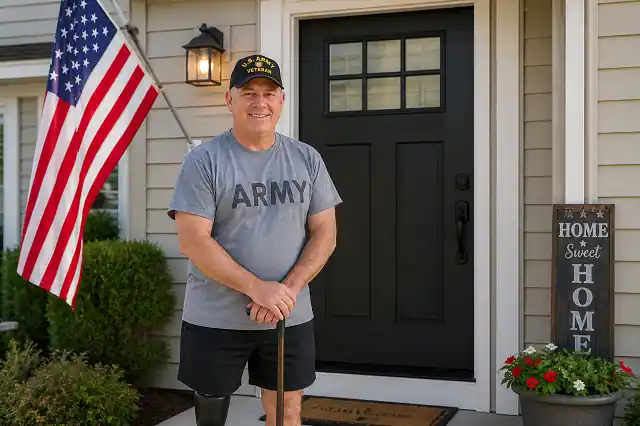
When Does a Veteran’s Door Problem Become a Funding Issue?
A door replacement request is more compelling when the project solves a documented housing, safety, accessibility, or medical problem rather than simply upgrading the appearance of the home.
- A damaged lock prevents the entrance from being secured.
- A deteriorated frame prevents the door from closing correctly.
- Rot or water damage has weakened the entrance.
- A high threshold creates an accessibility barrier.
- The door is too difficult for the veteran to operate because of a qualifying disability.
- The doorway is too narrow for the veteran’s mobility equipment.
- Major gaps cause significant air leakage.
- Storm or other damage has made the entrance unsafe.
The important question is not simply whether the door is old. It is why the door needs to be repaired or replaced and whether that reason matches the purpose of an available assistance program.
Veterans with a documented disability-related housing need can also review our home repair grants for disabled veterans guide.
VA HISA for Medically Necessary Door and Entrance Modifications
The U.S. Department of Veterans Affairs (VA) Home Improvements and Structural Alterations program (HISA) provides assistance for medically necessary improvements and structural alterations to a Veteran’s or Service member’s primary residence.
HISA can be relevant to a door project because VA specifically identifies modifications that allow entrance to or exit from the primary residence. The project must be medically justified, and VA determines whether the requested work qualifies.
HISA warning: HISA is not a general door replacement benefit for all veterans. An ordinary replacement, cosmetic upgrade, or routine maintenance project does not automatically qualify. The proposed work must satisfy VA requirements and have the required medical justification.
How Much Can HISA Provide?
| HISA Situation | Lifetime Benefit |
| Qualifying service-connected disability and certain covered circumstances | Up to $6,800 |
| Other covered disability situations | Up to $2,000 |
The U.S. Department of Veterans Affairs (VA) currently lists a lifetime HISA benefit of up to $6,800 for qualifying circumstances and up to $2,000 for other covered disability situations. The exact amount available to an individual veteran should be confirmed with the appropriate VA Prosthetic and Sensory Aids Service.
Could HISA Pay for a Front Door?
A front door may be relevant to HISA when the work is part of a medically necessary entrance or exit modification. For example, a veteran with a qualifying mobility limitation may need an entrance changed so the veteran can safely enter or leave the primary residence.
Potentially relevant projects may include:
- Modifying an entrance because of a qualifying mobility limitation.
- Making an entrance easier to use because of a documented disability.
- Making structural changes needed for disability-related access.
- Improving access through an existing doorway.
- Modifying an entrance when the existing configuration creates a documented functional barrier.
VA’s HISA guidance also makes clear that routine home maintenance is not the same thing as a medically necessary structural alteration. The medical and functional reason for the requested work should therefore be documented accurately.
HISA Application Checklist
Veterans should gather the documentation required by VA before planning the project.
HISA documentation checklist
- Medical prescription or supporting medical documentation.
- Completed HISA application materials.
- Explanation of the medical or functional need.
- Itemized project estimate when required.
- Photographs of the existing entrance.
- Property-owner authorization when applicable.
- Required permits or additional documentation.
Veterans should contact the appropriate VA Prosthetic and Sensory Aids Service before construction begins. Do not assume that a completed project will automatically be reimbursed.
VA SAH and SHA Grants for Larger Accessibility Projects
Some veterans need more than a simple door replacement. If the entrance is part of a larger accessibility project, the Specially Adapted Housing program (SAH) or Special Home Adaptation program (SHA) may be relevant when the veteran meets the specific disability requirements.
The U.S. Department of Veterans Affairs (VA) lists the following maximum amounts for fiscal year 2026:
| VA Housing Grant | FY 2026 Maximum | General Purpose |
| Specially Adapted Housing (SAH) | $126,526 | Major home adaptations for veterans with qualifying disabilities |
| Special Home Adaptation (SHA) | $25,350 | Specific disability-related home adaptations |
Important distinction: SAH and SHA are not ordinary veteran home repair grants. They are disability-related housing adaptation benefits with specific eligibility rules. A door or entrance can be part of an eligible adaptation project, but the VA determines whether the overall project qualifies.
For veterans who need a larger accessibility project, these programs may be more relevant than treating the door as an isolated repair.
USDA Section 504 Door Repair Assistance for Rural Veterans
The Section 504 Home Repair Loans and Grants program is administered by the U.S. Department of Agriculture Rural Development (USDA).
Section 504 is not a veteran-specific program. A veteran must meet USDA’s normal eligibility requirements.
USDA states that eligible very-low-income homeowners may use Section 504 loans to repair, improve, or modernize their homes or remove health and safety hazards. Grants are for eligible elderly homeowners to remove health and safety hazards.
| Section 504 Assistance | Maximum | Important Requirement |
| Repair loan | $40,000 | Eligible very-low-income rural homeowner |
| Repair grant | $10,000 lifetime maximum | Generally available to qualifying homeowners age 62 or older for health and safety hazards |
| Combined loan and grant | Up to $50,000 | Applicant must qualify for both forms of assistance |
The U.S. Department of Agriculture Rural Development (USDA) also notes that property eligibility is location-specific. Homeowners can use the USDA eligibility tools or contact their local Rural Development office.
USDA’s current program information states that applicants must own and occupy the property, meet the applicable very-low-income limit, and be unable to obtain affordable credit elsewhere. The grant portion has an age requirement.
USDA note: Being a veteran does not create a special Section 504 entitlement. The veteran must qualify under USDA’s rural housing repair rules.
Veterans who live in rural areas can also review our rural home repair assistance guide.
When Could USDA Section 504 Help With a Door?
A door project may be considered when it is part of an eligible repair that addresses a health or safety hazard or another allowable home improvement.
Examples could include:
- A severely damaged exterior door creates a safety problem.
- A failing entrance allows significant water intrusion.
- A damaged frame contributes to a health or safety hazard.
- An unsafe entrance is part of a larger eligible repair project.
- The proposed work removes a documented hazard in an eligible rural home.
USDA makes the final eligibility determination. A veteran should not assume that an old door automatically qualifies.
Weatherization Assistance for Drafty or Inefficient Doors
Veterans with low household income and a door that contributes to energy loss may also investigate the Weatherization Assistance Program (WAP), administered by the U.S. Department of Energy (DOE).
WAP is primarily designed to improve energy efficiency while protecting household health and safety. A local weatherization provider evaluates the home and determines which measures are appropriate.
Weatherization warning: WAP is not a guaranteed standalone door replacement grant. A local provider must determine whether a door-related measure is appropriate and eligible under the program.
WAP Statistics
| WAP Measure | Reported Figure |
| Homes receiving weatherization services each year using DOE funds | Approximately 32,000 |
| Jobs supported | Approximately 8,500 |
| Average annual household energy savings | $372 or more, according to DOE’s national evaluation |
The U.S. Department of Energy (DOE) reports that WAP provides services to approximately 32,000 homes each year using DOE funds and supports about 8,500 jobs. DOE also reports average annual energy savings of $372 or more based on its national evaluation.
DOE issued Program Year 2026 WAP allocation and application guidance in July 2026, confirming active program administration for the 2026 program year.
HUD-Funded Local Door and Home Rehabilitation Programs
The Community Development Block Grant program (CDBG) can support residential rehabilitation and other eligible community development activities, but it is administered through eligible state and local governments.
The U.S. Department of Housing and Urban Development (HUD) states that CDBG funds can be used for rehabilitation of residential structures and that local grantees determine how eligible funds are used within program rules.
HUD/CDBG warning: HUD does not operate one nationwide homeowner application for door replacement. If you are seeking CDBG-funded assistance, contact the city, county, or state agency that administers the local program.
A local program may offer homeowner rehabilitation, emergency repair, accessibility, or health-and-safety assistance. Another community may use its CDBG funds for different eligible activities.
For state and local starting points, see our state home repair assistance guide.
Local and Nonprofit Door Assistance for Veterans
Local organizations may sometimes help veterans when a federal program does not cover the entire project. Assistance can include labor, materials, referrals, volunteer work, or help identifying another funding source.
Possible sources include:
- Local veteran service organizations.
- Habitat for Humanity affiliates.
- Community Action Agencies.
- Faith-based repair organizations.
- Community development nonprofits.
- Local volunteer repair programs.
Availability varies by location and funding. Nonprofits do not all offer direct grants, and some may provide labor or materials instead of cash.
Veterans should verify whether the organization serves their county and whether door replacement or accessibility work falls within its current repair scope.
Which Door Problems Are Most Relevant to Assistance?
Damaged Exterior Doors
A door that cannot close or lock properly may create a security or safety issue. Photograph the damage and obtain a written estimate describing the necessary work.
Damaged Door Frames
A deteriorated frame can affect security, weather sealing, and the door’s ability to operate correctly. If the frame is the main problem, see our door frame replacement cost guide.
Accessibility Problems
A veteran with a qualifying mobility limitation may need a wider doorway, lower threshold, easier-to-operate hardware, or another entrance modification. For VA assistance, the medical and functional connection should be documented.
Drafty or Inefficient Doors
If the main problem is air leakage rather than structural failure, weatherstripping, sealing, or other weatherization measures may be more appropriate than complete door replacement.
For veterans researching another exterior opening, our window replacement grants for veterans guide covers related veteran-specific assistance.
Older Veterans
Age can matter for certain programs. For example, USDA Section 504 grants generally require the homeowner to be age 62 or older and otherwise meet the program requirements.
For a door-specific senior resource, see our door replacement grants for senior citizens guide.
Door Replacement Costs in 2026
The cost of a door project depends on the door type, size, frame condition, hardware, installation difficulty, accessibility modifications, permits, disposal, and structural repairs.
| Project | Main Cost Factors |
| Standard exterior door | Door, frame, hardware, removal, installation, and weatherproofing |
| Steel or fiberglass door | Material, hardware, frame condition, and installation |
| Accessible entrance | Door, threshold, doorway modifications, hardware, and related work |
| Door frame replacement | Frame material, removal, structural repairs, and installation |
| Energy-efficiency work | Door, sealing, insulation, weatherstripping, and installation |
Because local labor and material prices vary substantially, veterans should obtain a written estimate instead of relying on a single national price figure.
For detailed cost information, see our door replacement costs and grants guide.
How Veterans Can Apply for Door Replacement Assistance
The application process depends on the program, but the following sequence can help prevent common mistakes.
- Document the door problem. Take clear photographs and describe the damage or accessibility problem.
- Identify the reason for replacement. Decide whether the issue is medical, accessibility-related, safety-related, structural, energy-related, or disaster-related.
- Check VA options. If the project is medically necessary or disability-related, review HISA and, when appropriate, SAH or SHA.
- Check USDA. If the home is rural and the household may meet Section 504 requirements, verify property and income eligibility.
- Check weatherization. If energy loss is the primary issue, contact the local WAP provider.
- Check local rehabilitation. Contact the city, county, or state housing agency about applicable homeowner programs.
- Request a written estimate. Make sure the estimate separates materials, labor, frame work, accessibility modifications, and other charges.
- Gather supporting documents. Provide medical, income, ownership, property, or other documentation required by the program.
- Apply before construction when required. Do not begin work assuming that a program will reimburse you later.
- Keep records. Save applications, estimates, approvals, inspections, receipts, and communications.
For detailed application guidance, see our home repair grant application guide.
Veteran door assistance checklist
- Proof of veteran status when required.
- Proof of homeownership or qualifying occupancy.
- Income documentation when required.
- Photographs of the existing door and frame.
- Written contractor estimate.
- Medical documentation for disability-related modifications.
- Property information.
- Completed program forms.
- Inspection or permit information when required.
- Documentation of other funding sources when required.
How to Strengthen a Door Replacement Application
Strong applications should explain the actual problem instead of relying on broad statements such as “my door is old.”
Describe what is wrong with the entrance, how the condition affects the home, and why the requested work is necessary.
For a disability-related VA request, explain the functional problem clearly. If the veteran cannot safely operate the door, has difficulty crossing the threshold, or cannot enter or leave the home without assistance, that information should be documented through the appropriate medical process.
For USDA or local programs, explain the health, safety, structural, or rehabilitation problem and provide the requested property and income documentation.
Documentation tip: Keep photographs, estimates, medical records, application forms, approval letters, inspections, receipts, and program correspondence together in one file.
Can Veterans Use More Than One Assistance Program?
Veterans can investigate multiple programs, but they should not assume that the same expense can be paid twice.
For example, a veteran might investigate VA assistance for a medically necessary entrance modification while separately checking whether another program could cover a different eligible improvement. Whether assistance can be combined depends on the rules of the programs involved.
Warning: Disclose other applications or awards when required. Never submit the same expense to multiple programs without first confirming that the funding can legally be combined.
Checking several possible programs is useful because each program has a different purpose. It does not guarantee approval.
What If a Veteran’s Application Is Denied?
A denial from one program does not necessarily mean that no assistance is available.
First, identify the reason for the denial. It could involve income, property location, missing documentation, an ineligible repair, insufficient medical justification, program rules, or unavailable funding.
Then look for a program whose purpose better matches the actual problem. A medically necessary entrance modification may be more appropriate for VA assistance, while a qualifying rural low-income homeowner may need to investigate USDA Section 504. Energy-related problems may point toward weatherization, while broader rehabilitation may be handled locally.
If the denial resulted from missing documentation, correct the problem when possible and ask the administering agency whether you can reapply or appeal.
Where Should Veterans Start?
| Your Situation | Best Starting Point |
| Medically necessary entrance or accessibility modification | VA HISA |
| Qualifying severe service-connected disability requiring major adaptation | VA SAH or SHA |
| Very-low-income homeowner in an eligible rural area | USDA Section 504 |
| Low-income household with an energy-efficiency problem | Local Weatherization Assistance provider |
| General rehabilitation or safety problem | City, county, or state housing agency |
| Funding or labor gap after government options are checked | Local nonprofit or veteran organization |
If you are unsure which category fits the problem, use our Home Repair Program Finder 2026 and then verify the requirements with the actual program administrator.
Frequently Asked Questions About Door Replacement Grants for Veterans
Can veterans get a free door replacement in 2026?
Some veterans may qualify for full or partial assistance when the door project meets the requirements of a VA, USDA, weatherization, local housing, or nonprofit program. Veteran status alone does not guarantee a free replacement.
Does VA pay for door replacement?
The VA does not provide a universal door replacement benefit for every veteran. A door or entrance project may qualify under HISA when it is a medically necessary improvement or structural alteration that meets VA requirements. Larger disability-related projects may fall under SAH or SHA when the veteran meets those programs’ specific eligibility rules.
Does HISA cover a front door?
A front-door project may be considered when it forms part of a medically necessary entrance or exit modification. The VA determines whether the proposed work meets HISA requirements.
How much can HISA provide?
VA currently lists lifetime HISA benefits of up to $6,800 for qualifying circumstances and up to $2,000 for other covered disability situations. Veterans should confirm their individual available benefit with VA.
Can disabled veterans get assistance with accessibility modifications?
Eligible veterans may qualify for HISA, SAH, SHA, or other assistance depending on the disability, property, proposed modification, and program requirements.
Can low-income veterans use USDA Section 504?
Yes, if they meet USDA’s eligibility requirements. Section 504 is not veteran-specific. The homeowner generally must occupy an eligible rural property, meet the applicable very-low-income requirement, and be unable to obtain affordable credit elsewhere. The grant portion generally requires the homeowner to be age 62 or older.
Can weatherization assistance replace a door?
A local weatherization provider determines which measures are appropriate after evaluating the home. A door-related measure may be considered when it fits the program’s energy-efficiency or health-and-safety requirements, but a complete door replacement is not automatically guaranteed.
Can veterans apply to multiple programs?
Veterans can investigate multiple programs, but they must follow each program’s rules regarding other funding, duplicate expenses, and combined assistance. Never assume that the same repair can be paid for twice.
Why This Guide Is Reliable
Last Updated: August 2026
Reviewed By: Housing Assistance Research Team
- VA HISA is presented as a medically necessary modification benefit rather than a universal veteran door grant.
- SAH and SHA are separated from ordinary home repair assistance.
- USDA Section 504 is presented as a rural housing repair program rather than a veteran-specific grant.
- Weatherization is presented as an energy-efficiency program administered through state and local providers.
- HUD CDBG is presented as a locally administered funding source rather than a direct nationwide homeowner grant.
- Program maximums are presented as limits rather than guaranteed awards.
- Readers are directed to verify current eligibility and funding with the administering agency before beginning work.
Official-source reminder: Federal program rules, benefit limits, funding availability, and local requirements can change. Before starting work, verify current information with the U.S. Department of Veterans Affairs (VA), U.S. Department of Agriculture Rural Development (USDA), U.S. Department of Energy (DOE), the U.S. Department of Housing and Urban Development (HUD), or the applicable local administrator.
Conclusion
Veterans may have several ways to reduce the cost of replacing or modifying an unsafe, inaccessible, damaged, or inefficient door in 2026. The best option depends on the reason for the work and the veteran’s individual circumstances.
A veteran with a medically necessary entrance or accessibility need should investigate HISA and, when appropriate, SAH or SHA. A very-low-income veteran who owns an eligible rural home should investigate USDA Section 504. A low-income household with an energy-related problem can check its local weatherization provider, while local housing agencies and nonprofits may offer additional assistance.
The best approach is to document the door problem, identify the program that matches the need, gather the required records, obtain a detailed estimate, and secure approval before starting work whenever the program requires prior approval.
There is no universal federal free door replacement grant for veterans. Assistance is more likely when the requested work clearly addresses an eligible medical, accessibility, health, safety, rehabilitation, or energy-related need and the homeowner meets the program’s requirements.

Arthur Pendelton is a senior housing policy researcher and public welfare analyst with over eight years of experience tracking federal, state, and non-profit residential repair programs. He specializes in statutory grant frameworks, including USDA Section 504 Rural Housing, the Department of Energy’s Weatherization Assistance Program (WAP), and municipal HUD Community Development Block Grants (CDBG). Arthur systematically audits Federal Register publications and Title 7/42 CFR regulatory updates to provide low-income homeowners, seniors, and military veterans with accurate, barrier-free application guidance.