
Veterans facing damaged roofs often face high bills, with new roofs costing between $8,000 and $18,000. Many military families search for roof replacement grants for veterans to fix leaks and rotted wood. Before filing papers at your local office, compare open programs through national roof replacement grants and assistance programs. Knowing your options helps you fix your home safely without taking on costly bank debt.
Getting government roof aid requires good preparation. You must show home deeds, income papers, and written repair bids. You must also show that roof leaks threaten family safety. This guide covers the best funding options available in 2026. Following these steps helps you turn in a complete packet to the right office.
Wondering if your military service helps cover the cost of a leaking roof or rotted decking? Don’t guess. Check your options with our quick tool below.
Program: Roof Replacement Grant
Focus: Veteran / Military Family
The Department of Veterans Affairs requires all medical housing changes to register through official prosthetic intake forms before construction starts: Download Official VA Form 10-0103 HISA Application (PDF).
Overview of Federal and State Roof Replacement Grants for Veterans
Roof aid for former military personnel comes from several public programs. Each agency targets a specific type of housing need. Choosing the right program depends on your income, your town, and the cause of the roof damage.
Federal housing grants fall into three main groups. The Department of Agriculture helps very-low-income homeowners in small rural towns. Local city halls give out housing block grants to fix safety hazards. Emergency agencies like FEMA step in after major declared storms.
State housing agencies also provide specialized repair funds. Many states keep funds open for low-income military retirees and disabled veterans. You can explore regional differences through federal home repair programs for military families under active local rules.
| Assistance Source | Max Funding Cap | Primary Qualification Rule | Official Link |
|---|---|---|---|
| USDA Section 504 Grant | Up to $10,000 lifetime | Income under 50% Area Median Income | USDA Rural Housing Portal |
| City HUD CDBG Programs | $5,000 to $25,000 deferred | Income under 80% Area Median Income | HUD CDBG Block Grants Portal |
| VA HISA Adaptation | $2,000 to $6,800 maximum | Medically necessary structural change | VA Prosthetic Alterations Directive |
The October Fiscal Reset: Government repair funds for military families run on strict yearly budgets. When emergency storm funds run dry, local offices open up their next funding round every October or January. If a housing worker tells you that funds are paused, ask them to place your name on the waiting list for the next budget cycle.
Roof Repair vs. Complete Roof Replacement: What Programs Cover
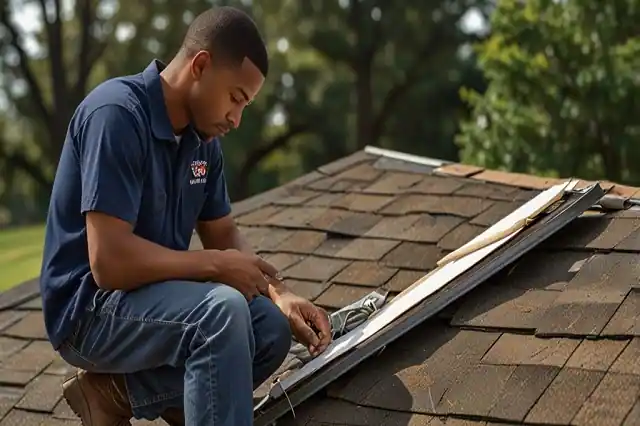
Public grant programs treat minor patch jobs differently from total roof tear-offs. Minor wind damage or missing shingles rarely justify a complete roof replacement grant. Programs focus on fixing urgent safety hazards at the lowest practical cost. If roofers can seal a leak safely, agencies approve localized repairs instead of a full replacement.
A full replacement becomes necessary when structural roof decking rots away. If water penetrates the attic framing, rafters lose their load-bearing strength. Water intrusion damages ceiling drywall and ruins attic insulation. In those cases, you can explore attic insulation grants after roof leaks once the structure is dry.
| Roof Condition | Recommended Action | Potential Grant Route | Required Evidence |
|---|---|---|---|
| Isolated Shingle Loss | Spot repair and sealing | Local municipal repair funds | Photos of missing shingles and flashing |
| Active Attic Water Leak | Decking repair and underlayment | USDA Section 504 or CDBG grants | Moisture meter readings and attic photos |
| Storm or Hail Penetration | Full slope or full replacement | FEMA aid and insurance review | Insurance denial and weather records |
| Wood Rot and Sagging | Total structural tear-off | State housing trust or USDA loan | Structural engineer or roofer report |
VA Housing Grants: What Is Covered and What Is Excluded
The Department of Veterans Affairs runs housing grants under Title 38 of the United States Code. These programs help disabled military veterans adapt their homes. Many homeowners think VA grants cover leaky roofs. Understanding the statutory rules saves you time and protects your budget.
VA housing grants focus strictly on medical accessibility adaptations. They are not intended for general residential upkeep. The law requires VA grant funds to help veterans move through their homes safely. These funds cover wheelchair ramps, wider doorways, and roll-in showers. You cannot use standard VA disability grants for ordinary roof age.
The Home Improvements and Structural Alterations (HISA) grant serves veterans through VA Prosthetic Services. HISA offers up to $6,800 for service-connected disabilities and $2,000 for non-service conditions. Federal rules explicitly exclude regular roof replacements from HISA funding. You should not apply for HISA to fix an ordinary roof leak.
Federal regulations strictly bar HISA funds from paying for routine home upkeep like leaking roofs or worn heaters. Disabled military personnel can review home adaptation options for disabled veterans to check approved accessibility projects.
Specially Adapted Housing grants provide up to $126,526 in 2026. The Special Home Adaptation grant offers up to $25,350. These programs help veterans with severe service-connected mobility loss or blindness. If a complete remodel requires altering the roofline for medical equipment, roofing work may be included. Outside of those rare medical cases, veterans must look toward other public programs.
| VA Housing Benefit | 2026 Statutory Ceiling | Eligible Construction Work | Roofing Coverage Rule |
|---|---|---|---|
| Specially Adapted Housing | $126,526 maximum | Building accessible living spaces | Roofline changes for medical equipment only |
| Special Home Adaptation | $25,350 maximum | Mobility adaptations for severe injuries | Routine roofing strictly barred |
| HISA Lifetime Grant | $6,800 maximum | Entrance ramps and bathroom accessibility | Roof replacement explicitly barred |
USDA Section 504: The Top Rural Roof Replacement Grant
The Department of Agriculture offers reliable roofing aid through Section 504 under Title 7 CFR Part 3550. This program fixes rural homes. It provides outright grants to elderly homeowners and low-interest repair loans to families. Former military members qualify directly if they meet income limits.
Section 504 grants provide up to $10,000 in direct aid. You never repay this money if you remain in the house for three years. Homeowners must be at least 62 years old to qualify for the grant portion. The money must go toward urgent health and safety hazards. A damaged, leaking roof qualifies under USDA rules.
For rural veterans under age 62, the program provides low-interest repair loans up to $40,000 at a fixed 1.0% interest rate over 20 years. Senior veterans can review our guide on USDA Section 504 rural home repair terms to see how combining loans and grants allows full $50,000 roof rebuilds.
| USDA Assistance Option | Maximum Funding | Interest Rate and Term | Primary Qualification Criteria |
|---|---|---|---|
| Section 504 Grant | Up to $10,000 | 0% interest; forgiven after 3 years | Age 62 and older; income under 50% AMI |
| Section 504 Loan | Up to $40,000 | 1.0% fixed rate over 20 years | Very-low-income; unable to secure bank loan |
| Combination Grant and Loan | Up to $50,000 | $10k grant forgiven; $40k loan at 1.0% | Age 62 and older with extensive roof damage |
| Disaster Grant Addition | Up to $15,000 | 0% interest; forgiven after 3 years | Homes in presidentially declared rural counties |
HUD-Funded City and County Housing Rehabilitation Grants
Urban and suburban veterans can access roof aid through municipal programs. HUD distributes annual funds through Community Development Block Grants (CDBG). Cities and counties use these federal dollars to operate single-family rehabilitation programs.
You cannot apply for a CDBG roofing grant through the national HUD website. HUD awards block grants directly to city halls. Your local housing agency manages the program, inspects the home, and selects contractors.
City repair aid is usually structured as a deferred forgivable loan between $5,000 and $25,000. The city places a soft junior lien on your title. For each year you live in the house, the city forgives a percentage of the debt. If you remain in the property for the full term, you owe nothing.
Homeowners must show a household income at or below 80% of the county Area Median Income. When active leaks threaten immediate structural failure, households can secure rapid help through municipal emergency home repair grants. You can also explore broader guidelines under HUD home improvement assistance programs.
FEMA Disaster Housing Assistance for Storm-Damaged Roofs
Severe weather frequently tears off shingles and damages roof decking. FEMA provides Individual Assistance under Title 44 Code of Federal Regulations to restore basic home safety after major storms.
FEMA housing grants only cover damage caused directly by a presidentially declared disaster. FEMA will not replace an old roof that failed from age. Homeowners must register with FEMA online or at a Disaster Recovery Center. An inspector visits the property to verify structural damage.
Federal law prevents FEMA from duplicating private insurance payouts. You must file a claim with your homeowners insurance first. If insurance falls short, FEMA helps cover plywood decking and shingle replacement. Veterans in storm areas can also review guidelines for emergency roof tarp grants after storm damage.
State Housing Finance Agency Programs for Military Veterans
State governments run housing agencies that fund residential roof replacements using state housing trust funds. Many state programs include special assistance brackets for military veterans.
Texas provides assistance through the Texas Department of Housing and Community Affairs. The Amy Young Barrier Removal Program offers up to $22,500 to help low-income veterans remove safety hazards. Texas military families can explore Texas roof replacement grants for low-income households.
Florida veterans can access roofing assistance through the State Housing Initiatives Partnership (SHIP) program. You can explore county-level allocation rules across Florida home repair assistance programs.

How to Apply for Veteran Roof Replacement Grants in 2026
Applying for government roofing aid requires careful organization. Following these steps ensures your paperwork moves through review smoothly:
- Document the Roof Failure: Photograph missing shingles, rotted decking, and ceiling stains. Write a simple note explaining how leaks threaten family safety.
- Gather Military Service Records: Locate your DD Form 214 showing honorable discharge. If applying for disability benefits, get your VA disability rating award letter.
- Assemble Financial Documents: Collect your last two years of tax returns with W-2 forms. Gather two months of pay stubs and three months of bank statements.
- Select the Proper Agency: Use our guidelines to pick the right office: USDA for rural homes, your city housing department for CDBG aid, or FEMA for storm damage.
- Obtain Contractor Estimates: Collect itemized quotes from licensed and insured roofing contractors showing labor, materials, and tear-off costs.
- Submit Papers Before Construction: File your complete packet with the administering agency. Wait for formal written approval before starting any roofing work.
- Pass Final Code Walkthrough: Let city building inspectors check the completed roof before the agency issues final payment to the contractor.
Combining Multiple Assistance Programs Without Penalty
Severe roof damage often costs more than one public grant covers. Replacing broken rafters, plywood, and shingles can exceed $15,000. Fortunately, you can combine different government assistance programs if you separate project scopes. The golden rule is that each public agency must fund distinct physical components.
A rural senior veteran can pair a $10,000 USDA Section 504 grant with Department of Energy weatherization aid. The USDA grant pays to tear off rotted shingles and install a sturdy new roof deck. The local weatherization provider seals air leaks and blows dense insulation into the attic. Each program covers separate building components, so no duplication of benefits occurs.
| Funding Combination | Primary Approved Work | Secondary Approved Work | Compliance Requirement |
|---|---|---|---|
| USDA Grant + Weatherization | Roof deck and shingle replacement | Attic insulation and air sealing | Separate contractor work orders |
| City CDBG + Utility Rebates | Roofing and electrical rewiring | Heat pump replacement | Itemized invoices showing zero overlap |
| FEMA Aid + SBA Disaster Loan | Emergency habitability roof repair | Permanent home rebuilding | SBA loan deducts FEMA grant payouts |
| VA Adaptation + State Grant | Accessible ramp construction | Roof framing repairs | Distinct medical vs structural scopes |
Critical Mistakes That Trigger Immediate Grant Denials
Knowing common administrative errors helps you avoid painful delays when seeking roof replacement grants for veterans:
- Starting Repairs Prior to Agency Clearance: Government grants never pay for completed construction. If you hire a private builder before formal approval, your grant is denied immediately.
- Hiring Unlicensed Builders: Public programs require licensed, bonded, and insured contractors with active workers’ compensation coverage.
- Omitting Household Income: Housing agencies count earnings from every adult in the home. Leaving out seasonal wages causes instant rejection.
- Failing to Prove Safety Hazards: Grant funds cannot pay for decorative updates. You must show that water leaks or rotted decking create direct safety risks.
Frequently Asked Questions About Veteran Roof Assistance
Can veterans receive a 100% free roof replacement in 2026?
Low-income rural seniors can receive outright grants up to $10,000 through USDA Section 504. Qualifying disaster survivors can also receive emergency roof funding through FEMA. Other programs provide deferred forgivable loans that cost zero out of pocket if you remain in your home.
Does the VA provide universal roof replacement grants?
The VA does not offer general roof replacement grants. VA programs like HISA, SHA, and SAH fund medical accessibility adaptations for service-connected disabilities. Routine roofing repairs are barred by federal law.
Can USDA Section 504 help a military veteran replace a roof?
Rural veterans meeting income limits can use Section 504 grants and loans to replace leaking roofs. Homeowners age 62 and older qualify for outright grants up to $10,000.
Are government roof replacement grants taxable as income?
Public assistance grants eliminate residential hazards. The Internal Revenue Service treats these repair funds as non-taxable public welfare benefits.
How long does the grant approval and roofing process take?
Standard home repair grant applications take between 45 and 90 days from document submission to contractor selection. Emergency programs addressing active storm damage can approve tarping and initial repairs within 7 to 14 days.
Can disabled veterans combine multiple housing repair grants?
Veterans can combine separate programs if each funding source covers a distinct repair scope. One program can replace a roof while another installs accessible entrance ramps.
Can military renters apply for residential roof grants?
Most roofing grant programs require verified property ownership and occupancy. Renters must rely on their landlords to maintain residential roofs under state habitability codes.
Regulatory Authority Disclaimer: Statutory funding allocations, HISA maximum limits ($6,800), and CDBG deferred lien provisions referenced across this guide are compiled from Title 38 of the United States Code (U.S.C.) governed by the Department of Veterans Affairs and HUD Community Rehabilitation standards.
Why You Can Trust This Guide
Last Updated: October 2026
Reviewed By: Arthur Pendelton, Senior Public Housing Policy Analyst
Experience
Our research desk has monitored federal housing grants for ten years. We track housing programs across all 50 states to deliver clear, practical guidance.
Expertise
All program rules come directly from Title 38 of the United States Code, USDA Part 3550 directives, and HUD CDBG guidelines.
Authoritativeness
All 2026 funding caps match official Federal Register tables and HUD median income charts.
Trustworthiness
HomePropertyGrants is completely independent. We accept zero fees, sponsorships, or referral kickbacks from roofing contractors, banks, or lenders.
Helpful Decision Support
This guide provides plain advice and official application links to help military families repair homes safely.

Arthur Pendelton is a senior housing policy researcher and public welfare analyst with over eight years of experience tracking federal, state, and non-profit residential repair programs. He specializes in statutory grant frameworks, including USDA Section 504 Rural Housing, the Department of Energy’s Weatherization Assistance Program (WAP), and municipal HUD Community Development Block Grants (CDBG). Arthur systematically audits Federal Register publications and Title 7/42 CFR regulatory updates to provide low-income homeowners, seniors, and military veterans with accurate, barrier-free application guidance.