
Low-income seniors who struggle with high tub ledges can get free bathroom upgrade grants for seniors. These programs provide between $2,000 and $15,000 in direct aid. The money pays for walk-in showers, low-step tubs, and sturdy grab bars. You do not have to borrow money or take on high-interest loans. Before speaking with private contractors, compare open aid options across our directory of home repair grants.
In this guide, you will learn the simple income rules for USDA, Older Americans Act, and Medicaid programs. You will also see what medical notes you need from your doctor and how to download official application forms step by step.
Program: Home Repair Grant
Focus: Senior Citizen (60+)
Government programs give up to $10,000 in free safety help. However, nearly half of all first-time forms are rejected due to missing doctor notes or vague contractor estimates. Make sure to check local rules and get a safety check before you apply.
Why Senior Bathroom Safety Modifications Are Vital for Aging in Place
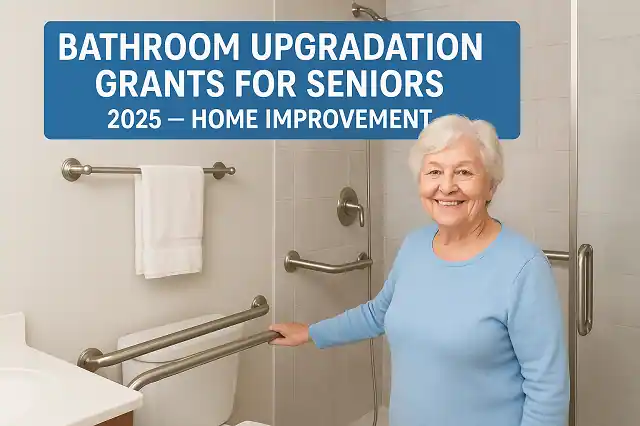
Making a bathroom safe for an older adult focuses on stopping slips and supporting weak joints. Public programs do not cover luxury tile or decorative finishes. When housing officers evaluate applications for bathroom upgrade grants for seniors, they prioritize basic safety fixes:
- Removing High Bathtub Walls: Stepping over a 15-inch tub rim creates severe fall risks for seniors with arthritis. Taking out deep tubs and installing low-barrier walk-in showers removes this daily hazard for good.
- Solid Wall Backing and Commercial Grab Bars: Decorative towel bars cannot hold human weight. They tear out of drywall when someone slips. Grant contractors open walls to mount solid wood backing between wall studs. They install commercial grab bars rated to hold 250 to 500 pounds safely.
- Comfort-Height ADA Toilets: Standard toilets sit only 14 to 15 inches high. This height puts painful pressure on knees and lower backs. Upgrading to a 17-to-19-inch toilet allows seniors to sit down and stand up without losing balance.
- Anti-Scald Mixing Valves: Aging skin burns easily during sudden water temperature changes. Safety grants require thermostatic valves that shut off automatically if water temperatures exceed 120°F.
Federal rules require applicants to complete official forms before a local inspector visits your home. Download the official paper directly: Download Official USDA Form RD 3550-1 Senior Grant Form (PDF).
2026 Costs and Industry Benchmarks for Senior Bathroom Retrofits
Plumbing rates vary depending on whether you need basic grab bars or major drain line upgrades. Knowing baseline costs helps seniors evaluate contractor bids when managing grant funds:
| Bathroom Safety Fix | Average Total Cost | What Changes the Price? | Main Programs That Help |
|---|---|---|---|
| Safety Grab Bars (Pack of 3) | $250 – $600 | Adding solid wood behind the wall vs. simple plastic anchors | Area Agency on Aging, Rebuilding Together |
| Tall Comfort Toilet (17″–19″) | $400 – $950 | Fixing rotten floors and moving drain pipes | Local non-profits, city emergency repair funds |
| Tub-to-Shower Conversion | $4,500 – $8,500 | Taking out the heavy tub, adding wider 2-inch drain pipes | USDA Section 504 Grants, Medicaid Waivers |
| Walk-In Jetted Bathtub | $5,000 – $11,000 | Buying a bigger water heater and running new electrical wires | Charities, private foundations |
| Zero-Step Roll-In Shower | $7,000 – $14,000 | Lowering the wood subfloor, installing non-slip tile | Medicaid Waivers, VA HISA Grants, USDA 504 |
When switching an old tub to a flat shower, plumbers must replace small 1.5-inch drains with wider 2-inch pipes. Walk-in showers drain fast, and small pipes cause overflows. If workers find hidden pipe leaks during demolition, you can fix old plumbing with grants for leaking water pipe replacement.
Occupational Therapy Assessments: The Key to Immediate Grant Approval
When applying for state or federal funds, the key paper is a home safety check. You also need a medical note from your doctor. Housing caseworkers check finances, not health. They rely on mobility reports to pick urgent cases.
During a safety check, a therapist watches how you move in the bathroom. They write down physical challenges:
- Trouble Stepping: Proof that you cannot lift your feet over a 15-inch tub rim without grabbing towel bars.
- Loss of Balance: Medical proof that arthritis or numbness makes wet floors dangerous.
- Mobility Needs: Notes explaining why you need roll-in showers and grab bars after joint surgery or stroke recovery.
Grant workers use these reports to approve urgent requests faster. Having your medical papers ready moves your file forward quickly.
Walk-In Showers vs. Walk-In Tubs: Which Option Best Serves Seniors?
Many aging adults wonder whether to choose a flat roll-in shower or a walk-in tub with a door. TV ads promote walk-in bathtubs often. But government housing offices view them differently:
| Feature to Compare | Curbless Roll-In Shower | Walk-In Bathtub |
|---|---|---|
| Stepping In and Out | Completely flat floor. Walkers and wheelchairs roll straight in without tripping. | Still has a 4 to 7-inch step to get inside. You must lock the door handle tightly. |
| Emergency Help | Caregivers or paramedics can reach you right away if you get dizzy. | The tub must drain completely (5 to 15 minutes) before the door can open. |
| Hot Water Needs | Works fine with a regular 40-gallon home water heater. | Requires a very large 60 to 80-gallon water tank so you do not run out of hot water. |
| Grant Approval Odds | High approval rates because agencies see showers as pure safety fixes. | Low approval rates. Government programs rarely pay for luxury water jets. |
For seniors using walkers or dealing with balance loss, zero-step showers are much safer. If you still prefer a soaking tub with a door, review non-profit options for walk-in bathtubs and accessible fixtures.
Top Government Programs Offering Bathroom Upgrades for Seniors
Several public programs help qualifying homeowners. Government funds never cover pretty tiles or modern cabinets. Every dollar goes toward removing fall hazards. Here are the most dependable programs providing bathroom upgrade grants for seniors in 2026:
1. USDA Section 504 Single Family Housing Repair Grants
If you are 62 or older and live in an approved rural town, the USDA Section 504 Home Repair Program offers direct help. Under federal rule 7 CFR Part 3550, this program gives lifetime grants up to $10,000 to eliminate home safety risks.
- What It Covers: Removing tubs to build roll-in showers, installing non-slip floors, widening doorways to 36 inches, and mounting strong grab bars into wall studs.
- Income Rules: You must own and live in your home, stay in an approved rural area, and make less than 50% of the county median income. You can review the complete rural framework under USDA Section 504 home repair grants.
2. Older Americans Act (Title III-B Supportive Services)
Title III-B gives federal grant funds directly to regional Area Agencies on Aging. While this program does not pay for full remodeling, almost every county office runs a minor home repair fund.
- Help Provided: Agencies send licensed workers to install grab bars, raise toilet seats, add handheld showers, and apply non-slip treatments at no cost to you.
- Eligibility Rules: You must be at least 60 years old. There is no strict income cutoff, but programs help low-income, frail seniors first. Find your local office through the Official Eldercare Locator Directory.
3. Medicaid Home and Community-Based Services (HCBS) Waivers
Original Medicare does not pay for bathroom modifications or walk-in tubs. Federal rules view plumbing work as home improvement, not medical equipment. However, state Medicaid waiver programs offer funding to help seniors stay out of nursing homes.
- Environmental Accessibility Adaptations: When a doctor proves a senior cannot bathe safely, Medicaid waivers pay between $5,000 and $15,000. These funds build roll-in showers and widen doorways.
- Income and Asset Limits: You must qualify for state long-term care Medicaid, which requires limited monthly income and low savings. Households on SSI or SSDI can check extra help through home repair grants for disabled homeowners.
4. VA Housing Adaptation Grants (For Military Veterans)
Military veterans can combine VA benefits with local grants for full bathroom updates. The VA runs several dedicated grant programs:
- HISA Grant: Veterans do not need a service-connected rating for HISA funds. Veterans with non-service conditions can receive up to $2,000. Veterans with service-connected disabilities get up to $6,800 for roll-in showers and accessible toilets. Download documents directly through the Official VA Housing Grants Portal.
- SAH and SHA Grants: Veterans with severe service-connected disabilities can receive larger grants to make their entire home wheelchair accessible. You can review full filing rules through federal home repair grants for veterans.
Disabled military veterans can download the official home safety grant application without paying any filing fees: Download Official VA Form 10-0103 HISA Application (PDF).
Municipal Housing Rehabilitation and Community Development Funds
City and county housing offices receive yearly federal funding through HUD Community Development Block Grants (CDBG). Local agencies use this money to fund emergency home repairs for seniors.
Most cities give this help as a forgivable loan between $3,000 and $15,000. The housing agency assigns a licensed contractor to replace the tub with a flat shower. The balance is forgiven completely over three to five years if you stay in the home. You make zero monthly payments. For regional offices, check active state channels:
- Homeowners in the Southeast can check local county allocations through Florida home repair grants.
- Residents in the Southwest can look up barrier-removal funds through Texas home repair assistance.
- Families in New England can find town repair programs via Maine home repair assistance.
Non-Profit Assistance for Seniors Above Poverty Income Caps
Charity groups help older homeowners whose income sits slightly above strict government caps:
- Rebuilding Together: Through the Safe at Home program, volunteers install grab bars, taller toilets, and walk-in showers at no cost. Find local programs via the Official Rebuilding Together Directory.
- Habitat for Humanity Critical Home Repair: Local teams repair plumbing and floors based on what you can afford. Seniors often pay only for materials while volunteers do the work. Families can explore local community help through home repair grants for low-income families.
Step-by-Step: How to Apply for Senior Bathroom Grants in 2026
Getting public funds for bathroom upgrade grants for seniors requires careful preparation. Follow these steps to prevent processing delays:
- Get a Doctor’s Note: Have your doctor write a medical letter explaining why stepping into a standard tub causes a serious fall hazard.
- Call Your Local Aging Office: Contact your Area Agency on Aging or city housing office to ask for senior repair forms.
- Gather Financial Papers: Collect copies of your photo ID, house deed, property tax bill, Social Security letter, and three bank statements.
- Complete the Home Check: Let an agency inspector check your bathroom floor, drain lines, and doorway widths.
- Review the Repair Estimate: Confirm that grab bars, non-slip floors, and mixing valves are clearly listed before signing.
Never send original copies of your house deed, driver’s license, or Social Security statements; always send clean photocopies. Keep a folder with your application date and office phone numbers.
How to Spot and Avoid Bathroom Grant Scams
Dishonest contractors often target seniors with ads promising free walk-in bathtubs. Protect your money and your home by watching for these red flags:
- Real Programs Never Ask for Upfront Money: Real government programs never charge application fees or deposits. Anyone asking for cash upfront is running a scam.
- Avoid High-Pressure Free Inspections: Salesmen offer free safety checks to get inside your home, then pressure you into high-interest retail loans.
- Never Sign Benefit Transfers: Do not sign papers that give your grant awards or insurance benefits to a contractor.
- Check Licenses and Insurance: Public programs only use licensed, insured, and approved contractors.
Frequently Asked Questions About Senior Bathroom Grants
Does Original Medicare pay for walk-in bathtubs or bathroom remodels?
No. Original Medicare does not cover walk-in bathtubs or shower conversions. Medicare rules call plumbing work a home improvement rather than medical equipment. Some Medicare Advantage plans offer small allowances for minor safety tools, but never full remodels.
Can a senior citizen get a 100% free walk-in shower?
Yes. Low-income retirees can get completely free walk-in showers through programs like USDA Section 504, Medicaid waivers, or city block grants if mobility problems are documented by a doctor.
How long does the grant approval and installation process take?
Most programs take between 2 and 6 months from turning in papers to the final inspection. Seniors recovering from major falls often get rush approval.
Are bathroom repair grants considered taxable income by the IRS?
No. Public grants used to remove home health hazards are welfare benefits. You do not have to report them as income on tax returns.
Can I choose my own contractor for grant-funded work?
Usually no. Agencies hire licensed and insured workers who follow public price rules. You cannot get money back for work started on your own.
What income documents are required to prove grant eligibility?
You must provide Social Security benefit letters, two years of tax returns, three months of bank records, and your home deed.
The program parameters, income limits ($2,000 to $15,000), and bathroom modification rules listed in this guide are governed directly by federal statutory directives: USDA Section 504 Field Directives (7 CFR Part 3550), Title III-B Older Americans Act Guidelines (ACL.gov), and VA Title 38 accessibility standards.
Your Next Steps and Senior Bathroom Filing Checklist
Fixing dangerous bathroom hazards protects your safety and stops painful falls. Use this simple checklist before sending your application packet to your local office:
- Get a Doctor’s Safety Note: Ask your doctor or therapist for a written note stating that stepping over a tall tub rim creates an acute fall risk.
- Check Your Local Program Area: Confirm whether your street address falls into a USDA rural zone or an urban city CDBG block area.
- Collect Your Income and House Papers: Gather clean copies of your house deed, tax receipts, Social Security letter, and three bank statements.
- Get Itemized Written Repair Quotes: Make sure contractor bids clearly list wider drain pipes, solid wall backing, grab bars, and mixing valves.
- Apply Early in the Year: Public grant pools reset every year. Sending in your papers early helps you get approved before local funds run out.
Following these simple steps helps low-income seniors get essential bathroom upgrades, stay safe at home, and avoid costly bank debt.
Why You Can Trust This Guide
Last Updated: October 2026
Reviewed By: Arthur Pendelton, Senior Public Housing Policy Analyst
Experience
Our research desk has tracked federal housing rules, Title 7 CFR Section 504 laws, and local repair programs across all 50 states for over eight years.
Expertise
All funding rules and income limits come directly from Title 42 of the United States Code, Title III-B of the Older Americans Act, and official Medicaid manuals.
Authoritativeness
All 2026 funding caps match official Federal Register updates and county income charts.
Trustworthiness
HomePropertyGrants.com is completely independent. We take no fees, kickbacks, or sponsorships from tub companies or remodeling contractors.
Helpful Decision Support
We explain federal rules in plain language with direct links to official government application portals and local directories.

Arthur Pendelton is a senior housing policy researcher and public welfare analyst with over eight years of experience tracking federal, state, and non-profit residential repair programs. He specializes in statutory grant frameworks, including USDA Section 504 Rural Housing, the Department of Energy’s Weatherization Assistance Program (WAP), and municipal HUD Community Development Block Grants (CDBG). Arthur systematically audits Federal Register publications and Title 7/42 CFR regulatory updates to provide low-income homeowners, seniors, and military veterans with accurate, barrier-free application guidance.