
Older homes have a timeless charm, but they often come with structural challenges that newer houses do not face. One of the most common problems homeowners encounter is sagging floors. Floors may start to dip in the middle, feel uneven underfoot, or even creak loudly when walked upon. Over time, this can lead to safety hazards and damage to the property.
Fortunately, there are grants to repair sagging floors in older homes that can help cover some or all of the repair costs, making it possible to restore your home without financial strain.
In this guide, we will explore the reasons floors sag, how much repairs can cost, what grants are available, and how homeowners can access federal, state, and local programs to restore the structural integrity of their homes.
Sagging floors in older homes are usually caused by weak floor joists, water damage, foundation shifts, or pest damage. Repair costs can range from $500 to over $15,000 depending on severity. Homeowners can apply for federal, state, and local grants by documenting damage, meeting income requirements, and submitting proper applications. These grants often cover structural repairs like joist replacement and foundation stabilization.
Why Floors Sag in Older Homes
Sagging floors are rarely caused by just one issue. Several factors often contribute, and identifying the cause is essential before planning repairs.
Weak or Damaged Floor Joists
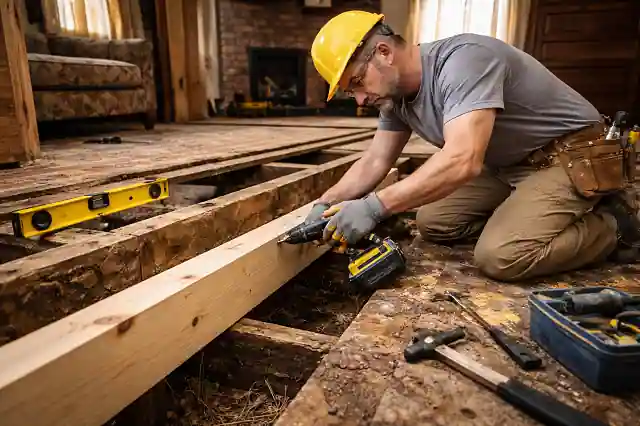
The main support system for floors, called joists, can deteriorate over time. Older homes often have wooden joists that have weakened due to age, rot, or previous water damage. When these joists lose strength, the floor above can sag or bow. In some cases, professional inspection may reveal that only a few joists need replacement, while in more severe situations, an entire section may require repair. Programs offering floor joist replacement grants can help cover these expenses for homeowners who qualify.
Read- Free Grants to Repair Leaky Roofs and Upgrade Bathrooms
Water Damage and Rot
Leaks from roofs, plumbing, or flooding can gradually compromise the wood supporting your floors. Moisture can cause wood to warp, rot, or lose its strength, leading to dips and uneven surfaces. Homeowners should address water problems promptly to prevent further sagging and structural damage.
Foundation Shifts
An uneven or unstable foundation is another major contributor to sagging floors. As soil settles or shifts over time, the home’s foundation can move, causing floors to dip or tilt. Some programs provide foundation repair assistance, recognizing that this is a critical structural concern.
Read- Free Grants For Fixing Leaky Basements-Low Cost Help For Homeowners
Pest Damage
Termites and other wood-destroying insects can also compromise floor integrity. Pests often target old wooden beams, creating weak spots that result in uneven or sagging floors. Regular inspections can detect infestations early and prevent long-term damage.
By understanding the underlying causes, homeowners can approach repairs more strategically and strengthen their applications for home repair grants.
Read- Free Home Improvement Grants For Low Income Seniors: Funding Options
How Much Does It Cost to Repair Sagging Floors?
Repair costs for sagging floors vary widely depending on the damage, the size of the affected area, and whether structural issues like foundation or joist problems exist. Minor repairs, such as reinforcing a few floor joists, may range from $500 to $1,500. Medium repairs involving multiple joists or partial subfloor replacement typically cost between $1,500 and $5,000. Extensive repairs that include foundation stabilization or full subfloor reconstruction can exceed $15,000.
Many homeowners find these costs prohibitive, which is why homeowner grants for repairs and other forms of structural repair funding are crucial. These programs can provide financial relief and ensure that repairs are done safely by licensed professionals.
Types of Grants for Floor Repairs
There are multiple avenues for financial assistance to repair sagging floors in older homes. Programs vary from federal initiatives to local nonprofit organizations, each with its own requirements and benefits.
Federal Programs
Federal assistance programs, such as those offered by HUD or USDA, often target low-income homeowners and focus on essential repairs that improve safety and structural stability. Emergency programs may also provide emergency home repair funding for homes at risk of collapse or other hazards.
State and Local Programs
Many states and municipalities offer grants to help homeowners repair older homes. Some focus specifically on seniors or low-income families, while others prioritize emergency repairs. Local governments may provide local repair assistance programs designed to stabilize floors, replace damaged joists, or address foundation issues.
Read- Homeowners Rebates For Energy-Efficient Window Replacement
Nonprofit Organizations
Nonprofits such as Habitat for Humanity or Rebuilding Together sometimes offer funding or hands-on repair support. These programs often assist homeowners who do not qualify for government grants but still face urgent structural problems. Combining nonprofit assistance with federal or state funding can maximize coverage and reduce out-of-pocket costs.
Read- Free Federal and State Roof Replacement Grants For Homeowners
Eligibility Criteria for Floor Repair Grants
Grant programs have specific criteria, so it is important to check eligibility before applying. Common requirements include:
Income Level: Many grants target low- to moderate-income households.
Home Ownership: Most programs are available only to homeowners, not renters.
Structural Risk: Homes must show proof of damage, such as sagging floors, weakened joists, or foundation shifts.
Age of Home: Older homes with long-standing structural issues are often prioritized.
Documenting the problem with photos, inspection reports, and contractor assessments strengthens applications and demonstrates the need for property renovation grants or other funding.
How to Apply for Grants to Fix Sagging Floors
Step 1: Research available programs
Start by exploring federal, state, and local programs and check nonprofit assistance options.
Step 2: Document the damage
Hire a professional inspection and collect reports showing sagging floors, joist damage, or foundation issues.
Step 3: Gather supporting documents
Prepare proof of home ownership, income details, photos of damage, and contractor estimates.
Step 4: Submit the application
Complete the application form carefully and attach all required documents.
Step 5: Follow up
Stay in contact with program officials and respond quickly to any additional requests.
Step 6: Apply to multiple programs
Increase your chances by applying to more than one grant program.
Step 7: Highlight safety risks
Clearly explain any safety concerns such as risks to children or elderly residents.
Read- Free Home Repair Grants For Low-Income Disabled Homeowners
Tips to Strengthen Your Grant Application
Several strategies can help your application stand out:
Provide detailed evidence of structural damage, including photos and inspection reports.
Highlight safety concerns, especially if children, seniors, or other vulnerable residents live in the home.
Apply to multiple programs to maximize your chances of receiving funding.
Emphasize any qualifying factors, such as low income, age of home, or emergency repair needs.
Being thorough and transparent can make a significant difference, particularly when applying for competitive programs.
What Repairs Grants Typically Cover
Grants generally cover essential repairs to restore safety and structural integrity:
Joist Replacement and Reinforcement: Weak or damaged joists are often a primary target for funding.
Subfloor Repairs: This can include replacing sections of flooring that have been weakened by water or age.
Foundation Stabilization: Grants may cover costs associated with stabilizing or reinforcing foundations that have contributed to sagging floors.
Emergency Repairs: Some programs provide funding specifically for immediate safety hazards, such as floors at risk of collapse.
Most grants do not cover purely cosmetic improvements like flooring finishes, painting, or carpeting, unless they are part of a structural repair.
Read- Emergency Home Repair Grants-Critical Home Improvements
Alternative Funding Options
If grants are not available or insufficient, other financing options exist:
Low-Interest Home Repair Loans: Some programs offer affordable loans specifically for structural repairs.
Home Equity Lines of Credit (HELOC): Borrowing against home equity can provide immediate funds for urgent repairs.
Community or Crowdfunding Programs: Local groups or online platforms may help raise money for homeowners in need.
By combining grants with alternative funding, homeowners can address even major repairs without putting themselves in financial hardship.
Maintaining Floors After Repairs
Preventing future sagging is as important as fixing current damage. Regular maintenance can extend the life of your floors:
Fix leaks promptly and manage moisture to avoid wood rot.
Inspect floors periodically for signs of weakening or unevenness.
Protect wood from pests with appropriate treatments.
Avoid overloading floors with heavy furniture or storage concentrated in one area.
Maintaining your floors after repair helps ensure long-term safety and can reduce the likelihood of needing future grants.
Frequently Asked Questions
- What causes sagging floors in older homes?
Sagging floors are caused by weak or damaged floor joists, water damage and rot, foundation shifts, and pest damage. - How much does it cost to repair sagging floors?
Repair costs range from $500 to $15,000 or more depending on the severity of damage and type of repair required. - Are there grants available for fixing sagging floors?
Yes, federal, state, and local programs offer grants to help homeowners repair sagging floors and structural issues. - Who is eligible for floor repair grants?
Eligibility is based on income level, home ownership, structural damage, and the age of the home. - What do floor repair grants usually cover?
Grants typically cover joist replacement, subfloor repairs, foundation stabilization, and emergency structural repairs. - How can I apply for a sagging floor repair grant?
You need to research programs, document damage, gather required documents, submit the application, and follow up. - Do grants cover cosmetic floor repairs?
No, most grants do not cover cosmetic improvements unless they are part of structural repairs.
Expert-Verified Home Repair Guidance
Last Updated: April 2026
Reviewed By: Home Repair Grants Research Team
- This content is based on real federal, state, and nonprofit housing assistance programs, including HUD and USDA-supported initiatives.
- All repair cost estimates and grant processes are aligned with current 2026 home repair funding trends.
- The guide focuses on structural safety issues like sagging floors, which are recognized as critical repair priorities in grant programs.
- Information is written in simple, clear language to help homeowners easily understand eligibility and application steps.
- This article is continuously updated to reflect the latest funding opportunities, ensuring accurate and trustworthy guidance for homeowners.
Conclusion
Sagging floors in older homes are a serious concern, but homeowners do not need to bear the entire cost alone. Grants to repair sagging floors in older homes provide a valuable opportunity to restore structural integrity safely and affordably. By understanding the causes, costs, and eligibility criteria, and by following a clear application process, homeowners can take the necessary steps to secure funding and complete essential repairs.
Addressing sagging floors promptly not only ensures safety but also preserves the value and charm of an older home. With the right information and access to home repair grants, structural repair funding, and local assistance programs, it is possible to make your home safe, comfortable, and secure for years to come.

Arthur Pendelton is a senior housing policy researcher and public welfare analyst with over eight years of experience tracking federal, state, and non-profit residential repair programs. He specializes in statutory grant frameworks, including USDA Section 504 Rural Housing, the Department of Energy’s Weatherization Assistance Program (WAP), and municipal HUD Community Development Block Grants (CDBG). Arthur systematically audits Federal Register publications and Title 7/42 CFR regulatory updates to provide low-income homeowners, seniors, and military veterans with accurate, barrier-free application guidance.