
Quick Answer: Low-income homeowners in New York may qualify for foundation repair assistance through USDA Section 504 Home Repair Grants, HUD-funded Community Development Block Grant (CDBG) programs, New York State housing rehabilitation initiatives, RESTORE grants for seniors, ACCESS to Home programs, nonprofit housing organizations, and local county rehabilitation funds. These programs may help pay for foundation stabilization, basement wall repairs, structural reinforcement, drainage corrections, and other health-and-safety improvements.
Foundation damage is one of the most expensive home repair problems a homeowner can face. Cracks in foundation walls, uneven floors, bowing basement walls, and water intrusion can quickly threaten the safety, value, and habitability of a home. For many low-income families across New York, repair costs ranging from $5,000 to more than $40,000 make professional repairs financially impossible without assistance.
Fortunately, several federal, state, and local programs may help homeowners reduce or eliminate some of these costs. Although very few programs are marketed specifically as foundation repair grants, many housing rehabilitation programs can be used for structural repairs when they are necessary to maintain a safe and livable home.
Homeowners who are just beginning their search for assistance should first review a comprehensive home repair grants guide for homeowners and a detailed state home repair grants guide to understand how federal, state, and local funding programs work.
Why Foundation Problems Are So Common in New York
New York’s climate creates ideal conditions for foundation deterioration. Long winters, freeze-thaw cycles, groundwater pressure, flooding, aging housing stock, and shifting soil conditions can gradually weaken foundations over time.
Many homes throughout New York City, Buffalo, Rochester, Syracuse, Albany, Yonkers, and Long Island were built decades ago. As these homes age, structural issues become more common, particularly when routine maintenance has been delayed due to financial hardship.
Common signs of foundation damage include:
- Cracks in foundation walls
- Uneven or sloping floors
- Bowing basement walls
- Doors and windows that stick
- Water is entering the basement
- Large settlement cracks
- Structural shifting
- Sagging floors
Homeowners experiencing structural movement often discover related issues such as water damage, basement moisture, and flooring problems. In these situations, programs that provide grants for fixing sagging floors, financial assistance for leaky basement repairs, and grants for repairing water-damaged drywall may help address related damage.
Because foundation issues rarely occur alone, many homeowners combine structural repair assistance with broader home improvement grants for homeowners to restore the overall condition of the property.
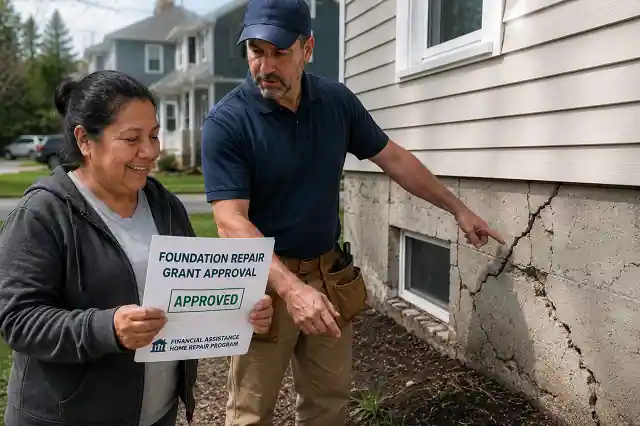
Average Foundation Repair Costs in New York (2026)
The cost of repairing a foundation depends on the severity of the damage, the repair method used, and the size of the home.
| Foundation Repair Type | Average Cost in New York |
|---|---|
| Foundation Crack Repair | $500 – $5,000 |
| Basement Wall Reinforcement | $3,000 – $15,000 |
| Drainage Correction System | $2,000 – $12,000 |
| Structural Stabilization | $5,000 – $30,000+ |
| Foundation Underpinning | $10,000 – $40,000+ |
| Basement Waterproofing | $2,500 – $15,000 |
For families already struggling with housing expenses, these costs can be overwhelming. Many applicants begin by exploring available home repair grants for low-income families and low-income home improvement assistance programs before seeking specialized foundation repair funding.
Can You Get a Foundation Repair Grant in New York?
Yes. However, most assistance is provided through broader housing rehabilitation and preservation programs rather than standalone foundation repair grants.
Programs may provide funding when foundation damage affects:
- Health and safety
- Structural stability
- Accessibility
- Habitability
- Weather resistance
- Energy efficiency
Applicants who understand eligibility requirements before applying often have better success rates. Reviewing a detailed home repair grant eligibility guide and following a step-by-step home repair grant application process can help avoid common mistakes that delay approval.
Homeowners who struggle to find local programs should also investigate hidden home repair grant opportunities that may not receive significant public attention.
USDA Section 504 Home Repair Loans and Grants
The USDA Section 504 Program remains one of the most important sources of foundation repair assistance for eligible rural homeowners in New York.
The program helps low-income households address health and safety hazards through grants and low-interest loans. Severe foundation problems often qualify when they threaten structural integrity or create unsafe living conditions.
Eligible repairs may include:
- Foundation stabilization
- Structural reinforcement
- Basement wall repairs
- Drainage improvements
- Safety-related structural corrections
Many homeowners first learn about this program through guides explaining USDA Section 504 home repair grants and the broader Section 504 home repair assistance program.
Because foundation damage frequently occurs alongside roofing issues, homeowners sometimes combine structural repair funding with assistance available through roof replacement grants for homeowners and roof replacement grants for low-income families.
Official Program: USDA Program
HUD Community Development Block Grant (CDBG) Programs
The Community Development Block Grant program provides federal funding to local governments throughout New York. Many cities and counties use this funding to help low-income homeowners complete critical structural repairs.
Depending on local program guidelines, eligible projects may include:
- Foundation repairs
- Structural stabilization
- Basement rehabilitation
- Drainage correction systems
- Waterproofing improvements
- Health and safety repairs
Families seeking assistance through CDBG-funded programs often qualify for additional support through HUD home improvement grant programs and other HUD-funded home rehabilitation initiatives.
In some communities, foundation repairs may be approved as part of larger housing rehabilitation projects that include accessibility upgrades, energy-efficiency improvements, or weather protection measures.
New York State Housing Rehabilitation Programs
New York State Homes and Community Renewal administers several housing preservation and rehabilitation programs designed to maintain safe and affordable housing. These programs may provide assistance for foundation repairs when structural issues threaten occupancy or safety.
Depending on local funding availability, eligible work may include:
- Foundation crack repair
- Foundation replacement
- Basement stabilization
- Structural reinforcement
- Drainage improvements
- Water damage prevention
Many homeowners who receive housing rehabilitation assistance also qualify for related programs such as government grants for home renovations, grants for exterior home improvements, and waterproofing assistance programs for homeowners.
RESTORE Program for Senior Homeowners
The RESTORE Program is one of New York’s most valuable housing assistance programs for older homeowners. It helps eligible seniors address dangerous housing conditions and remain safely in their homes.
Foundation damage often creates safety hazards that may qualify for assistance under senior-focused housing rehabilitation programs.
Eligible repairs may include:
- Foundation stabilization
- Structural repairs
- Emergency housing repairs
- Accessibility improvements
- Safety-related corrections
Older homeowners living on fixed incomes frequently rely on New York home repair grants for seniors, home repair grants for senior citizens, and housing assistance programs for seniors when major structural repairs become necessary.
ACCESS to Home Programs for Disabled Homeowners
Disabled homeowners often face additional challenges when foundation damage affects accessibility and mobility. Uneven floors, structural movement, cracked foundations, and shifting door frames can make it difficult to safely move throughout the home. New York’s ACCESS to Home Program helps eligible residents make modifications that improve accessibility and independent living.
Although ACCESS to Home primarily focuses on accessibility improvements, certain structural repairs may qualify when they are necessary to complete approved modifications. Homeowners facing both accessibility and structural issues should investigate available home repair grants for disabled homeowners, window replacement grants for disabled homeowners, and housing assistance programs for disabled homeowners to identify additional funding opportunities.
Families caring for disabled household members may also benefit from programs that provide bathroom accessibility upgrade grants and walk-in bathtub assistance programs when broader home modifications are needed.
Foundation Repair Assistance for Veterans and Military Families
Veterans experiencing foundation damage may qualify for several housing assistance programs designed to improve safety, accessibility, and housing stability. Structural issues can create serious risks for aging veterans, disabled veterans, and military families living on fixed incomes.
Depending on eligibility, assistance may be available through federal housing programs, community development initiatives, nonprofit organizations, and veteran-focused housing assistance programs.
Veterans dealing with structural problems often combine foundation repair assistance with home repair grants for disabled veterans, federal home repair grants for veterans, and housing repair assistance for veterans to address multiple safety concerns at the same time.
When structural damage is accompanied by roofing or window problems, homeowners may also qualify for roof replacement grants for veterans, window replacement grants for veterans, and door replacement assistance for veterans.
Nonprofit Organizations That May Help Pay for Foundation Repairs
Government programs are not the only source of assistance. Many nonprofit organizations provide funding, volunteer labor, materials, and rehabilitation assistance for qualifying homeowners.
Organizations such as Habitat for Humanity, Rebuilding Together, local housing nonprofits, and faith-based community groups often assist homeowners facing serious structural problems.
When government funding is limited, many families supplement assistance through nonprofit home repair grant programs that help cover critical repairs affecting health and safety. Some homeowners also receive assistance through nonprofit housing rehabilitation programs that address multiple repair needs under a single project.
Applicants who are unable to secure full funding through government agencies should not overlook charitable organizations that focus on preserving affordable housing and preventing displacement.
Emergency Foundation Repair Assistance After Storms and Flooding
New York homeowners occasionally experience foundation damage following severe storms, flooding, excessive rainfall, and groundwater intrusion. In these situations, emergency assistance programs may provide funding faster than traditional rehabilitation programs.
Emergency programs often prioritize repairs that prevent further damage and protect occupant safety. Foundation movement, basement flooding, and structural instability may qualify when the home is at risk.
Homeowners facing urgent situations should explore available emergency home repair grant programs and emergency housing repair assistance opportunities that support critical repairs.
When severe weather causes additional roof damage, assistance may also be available through emergency roof tarp assistance programs, grants for repairing roof leaks, and roof repair grants for storm damage.
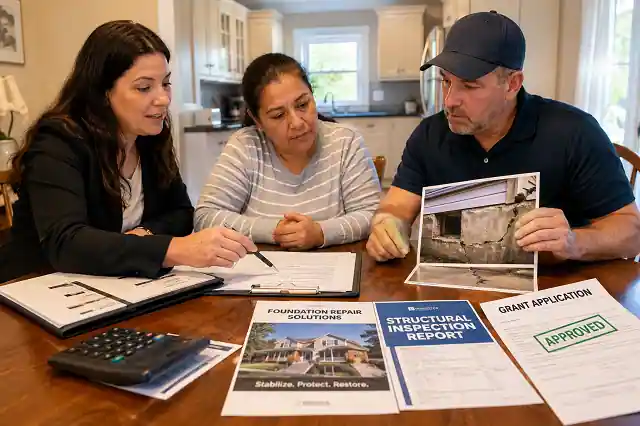
How to Improve Your Chances of Getting Approved
Competition for housing repair funding can be significant, particularly in areas with high demand and limited budgets. Homeowners who prepare complete applications and clearly document structural issues often improve their chances of approval.
| Action | Benefit |
|---|---|
| Obtain multiple repair estimates | Demonstrates actual project costs |
| Photograph all foundation damage | Provides visual evidence |
| Submit complete income documents | Reduces processing delays |
| Apply to multiple programs | Increases funding opportunities |
| Respond quickly to requests | Improves approval timelines |
Applicants who follow a detailed home repair grant application guide and understand the requirements outlined in a home repair grant eligibility guide often avoid mistakes that lead to unnecessary delays.
How to Apply for New York Foundation Repair Grants
1. Schedule a Professional Foundation Inspection
Obtain a written assessment from a qualified contractor or structural specialist documenting the damage and recommended repairs.
2. Gather Multiple Repair Estimates
Most assistance programs require cost estimates before funding decisions can be made.
3. Verify Program Eligibility
Review ownership requirements, occupancy rules, income limits, and geographic restrictions before applying.
4. Collect Required Documentation
Prepare proof of ownership, tax records, income verification, contractor estimates, and identification documents.
5. Apply to Multiple Funding Sources
Many homeowners improve their chances of success by submitting applications to several programs simultaneously.
6. Complete Follow-Up Requirements
Respond promptly to requests for inspections, additional documentation, or contractor information.
7. Keep Copies of All Records
Maintain organized records of applications, approvals, inspections, and communications throughout the process.
Frequently Asked Questions
Can I get free foundation repair assistance in New York?
Some homeowners may qualify for grants that do not require repayment, while others may receive forgivable loans, deferred-payment loans, or low-interest financing.
Does USDA Section 504 cover foundation repairs?
Foundation stabilization and structural repairs may qualify when the damage creates health or safety concerns and the homeowner meets program requirements.
Are foundation repairs covered by HUD-funded programs?
Many local rehabilitation programs funded through HUD allow assistance to be used for structural repairs that improve safety and habitability.
Can seniors receive foundation repair grants?
Yes. Programs such as RESTORE and other senior-focused housing assistance initiatives may help eligible homeowners address foundation-related problems.
Are disabled homeowners eligible for additional assistance?
Yes. Accessibility-focused programs and disability assistance initiatives may provide additional funding opportunities for qualifying homeowners.
Can veterans get help with foundation repairs?
Veterans may qualify for housing rehabilitation assistance, VA-related programs, nonprofit support, and community development funding.
How long does the approval process take?
Approval timelines vary by program, funding availability, inspection requirements, and application volume.
Why You Can Trust This Guide
Last Updated: June 2026
Reviewed By: Home Property Grants Editorial Team
- Information is researched using current federal, state, and local housing assistance resources available in 2026.
- Programs are evaluated based on homeowner eligibility, funding availability, and practical application requirements.
- Housing assistance information is reviewed regularly to reflect policy changes and new opportunities.
- The guide focuses on legitimate funding sources rather than promotional or misleading offers.
- Content is written specifically to help low-income homeowners identify realistic options for obtaining structural repair assistance.
Conclusion
Foundation repairs can place a significant financial burden on low-income homeowners, but assistance may be available through federal housing programs, New York State initiatives, local rehabilitation agencies, nonprofit organizations, and specialized programs for seniors, disabled homeowners, and veterans.
By documenting structural damage, obtaining repair estimates, understanding eligibility requirements, and applying to multiple programs, homeowners can improve their chances of securing funding. Acting early can prevent additional structural deterioration, protect property values, and help ensure that families remain safely in their homes for years to come.

Arthur Pendelton is a senior housing policy researcher and public welfare analyst with over eight years of experience tracking federal, state, and non-profit residential repair programs. He specializes in statutory grant frameworks, including USDA Section 504 Rural Housing, the Department of Energy’s Weatherization Assistance Program (WAP), and municipal HUD Community Development Block Grants (CDBG). Arthur systematically audits Federal Register publications and Title 7/42 CFR regulatory updates to provide low-income homeowners, seniors, and military veterans with accurate, barrier-free application guidance.