
Texas Home Repair Grants for Senior Citizens in 2026 may help older homeowners pay for roof repairs, plumbing fixes, accessibility upgrades, HVAC replacement, weatherization, and emergency home repairs. Seniors may qualify through federal, Texas state, county, nonprofit, or emergency housing programs based on age, income, disability, and homeownership.
Many senior citizens in Texas are struggling to keep up with rising home repair costs. A leaking roof, broken air conditioner, unsafe bathroom, damaged plumbing, or rising electric bill can become a major problem when living on Social Security or retirement income.
The good news is that several Texas home repair grants for senior citizens in 2026 may help older homeowners repair unsafe homes, lower energy bills, and stay safely in the homes they already own. Some programs offer grants that do not need repayment, while others provide forgivable loans or low-cost repair assistance.
Many seniors do not realize they may already qualify for programs connected to HUD home improvement grants for low-income homeowners. In many cases, elderly homeowners may also qualify for repair assistance if their home has health or safety problems.
Texas seniors who live in older homes often face expensive repairs such as roof damage, poor insulation, unsafe electrical systems, or broken windows. Some homeowners reduce repair costs by combining housing assistance with window replacement help for senior citizens to improve energy efficiency and lower utility bills.
This complete guide explains who may qualify, how to apply, what programs may help, and what documents seniors may need in 2026.
What Are Texas Home Repair Grants for Senior Citizens?
Texas home repair grants for senior citizens are housing assistance programs that help elderly homeowners repair damaged, unsafe, or unhealthy living conditions.
Unlike personal loans, many grants do not need to be repaid if the homeowner follows program rules. Some counties may also offer forgivable loans that are removed after the homeowner stays in the property for a certain number of years.
Most senior repair programs focus on repairs that improve health, safety, accessibility, and basic living conditions.
- Roof replacement and roof repairs
- Heating and cooling system replacement
- Electrical and plumbing repairs
- Bathroom safety upgrades
- Wheelchair ramps and accessibility improvements
- Window and door replacement
- Energy-efficiency upgrades
- Storm-related emergency repairs
Many seniors start looking for help after a small problem becomes expensive. For example, older homeowners with storm damage often explore roof replacement grants for senior citizens when repair costs become too expensive to handle alone.
Older homes with damaged windows may also qualify for help through home window replacement grants and repair assistance, especially when high electric bills become difficult to manage.
Seniors needing safer housing may also qualify for local accessibility or home rehabilitation assistance depending on program requirements.
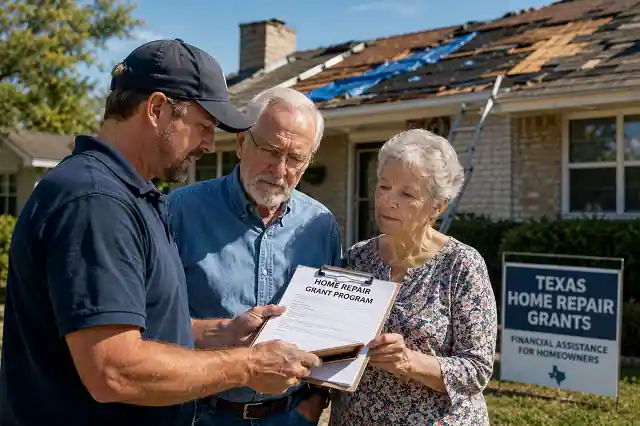
Why Texas Seniors Need Home Repair Assistance in 2026
Texas has one of the largest senior populations in the country. Many elderly homeowners live in houses built decades ago. Over time, homes naturally begin needing repairs.
In 2026, repair costs remain high because of:
- Inflation and rising contractor prices
- Higher material costs
- Storm and weather damage
- Older homes needing major repairs
- Higher insurance deductibles
Many seniors live on a fixed income, making repairs difficult to afford. Waiting too long can make problems worse. A small leak may turn into mold, damaged ceilings, or structural problems.
Some homeowners begin by searching for hidden home repair grants that many people miss because local housing programs are often overlooked.
Texas weather creates extra problems for older homeowners. Heat waves, hailstorms, hurricanes, and heavy rain often damage roofs and older homes. Seniors dealing with storm-related damage often look into roof repair and roof replacement grant programs when insurance does not fully cover repair costs.
High electricity costs are also becoming a growing issue for older adults. Seniors struggling with drafty homes sometimes qualify for energy-efficient window replacement grants for homeowners to improve comfort and lower monthly bills.
Who Qualifies for Texas Home Repair Grants in 2026?
Every program has different rules, but most Texas home repair grants for elderly homeowners follow similar eligibility guidelines.
Age Requirement
Age requirements depend on the program. Some local senior programs may use age 60 or 65 thresholds, while USDA Section 504 grants generally require the homeowner to be 62 or older.
- 60+ for some local senior assistance programs
- 62+ for USDA Section 504 grants
- Other programs may use different eligibility rules
Income Requirement
Most grants focus on:
- Households with income below the applicable program limit
- Very-low-income households
- Fixed-income households that meet program income requirements
- Seniors whose income falls within the program’s eligibility guidelines
Meeting the applicable income requirements can make a homeowner eligible for programs that prioritize financially vulnerable households.
Homeownership Requirement
Most programs require seniors to:
- Own the property
- Live in the home full-time
- Provide proof of ownership
- Show tax or mortgage records
Repair Requirement
Most programs focus on repairs related to:
- Health and safety
- Accessibility needs
- Emergency housing repairs
- Energy efficiency
Luxury upgrades or cosmetic remodeling are usually not covered.
Seniors with disabilities or mobility problems may also qualify for extra support through programs similar to home repair grants for disabled homeowners or repair grants for disabled veterans and elderly homeowners.
Best Federal Home Repair Programs for Seniors in Texas (2026)
USDA Section 504 Home Repair Program
The USDA Section 504 Program is one of the best federal repair programs for seniors living in eligible rural parts of Texas.
This program may help seniors age 62 or older remove safety hazards from their homes.
For eligible homeowners, USDA Section 504 provides grants of up to $10,000 over the homeowner’s lifetime for eligible health and safety hazards. The program also offers loans of up to $40,000 for eligible repairs and improvements. Grant applicants generally must be age 62 or older and meet the program’s income, ownership, occupancy, rural-area, and other requirements.
Eligible repair work may address health and safety hazards and can include:
- Roof repairs when needed to correct an eligible health or safety hazard
- Electrical repairs
- Plumbing repairs
- Accessibility-related improvements
- Heating and cooling repairs when eligible under program rules
Some homeowners living in smaller towns combine USDA assistance with state home repair grant programs to reduce repair costs.
HUD HOME-Funded Homeowner Rehabilitation Assistance
HUD HOME funding can support homeowner rehabilitation through local and state housing programs in Texas. TDHCA’s HOME-funded Homeowner Rehabilitation Assistance program helps eligible lower-income homeowners with rehabilitation, reconstruction, or related housing assistance through participating local administrators.
Eligible work can vary by the local program but may include:
- Critical home repairs
- Housing rehabilitation
- Accessibility improvements
- Health and safety repairs
- Reconstruction when the applicable program allows it
Eligibility, income limits, eligible repairs, and availability vary by local administrator. Seniors should use Texas’s Help for Texans resources or their local housing agency to find the appropriate provider.
Official Program: Texas Homeowner Rehabilitation Assistance
Weatherization Assistance Program (WAP)
The Weatherization Assistance Program helps seniors lower utility costs and improve home comfort.
Covered improvements may include:
- Insulation
- Window sealing
- HVAC improvements
- Energy-saving upgrades
Eligible seniors may also ask their local provider whether other energy-efficiency assistance can be used for improvements that WAP does not cover.
Official Program: Weatherization Assistance Program
Texas State Home Repair Programs
Besides federal grants, Texas seniors may qualify for state housing repair help.
The Texas Department of Housing and Community Affairs (TDHCA) supports local repair programs that may help seniors with emergency housing problems, accessibility improvements, and weather-related repairs.
Participating local administrators may offer housing rehabilitation or reconstruction assistance, but available repairs, income limits, funding, and application requirements vary by program and location.
Understanding the program’s eligibility requirements before applying can help seniors prepare the correct documentation.
Official Program: Texas Department of Housing and Community Affairs
Amy Young Barrier Removal Program
Texas’s Amy Young Barrier Removal (AYBR) Program provides one-time grants for accessibility modifications and the removal of hazardous conditions in homes occupied by households with a person with a disability.
Current TDHCA program information lists grants of up to $22,500. Eligible households generally must have income at or below 80% of Area Median Family Income, and the program may assist both homeowners and renters.
Eligible work may include reasonable accessibility modifications and improvements that help a person with a disability safely use the home.
Because AYBR is not available in every area of Texas, homeowners should use TDHCA’s Help for Texans tool to locate a participating provider.
Official Program: Amy Young Barrier Removal Program
County and City Home Repair Grants in Texas
Many of the best repair programs for seniors come from local county or city governments. Cities may use HUD money, nonprofit partnerships, or emergency housing funds to help older homeowners.
Programs often focus on:
- Roof replacement
- Electrical repairs
- Bathroom safety upgrades
- Accessibility improvements
- Emergency home repairs
Rural seniors sometimes combine local funding with Section 504 home repair grants for homeowners when major repairs are needed.
Some elderly homeowners also explore nonprofit home repair grant programs when county funding is limited.
Nonprofit Home Repair Help for Senior Citizens in Texas
Not every senior homeowner qualifies for government grants. The good news is that several nonprofit organizations may also help elderly homeowners repair unsafe homes.
Many nonprofit programs focus on helping low-income seniors, disabled homeowners, veterans, and older adults who need safety improvements.
Habitat for Humanity Home Repair Programs
Habitat for Humanity may offer repair assistance for seniors, depending on local program availability.
Depending on the local Habitat affiliate and available funding, repair work may include:
- Minor home repairs
- Accessibility improvements
- Exterior repairs
- Safety improvements
- Other eligible home rehabilitation work
Habitat for Humanity availability and eligible repairs vary by local affiliate, so seniors should check the requirements of the organization serving their area.
Official Website: Habitat for Humanity
Rebuilding Together
Rebuilding Together is another nonprofit organization that may provide home repair and accessibility assistance through local programs. Availability, eligibility, and the types of repairs offered vary by location and funding.
Depending on funding, repairs may include:
- Grab bars and safer bathrooms
- Accessibility improvements
- Minor critical repairs
- Emergency repairs
- Fall prevention upgrades
Seniors needing safer housing may also check government and local housing programs to see whether additional assistance is available.
Official Website: Rebuilding Together
Local Churches and Community Groups
Some churches and local volunteer groups may also help elderly homeowners with smaller repairs.
These groups sometimes assist with:
- Handrail installation
- Wheelchair ramps
- Minor accessibility upgrades
- Emergency home repairs
- Basic exterior repairs
Seniors facing urgent repair needs often also search for emergency home repair grants for homeowners when problems affect health or safety.
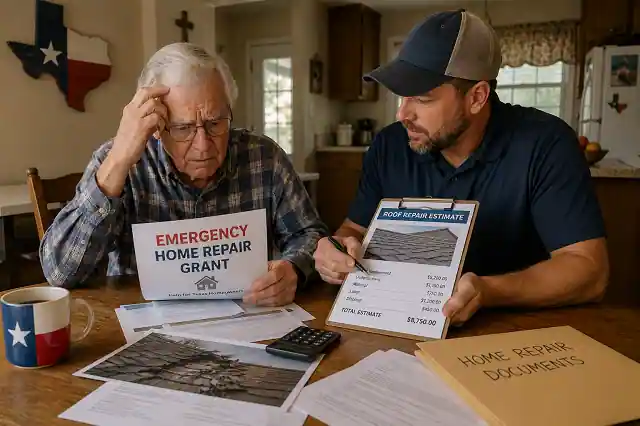
Emergency Home Repair Grants for Seniors in Texas
Some repairs simply cannot wait. A broken air conditioner during extreme heat, electrical hazards, roof leaks, or plumbing failures can quickly become dangerous for senior citizens.
Some Texas programs may offer emergency home repair assistance when a serious repair problem affects health or safety. Availability, funding, and eligible repairs vary by program.
Emergency repairs may include:
- Roof leaks after storms
- Heating or cooling failures
- Unsafe electrical systems
- Water or plumbing emergencies
- Accessibility-related emergencies
- Structural safety concerns
Because emergency funding can be limited, seniors should contact local housing agencies and nonprofit providers as soon as a serious health or safety problem occurs.
Veterans may also have additional options through home repair grants for disabled veterans and senior homeowners.
Before applying for emergency help, seniors should prepare:
- Proof of age
- Income records
- Homeownership documents
- Photos of damage
- Repair estimates
How to Apply for Texas Home Repair Grants for Senior Citizens
1. Check Eligibility First
Before applying, make sure you meet the program rules. Most programs look at age, income, location, homeownership, and repair type.
Understanding the specific program’s eligibility requirements can help you prepare a more complete application.
2. Gather Important Documents
Most programs ask for:
- Government ID
- Proof of age
- Social Security income documents
- Tax returns
- Property ownership proof
- Repair estimates
3. Take Photos of Home Damage
Photos can help document the condition of the home and explain why the repair is needed.
4. Check Multiple Programs
Review federal, state, county, nonprofit, and emergency programs that fit your situation. You may apply to more than one program when appropriate, but disclose other assistance and confirm that the same repair expense is not funded twice.
5. Schedule a Home Inspection
Some housing assistance programs require a home inspection before approving or scheduling eligible repairs.
6. Respond Quickly to Requests
Housing agencies may ask for additional paperwork or information. Responding promptly can help keep the application process moving.
7. Keep Copies of Everything
Save applications, repair estimates, emails, and approval letters for future reference.
Common Mistakes Seniors Should Avoid
- Waiting too long to apply
- Applying to only one program
- Missing required documents
- Ignoring nonprofit or local help
- Skipping accessibility assistance options
- Not taking photos of damage
- Missing deadlines
Many seniors can reduce the risk of larger repair problems by addressing damage early and contacting housing assistance providers before a minor issue becomes more serious.
Frequently Asked Questions About Texas Home Repair Grants for Senior Citizens
1. Can senior citizens get free home repair grants in Texas?
Some Texas seniors may qualify for grants or other home repair assistance through federal, state, local, nonprofit, or emergency programs. Whether assistance is free, forgivable, or repayable depends on the specific program.
2. What age qualifies for senior home repair programs?
There is no single age requirement. Some local programs may use age 60 or 65 thresholds, while USDA Section 504 grants generally require the homeowner to be 62 or older.
3. Can seniors get roof replacement grants?
Some eligible seniors may receive roof repair or replacement assistance through programs such as USDA Section 504 or qualifying local housing rehabilitation programs. Eligibility and covered work vary by program.
4. Do grants cover bathroom safety upgrades?
Sometimes. Programs may help with grab bars, ramps, safer flooring, and accessibility upgrades.
5. Can multiple repair programs be combined?
Different programs may sometimes be used for different eligible expenses, but seniors should confirm each program’s rules, disclose other assistance, and make sure the same repair expense is not funded twice.
6. How long does approval take?
Approval times vary depending on funding, urgency, and local program rules.
7. Are emergency repairs covered?
Some emergency programs may assist with urgent roofing, electrical, plumbing, HVAC, or other health and safety problems. Availability and eligible repairs depend on the specific program and local funding.
Why You Can Trust This Information
Last Updated: August 9, 2026
Reviewed By: Grants & Housing Assistance Editorial Team
1. Updated for 2026 Housing Programs
This guide reflects updated 2026 housing repair information for senior homeowners in Texas.
2. Based on Government and Housing Sources
Information comes from HUD, USDA, TDHCA, nonprofit housing organizations, and emergency repair programs.
3. Written in Simple English
This article uses clear language to help senior citizens and caregivers understand repair assistance options.
4. Focused on Real Housing Assistance
We focus on real grants, repair programs, and homeowner assistance that may help reduce housing costs.
5. Reviewed for Accuracy
Housing information is reviewed regularly to reflect newer grant programs and changing repair assistance opportunities.
Conclusion
Home repairs can feel overwhelming for senior citizens living on a fixed income, but help may be available. In 2026, several Texas home repair grants for senior citizens may help older homeowners repair unsafe homes, improve accessibility, lower energy bills, and stay safely where they live.
Federal programs, Texas housing assistance, county repair help, nonprofit organizations, and emergency funding may all provide support depending on your situation.
The best approach is to apply early, prepare the required paperwork, and compare programs that match your age, income, property, location, and repair needs. If one program is unavailable or you do not qualify, check whether another program has different eligibility requirements. When using more than one source of assistance, confirm the funding rules and make sure the same repair expense is not funded twice.

Arthur Pendelton is a senior housing policy researcher and public welfare analyst with over eight years of experience tracking federal, state, and non-profit residential repair programs. He specializes in statutory grant frameworks, including USDA Section 504 Rural Housing, the Department of Energy’s Weatherization Assistance Program (WAP), and municipal HUD Community Development Block Grants (CDBG). Arthur systematically audits Federal Register publications and Title 7/42 CFR regulatory updates to provide low-income homeowners, seniors, and military veterans with accurate, barrier-free application guidance.