
Aging residential windows with rotted frames, broken dual-pane seals, and persistent thermal drafts turn an ordinary house into an expensive financial burden. When air infiltration drives monthly utility bills up, contractor estimates to replace 8 to 15 residential windows routinely range between $6,500 and $18,000. Securing official window replacement grants provides non-repayable capital for low-income homeowners, seniors, and disabled residents to eliminate air leaks, replace decayed framing, and install Energy Star certified units without taking on debt. Discover how qualifying households access assistance through our comprehensive low income window replacement programs to fund home energy upgrades today.
The primary barrier facing homeowners is separating legitimate statutory grant programs from commercial sales pitches. Search engines are crowded with lead-generation sites claiming the government gives universal vouchers to install new windows upon request. In reality, public housing assistance is disbursed through statutory channels codified under federal law, requiring verification of household income, property deed, and physical hazard severity. Former military personnel can also examine specialized benefits in our directory of veteran window replacement assistance. You can also run our free home repair program finder to locate county preservation agencies accepting applications.
When statutory requirements are satisfied, approved window replacement grants pay for comprehensive building envelope upgrades. Approved grant scopes cover complete tear-outs down to the structural rough opening, installation of rot-resistant vinyl or fiberglass frames, double-pane Low-E insulated glass, argon gas thermal fills, custom casement operators for accessibility, and lead-safe window casing abatement. Matching your household income and property location with the correct public funding source is the essential first step toward eliminating drafts without exhausting personal savings.
Download Official USDA Form RD 410-4 Repair Application (PDF)
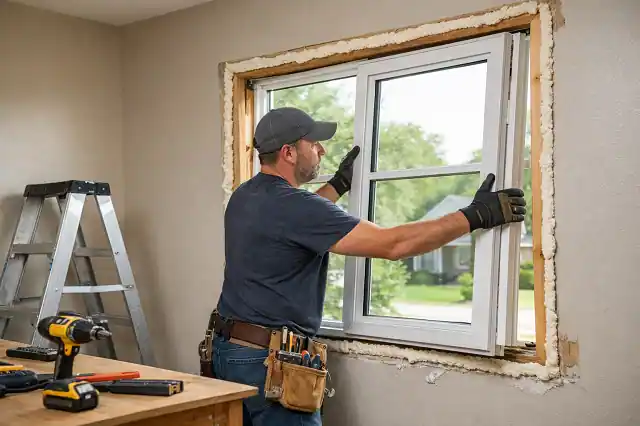
Statutory Allocation Frameworks: Comparing Public Window Grant Channels
Public assistance for residential windows is split across several federal departments, each governed by specific statutory rules. Because there is no single agency handling all home repairs, homeowners must match their window damage and income with the correct statutory program.
Before preparing formal documentation for window replacement grants, applicants must examine how different public entities evaluate property eligibility, maximum dollar allocations, and repayment obligations:
| Assistance Channel | Administering Agency | Statutory Authority | Maximum Grant Limit | Core Eligibility Benchmark |
| Weatherization Assistance (WAP) | U.S. Department of Energy | Energy Conservation & Production Act (10 CFR Part 440) | Comprehensive retrofit ($8,000 to $12,000 avg) | Households earning at or below 200% Federal Poverty Guidelines or SSI |
| USDA Section 504 | USDA Rural Development | Title V, Housing Act of 1949 (7 CFR Part 3550) | Up to $10,000 Grant / $40,000 Loan | Homeowners age 62+ earning below 50% Area Median Income in rural zones |
| HUD CDBG Housing Rehab | Local Municipal Housing Authorities | Housing & Community Development Act (24 CFR Part 570) | Up to $25,000 Forgivable Loan / Grant | Low-to-moderate-income homeowners earning below 80% Area Median Income |
| HUD HOME Program | State & Local Participating Jurisdictions | Cranston-Gonzalez National Affordable Housing Act | $15,000 to $35,000 deferred balance | Owner-occupied households meeting local affordable housing rehabilitation standards |
| VA Disability Housing Grants | U.S. Department of Veterans Affairs | Title 38 U.S.C. Chapter 21 & 38 CFR Part 36 | $6,800 (HISA) / $126,526 (SAH) | Veterans with qualifying service-connected disabilities or medical consults |
| FEMA Individuals & Households | Federal Emergency Management Agency | Robert T. Stafford Disaster Relief Act (44 CFR Part 206) | Up to $42,500 statutory cap | Primary homes damaged within federally declared presidential disaster areas |
When evaluating applications for window replacement grants, intake officers distinguish between normal fixture aging and verified building safety hazards. Requests made purely for aesthetic updates or exterior color changes are denied across all public channels. To qualify, existing windows must demonstrate verified structural rot, air infiltration driving energy burdens, or code violations that make the residence unsafe.
DOE Weatherization Assistance: Free Energy-Efficient Window Retrofits
The Weatherization Assistance Program (WAP), administered by the U.S. Department of Energy, represents the primary federal funding opportunity for lower-income households facing high utility bills. Operating across all 50 states through regional Community Action Agencies, WAP delivers whole-house energy efficiency services at zero out-of-pocket cost to qualifying homeowners.
Under 10 CFR Part 440, weatherization providers evaluate window replacements through empirical building science assessments. Technicians conduct an on-site diagnostic audit using a calibrated blower-door fan and infrared thermographic imaging to measure air leakage:
- Air Sealing and Weatherstripping First: If drafty sashes can be effectively sealed using heavy-duty caulking, bronze weatherstripping, or new locking latches, technicians perform those targeted repairs first.
- The Savings-to-Investment Ratio (SIR): Full window replacement requires a computed SIR of 1.0 or higher, confirming that projected energy savings exceed the total labor and equipment cost over the product lifetime.
- Physical Replacement Triggers: Whole window units are replaced when wooden frames suffer irreparable rot, insulated dual-pane glass seals have failed, or broken sashes allow outdoor air to bypass air barriers entirely.
Approved window replacement grants through weatherization install high-performance units meeting ENERGY STAR 7.0 standards, featuring multi-chamber vinyl frames, Low-E coatings, and insulated argon gas. Discover technical performance thresholds in our guide on energy efficient window grants.
USDA Section 504: Federal Grants and 1% Loans for Rural Homeowners
The premier federal resource for rural homeowners is the USDA Section 504 Home Repair program. Codified under 7 CFR Part 3550, this program provides direct loans and grants to very-low-income rural property owners to remove structural health and safety hazards.
Section 504 operates two distinct funding tracks that can be deployed independently or combined to finance full window replacements:
- Outright Section 504 Grants: Provides up to $10,000 in lifetime non-repayable grants. To qualify, the primary homeowner must be at least 62 years of age and demonstrate an inability to repay a loan. Funds must resolve documented health and safety hazards.
- Low-Interest Section 504 Loans: Homeowners of any age can borrow up to $40,000 at a fixed 1.0% interest rate amortized over 20 years. A $10,000 window replacement project costs approximately $46 per month, protecting rural families from predatory consumer loans.
- Combined Grant and Loan Packages: Rural seniors age 62 and older can combine a $10,000 grant with a 1% loan to finance extensive home renovations totaling up to $50,000.
When applying for window replacement grants through Section 504, the applicant must occupy the home as their primary residence and hold verified deed ownership. In addition, total household earnings must fall strictly below 50% of the county Area Median Income (AMI). Senior homeowners can review dedicated age-based rules in our directory of window replacement grants for senior citizens.
HUD Community Development Block Grants and Municipal Programs
For homeowners in urban and suburban areas, the U.S. Department of Housing and Urban Development provides resources through formula block grants. The Community Development Block Grant (CDBG) program and HOME Investment Partnerships deliver funds directly to participating cities.
Local municipal housing departments design and administer single-family rehabilitation programs tailored to neighborhood needs. While federal law mandates broad compliance standards, local program administrators establish exact project scopes, annual funding limits, and application windows:
- Emergency Minor Repair Grants: Many municipalities provide rapid-response emergency grants between $3,000 and $7,500 when broken glass, failed locks, or severe water intrusion through window openings threatens home security.
- Deferred Forgivable Loans: For comprehensive window upgrades, cities offer 0% interest deferred loans up to $25,000. Requiring zero monthly payments, the entire balance is forgiven if you remain in the home for 5 to 10 years.
- Lead Hazard Reduction Grants: Homes constructed prior to 1978 often contain lead-based paint on window sills and sashes. HUD Lead Hazard Control grants fund complete removal and replacement of contaminated sashes under strict EPA Lead RRP rules.
Securing window replacement grants through municipal authorities requires contacting your local municipal housing authority. Request an application for the Single-Family Rehabilitation Program during open intake to avoid lengthy waitlists.
VA Disability Adaptation: HISA, SAH, and SHA Window Rules
The Department of Veterans Affairs does not offer general home improvement funds. When veterans use VA benefits for windows, work must fall under disability housing adaptation authorities in Title 38 of the United States Code.
Home Improvements and Structural Alterations (HISA)
The Home Improvements and Structural Alterations (HISA program) is managed by the Prosthetic and Sensory Aids Service. HISA makes living areas accessible for disabled veterans without requiring a 100% service-connected rating.
Under official VA regulations, HISA assistance offers two lifetime benefit tiers:
- Service-Connected Benefit ($6,800): For veterans addressing a service-connected condition, or those rated 50% or higher for combined service-connected disabilities.
- Non-Service-Connected Benefit ($2,000): For all veterans enrolled in VA healthcare needing structural alterations for non-service medical conditions.
When applying for window replacement grants through HISA, ordinary cosmetic replacements are excluded. However, HISA permits window alterations when medically necessary. Approved scopes include lowering sills for wheelchair viewlines, installing easy-opening casement cranks, and adding solar tinting for light sensitivity.
Specially Adapted Housing (SAH) and Special Home Adaptation (SHA)
Veterans with severe, permanent service-connected mobility impairments can access large adaptation grants under 38 CFR Part 36:
- Specially Adapted Housing (SAH) ($126,526 Limit): For veterans with loss of limbs or severe burns. Windows must be part of an approved barrier-free design with accessible latches and energy-saving glazing.
- Special Home Adaptation (SHA) ($25,350 Limit): For veterans with blindness, loss of hand use, or severe respiratory injuries. SHA pays for automated window operators, motorized blinds, and insulated glass that prevents drafts.
Disabled military homeowners can compare broader disability scopes in our specialized window replacement grants for disabled homeowners guide.
Targeted Demographic Allocations: Seniors, Veterans, and Disabled Homeowners
Public programs provide expedited queues, dedicated funding pools, and elevated caps for vulnerable demographics pursuing window replacement grants.
Fixed-Income Senior Homeowners
Seniors age 62 and older represent the primary beneficiaries of non-repayable window grants. Living on fixed Social Security or pension checks, elderly homeowners lack funds for major renovations. Programs like USDA Section 504 and local Area Agencies on Aging waive loan repayment for qualifying seniors. Explore dedicated rules in our guide on senior window replacement grants.
Disabled Homeowners and Medically Vulnerable Residents
Homeowners living with permanent disabilities qualify for specialized state and local repair grants. Because severe drafts and moisture leaks cause pulmonary trauma for medically fragile individuals, municipal agencies expedite grant intake for disabled applicants with doctor documentation.
Single Mothers and Working Families
Single parents often struggle to finance emergency window work. Municipal block programs and charitable networks reserve repair stipends for low-income single-parent households. See assistance options in our guide on energy efficient windows for single mothers.
Teachers and Healthcare Paraprofessionals
Public service workers often fall into an income gap where earnings exceed poverty lines yet lag behind private contractor bids. Several states offer workforce housing programs with deferred loans and emergency repair grants. Learn more in our specialized manual on window replacement grants for teachers.
Diagnostic Scope Evaluation: Matching Window Damage to Grant Approvals
Intake evaluators and municipal building inspectors do not approve funding based on general statements. Every grant application requires an empirical, photographic site assessment detailing the exact physical failure mode of the window units.
Understanding primary degradation patterns helps homeowners present an airtight case when applying for window replacement grants:
| Physical Window Condition | Diagnostic Failure Mechanism | Approved Public Grant Remediation Scope |
| Broken Glass & Cracked Lites | Physical impact or thermal shock fracture compromising weather seal | Complete pane replacement or full frame swap to eliminate injury risks and restore security |
| Rotted Wooden Sills & Jambs | Chronic water intrusion causing fungal decay and structural wood softening | Removal of decayed framing; replacement with multi-chamber vinyl or composite casements |
| Foggy Double-Pane Units | Desiccant saturation and perimeter seal failure allowing moisture between lites | Installation of insulated glass units with argon gas and warm-edge spacer technology |
| Severe Air Drafts & Rattling Sashes | Warped frames, failed weatherstripping, or counterweight cord breaks | Comprehensive weatherization air sealing or full Energy Star 7.0 frame replacement |
| Inoperable Sashes in Bedrooms | Painted shut, stuck, or sized below residential egress standards | Retrofitting rough openings to provide minimum 5.7 sq ft clear emergency escape opening |
If your home currently suffers from timber decay around exterior sashes, consult our guide on grants for window frame rot repair. For windows with trapped condensation and haze between glass panes, review our technical tutorial on replacing foggy double-pane windows.
When evaluators assess window replacement grants, they check whether moisture damage has spread into wall studs. Remediating framing rot early protects building envelopes from mold colonization.
Building Science and Trade Engineering Standards for Grant Projects
Public programs will not finance low-grade units. When agencies award grant funds, contracts must conform to modern building codes and empirical building science standards:
| Performance Metric | Target Grant Specification | Why It Matters for Approval |
| U-Factor Rating | ≤ 0.22 (Northern Climate) or ≤ 0.28 (Southern) | Measures heat transfer rate; lower numbers signify superior thermal insulation |
| Solar Heat Gain (SHGC) | ≤ 0.23 (Southern / Cooling Climates) | Quantifies how much solar heat enters; blocks intense summer heat gain |
| Air Leakage Rating | ≤ 0.30 cfm per square foot | Restricts drafty air infiltration through sash perimeters during high winds |
| Glazing Architecture | Double-pane or triple-pane with argon gas | Argon provides 30% higher insulation than standard trapped dry air |
| Low-E Coating | Microscopic metallic oxide thermal film | Reflects radiant heat indoors in winter and blocks ultraviolet rays in summer |
| Frame Construction | Multi-chamber insulated vinyl or fiberglass | Prevents thermal bridging and eliminates structural rot common in wood |
When selecting contractors for window replacement grants, confirm that all units carry certification stickers from the National Fenestration Rating Council (NFRC). Review product benchmarks and pricing tiers in our directory of energy efficient window replacement costs.
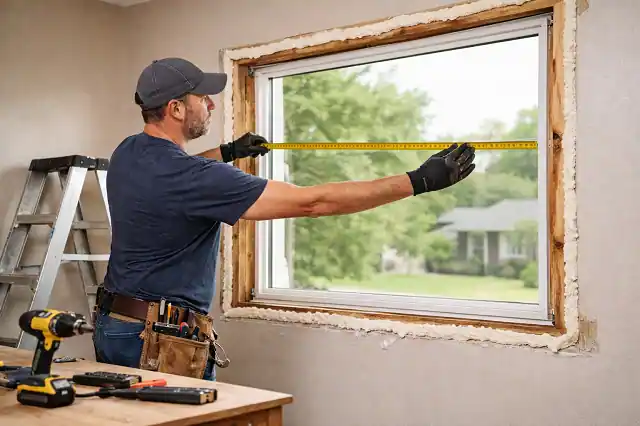
State and Municipal Window Grant Directories: Regional Highlights
State housing finance agencies and municipal community development divisions maintain customized grant programs designed to address regional climate threats. Review active state-level programs providing window replacement grants:
Texas Housing and Barrier Removal
Texas homeowners deal with intense solar heat gain and severe storm fronts. The Texas Department of Housing and Community Affairs (TDHCA) manages weatherization and the Amy Young Barrier Removal Program, offering grants up to $22,500 for low-income households with disabled residents. Explore regional intake steps in our guide on Texas window replacement grants.
Florida Weatherization Assistance
In Florida, high cooling loads make thermal efficiency essential. FloridaCommerce distributes weatherization funds through regional community action agencies to install high-performance double-glazed windows, solar screens, and air sealing for low-income households. Compare guidelines in our Florida window repair and replacement grants guide.
Evaluating state-level energy rules ensures you apply for programs with active funding allocations rather than expired regional incentives.
Accredited Non-Profit Organizations Providing Free Window Replacements
When municipal waiting lists are closed or household income exceeds federal thresholds, non-profit organizations provide supplemental window replacement grants to protect vulnerable homeowners:
Habitat for Humanity: Critical Home Repair
Habitat for Humanity operates the Critical Home Repair and Repair Corps programs across hundreds of local community affiliates. Utilizing volunteer labor, corporate donations, and subsidized financing, local chapters replace deteriorated windows for low-income seniors, veterans, and single-parent households facing severe code enforcement penalties.
Rebuilding Together: Safe at Home
Rebuilding Together is a leading national non-profit that mobilizes professional contractors, corporate sponsors, and volunteers to repair single-family homes. Through their Safe at Home and Veterans at Home programs, local chapters provide complete window replacements, structural frame repairs, and weatherproofing for indigent homeowners at zero cost.
Explore comprehensive non-profit resources in our directory covering nonprofit window replacement grants.
8 Practical Steps to Apply for Window Replacement Grants
Navigating public bureaucracy requires organized paperwork. Following this step-by-step procedure prevents administrative delays and speeds approval:
- Identify and Document Window Deterioration: Take date-stamped photos of broken glass, rotted sills, failed seals, and peeling paint.
- Assemble Identification and Military Records: Gather driver’s licenses, Social Security cards, and DD-214 discharge papers.
- Compile Complete Financial Records: Prepare your last two years of tax returns, W-2s, three months of bank records, and benefit statements.
- Verify Clear Property Title Ownership: Locate your recorded deed, recent property tax receipt, and mortgage statement.
- Locate Administering Housing Agencies: Contact your city housing office, USDA Rural Development, or local Community Action Agency.
- Solicit Bids from Licensed, SAM-Registered Contractors: Obtain written bids from licensed contractors registered in the federal SAM.gov database.
- Submit Complete Application Packages: File Form RD 410-4 for USDA aid or local municipal CDBG packets.
- Await Official Written Notice of Award: Never begin construction before your agency issues an official written approval letter. Early work is permanently disqualified from grant funding.
How to Protect Yourself from Deceptive Window Marketing Scams
Vulnerable homeowners are heavily targeted by predatory contractors and aggressive sales crews. When pursuing approved window replacement grants, keep these essential consumer protections in mind:
- Beware of the “Free Government Window” Sales Pitch: No private contractor represents a federal agency. Any glazier who knocks on your door claiming they are sent by the “Federal Window Program” is deploying deceptive sales practices.
- Never Pay Upfront Application Fees: Legitimate government housing programs never charge application, registration, or processing fees. Demands for upfront cash indicate a scam.
- Grants Are Never Deposited into Personal Bank Accounts: Public assistance programs manage payments through secure escrow accounts or voucher systems paid directly to verified trade contractors upon passing physical municipal building code inspections.
- Check Contractor SAM.gov and State Licensing: Verify that your contractor maintains an active license in good standing with your state licensing board, carries commercial liability insurance, and holds EPA Lead-Safe certification for homes built prior to 1978.
Frequently Asked Questions About Window Replacement Grants
Can low-income homeowners get free window replacement grants?
Yes. If you meet the income limits of programs like USDA Section 504 (age 62+ in rural zones), municipal CDBG emergency programs, or local community action weatherization initiatives, approved grants pay 100% of the replacement costs without requiring repayment.
What is the maximum income to qualify for federal window grants?
Income thresholds vary by geographic region and program. USDA Section 504 requires household income below 50% of the county Area Median Income (Very Low Income). HUD CDBG programs cap eligibility at 80% AMI, while DOE Weatherization caps eligibility at 200% of federal poverty guidelines.
Does the federal window tax credit apply to 2026 installations?
No. The Internal Revenue Service states that the federal Energy Efficient Home Improvement Credit under Section 25C is not allowed for property placed in service after December 31, 2025. Homeowners should not rely on Section 25C tax credits for 2026 projects.
How long does the application and approval process take?
Timelines range from 30 to 60 days for emergency municipal CDBG repair pools, to 3 to 6 months for USDA Section 504. Active water leaks or broken security hazards receive priority intake handling.
Can I replace the windows myself and receive reimbursement from the grant?
No. Federal and state grant programs strictly prohibit DIY labor reimbursements. All structural framing, glass installations, and weatherproofing must be executed by licensed, insured trade contractors approved by the funding authority.
What happens if I sell my home after receiving a window grant?
USDA Section 504 grants require repayment if you sell within three years. Municipal CDBG loans enforce 5-to-10-year retention periods with pro-rated repayment.
Why You Can Trust This Guide
Last Updated: September 26, 2026
Reviewed By: HomePropertyGrants Editorial Team
Experience: Our editorial research team has analyzed federal housing acts, municipal community development block programs, and trade engineering codes across all 50 states for more than a decade.
Expertise: All statutory dollar caps, income eligibility limits, and engineering standards are derived directly from Title V of the Housing Act of 1949, 7 CFR Part 3550 codes, 24 CFR Part 570 regulations, and published HUD Veterans and Community Development manuals.
Authoritativeness: All Fiscal Year 2026 funding caps ($10,000 for USDA 504, $25,000 for CDBG, $126,526 for VA SAH) are cross-referenced against current Federal Register notices and agency administrative circulars.
Trustworthiness: HomePropertyGrants.com is completely independent. We accept zero financial compensation, contractor kickbacks, or sponsored placements from window manufacturers or mortgage lenders. Our evaluations are published exclusively to provide honest, verified public assistance roadmaps for American property owners.
Helpful Decision Support: We break down complex federal regulations into plain American English with direct links to official `.gov` applications, helping homeowners secure legitimate public aid while avoiding predatory contractor scams.
Next Steps: Secure Your Housing Assistance Application
Replacing drafty, broken, or rotted windows restores living comfort, cuts monthly heating bills, and protects your long-term property investment. Securing approved window replacement grants gives vulnerable households the financial resources needed to complete high-performance envelope repairs without falling into debt. If you are an elderly homeowner in a rural township, begin by preparing USDA Form RD 410-4. If you live in an urban municipality, contact your local city housing office to inquire about open CDBG emergency repair funds.
Taking action early prevents structural framing rot from spreading into adjacent wall cavities, ensuring your home remains secure and energy-efficient for decades to come.

Arthur Pendelton is a senior housing policy researcher and public welfare analyst with over eight years of experience tracking federal, state, and non-profit residential repair programs. He specializes in statutory grant frameworks, including USDA Section 504 Rural Housing, the Department of Energy’s Weatherization Assistance Program (WAP), and municipal HUD Community Development Block Grants (CDBG). Arthur systematically audits Federal Register publications and Title 7/42 CFR regulatory updates to provide low-income homeowners, seniors, and military veterans with accurate, barrier-free application guidance.