
What bathroom upgrade grants are available for veterans in 2026? Eligible veterans may find bathroom improvement assistance through the U.S. Department of Veterans Affairs (VA), state programs, and nonprofit organizations. For medically necessary bathroom modifications, the VA Home Improvements and Structural Alterations (HISA) benefit is an important program to check first, while SAH and SHA may help veterans who meet specific disability and housing requirements.
Depending on the program, assistance may support improvements such as grab bars, roll-in or walk-in showers, accessible sinks, doorway modifications, and other disability-related bathroom changes. This guide explains which programs to check first, who may qualify, what each program can cover, and how veterans can apply in 2026.
Quick answer: HISA is the main VA benefit to check when a bathroom modification is medically necessary and meets VA requirements. Veterans with certain qualifying service-connected disabilities may also qualify for SAH or SHA. State and nonprofit programs can provide additional options when their eligibility and project requirements fit.
What Bathroom Improvements Can Veterans Get Help With?
The type of bathroom improvement that qualifies depends on the program and the reason for the modification. A project connected to a documented medical or accessibility need may fit a VA program, while other improvements may be better suited to state or nonprofit assistance.
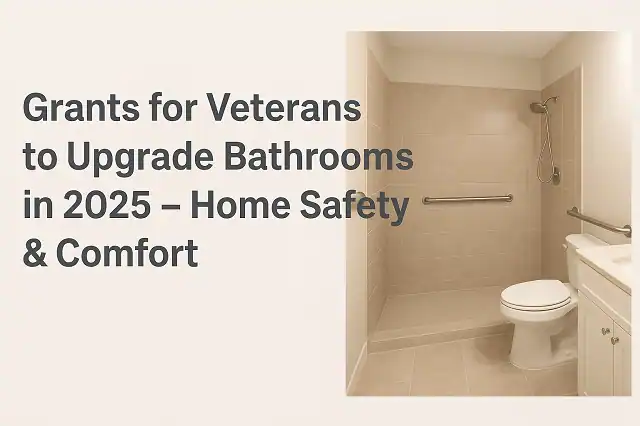
- Grab bars and handrails: These can improve stability and make bathroom use safer.
- Walk-in or roll-in showers: These can make shower entry easier for veterans with mobility limitations. Veterans researching accessible bathing options can also compare grants for walk-in bathtubs and related assistance.
- Accessible sinks and counters: These modifications can improve access for veterans who use wheelchairs or have limited mobility.
- Non-slip flooring: Depending on the program, flooring changes may support a safer bathroom environment.
- Bathroom doorway modifications: Some accessibility programs may support changes that improve access for mobility devices.
- Roll-in shower modifications: Certain VA and state programs specifically recognize accessibility modifications such as roll-in showers.
- Other medically necessary modifications: A program may consider additional work when it directly meets its eligibility and medical requirements.
Veterans with broader disability-related home improvement needs can also review home repair grants for disabled veterans to compare other possible funding pathways.
The exact improvement should always be checked against the program’s written requirements before work begins. A bathroom renovation that is useful for one homeowner may not be an eligible expense under a particular grant or assistance program.
Top Bathroom Upgrade Programs for Veterans in 2026
The strongest starting points are the VA programs designed for medically necessary improvements and disability-related housing adaptations. State and nonprofit programs can then be researched based on location and individual circumstances.
Home Improvements and Structural Alterations (HISA)
The Home Improvements and Structural Alterations (HISA) benefit can help eligible Veterans and Servicemembers pay for medically necessary improvements or structural alterations to a primary residence. Bathroom accessibility is specifically relevant because HISA can address essential lavatory and sanitary facilities.
Depending on eligibility and medical justification, HISA may support improvements such as roll-in or barrier-free showers, bathroom sinks or counters, handrails, doorway widening, and certain plumbing or electrical work needed because of medical equipment.
Veterans who need assistance with a broader home repair project can also compare HISA with home repair grants for veterans to identify other federal and state programs that may address different types of work.
HISA funding limits: The current VA information lists a lifetime benefit of up to $6,800 for qualifying service-connected circumstances and certain specified cases. A lifetime amount of up to $2,000 may apply in other qualifying disability situations. The amount available depends on the Veteran’s eligibility and remaining lifetime benefit.
HISA is not a general-purpose bathroom remodeling benefit. The proposed improvement must meet VA requirements and be medically justified. Routine maintenance and unrelated repairs are not automatically covered simply because the applicant is a Veteran.
Specially Adapted Housing (SAH) Grant
The Specially Adapted Housing (SAH) grant helps eligible Veterans and service members with certain qualifying service-connected disabilities buy, build, or modify a permanent home so it better meets their accessibility needs. Bathroom changes can form part of a larger approved home adaptation project when they address the Veteran’s disability-related needs.
The U.S. Department of Veterans Affairs (VA) lists qualifying conditions that can include the loss or loss of use of more than one limb, certain types of blindness, certain severe burns, and certain qualifying lower-extremity disabilities that affect balance or walking.
For FY 2026, eligible Veterans can receive up to $126,526 through the SAH program. The actual amount used depends on eligibility, approved adaptations, and the Veteran’s project needs.
VA also explains that eligible SAH or SHA beneficiaries may use their grant benefit up to six different times over their lifetime, depending on their circumstances and remaining benefit.
Important: SAH is not a general bathroom renovation grant for every Veteran. It is a disability housing adaptation benefit with specific service-connected disability and housing requirements.
Special Home Adaptation (SHA) Grant
The Special Home Adaptation (SHA) grant helps eligible Veterans and service members with certain qualifying service-connected disabilities adapt a permanent home for improved accessibility and independent living.
Qualifying disabilities can include the loss or loss of use of both hands, certain severe burns, and certain respiratory or breathing injuries. The Veteran or a qualifying family member must also own or plan to own the home involved in the grant.
For FY 2026, eligible Veterans can receive up to $25,350 through the SHA program. The amount actually available depends on eligibility, the approved project, and the Veteran’s remaining benefit.
Veterans comparing disability-related bathroom options can also review bathroom accessibility grants for disabled homeowners to understand other possible assistance pathways.
Important: SHA is designed for Veterans who meet specific disability and housing requirements. Having a service-connected disability by itself does not automatically qualify someone for SHA.
State Bathroom Assistance Programs for Veterans
State programs can provide another route when a bathroom project does not fit a VA benefit or when a Veteran needs a different type of assistance. Depending on the state, support may take the form of a grant, home improvement loan, accessibility modification program, or locally administered housing assistance.
Because state programs have their own eligibility rules, Veterans should check requirements related to income, disability, homeownership, property location, project type, and available funding before applying.
| State program | Type of assistance | Potential bathroom connection |
| Texas Veterans Home Improvement Program | Home improvement loans | Eligible improvements to an existing primary residence may include qualifying bathroom work |
| New York Access to Home for Heroes/Veterans | Accessibility and home-repair assistance through participating organizations | Can support accessibility modifications for eligible disabled Veterans |
| Other state and local programs | May include grants, loans, modifications, or repair assistance | Depends on the individual program |
Texas Veterans Home Improvement Program
Eligible Texas Veterans can investigate the Texas Veterans Land Board (VLB) Home Improvement Program when they need financing for improvements to an existing primary residence.
Current VLB materials describe loans of up to $50,000 for eligible Texas Veterans, subject to credit approval and other requirements. Because this is a loan program, Veterans should treat it as financing rather than a free bathroom renovation grant.
Before beginning the project, Veterans should compare the proposed bathroom work with the VLB’s current eligible-improvement requirements and confirm that the property and borrower meet the program rules.
Texas reminder: The Texas Veterans Home Improvement Program provides loans, not free grant funding. Credit approval and other program requirements apply.
New York Access to Home for Heroes/Veterans
New York provides another example of state-level assistance through the Access to Home for Heroes/Veterans Program. The program is designed to help eligible disabled Veterans with accessibility modifications and certain home-repair needs.
New York State Homes and Community Renewal (HCR) describes eligible activities that can include accessibility modifications, emergency home repairs, and code violations. Program participation and application administration are handled through eligible local organizations and program administrators.
Because eligibility and project approval depend on the specific program requirements, Veterans should confirm with the applicable local administrator whether their proposed bathroom modification qualifies before beginning work.
Veterans who want to compare this type of state assistance with broader accessibility options can also review bathroom accessibility grants for disabled homeowners.
How to Find Programs in Other States
Veterans outside Texas and New York can begin with their state’s Department of Veterans’ Services, veterans affairs agency, housing agency, or local housing department. Search for programs involving home modifications, accessibility improvements, disabled Veterans, owner-occupied home repairs, or housing rehabilitation.
State program checklist:
- Check the state’s official Veterans affairs or veterans services website.
- Look for owner-occupied home improvement and accessibility programs.
- Determine whether the program provides a grant, loan, modification service, or another form of assistance.
- Check income, disability, property, ownership, and location requirements.
- Ask whether bathroom accessibility work is an eligible improvement.
- Confirm whether approval is required before construction begins.
Veterans who want a broader state-by-state starting point can also use our guide to state home repair grants to identify additional agencies and programs to research.
Nonprofit Organizations That Help Veterans With Home Improvements
Nonprofit organizations can provide another source of help for Veterans who need safer or more accessible housing. Depending on the organization and local program, assistance may include home modifications, repairs, volunteer labor, materials, or connections to community resources.
Nonprofit eligibility is different from VA and state eligibility. Some organizations focus on Veterans with severe service-related disabilities, while others consider income, location, housing conditions, or the specific type of repair.
Homes For Our Troops
Homes For Our Troops (HFOT) provides specially adapted custom homes for severely injured post-9/11 Veterans. Its mission focuses on housing designed around accessibility and independent-living needs.
Veterans who believe they may meet the organization’s requirements can review the Homes For Our Troops (HFOT) application information to understand the eligibility requirements and type of housing assistance available.
HFOT is not a general bathroom remodeling grant. Veterans who need a smaller bathroom modification should therefore also investigate HISA, state programs, and other local nonprofit resources.
Rebuilding Together
Rebuilding Together is a national nonprofit network that works through local affiliates to provide home repairs and modifications for households that meet local program requirements.
Because each affiliate can have its own service area, funding availability, and eligibility rules, Veterans should use the Rebuilding Together local affiliate directory to identify the organization serving their area and then ask whether bathroom accessibility or safety improvements are currently supported.
Veterans researching additional charitable assistance can also compare local nonprofit opportunities with our guide to nonprofit home repair grants.
Veterans Service Organizations
Veterans service organizations and local community groups can also help Veterans identify housing resources. Organizations such as the American Legion and Veterans of Foreign Wars may help connect Veterans with benefits, local programs, or organizations that provide housing-related support.
A Veterans Service Officer (VSO) can also be useful when a Veteran needs help understanding VA benefits, documentation, or application requirements.
Who May Qualify for Bathroom Upgrade Assistance?
There is no single eligibility rule for every bathroom upgrade program. The right program depends on the Veteran’s disability status, medical need, homeownership situation, income when applicable, location, and the exact improvement being requested.
| Program | Main eligibility focus | Bathroom connection |
| HISA | Eligible Veteran or Servicemember, qualifying residence, and medically necessary improvement | Can support medically necessary modifications to essential bathroom facilities |
| SAH | Specific qualifying service-connected disabilities and VA housing requirements | Bathroom adaptations may form part of a broader approved home adaptation project |
| SHA | Specific qualifying service-connected disabilities and VA housing requirements | Bathroom adaptations may form part of an approved accessibility project |
| State programs | Varies by state, including income, disability, property, location, and project requirements | May support accessibility, repairs, or broader home improvements |
| Nonprofit programs | Varies by organization, location, household circumstances, and funding | May provide repairs, modifications, labor, materials, or other support |
HISA Eligibility
HISA is intended for medically necessary improvements and structural alterations to a primary residence. The proposed improvement must be medically justified and meet the applicable VA requirements.
For a bathroom project, the need should be clearly connected to the Veteran’s medical or accessibility requirements. Veterans should prepare the medical documentation and other supporting information requested by VA before submitting the application.
The U.S. Department of Veterans Affairs (VA) provides the current HISA information covering eligible improvements, funding limits, exclusions, and application requirements.
SAH and SHA Eligibility
SAH and SHA have more specific disability requirements than HISA. They are intended for Veterans and service members with certain qualifying service-connected disabilities who need housing adaptations.
SAH and SHA should not be treated as general bathroom renovation programs. The Veteran must meet the applicable disability and housing requirements, and the proposed adaptation must fit the approved purpose of the grant.
The current VA disability housing grant information provides the current qualifying categories, FY 2026 funding limits, and application information for these programs.
State and Nonprofit Eligibility
State and nonprofit programs can use different eligibility standards. A state program may consider income, homeownership, property location, disability, or the type of improvement. A nonprofit may have geographic restrictions, limited funding, or requirements based on its mission.
Veterans can use our resources on state home repair grants and nonprofit home repair grants to continue researching these alternative funding pathways.
Documents Veterans May Need
The exact documents depend on the program. VA programs may require information related to Veteran status, disability, medical necessity, residence, proposed work, and project cost.
Common document checklist:
- Proof of Veteran or Servicemember status, when required
- Medical documentation or a VA medical prescription when required
- Property or homeownership information
- Contractor estimates or itemized project costs when required
- Photographs of the area requiring modification, when requested
- Income documentation for programs that use income eligibility
- State or nonprofit application forms
Quick Eligibility Checklist
Before applying, check these points:
- ☐ I know which program I am applying to.
- ☐ My bathroom improvement matches that program’s purpose.
- ☐ I meet the applicable Veteran, disability, income, property, or location requirements.
- ☐ I have the required medical documentation when applicable.
- ☐ I understand whether the program provides a grant, loan, modification service, or another form of assistance.
- ☐ I know whether approval is required before work begins.
How to Apply for Bathroom Upgrade Grants for Veterans
The application process becomes easier when the bathroom project is clearly matched to the right program. VA, state, and nonprofit programs use different application procedures, so Veterans should follow the current instructions for the specific program they choose.
Choose the Right Program
Start by identifying why the bathroom needs to be changed. If the improvement is medically necessary because of a disability, review HISA first. Veterans who meet the specific disability requirements for broader home adaptation should also review SAH or SHA.
If the project does not fit a VA benefit, investigate state and nonprofit programs. Veterans with broader repair needs can also compare their options with home repair grants for veterans.
Confirm Your Eligibility
Read the current program requirements before preparing the application. Check Veteran status, disability requirements, homeownership rules, income limits when applicable, location restrictions, and eligible improvements.
Veterans applying for VA housing adaptation benefits can use the official VA disability housing grant application information to review the available application methods and requirements.
Gather Your Documents
Collect the documents required by the specific program. Depending on the benefit, this may include medical documentation, property information, photographs, project details, contractor estimates, and other supporting records.
| Document | Why it may be needed | Programs that may request it |
| Veteran or Servicemember information | Confirms program eligibility | VA, state, nonprofit |
| Medical documentation | Shows the medical or accessibility need when required | HISA and certain disability-related programs |
| Property information | Confirms residence and ownership requirements | VA, state, nonprofit |
| Contractor estimate | Shows the proposed work and estimated cost | Depending on program requirements |
| Photos | Documents the existing condition or accessibility need | Depending on program requirements |
Prepare a Clear Bathroom Improvement Proposal
Describe exactly what needs to change and why the improvement is needed. Instead of simply requesting a bathroom renovation, explain the accessibility or medical need and identify the specific modification that addresses it.
For example, a proposal might explain the need for a roll-in shower, grab bars, an accessible sink, wider bathroom access, or another modification that supports safer daily use.
Application tip: Be specific. Explain what needs to change, why the change is needed, and how the proposed improvement addresses the Veteran’s accessibility or medical requirements.
Submit the Application Through the Correct Program
Submit the application using the official process provided by the program. For VA benefits, Veterans should use VA’s official application process rather than relying on an unofficial third-party website.
State and nonprofit programs may use different procedures. Some accept applications directly, while others operate through local housing agencies, nonprofit affiliates, or program administrators.
Wait for Approval Before Starting Work
Check the program instructions before hiring a contractor or beginning construction. A program may require written approval, an inspection, a project review, or other steps before eligible work can begin.
Keep copies of your application, supporting documents, estimates, correspondence, and approval notices so you can respond quickly if the program requests additional information.
Application Checklist
Before submitting your application:
- ☐ I identified the program that best matches my situation.
- ☐ I checked the current eligibility requirements.
- ☐ I confirmed that my bathroom improvement is potentially eligible.
- ☐ I gathered the required Veteran, medical, property, and financial documents.
- ☐ I prepared a clear description of the proposed work.
- ☐ I obtained an estimate if the program requires one.
- ☐ I used the official application instructions.
- ☐ I understand whether approval is required before construction begins.
What These Programs Do NOT Cover
Bathroom assistance programs do not automatically cover every improvement a Veteran may want. Each program has a defined purpose, eligibility rules, and list of potentially eligible expenses.
For example, HISA is focused on medically necessary improvements and structural alterations. It is not a general home remodeling benefit for cosmetic upgrades or routine maintenance.
Similarly, SAH and SHA are designed around specific disability-related housing adaptations rather than general bathroom remodeling for all Veterans.
State and nonprofit programs may also limit assistance to accessibility modifications, emergency repairs, code-related work, or other defined improvements.
Before spending money: Confirm the program’s current requirements and approval process before starting construction. Do not assume that an expense will qualify for reimbursement simply because it is related to a Veteran’s home.
Other Home Improvement Assistance Veterans Can Explore
A bathroom project may be only one part of a larger home improvement plan. When several repairs are needed, it can be useful to separate the work into individual categories and research the programs that specifically address each need.
Accessibility and Mobility Improvements
Veterans who need accessibility changes beyond the bathroom can explore programs that support disability-related home modifications. These may address entrances, doors, mobility areas, ramps, or other parts of the home.
Our guide to home repair grants for disabled veterans provides another starting point for comparing disability-related home improvement options.
Window Improvements
Windows may require a different funding pathway from medically necessary bathroom modifications. Veterans considering window work can review window replacement grants for veterans when that type of improvement is part of their broader home repair plan.
Roof and Essential Home Repairs
Roof repairs and other major home maintenance projects generally need to be evaluated separately from bathroom accessibility work. Veterans can compare available assistance for roof projects through roof replacement grants for veterans.
Planning tip: If your project includes a bathroom modification plus other major repairs, make a separate list for each improvement. Then match each item with programs designed for that type of work.
Can Veterans Combine Funding From Different Programs?
It may be possible to use different funding sources for different parts of a larger project, but Veterans should not assume that every program can be combined. Each VA, state, or nonprofit program may have its own rules regarding other funding sources and eligible expenses.
Before combining assistance, ask each program administrator whether another funding source can be used and whether the same expense may be claimed through more than one program. Keep separate estimates, approvals, invoices, and payment records for each funding source.
Best Program for Your Situation
The best starting point depends on the reason for the bathroom improvement, the Veteran’s disability status, the home involved, and the requirements of the available program.
| Your situation | Program to check first | Why it may fit |
| Medically necessary bathroom modification | HISA | Designed for medically necessary improvements and structural alterations to a primary residence |
| Qualifying severe service-connected disability requiring broader home adaptation | SAH | Provides housing adaptation assistance for Veterans who meet specific disability and housing requirements |
| Qualifying disability that fits SHA requirements | SHA | Supports home adaptations for Veterans who meet its specific qualifying disability requirements |
| VA requirements do not fit the project | State programs | State and local programs may provide grants, loans, accessibility modifications, or other assistance |
| Need charitable repair or accessibility assistance | Nonprofit programs | Nonprofits may provide repairs, modifications, labor, materials, or referrals depending on location and eligibility |
If the Bathroom Work Is Medically Necessary
Start with HISA when the proposed bathroom modification is medically necessary and you meet the applicable VA requirements. HISA is specifically designed around medically necessary improvements and structural alterations to a primary residence.
Examples may include certain modifications to essential bathroom facilities that help a Veteran use the bathroom more safely or independently.
The U.S. Department of Veterans Affairs (VA) provides the current HISA requirements and application information that should be reviewed before applying.
If You Have a Qualifying Severe Service-Connected Disability
Check SAH or SHA when you have a qualifying service-connected disability and need broader adaptations to a permanent home. Bathroom modifications may form part of an approved housing adaptation project when they address the Veteran’s disability-related needs.
The current VA disability housing grant information lists the qualifying conditions and current FY 2026 funding limits for SAH and SHA.
If You Need State-Level Assistance
State programs are worth researching when a project does not fit a VA benefit or when another potential funding pathway is needed. Eligibility can depend on income, disability, homeownership, location, property type, and the specific improvement.
Our guide to state home repair grants can help Veterans identify additional state-level resources to investigate.
If You Need Charitable Home Modifications
Nonprofit organizations can be useful when a Veteran needs repairs or accessibility modifications and meets the organization’s requirements. Availability can depend on location, household circumstances, project type, and available funding.
Veterans can use our guide to nonprofit home repair grants as another starting point for researching charitable assistance.
If You Are Unsure Which Program Fits
Start here:
- Medically necessary bathroom modification: Check HISA first.
- Qualifying severe service-connected disability: Check SAH or SHA.
- State-specific housing need: Check state and local housing programs.
- Charitable repair or modification: Check nonprofit organizations serving your area.
- Several different repairs: Match each repair with the program designed for that type of work.
Veteran status alone does not determine which program is best. The proposed work, disability or medical need, property, location, and program requirements all matter.
Frequently Asked Questions (FAQ)
What are bathroom upgrade grants for veterans?
Bathroom upgrade assistance includes VA, state, and nonprofit programs that may help eligible Veterans pay for or receive support with accessibility or medically necessary bathroom improvements such as grab bars, accessible sinks, and roll-in showers.
Who is eligible for bathroom upgrade assistance in 2026?
Eligibility depends on the program. VA programs may require specific service-connected disabilities or medical necessity, while state and nonprofit programs may use income, property, location, disability, or project-specific requirements.
What is the HISA benefit?
The HISA benefit helps eligible Veterans and Servicemembers pay for medically necessary improvements and structural alterations to a primary residence. Certain bathroom accessibility improvements may qualify when the required medical justification and other VA requirements are met.
How much can Veterans receive through SAH and SHA in 2026?
For FY 2026, the maximum SAH amount is $126,526 and the maximum SHA amount is $25,350. The amount a particular Veteran can use depends on eligibility, the approved project, and the remaining benefit.
How much can HISA provide?
The current HISA information lists a lifetime benefit of up to $6,800 for qualifying service-connected circumstances and certain specified cases, while up to $2,000 may apply in other qualifying disability situations. The available amount depends on the Veteran’s eligibility and remaining lifetime benefit.
Can Veterans use more than one assistance program?
Different programs may sometimes support different parts of a larger home improvement project, but Veterans should confirm the rules with each program administrator before combining funding or claiming the same expense through multiple sources.
Are there state programs for Veterans who need bathroom improvements?
Yes. State and local programs can provide grants, loans, accessibility modifications, or other home improvement assistance depending on the state and the Veteran’s circumstances.
Should Veterans start bathroom work before receiving approval?
Veterans should check the specific program’s rules before beginning construction. Some programs may require an application, inspection, written approval, or other project steps before eligible work starts.
Why You Should Trust This Guide
Last Updated: September 14, 2026
Reviewed By: Homepropertygrants Editorial Team
Experience: This guide focuses on practical home-improvement assistance and explains how Veterans can evaluate bathroom accessibility funding options.
Expertise: Program descriptions are organized around the actual eligibility, project, and application differences between VA, state, and nonprofit assistance.
Authoritativeness: Key VA and state program information is connected to official government sources so readers can verify current requirements before applying.
Trustworthiness: Grant and loan programs are clearly separated, and the article avoids presenting Veteran status alone as a guarantee of funding.
Helpful Decision Support: The program comparison, eligibility checklist, application steps, and project-specific guidance are designed to help Veterans choose a realistic starting point.
Conclusion
Bathroom improvements can make a home safer, more accessible, and easier to use for Veterans with mobility or disability-related needs. The strongest starting point depends on the reason for the improvement and the Veteran’s eligibility.
For medically necessary bathroom modifications, HISA is an important VA benefit to investigate. Veterans with certain qualifying service-connected disabilities may also qualify for SAH or SHA, while state and nonprofit programs can provide additional pathways when their requirements fit the project.
Before paying for construction, identify the program, verify the current requirements, prepare the required documentation, and confirm whether approval is needed before work begins. Taking these steps can help you focus on programs that genuinely match your bathroom improvement needs.

Arthur Pendelton is a senior housing policy researcher and public welfare analyst with over eight years of experience tracking federal, state, and non-profit residential repair programs. He specializes in statutory grant frameworks, including USDA Section 504 Rural Housing, the Department of Energy’s Weatherization Assistance Program (WAP), and municipal HUD Community Development Block Grants (CDBG). Arthur systematically audits Federal Register publications and Title 7/42 CFR regulatory updates to provide low-income homeowners, seniors, and military veterans with accurate, barrier-free application guidance.