
Free Roof Replacement Grants For Healthcare Workers in 2026
Healthcare workers who need to fix their roof or buy a whole new one might lower the price using existing home repair programs. Help might come from country repair grants, disaster rebuilding money, weather sealing programs, charities, state housing offices, local city money, or employer programs. There is no special national roof grant made just for healthcare workers. Winning the money usually depends on your family income, owning the house, where it is located, how bad the roof is, storm damage, your age, disabilities, if you are a veteran, or the strict rules of the single program.
This guide talks about the best choices for nurses, doctors, EMTs, paramedics, therapists, techs, home healthcare aides, and other medical workers. To see the whole picture of roof grants, start with our huge Roof Repair and Roof Replacement Grants for Homeowners 2026 page.
Why Roof Replacement Assistance Matters for Healthcare Workers
A bad roof gets way more expensive if you let small leaks keep dripping. Our guide about the cost of delayed home repairs shows how waiting to fix a problem destroys your wallet. Water dripping inside can ruin your ceilings, turn insulation to mush, rot the wood frame, destroy electrical wires, and ruin the inside of your house.
Roof money programs almost always care about the condition of the house, not what job the homeowner works. This means a healthcare worker might win money because the roof is a terrible health danger, the family has low income, the house is in an approved country town, or a huge storm smashed the roof.
For a big list of federal, state, city, and charity roof help, check out our federal and state roof replacement grants guide. If you just want a good general roof-replacement starting page, our roof replacement grants 2026 guide is another great place to look.
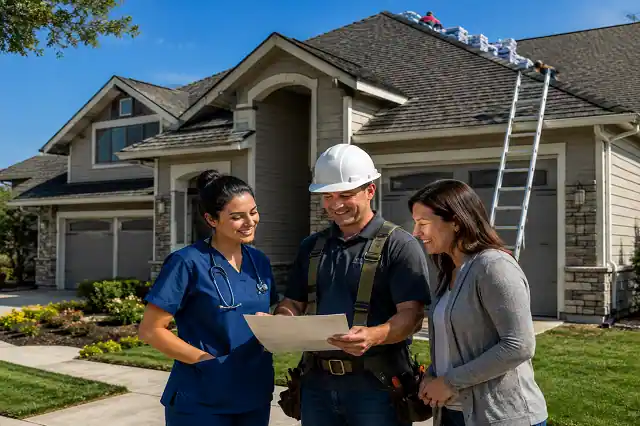
Who Might Get Roof Replacement Assistance in 2026?
Programs all use different rules to pick who wins money. The most common rules look at whether you own the house, if it is your main house, how much your family makes, where the house sits, how terrible the roof is, and if fixing it is needed for health, safety, house strength, saving energy, or storm rebuilding.
| Rule to Check | Why They Care About It |
|---|---|
| Owning the House | Many home repair programs demand that you really own and live in the house. |
| Main House | Programs usually only fix the main house where the family lives every day. |
| Family Income | Many programs help low- and very-low-income families first. |
| Roof Condition | Huge leaks, rotting wood, water pouring in, or safety dangers can push you to the front of the line. |
| House Location | USDA programs only work in approved country towns, while state and city programs have their own map lines. |
| Age or Disability | Some programs give extra help to older adults or homeowners with disabilities. |
| Disaster Damage | An approved declared disaster can open the door to special storm money. |
Healthcare workers might be nurses, doctors, EMTs, paramedics, breathing therapists, physical therapists, mental health workers, lab techs, X-ray techs, home health aides, or other medical workers. These job titles do not magically prove you pass the rules for a grant.
If low income is your biggest problem, our roof replacement grants for low-income homeowners guide is much better for you. Older healthcare workers can also read roof replacement grants for seniors. Veterans can check federal and state roof replacement grants for veterans, and disabled homeowners can look at roof replacement grants for disabled homeowners.
Federal Programs Healthcare Workers Should Look At First
There is no one federal form that gives a free roof just because you are a healthcare worker. Instead, a few federal programs help pay for country house repairs, local city rebuilds, weather sealing, or disaster clean-up. The actual form you fill out is usually handled by your state, county, city, housing department, charity, or local worker.
| Program Name | How It Might Help With a Roof | Who Should Check It Out |
|---|---|---|
| USDA Section 504 | House repairs, updates, and removing health and safety dangers for eligible country homeowners. | Very-low-income country homeowners; the free grants have extra age rules. |
| HUD CDBG | Local CDBG money can pay to rebuild approved houses. | Homeowners living in approved cities, counties, or states. |
| HUD HOME | Approved cities can use HOME money to fix up affordable houses. | Homeowners living in towns running HOME programs. |
| DOE WAP | Energy-saving and health-and-safety weatherization works; this is not a normal roof replacement grant. | Approved low-income families working with local weather offices. |
| FEMA Individual Assistance | Might pay for allowed disaster house repairs, like certain bad roof damage. | Approved homeowners living inside a declared disaster zone. |
USDA Section 504 Home Repair Loans and Grants
The USDA Section 504 Home Repair program is a huge deal for healthcare workers who own houses in approved country towns. USDA says this program hands out loans to very-low-income homeowners to fix, improve, or update their houses. It also gives free grants to older, very-low-income homeowners who need to remove a health and safety danger.
USDA’s newest page says you must own and live in the house, be unable to get a cheap bank loan, and make less than the very-low-income limit for your county. The free grant part is only for homeowners age 62 or older and must be used to remove a real health and safety danger.
| USDA Section 504 Money | Current Top Limit |
|---|---|
| House repair loan | Up to $40,000 |
| Normal repair grant | Up to $10,000 |
| Grant for approved disaster damage | Up to $15,000 |
| Mixed loan and grant money | Up to $50,000 |
| Mixed loan and grant inside disaster areas | Up to $55,000 |
USDA currently offers the Section 504 repair loan with a super cheap 1% interest rate that you can pay back over 20 years. The program also has strict lifetime limits on grants, so never assume you will automatically get the top dollar amount.
For a guide completely focused on roofing, read our USDA Section 504 roof safety grants page.
HUD Community Development Block Grant Programs
HUD’s Community Development Block Grant program sends money to states, cities, and counties every year. HUD says fixing up family houses is an allowed way to spend it, but CDBG is not a giant national roof grant that everyone gets. Local town leaders pick which allowed jobs get paid for and how their homeowner programs run.
A healthcare worker must call their city, county, or state housing desk. Ask them if they run a CDBG-funded owner-occupied repair program, an emergency repair program, or a house preservation program that can pay for a new roof.
HUD HOME Investment Partnerships Program
HUD’s HOME program gives money to approved states and cities for affordable housing projects. These approved towns can use HOME money to fix up houses for families who own them, but the local town decides how the help works and what repair costs pass the test.
Ask your local city office if they have HOME-funded owner-occupied repairs and if a new roof is allowed under their current rules.
DOE Weatherization Assistance Program
The Department of Energy’s Weatherization Assistance Program helps eligible low-income families save energy while keeping the house healthy and safe. DOE says WAP weather seals about 32,000 houses every year using DOE money and supports about 8,500 jobs. Families in the program save about $372 or more every single year based on national tests.
WAP is not a normal roof replacement grant. A leaking or totally broken roof can actually stop them from doing other weather jobs. The local weather worker is the one who decides what jobs pass the test.
Healthcare workers who want an energy-saving roof can also read our energy-efficient roof replacement costs, grants, and programs guide.
FEMA House Repair Help After a Bad Storm
FEMA might give you house repair money when an approved homeowner’s house gets smashed by a declared disaster. FEMA rules clearly say that ruined roofs are one of the house parts that might get fixed. This works if the storm caused the damage, a FEMA inspector says you need the repair, the house passes all the rules, and your insurance will not cover it.
If a bad storm ripped open your roof and you need fast protection before building a real one, read the roof repair and roof replacement grants guide for storm and emergency roof ideas. Save all inspector reports, clear photos, insurance letters, builder prices, and storm papers in one neat folder.
State and Local Roof Replacement Programs
State and city housing desks are often way better than a giant national search because they run many rebuilding programs right in your own town. A city, county, housing desk, or state housing office might have owner-occupied repairs, fast emergency fixes, house-saving programs, disaster rebuilding, or loans that go away over time.
| Where to Look | What to Ask For |
|---|---|
| State housing office | Owner-occupied repair, emergency roof fixes, saving old houses, and disaster rebuilding programs. |
| County housing desk | Roof repair, roof replacement, emergency rebuilding, and delayed-payment help. |
| City housing desk | CDBG- or HOME-funded owner-occupied repair programs. |
| Housing authority | Local homeowner rebuilding or saving old house programs. |
| Community Action Agency | Weather sealing and other low-income family help. |
| Emergency-management office | Disaster rebuilding and bad storm damage help. |
Never trust a fake national dollar guess when looking at a local city program. Top money limits, income rules, allowed repairs, builder rules, house liens, payback rules, and open dates can change completely from one town to the next.
Texas Roof Replacement Help
Healthcare workers living in Texas can grab state, local, and federal housing money if they pass all the rules. Our Texas roof replacement grants for low-income families guide is a great read if your house is in Texas and your family needs roof money.
Other State Programs
For all other states, start by calling the state housing finance desk, state housing office, county housing desk, and city rebuilding office. The website’s Roof Replacement Grants category can also help you find roof-focused pages before you dig into your exact state.
If you really need a giant national list of roof money, use the Roof Replacement Grants 2026 guide instead of wasting time on normal house repair pages.
Roof Replacement Assistance for Healthcare Workers With Special Circumstances
A healthcare worker might fit more than one program rule. For example, a nurse might also be a senior homeowner, a veteran, a low-income country homeowner, or have a disability. The trick is to match your exact life facts to a program that wants to help you.
Older healthcare workers can read about senior roof replacement assistance. Veterans can check the veteran roof replacement guide. Disabled homeowners can use the disabled homeowner roof replacement guide to find special disability money.
Low-income homeowners can also read the low-income roof replacement guide. Searching based on income is almost always better than searching based on your job.
Can I Combine Multiple Roof Grants?
Sometimes. But you should never guess that grants, insurance checks, cash back, loans, and boss benefits can all be dumped in the same bucket. Every program has strict rules about what they pay for, mixing money, insurance checks, and top limits.
| Money Source | What to Ask Before Mixing It |
|---|---|
| USDA Section 504 | Check USDA rules, allowed jobs, and what they say about other money. |
| Local HUD city repair | Check city rules, house liens, payback rules, and allowed jobs. |
| State or local money | Ask if you must tell them about other grants or insurance checks. |
| Weather sealing | Ask if the bad roof must be totally fixed before they will seal drafts. |
| House insurance | Check what is covered and if the check cancels out other grants. |
| Employer benefits | Ask if the boss’s money is legally allowed to pay for house repairs. |
If you are trying to figure out if your roof is an emergency, read our roof replacement planning guide for more ideas.

Employer Housing and Hardship Assistance for Healthcare Workers
Hospitals and clinics might have housing, hardship, moving, or community money, but these belong to the boss. They are not federal roof grants. One hospital might have a giant repair fund while another hospital gives nothing.
Ask your Human Resources desk if the hospital has a hardship fund, employee relief money, a housing benefit, or disaster help. Always ask to see the written rules before guessing they will pay for your roof.
Charity Roof Repair Help
Charity groups are awesome when you have a terrible roof and no money. Getting their help depends on where your house is and their local rules, not your healthcare job.
| Group to Call | What to Ask For |
|---|---|
| Habitat for Humanity | Local fast repair and home-saving programs. |
| Rebuilding Together | Local programs that focus on safe and healthy houses. |
| Community Action Agencies | Weather sealing and local family help. |
| Local charity groups | Emergency repair money, finding builders, or free worker help. |
| Churches and faith groups | Local repair jobs and fast emergency help. |
Before you ask for help, make sure the charity actually works in your town and fixes houses for people who own them. Big national charities use local offices, so local rules are what matters most.
Energy-Saving Roofs and 2026 Tax Warnings
Saving energy is great, but homeowners must keep weather programs, power company discounts, and tax breaks completely separate. A new roof does not automatically win a federal tax credit just because the box says “saves energy.”
The IRS says the Residential Clean Energy Credit is dead for parts bought after December 31, 2025. Normal roof shingles and wood rarely qualify, but special solar tiles and solar shingles might because they make clean power. Always check the real IRS rules for your exact roof part and install date before counting on a tax break.
Different Roofs and Special Jobs
Not every roof job costs the same or uses the same money. The roof shape, how bad it is, how you use the house, and why you need it all change what money you can ask for.
For example, if you have a totally flat roof, read our flat roof replacement costs and grants guide. Healthcare workers must always try to fix the main house first because sheds and garages often get rejected.
How to Apply for Roof Money
The best form proves you have a real roof problem and that you pass all their rules.
- Look at the roof and get a real, written builder report.
- Take clear photos of leaks, missing shingles, rotten wood, storm damage, and water stains inside the house.
- Get written prices from a few licensed roofers.
- Gather your photo ID, house deed, income papers, insurance, and tax forms.
- Check the city, county, state, USDA, storm, charity, and boss money that matches your life.
- Send in your form before the deadline, and never start building before they say yes.
- Answer the office super fast if they call or mail you.
- Keep copies of your form, inspector notes, prices, insurance papers, and the “yes” letter.
| Paper to Have | Why They Want It |
|---|---|
| Government photo ID | Proves who you are. |
| Proof you own the house | Proves your name is on the deed. |
| Proof you live there | Proves it is your main, everyday house. |
| Income papers | Proves you pass the low-income rules. |
| Roof inspector notes | Proves the exact damage on paper. |
| Builder prices | Shows exactly how much the job will cost. |
| Insurance papers | Shows if you got a check, so they do not pay you twice. |
| Storm proof | Proves a bad storm caused the damage. |
Big Mistakes Healthcare Workers Make
- Guessing that having a healthcare job magically wins you a grant.
- Trusting fake national dollar amounts for a small city program.
- Starting to build the roof before getting a written “yes.”
- Hiding insurance checks when the rules say you must show them.
- Sending in forms missing important income or house papers.
- Ignoring city and county house repair programs.
- Hiring a builder who does not have the license or insurance the program demands.
- Paying a scammer who promises a guaranteed government grant.
Common Questions
Are there roof grants just for healthcare workers?
No. There is no magic national roof grant made just for healthcare workers. Nurses and doctors might win money from normal home repair, country living, storm rebuilding, weather sealing, charity, state, city, or boss programs if they pass the rules.
How much money can a healthcare worker get?
There is no one magic number. For USDA Section 504, the top limit is $40,000 for a loan and $10,000 for a normal grant. A bad, approved storm can push the grant limit to $15,000. You can mix loans and grants up to $50,000, or $55,000 in a storm area. These are absolute top limits, not a guaranteed check.
Can USDA Section 504 help pay for a roof?
USDA Section 504 pays for allowed repairs, updates, and removing health and safety dangers for approved country homeowners. The roof job must pass their rules, and the family must qualify.
Do I have to live in a country town?
No. Living in the country is a must for USDA Section 504. But city, county, state, HUD, charity, and storm programs work in other towns.
Can FEMA pay for a bad roof?
FEMA might give house repair money after a declared disaster if the family and house pass FEMA’s strict rules. FEMA says bad roofs might get fixed if the storm destroyed them.
Can I mix grants, insurance, and other money?
Sometimes. Every program has its own rules. Storm money changes if you get an insurance check. You must always tell them about other money if they ask.
Where should healthcare workers start looking?
Start with the county or city housing desk, the state housing office, USDA Rural Development if you live in the country, FEMA if a storm hit, your hospital’s HR desk, and real charity groups in your town.
Tricks to Avoid Roof Form Problems
- Write down the roof problem before it gets much worse.
- Ask to fix urgent health and safety dangers, not pretty upgrades.
- Look at federal, state, county, city, charity, boss, and power company choices.
- Check the exact income, map, house, and repair rules before sending a form.
- Get many written prices from builders if the rules allow it.
- Ask every office if a different grant or insurance check ruins your chance.
- Keep all your papers in one safe folder.
- Never start building until you know for a fact that you do not need a written “yes” first.
Roof Money for Healthcare Workers: Final Thought
Healthcare workers rarely get roof money just because of their job title. The best ways to get money come from programs that check your income, country address, house damage, storm damage, age, disabilities, or veteran status.
Start by matching your life facts to USDA, HUD city repairs, DOE weather sealing, FEMA storm money, state and city programs, charities, and real boss benefits.
Always check the newest rules, open money, deadlines, builder demands, and allowed repair costs with the real office before signing a contract with a builder.
Why You Can Trust This Guide
Last Updated: November 2026
Reviewed By: Arthur Pendelton, Senior Public Housing Policy Analyst
- Real Government Facts: Federal facts come straight from real USDA Rural Development, HUD, DOE, FEMA, and IRS websites.
- Real Money Limits: Dollar amounts are only used when a real office prints them. Local city money changes too much to guess a national number.
- Healthcare Worker Truth: The guide explains how medical workers can use normal homeowner money without tricking them into thinking their job title is magic.
- Honest Help: Home Property Grants just gives information. We do not promise approval, charge fake fees, or push a certain builder.
- Always Double Check: Program rules, budgets, deadlines, and city goals change all the time. Homeowners must check the real facts with the office before spending a dime.
Conclusion
A huge new roof is incredibly expensive, even if you have a good job. Healthcare workers must look past their job title and focus on the real life facts that government and charity programs actually care about.
Having clear photos of the bad roof, perfect income papers, a real builder’s price, and searching through USDA, HUD city programs, storm help, weather sealing, state programs, charities, and boss benefits is the smartest way to win.
Before you sign a building contract, check the newest rules with the real office and see if you need a written “yes” first. This keeps healthcare workers out of trouble and focused on real, honest roof money.

Arthur Pendelton is a senior housing policy researcher and public welfare analyst with over eight years of experience tracking federal, state, and non-profit residential repair programs. He specializes in statutory grant frameworks, including USDA Section 504 Rural Housing, the Department of Energy’s Weatherization Assistance Program (WAP), and municipal HUD Community Development Block Grants (CDBG). Arthur systematically audits Federal Register publications and Title 7/42 CFR regulatory updates to provide low-income homeowners, seniors, and military veterans with accurate, barrier-free application guidance.