
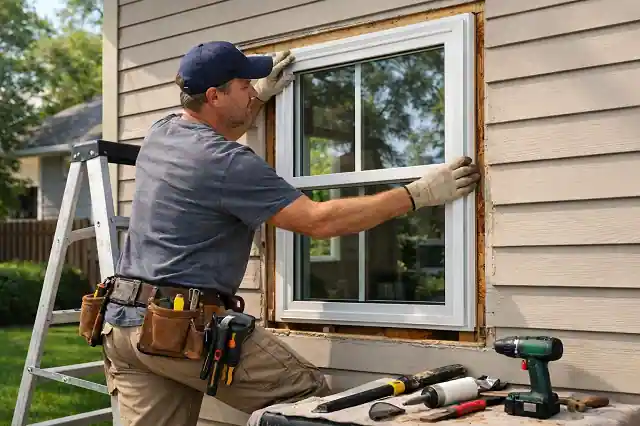
Replacing drafty or broken glass in an older home can cost families $6,000 to $18,000. For households living on modest incomes, commercial contractor estimates create heavy financial stress. Fortunately, trusted charitable groups and community networks offer direct help without taking on debt. Qualifying homeowners can get nonprofit window replacement grants without paying predatory application fees or signing high-interest loans. You can review our master window replacement grants guide to see how federal funds coordinate with local charities.
Online search results often show confusing information about home repair money. Commercial lead websites frequently disguise private home improvement loans as free charity aid. In reality, real charity assistance works through local volunteer teams and regional housing networks. Knowing how these groups review home safety needs helps families find real aid while protecting their private personal records.
Charity Assistance Realities: Real Aid vs Commercial Traps
Many homeowners confuse charitable help with direct cash payments. Legitimate charities rarely hand cash directly to homeowners. Instead, they provide volunteer work crews, secure donated building supplies, or hire licensed contractors through approved purchasing channels.
Program Notice on Public Funding Differences:
Public search results often mix commercial business grants with residential homeowner programs. City business relief pays for broken storefront glass, not private homes. True charitable homeowner assistance focuses strictly on family safety risks, heat loss, and rotting structural frames.
Charities also manage public funding contracts for local town governments. A local Community Action Agency often handles federal energy programs alongside private donations. Homeowners who need larger structural repairs can explore our guide on nonprofit home repair grants to see how groups manage complex rebuilding projects.
| Assistance Model | Funding Source | Primary Benefit | Repayment Term |
| Charitable Direct Repair | Private gifts and trust funds | Complete window installation with zero fees | 100% non-repayable gift |
| Community Housing Rehab | HUD Community Block Grants | Subsidized window repair up to $25,000 | Forgivable deferred lien (3 to 5 years) |
| Volunteer Home Preservation | Community donations and work crews | Free labor paired with discounted materials | Zero repayment or modest sliding fee |
| Commercial Lead Funnel | Private lenders and sales crews | High-interest loans disguised as grant relief | Full monthly payment with heavy interest |
Understanding these distinct delivery models keeps families from wasting time on predatory websites. Real programs require clear proof of income and property deeds before sending work crews to your address.
Major Organizations Providing Nonprofit Window Replacement Grants
There is no single universal program that gives free windows nationwide. Instead, regional networks evaluate each applicant based on age, disability, and income need. Several established charitable networks provide verified window assistance across the country.
Rebuilding Together operates over one hundred regional affiliates in thirty-eight states. This charitable group repairs hazardous homes for low-income seniors, military veterans, and residents with disabilities. Local teams replace rotted window sills, fix broken glass, and install energy-saving units. Their intake evaluators inspect each home to ensure urgent structural hazards get fixed first.
Habitat for Humanity runs home repair and preservation programs through local chapters. Their work covers weatherization, exterior painting, and safety repairs. Homeowners partner with local chapters through volunteer hours or small affordable loan agreements. While some chapters cover all repair costs through donor gifts, others use low-interest loans. Always confirm local financial terms directly with your regional chapter office.
Community Action Agencies serve almost every county in America as local public-service networks. These nonprofit groups run the federal Weatherization Assistance Program under rules from the Department of Energy. Their technicians run blower-door tests and replace old window sashes to lower winter power bills. Families searching for nonprofit window replacement grants can use these local agencies as their first intake door.
Regional housing partnerships also offer extensive repair funds. Programs modeled after the Neighborhood Nonprofit Housing Corporation provide critical rehabilitation grants up to $25,000 in participating western counties. These targeted programs combine city block grants with charitable funding to replace damaged windows and repair weak framing.
Locate an Official Rebuilding Together Affiliate
Faith-based charitable groups and local civic clubs also offer small emergency repair funds. Groups like Catholic Charities and the Society of St. Vincent de Paul assist low-income homeowners facing city safety citations. They often donate window units or pay local contractors to fix safety hazards for frail elderly residents.
Pre-1978 Homes and Lead Paint Window Programs
Houses built before 1978 have special safety and health rules during window replacement. Older wooden window frames often have layers of toxic lead paint. When old window sashes slide open, friction creates invisible lead dust that harms young children.
The Department of Housing and Urban Development offers Lead Hazard Reduction grants to local housing offices and partner charities. These public efforts prioritize homes with children under six years old. Program teams test window sashes for dangerous paint dust. If paint tests positive for toxic lead, approved contractors replace the entire window with new vinyl units.
Lead abatement work is provided at zero cost to qualifying low-income homeowners. Contractors must hold official EPA Lead-Safe certifications before beginning work. They seal living areas with plastic barriers and use special vacuum tools to capture dangerous dust. Homeowners can call 211 to find local lead hazard programs running in their home county.
Eligibility Triage for Nonprofit Window Replacement Grants
Charity repair funds are set aside for families who cannot get standard bank loans. Program administrators use clear family and financial rules to review incoming applications.
Most charitable groups set household income caps at or below eighty percent of the local Area Median Income. Others follow federal poverty lines, capping income at two hundred percent of the baseline rate. Priority review is given to elderly homeowners, residents with disabilities, and single parents. You can review our guide on who qualifies for free home repair grants to see common qualification benchmarks.
| Household Priority Category | Standard Income Benchmark | Mandatory Property Requirement | Program Approval Likelihood |
| Low-Income Senior (Age 62+) | Under 50% to 80% Area Median Income | Primary residence with clean title deed | High priority for drafty or broken glass |
| Disabled Homeowner | Under 80% Area Median Income | Documented accessibility need | High priority for egress window updates |
| Pre-1978 Family with Children | Under 80% Area Median Income | Home built before 1978 with child under 6 | Top priority for complete lead window replacement |
| General Low-Income Family | Under 200% Federal Poverty Line | Owner-occupied single-family home | Standard waitlist based on seasonal funds |
Applicants must own the home and live in it as their main residence. Rental properties owned by private landlords are excluded from homeowner assistance pools. Mobile home owners can qualify under weatherization rules if the home is permanently attached to land.
Rural homeowners can also pair charity aid with federal resources. The Department of Agriculture provides non-repayable grants up to $10,000 for rural seniors through section 504 home repair grants to remove urgent health hazards. Combining federal rural funds with local donations helps country homeowners replace failing windows without taking on debt.
The Anti-Scam Shield: How to Spot Fake Window Grant Offers
Aggressive sales companies often target older homeowners searching for free window aid online. Knowing how to spot predatory tactics protects your home deed and stops identity theft.
Fraud Warning on Guaranteed Approvals:
No genuine government agency or charity offers guaranteed window grants through social media ads. Any salesperson asking for upfront processing fees, inspection deposits, or bank numbers is running an illegal sales trap. Real charity programs never charge application fees.
Watch out for unsolicited door-to-door sales workers claiming to represent state green energy programs. These crews pressure seniors into signing digital forms on tablet computers. Many victims later discover they signed twenty-year tax assessment loans called PACE financing. These loans place legal tax liens on your property that can cause foreclosure if missed.
A legitimate program always asks for income records, tax forms, and property deeds before approving work. Also, beware of outdated web pages claiming you can get federal window tax credits. The Internal Revenue Service ended the residential Energy Efficient Home Improvement Credit for windows placed in service after December 31, 2025. Never trust sales companies that promise phantom tax refunds to sell expensive window products.
Step-by-Step Application Roadmap for Homeowners
Applying for charity home help takes careful planning and organized paperwork. Following clear steps stops application rejections and keeps your file moving through the intake queue.
- Confirm Property Ownership: Find your county property deed or tax receipt. Make sure your name matches public county records exactly.
- Photograph Damaged Windows: Take clear photos of cracked glass, rotting wooden frames, water stains, and broken security locks.
- Gather Income Records: Collect three months of bank statements, recent pay stubs, and Social Security benefit letters.
- Download Electric and Gas Bills: Collect twelve months of energy bills from your utility company to prove high seasonal heating costs.
- Submit Intake Packet to Real Charities: Deliver your papers directly to your local Community Action Agency or Rebuilding Together chapter.
- Complete the Home Technical Audit: Allow trained inspectors to measure window openings and test frames for toxic lead paint.
- Review Project Contracts Before Work Starts: Confirm that the assigned contractor carries valid insurance and that written agreements require zero out-of-pocket costs from you.
Homeowners facing multiple home problems should also check home repair grants for low income families to coordinate window repairs with roof and electrical fixes. Applying across several legitimate programs expands your access to available community funding pools.
Glazing Standards and Utility Rebate Integration
Charities and weatherization programs install high-efficiency window packages that reduce household power bills for years to come. Program supervisors choose replacement units that meet strict regional Energy Star 7.0 standards.
In cold northern regions, new window units must have low U-factor ratings of 0.22 or lower to stop indoor heat from escaping in winter. In hot southern states, programs require a Solar Heat Gain rating of 0.23 or lower to reflect scorching sun rays away from living areas. Putting in modern double-pane glass with low-e coatings cuts heating and cooling bills by fifteen to thirty percent.
Homeowners can also pair charitable labor with utility company rebates. Power companies give cash credits when residential customers replace old single-pane glass. You can check our guide on rebates for window replacement to see how to pair power bill credits with charity assistance. Stacking these funds helps charity teams replace more windows on each home.
Reviewing our guide on energy efficient windows grants gives deeper details on regional glass performance. Choosing certified materials ensures your new windows hold up against extreme weather for decades.
Frequently Asked Questions
Are nonprofit window replacement grants completely free?
Yes, genuine charitable programs provide approved window installations at zero cost to qualifying homeowners. Some groups use volunteer crews and donated goods, while others use municipal grants that need zero out-of-pocket repayment.
Can I get free windows if I live in a mobile home?
Yes, low-income mobile home owners can qualify through Community Action Agencies running the Weatherization Assistance Program. The home must be owner-occupied and permanently installed on an approved site.
What is the maximum benefit from nonprofit window replacement grants?
Grant assistance depends on the program type. Volunteer groups like Rebuilding Together focus on fixing immediate safety hazards, while community housing partnerships offer complete rehabilitation grants ranging from $10,000 to $25,000.
Will a nonprofit grant pay me cash directly?
No, legitimate charities never send cash payments directly to homeowners. All project funds pay approved, licensed window contractors directly or cover donated materials through official charity accounts.
Next Steps to Secure Legitimate Window Replacement Assistance
Waiting to fix rotted or cracked windows causes higher power bills and invites structural water damage. Taking organized action today protects your home structure and keeps your savings safe from high-interest debt.
Start by gathering your recent power bills and photographing all damaged window sills. Call 211 to find authorized charity housing groups and community action offices serving your area. Inquire specifically about open waitlists for nonprofit window replacement grants, weatherization audits, and lead hazard control programs.
Senior homeowners should also look into dedicated home repair grants for senior citizens to address accessibility issues and broken doors. Submitting organized paperwork early in the annual funding cycle gives your family the best chance to secure safe, energy-saving windows at zero out-of-pocket cost.
Why You Can Trust This Guide
Last Updated: October 2026
Reviewed By: HomePropertyGrants Editorial Team
Our editorial team provides independent, thoroughly researched home repair guidance for American homeowners. We check municipal housing notices, charity filings, and federal program rules to deliver factual assistance guides. We do not accept advertising money or referral fees from private window contractors or loan brokers.
- Experience: We track regional Community Action Agencies, charitable networks, and weatherization offices across all fifty states on an active weekly schedule.
- Expertise: Our research team reviews residential building codes, Energy Star 7.0 standards, and EPA lead-safe work rules to explain exact contractor standards.
- Authoritativeness: We source program guidelines directly from the Department of Energy, HUD Community Block Grant manuals, and verified charity charters.
- Trustworthiness: We direct readers toward legitimate public portals and accredited nonprofit offices, actively warning consumers about predatory loans and upfront fee scams.
- Helpful Decision Support: Our guides translate complex administrative rules into clear, practical checklists that help low-income homeowners make safe choices.

Arthur Pendelton is a senior housing policy researcher and public welfare analyst with over eight years of experience tracking federal, state, and non-profit residential repair programs. He specializes in statutory grant frameworks, including USDA Section 504 Rural Housing, the Department of Energy’s Weatherization Assistance Program (WAP), and municipal HUD Community Development Block Grants (CDBG). Arthur systematically audits Federal Register publications and Title 7/42 CFR regulatory updates to provide low-income homeowners, seniors, and military veterans with accurate, barrier-free application guidance.