
Free Home Accessibility Grants For Senior Citizens in 2026
Home accessibility modification grants for senior citizens in 2026 can help older homeowners pay for safety and walking fixes. These include wheelchair ramps, grab bars, flat showers, handrails, wider doors, and brighter lights. Help might come from USDA Rural Development, local HUD programs, VA grants, state offices, or local charities.
These works are totally different from making a house look pretty. The money focuses on fixing a health or safety problem. It helps remove walking barriers so older homeowners can stay safely in their own house.
For a huge list of federal, state, and charity help, check out our Home Repair Grants 2026 guide. This article focuses just on walking and access fixes for senior citizens.
Depending on who gives the money, the help might be a free grant, a loan that goes away, a cheap loan, or just free builder help. The exact kind of help depends on the office rules and your exact family facts.
USA.gov says house repair money depends on your income, age, house type, and address. They also warn homeowners to stay away from websites that promise secret “free government money.”
Where to Start: If you need a walking access fix, check USDA Rural Development if you live in the country. Call your local Area Agency on Aging. Check your city or county housing desk. Look at VA housing programs if you are a veteran.
Why Walking Access Fixes Matter for Seniors
Home access becomes super important when an older adult has trouble walking, climbing stairs, getting in a tub, fitting through tight doors, or moving safely around the house.
The Administration for Community Living lists common house fixes like ramps, bathroom grab bars, flat showers, easy lever handles, bright lights, handrails, wider doors, and stair chairs. These changes make a house safer and help an older adult live at home longer. ACL aging-in-place guidance
Bad falls are the biggest reason house access matters. The CDC says in 2026 that more than one out of every four adults age 65 and older falls every single year. These falls cause about 3 million trips to the emergency room every year.
2026 Fall Danger Fact: The CDC reports that more than one in four older adults falls every year. About 3 million emergency room trips happen every year because of older adult falls. Safe house fixes are one way to stop these falls.
The ACL also tells seniors to call the local Area Agency on Aging to find local home-fix funding. Some local programs give you money straight from their office. Others send you to a housing desk or charity group that can help.
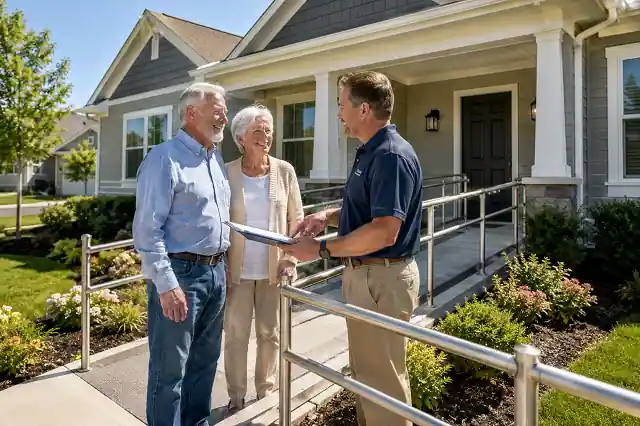
What Are Walking Access Grants?
Walking access grants are money programs designed to help allowed homeowners make changes that improve safety, moving around, and living alone.
Not every program uses the word “grant.” A senior homeowner might get a loan that disappears, a cheap loan, free worker help, free wood and parts, volunteer builders, or another kind of help.
The exact fix that gets approved changes in every program. A wheelchair ramp might get a “yes” from one office but a “no” from another. A bathroom fix might pass the test if it fixes a real safety danger, but not if you just want it to look nicer.
Warning About Fake Money: Be very careful of websites that promise you a guaranteed grant just because you are a senior. USA.gov clearly states that the government does not give out secret free money just for personal house repairs. Websites making these claims are usually scams.
What House Fixes Might Get Approved?
Approved jobs change in every program, but access money usually pays for fixes that remove physical walking barriers or stop health and safety dangers.
- Wheelchair ramps
- Outside handrails
- Inside handrails
- Bathroom grab bars
- Flat walk-in showers
- Flat roll-in showers
- Safe bathroom changes
- Wider doors
- Removing floor bumps
- Easy lever door handles
- Brighter lights
- Floors that stop you from slipping
- Safe, flat front doors
- Stairway riding chairs
- Porch lifts if the rules allow it
- Easy-to-reach sinks and bathroom parts
- Other fixes the program says yes to
The ACL clearly names ramps, bathroom safety bars, flat showers, bright lights, handrails, wider doors, and stair chairs as fixes that help older adults stay safely at home.
| House Fix | Main Goal | Best Program to Try |
|---|---|---|
| Wheelchair ramp | Makes getting in and out of the house easier | Access and repair programs |
| Grab bars | Makes the bathroom much safer | Home safety and access programs |
| Flat shower | Stops the danger of stepping over a high tub wall | Access repair programs |
| Wider doors | Lets wheelchairs and walkers fit through the door | Home fixing programs |
| Handrails | Helps you keep your balance | Safety and repair programs |
| Brighter lights | Helps you see better so you do not trip | Home safety programs |
| Stair chair | Helps you safely get up and down the stairs | Special access programs |
Senior homeowners who mostly need to fix a bad bathroom can also read our Bathroom Upgradation Grants for Seniors guide for more bathroom money help.
USDA Section 504 Home Repair Grants for Seniors
The USDA Rural Development Section 504 program is one of the best federal choices for senior homeowners who live in an approved country town.
The program gives loans to very low-income homeowners to fix, improve, update, or remove health and safety dangers from their house. Homeowners age 62 or older might qualify for the free grant part if they meet the rules and prove they cannot afford a normal bank loan.
USDA currently says the top limit for a Section 504 loan is $40,000 and the top grant is $10,000. USDA also has special disaster money rules for houses in approved storm areas.
Walking access work might get approved if it fixes an allowed health or safety danger. But homeowners should not assume that every ramp, bathroom fix, stair chair, or access job gets a “yes” right away.
USDA Section 504 Fast Facts:
- You must pass the program’s strict income limits.
- The house must sit in an approved country town.
- You usually must own the house and live in it.
- The grant money is usually just for homeowners aged 62 or older.
- The grant is meant to fix health and safety dangers.
- The current top limit for a grant is $10,000.
- The current top limit for a loan is $40,000.
Use the official USDA Rural Development Single-Family Housing Programs website to check the newest rules and how to apply.
For deep program facts, our Section 504 Home Repair Grants guide covers the USDA program perfectly.
Country homeowners who need more house help can also read our Federal and State Home Repair Grants for Rural Homeowners guide.
HUD City Walking Access Programs
HUD’s Community Development Block Grant program pays for house repairs through states and local cities. HUD says fixing family houses is an allowed job when the work matches the local program goals.
CDBG is not a single national form that a senior sends straight to the big HUD office. Instead, approved cities and towns run their own programs using the federal money. They make their own rules and pick what jobs are most important.
A city, county, or state office might run a homeowner repair program that pays for walking access fixes. The allowed jobs and rules change in every single town.
The official HUD Community Development Block Grant Program page explains how the federal money trickles down to your city.
Senior homeowners who need more rule facts can also read our Home Repair Grants Eligibility Guide.
Big Difference: HUD gives the city the money, but your local city office handles the forms, checks the house, picks the jobs, checks your income, and runs the whole project.
VA Housing Money for Senior Veterans
Senior veterans with qualifying injuries from their service might get special housing grants through the U.S. Department of Veterans Affairs.
The VA’s biggest home grant programs include Specially Adapted Housing and Special Housing Adaptation. These programs help approved veterans change their home so they can live safely with their injuries.
For the 2026 budget, the VA says the top limit for the Specially Adapted Housing grant is $126,526. The VA also gives Special Housing Adaptation money to veterans who pass its specific injury rules.
These are not normal senior house-repair grants. Getting a “yes” depends on your exact service injuries and the strict rules of the VA housing program.
| VA Program | Main Goal | 2026 Facts |
|---|---|---|
| Specially Adapted Housing | Helps injured veterans fix, build, or buy a safe house. | Up to $126,526 |
| Special Housing Adaptation | Helps some veterans fix or buy a safe house. | The limit changes based on the program rules. |
| Temporary Residence Adaptation | Might help some veterans fix a family member’s house safely. | The limit changes based on the program rules. |
Check the official VA Disability Housing Grants page for the newest rules and how to ask for money.
Veterans who need normal repair money can also read our Federal Home Repair Grants for Veterans guide.
Area Agencies on Aging and Local Access Help
Federal money is only one piece of the puzzle. Local aging offices are amazing for seniors who need small access fixes or a point in the right direction.
The Administration for Community Living says you should call your Area Agency on Aging to find out what help is in your exact town. Depending on the city, this help could be sending you to a repair program, checking your house for dangers, teaching you how to live safely at home, fixing small things for free, or hooking you up with charity groups.
The Eldercare Locator can help older adults find local aging offices and Area Agencies on Aging near them.
Local Search Trick: Ask your Area Agency on Aging exactly about home modification help, fall-prevention programs, aging-in-place services, walking access repairs, small house repairs, and local city housing repair offices.
State and City House Repair Programs
States, counties, and cities run their own house repair programs using federal, state, or local money. These programs are totally different from one town to the next.
One town might pay for ramps and bathroom fixes, while the next town might only pay for emergencies, strong wood repairs, or big safety fixes.
Some programs give free grants. Others give loans that go away over time, super cheap loans, or other kinds of money help.
Homeowners must call their state housing office, county housing desk, city housing office, or the group running the program to get the real facts. Never guess the money amount based on an old article.
Our State Home Repair Grants 2026 guide helps you find the right state office to call first.
Charity Help for Senior House Fixes
Charity groups can sometimes help homeowners who do not pass the government rules or who need extra help after getting a small grant.
Depending on the charity and your town, the help might be free volunteer workers, donated wood and parts, small walking access fixes, a house safety check, finding a good builder, or other community help.
This help is completely local, so seniors must call the charity directly. Ask them if an access program is running in your town right now.
For a bigger list of charity help, read our Nonprofit Home Repair Grants 2026 guide.
Which Access Jobs Might Get a “Yes”?
There is no magic federal list that promises money for one access job over another. Programs always check if the requested job fits their exact goals. They check if the job fixes a real health, safety, walking, or access need.
| The Job | The Danger It Fixes | Best Program to Call |
|---|---|---|
| Wheelchair ramp | Dangerous or blocked front door | Access repair programs |
| Grab bars | Trouble keeping your balance in the bathroom | Home safety programs |
| Flat shower | Trouble stepping over a high bathtub wall | Access repair programs |
| Wider doors | Wheelchairs or walkers cannot fit through the door | Access programs |
| Handrails | Trouble walking safely on stairs or paths | Safety fixes |
| Brighter lights | Cannot see well enough to walk safely | Safety programs |
| Stair chair | Cannot safely climb the house stairs | Special access programs |
The strongest forms explain exactly how the fix stops a real walking danger. Do not just ask for the money and say it is a normal remodeling job.
How to Prove You Need Access Help
A really good form explains exactly what stops you from safely walking around the house. You must explain how the new fix solves that exact danger.
Depending on the program rules, proof can be photos, an inspector’s notes, a real doctor’s note, an occupational therapy checkup, or a written price from a builder.
Better Form Words: Instead of writing “I need a bathroom remodel,” explain the real walking danger. Write “I have trouble stepping over the high bathtub wall safely.” Then explain how the flat shower fixes that exact danger.
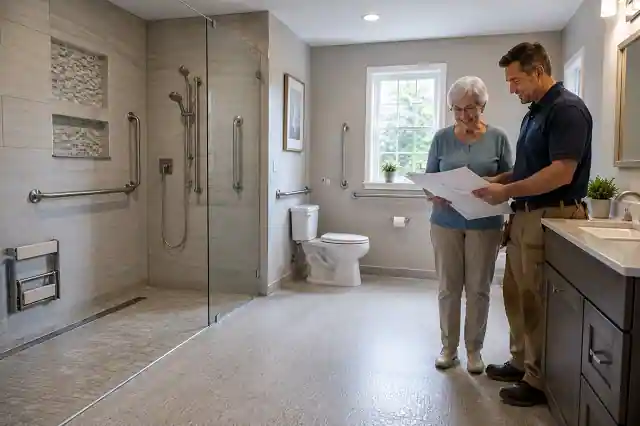
Who Qualifies for Walking Access Grants?
There is no single rule for all walking access programs. Different programs might pick senior citizens, low-income homeowners, country families, disabled people, or veterans first. They also pick families who have serious health or safety dangers at home.
| Rule to Check | What the Office Wants to Know |
|---|---|
| Age | Are you old enough for the program’s rules? |
| Income | Does your family make less than the allowed limit? |
| Owning the House | Is your name on the house deed? |
| Living There | Is this the main house where you live every day? |
| Address | Is your house inside the program’s map borders? |
| Real Access Need | Does the fix solve a real walking barrier? |
| House Condition | Is the rest of the house strong enough for the program’s rules? |
Just because you get Social Security or Medicare does not mean you automatically get a grant. You must pass all the rules for that specific program.
To learn more about the rules, read our Who Qualifies for Free Home Repair Grants guide.
Low-income seniors can also read our Home Repair Grants for Low-Income Families guide when income is the biggest rule they must pass.
Income Limits and Money Rules
Income is a huge deal for many housing programs. Different federal, state, and city programs count your income in different ways.
Some HUD programs use HUD’s income list or local city limits. USDA uses its own income rules for the Section 504 program.
Homeowners must get their income papers ready. Depending on the program, you might need to show Social Security, pension checks, work pay, disability money, or other cash you get.
The official HUD Income Limits website helps families understand how HUD measures income.
Papers to Get Ready Before Applying
Having your papers ready early makes the form much easier. The exact list changes, so always follow the office’s official list.
Senior Access Grant Paper Checklist
- A real government photo ID
- Proof that you own the house
- House deed or property papers if asked
- Papers proving your total family income
- Social Security or pension letters
- Doctor or disability notes if asked
- Photos showing the dangerous walking barrier
- Written prices from builders if asked
- Insurance or house tax papers if asked
- The fully filled-out program forms
How to Apply for Home Accessibility Grants in 2026
The exact steps change in every program, but senior homeowners usually follow these same steps.
- Write down the exact walking danger and the fix you need.
- Find programs that match your age, income, town, disability, or veteran status.
- Check if the program is open and if your fix is allowed.
- Gather your ownership, income, doctor, and other papers.
- Get written prices from builders or a home inspector if they ask.
- Send in the perfect form and answer any questions from the office fast.
- Wait for a real written “yes” letter before starting the work.
For more advice on forms, our How to Apply for Home Repair Grants guide explains common paper problems.
Do Not Build Too Early: Always ask the office if you need a written “yes” before the builder starts. Starting work early cancels your grant in many programs.
How to Make Your Form Better
No trick promises you will get money, especially when the budget is tight. But a perfect form that clearly explains your walking danger gives you the best chance to win.
- Send in your form as early as you can.
- Explain the exact walking danger very clearly.
- Explain how the new fix completely solves the danger.
- Send in every single paper they ask for.
- Give them written builder prices when asked.
- Give them doctor or therapy notes when asked.
- Keep copies of your form and all your papers.
- Answer the office super fast when they ask a question.
- If the money is gone, ask if they have a waiting list.
Common Reasons Forms Get Denied
| Possible Problem | How to Stop It |
|---|---|
| Income is too high for the rules. | Check the exact income numbers before applying. |
| House is outside the map border. | Check if your street is in their service area first. |
| The fix is not allowed. | Ask if your exact fix is on their approved list. |
| The form is missing papers. | Use the official checklist before mailing it in. |
| Missing house ownership proof. | Get your newest house deed ready. |
| The walking danger is not clear. | Write clearly about the barrier and how it gets fixed. |
| The yearly money ran out. | Ask about the next money round or the waiting list. |
| Work started before approval. | Always ask if you need a written “yes” first. |
Can Medicare Pay for House Access Fixes?
Original Medicare is not a house-remodeling program. Medicare Part B pays for needed medical equipment when you pass the rules, like walkers and wheelchairs.
Paying for medical machines is totally different from paying to tear down walls, build ramps, or remodel a whole bathroom.
Seniors who need permanent house fixes should look at housing programs, aging offices, Medicaid if they qualify, VA help, USDA help, city programs, and charity groups.
Where Should Senior Homeowners Ask First?
The best place to start depends on your exact life facts.
| Homeowner Type | Best Place to Start |
|---|---|
| Age 62+ and very-low income in a country town | USDA Rural Development Section 504 |
| Veteran with a qualifying service injury | VA housing adaptation programs |
| Low-income senior needing city repair | City, county, or state housing office |
| Senior looking for local aging help | Area Agency on Aging using the Eldercare Locator |
| Homeowner who fails federal rules | Local charity and community programs |
If you have no idea where to start, our Home Repair Program Finder 2026 helps you match your life facts to the right programs.
USA.gov also has a real home repair assistance guide for federal, state, and city programs.
Real Government Websites for Senior Home Fixes
- USDA Rural Development Single-Family Housing Programs
- HUD Community Development Block Grant Program
- VA Disability Housing Grants
- ACL Eldercare Locator
- ACL Aging-in-Place Help
- CDC Older Adult Fall Prevention
- HUD Income Limits
- USA.gov Home Repair Help
- Medicare Medical Machine Help
Final Safety Check: Always check the real office name, the newest rules, the open dates, the form steps, the inspector rules, and the builder rules before you spend any money.
Access Grant Form Checklist
Before you mail in your form:
- Write down the exact walking problem.
- Write down the exact fix you need.
- Make sure you pass the age rule.
- Check your family income against the limit.
- Make sure you own the house and live there.
- Make sure your street is inside their map borders.
- Gather your photo ID and house deed.
- Gather your income and benefit letters.
- Get doctor or medical notes if they ask.
- Get written builder prices if they ask.
- Ask if they need to check the house first.
- Send in every single piece of paper they want.
- Save copies of every paper you send them.
- Wait for a real written “yes” before building.
Common Questions
Can senior citizens get walking access grants?
Yes. Some federal, state, city, aging, veteran, and charity programs give free grants or help to approved seniors. It all depends on the exact program rules.
What access fixes do they normally approve?
Normal fixes include wheelchair ramps, grab bars, flat walk-in showers, handrails, wider doors, brighter lights, safe front doors, and other things that stop walking dangers.
How much money can a senior get for access fixes?
There is no one magic number for the whole country. USDA Section 504 currently has a $10,000 top grant limit. Approved veterans can get much more money from the VA. State, city, and charity programs have their own limits.
Can seniors get USDA Section 504 grants?
Seniors 62 or older might get the free grant part of USDA Section 504 if they pass the rules for income, house ownership, country town address, and other rules.
Can senior veterans get access grants?
Yes. Approved veterans with service-connected injuries might get VA home adaptation grants. This money is based on the injury rules, not just age.
Will Medicare pay for a wheelchair ramp or bathroom remodel?
Original Medicare is not a house remodel program. It might pay for some needed medical machines, but tearing down walls or building permanent ramps is a totally different thing.
Where can seniors find local house fix help?
The Eldercare Locator helps seniors find local aging offices and Area Agencies on Aging. City, county, and state housing offices also run repair and access programs.
EEAT Review
Last Updated: November 2026
Reviewed By: Arthur Pendelton, Senior Public Housing Policy Analyst
Experience: This guide answers the real questions senior homeowners ask about walking access help. It covers picking fixes, proving danger, preparing forms, and finding local offices.
Expertise: Federal program facts are checked against real sites like USDA Rural Development, HUD, VA, the Administration for Community Living, the CDC, Medicare, and USA.gov.
Authoritativeness: Government facts always link back to the real office. Local programs change constantly with different rules, form steps, money limits, and waiting lists.
Trustworthiness: Grant amounts, income limits, open dates, deadlines, and allowed repairs can change. Homeowners must check the newest rules with the real office before signing contracts, paying money, or making big choices.
Final Thought
Access house grants help approved senior homeowners make their houses safer and easier to walk around in. The best money program depends on your age, income, town, walking danger, veteran status, and the exact fix you need.
Start by writing down the exact walking barrier in the house and how to fix it. Then check USDA Section 504 if you live in a country town. Check VA programs if you are an injured veteran. Check local city repair programs and aging offices for other help.
Do not guess that one single program will pay for the whole job. A federal program, local housing desk, aging group, or charity might all give different kinds of help. Most importantly, check the real rules and get a written “yes” before you start building.

Arthur Pendelton is a senior housing policy researcher and public welfare analyst with over eight years of experience tracking federal, state, and non-profit residential repair programs. He specializes in statutory grant frameworks, including USDA Section 504 Rural Housing, the Department of Energy’s Weatherization Assistance Program (WAP), and municipal HUD Community Development Block Grants (CDBG). Arthur systematically audits Federal Register publications and Title 7/42 CFR regulatory updates to provide low-income homeowners, seniors, and military veterans with accurate, barrier-free application guidance.