
Veterans may find home repair assistance through several different funding systems in 2026, including federal programs, state and local housing programs, VA benefits, weatherization assistance, disaster programs, and nonprofit organizations. The right option depends on the type of repair, income, disability-related needs, property location, homeownership, and other program rules.
The best starting point is to match the funding source to the reason for the repair and the veteran’s eligibility. Some programs are designed for disability-related home modifications, while others support health and safety repairs, energy efficiency, rural housing, disaster recovery, or local housing rehabilitation.
Quick answer: Veterans should first identify the reason for the repair, then check the funding category that matches it. Veterans with qualifying service-connected disabilities should investigate VA housing-adaptation benefits. Older, very-low-income veterans in eligible rural areas may also qualify for USDA Section 504 assistance. Other veterans should check state, county, city, HUD-funded, weatherization, disaster, and nonprofit programs that accept applications in their area.
This guide focuses on the broader federal, state, local, and other funding landscape for veterans. For a detailed comparison of HISA, SAH, SHA, and TRA, see our guide to VA home repair grants and housing adaptation benefits.
What Types of Home Repair Assistance Are Available to Veterans?
Veterans can find home repair assistance through several different funding systems, and each one has a different purpose. Some programs are designed specifically for disability-related housing adaptations, while others are based on income, rural location, energy needs, property condition, disaster damage, or local housing priorities.
For a broader explanation of federal home repair funding, see our guide to home repair grants in 2026. This veteran-focused guide narrows the information to the funding paths veterans should investigate first and explains how to decide which type of program fits the repair.
| Funding source | Best fit | Main purpose |
| VA housing-adaptation benefits | Veterans with qualifying service-connected disabilities | Disability-related housing adaptations |
| USDA Section 504 | Eligible very-low-income rural homeowners, generally age 62+ for grants | Health and safety repairs |
| HUD/CDBG-funded local programs | Eligible homeowners where local rehabilitation programs are available | Housing rehabilitation, safety, and accessibility |
| Weatherization Assistance Program | Eligible low-income households with qualifying energy needs | Energy-efficiency and weatherization work |
| State and local housing programs | Veterans who meet local eligibility rules | Repair, rehabilitation, accessibility, or safety improvements |
| Disaster assistance | Homeowners with qualifying disaster damage | Disaster-related housing recovery |
| Nonprofit programs | Veterans who meet a nonprofit’s specific eligibility rules | Repair or accessibility assistance |
A veteran may qualify for more than one funding pathway, but eligibility for one program does not automatically create eligibility for another. The safest approach is to identify the actual repair first and then match it to the program’s purpose, eligibility rules, location, and funding limits.
For example, a service-connected disability may point toward VA housing-adaptation benefits, while a health or safety problem in a rural home may point toward USDA Section 504. A general rehabilitation need may instead require a city, county, state, HUD-funded, weatherization, disaster, or nonprofit program.

When Should Veterans Check VA Home Adaptation Benefits?
Veterans who need a detailed comparison of HISA, SAH, SHA, and TRA can continue to our guide to VA home repair grants and housing adaptation benefits, which explains the individual VA programs, eligibility rules, and potential uses in greater detail.
Specially Adapted Housing and Special Home Adaptation
Specially Adapted Housing (SAH) and Special Home Adaptation (SHA) are VA housing grants for veterans and service members who meet specific disability and housing requirements. They are designed for qualifying housing adaptations rather than ordinary maintenance or cosmetic remodeling.
Temporary Residence Adaptation
Temporary Residence Adaptation (TRA) can help an eligible veteran adapt a family member’s home when the veteran is temporarily living there and meets the applicable VA requirements.
Home Improvements and Structural Alterations
Home Improvements and Structural Alterations (HISA) can support certain medically necessary structural modifications to a veteran’s primary residence. Examples can include qualifying accessibility changes involving entrances, bathrooms, kitchens, ramps, plumbing, or electrical systems.
VR&E Independent Living
The Veteran Readiness and Employment Independent Living track may also be relevant when a service-connected disability affects a veteran’s ability to live independently. VA may evaluate home adaptations as part of an eligible rehabilitation plan.
These VA programs have different eligibility requirements and purposes. Veterans should not assume that a VA disability rating automatically qualifies them for every housing benefit. For the current grant amounts, disability categories, application requirements, and detailed program comparison, use the dedicated VA guide.
Which Home Repair Funding Program Should a Veteran Check First?
The fastest way to narrow your options is to identify why the repair is needed, then check the funding source that matches that need. Veteran status can be relevant, but it is only one part of eligibility. Income, disability, age, rural location, property condition, disaster damage, and local program rules may also determine which option is available.
| Your situation | First place to investigate | Why |
| Qualifying service-connected disability requires major home adaptation | VA housing-adaptation benefits | Designed for qualifying disability-related housing needs |
| Medically necessary accessibility modification | VA HISA or another qualifying VA benefit | May cover specific structural modifications |
| Age 62+, very-low income, eligible rural homeowner | USDA Section 504 | May provide grants for qualifying health and safety hazards |
| Low/moderate income and local rehabilitation program available | City or county housing program | Local programs may use HUD or other housing funds |
| Energy-efficiency or weatherization need | State/local Weatherization Assistance Program provider | WAP is designed for qualifying energy-related improvements |
| Disaster-related home damage | Disaster recovery programs | Disaster assistance has separate eligibility and deadlines |
| General repair in a state or local program area | State, county, or city housing agency | Funding and eligibility vary by location |
| Veteran-specific state assistance available | State veterans agency | Some states have veteran-focused housing assistance |
If the repair is specific to the roof, door, or windows, Veterans can also narrow the search by matching the funding information to the specific repair. Veterans with a roof problem can compare roof replacement grants for veterans, while those replacing doors can review door replacement grants for veterans and homeowners planning window work can explore window replacement grants for veterans. These repair-specific guides provide additional options without changing this article’s broader focus on veteran home repair funding.
Can Rural Veterans Use USDA Section 504?
Yes. A veteran does not have to use a veteran-specific program to receive home repair assistance. The USDA Section 504 Home Repair program is one of the most important alternatives for eligible rural homeowners.
The U.S. Department of Agriculture Rural Development (USDA) says Section 504 provides loans to very-low-income homeowners for repair, improvement, or modernization and grants to eligible elderly very-low-income homeowners to remove health and safety hazards.
The national program rules currently list a maximum grant of $10,000. A higher disaster-related grant limit can apply in qualifying presidentially declared disaster situations. The program also has a loan component, so applicants should not confuse the grant maximum with the total amount that may be available through loans and grants.
For a grant, the homeowner generally must be 62 or older, own and occupy the property, meet the applicable very-low-income standard, live in an eligible rural area, and be unable to obtain affordable credit elsewhere.
This means an older veteran may have two separate questions to consider: whether a VA housing benefit applies because of a qualifying disability, and whether USDA Section 504 applies because of age, income, rural location, ownership, and the condition of the home. The veteran should check both pathways rather than assuming that veteran status determines the answer.
Veterans age 62 or older who meet the USDA requirements can also compare Section 504 home repair grants for seniors when evaluating the rural repair option.
USDA warning: Veteran status alone does not qualify a homeowner for Section 504. Rural location, income, ownership, age, credit availability, and the purpose of the repair all matter.
Use the official USDA eligibility tools and local Rural Development office rather than relying on a national income number copied from another website. County-level income limits and property eligibility can affect the result.
Veterans who live outside metropolitan areas can also review home repair grants for rural homeowners for broader rural funding options.
How State and Local Veteran Repair Grants Work
There is no single national state grant that every veteran can receive. State and local programs are created and funded differently, so a veteran in one state may have access to a repair program that does not exist in another.
Good places to check include your state Department of Veterans Affairs, state housing agency, county housing department, city housing office, community action agency, and local rehabilitation programs.
Low-income veterans should also search beyond programs that are labeled specifically for veterans. Many housing rehabilitation programs use household income, property condition, age, disability, rural location, or local funding priorities as their main eligibility factors. Veteran status may help with some state or nonprofit programs, but it should not be treated as an automatic qualification for a federal home repair grant.
Because many local programs are not labeled specifically as veteran grants, veterans should also review how to find hidden home repair grants when searching for state, county, and city funding.
The National Association of State Directors of Veterans Affairs ( NASDVA ) maintains links to state and territory veterans agencies. The Department of Veterans Affairs also maintains a directory of state veterans affairs offices.
Some local programs may use federal funding but operate under local rules. That is especially important with Community Development Block Grant programs because the money generally flows to eligible local governments rather than directly from HUD to an individual homeowner.
For broader state funding research, see state home repair grants. Veterans in Texas can also compare local opportunities with Texas home repair grants for low-income families.
Can HUD CDBG or Weatherization Pay for Repairs?
Community Development Block Grant programs
The U.S. Department of Housing and Urban Development ( HUD ) administers the Community Development Block Grant ( CDBG ) program.
CDBG can support activities such as residential rehabilitation, but the local government determines its eligible activities, priorities, application rules, and available funding. This means a veteran should contact the city or county rather than assume that HUD will issue a direct check.
A local CDBG-funded program may focus on low- and moderate-income households, unsafe housing, accessibility, neighborhood rehabilitation, or other locally approved needs. A veteran preference may exist in some local programs, but it should never be assumed without checking the local rules.
Weatherization Assistance Program
The U.S. Department of Energy’s Weatherization Assistance Program ( WAP ) is administered through state and local organizations.
WAP is designed to improve energy efficiency and reduce energy burdens for eligible low-income households. Depending on the state and property assessment, eligible work can involve weatherization measures rather than general remodeling.
DOE’s 2026 program notices confirm that funding continues through state and local weatherization systems. Veterans should therefore check their state’s weatherization administrator rather than searching for a national “veteran WAP grant.”
If your main problem is insulation or energy loss, you can also review home insulation grants and weatherproofing grants for older homes.
What These Programs Cover
The repair itself does not determine eligibility. The program’s purpose, applicant eligibility, property rules, and allowable costs all matter. A repair that qualifies under one funding source may be excluded by another.
| Repair or improvement | Possible funding path | Important limitation |
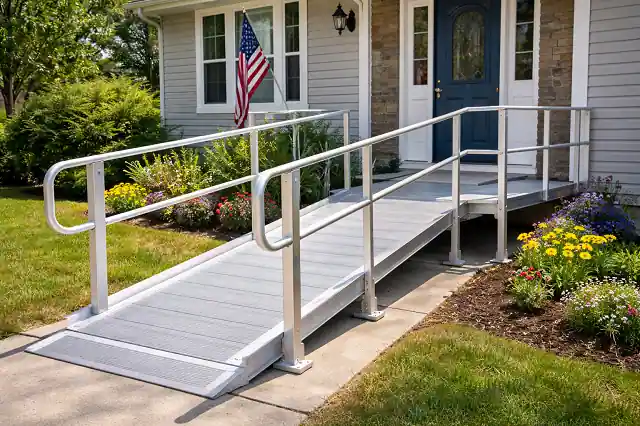
| Permanent accessibility ramp | SAH, SHA, HISA, VR&E, local programs | Must meet the applicable program’s eligibility and project rules |
| Doorway widening | SAH, SHA, HISA, VR&E | Usually must be connected to an eligible disability or rehabilitation need |
| Accessible bathroom modification | SAH, SHA, HISA, VR&E, local programs | Medical necessity may be required for HISA |
| Kitchen accessibility modification | SAH, SHA, HISA, VR&E | Must fit the specific benefit rules |
| Health and safety hazards in rural home | USDA Section 504 | Income, rural eligibility, ownership, age, and credit rules apply |
| Energy-efficiency improvements | WAP or other local programs | Eligibility and measures are determined locally |
| Roof repair | USDA, CDBG/local, disaster or state programs | VA HISA does not generally cover routine roof replacement |
| Window replacement | WAP, local, state, or other qualifying programs | Eligibility depends on program purpose and property conditions |
Veterans with a damaged or deteriorating roof should investigate roof repair grants for damaged or missing shingles and grants for small roof leaks rather than assuming HISA will cover ordinary roofing work.
If the roof or another essential part of the home has been damaged suddenly and the property is no longer safe or habitable, treat the situation differently from a routine repair. Check disaster or emergency housing programs first, because those programs can have separate eligibility rules, application procedures, and deadlines.
For a broader list of emergency funding pathways, veterans can also review emergency home repair grants before treating an urgent problem as a routine repair.
What These Programs Do NOT Cover
One of the most important ways to avoid a rejected application is to understand what a program is not designed to pay for.
| Expense | Why it may not qualify | Better place to investigate |
| Routine roof replacement under HISA | HISA is focused on medically necessary structural alterations | USDA, CDBG/local, state, disaster, or repair-specific programs |
| Cosmetic remodeling | Many programs require health, safety, accessibility, or energy-related purposes | State/local housing programs or personal financing |
| Luxury bathroom upgrades | Accessibility programs are not general remodeling benefits | Local rehabilitation programs or personal funds |
| New construction under HISA | VA HISA specifically excludes new construction | Other VA housing programs if eligible |
| General home maintenance | Veteran status does not automatically create a federal maintenance grant | USDA, CDBG/local, state, nonprofit, or other qualifying programs |
| Repairs unrelated to an approved disability need | Disability-focused VA benefits require the project to fit the program purpose | General housing repair programs |
Do not assume every VA benefit pays for ordinary repairs. VA’s HISA guidance specifically identifies routine maintenance such as roof, furnace, and air-conditioner replacement as excluded work. Always match the repair to the program before paying a contractor or signing a contract.
Can Veterans Get Home Repair Assistance After a Disaster?
Veterans whose homes have been damaged by a qualifying disaster may have additional recovery options beyond ordinary home repair programs. Depending on the disaster and location, assistance may come through federal disaster programs, USDA disaster housing assistance, state recovery programs, local housing agencies, or other approved recovery organizations.
Disaster assistance should be treated separately from routine maintenance. A veteran should first confirm whether the damage is connected to a declared disaster, whether the property is in the eligible area, and whether the program’s application period is still open.
If the home has become unsafe or uninhabitable, check disaster or emergency housing assistance before assuming that a standard VA, USDA, or local repair program will cover the work. Veterans can also review emergency home repair grants for additional emergency-repair funding paths.
What You Need Before Applying
Most successful applications become easier when the homeowner prepares evidence before contacting the agency. The exact documents vary, but the following preparation is useful across several programs.
Application preparation checklist
- Proof of veteran or service-member status when required.
- VA file or claim information when required for a VA application.
- Evidence of a qualifying service-connected disability when the program requires it.
- Proof that you own and occupy the property when required.
- Recent income documentation for income-tested programs.
- Repair descriptions explaining the safety, health, accessibility, or energy problem.
- Contractor estimates or project documentation when requested.
- Photographs of the problem area when appropriate.
- Medical documentation or prescription when required for HISA.
- Property information needed to confirm rural or local program eligibility.
VA states that applicants for SAH or SHA may need information such as a Social Security number and VA file or claim number. VA also provides online and paper application options, including VA Form 26-4555 for SAH and SHA.
How to Apply Without Choosing the Wrong Program
The application process should begin by identifying the repair and the reason it is needed, not by applying to every program that mentions veterans. First identify the actual problem. Then determine whether it is disability-related, health or safety-related, energy-related, disaster-related, rural, income-based, or a general housing repair.
Seven-step application path:
- Write down exactly what needs to be repaired or modified.
- Identify whether the repair is disability-related, health or safety-related, energy-related, disaster-related, or general maintenance.
- Check VA eligibility first if a service-connected disability is involved.
- Check USDA Section 504 if you are very-low income and live in an eligible rural area.
- Check your city and county housing departments for CDBG-funded rehabilitation programs.
- Check your state veterans agency and state housing or weatherization agency.
- Submit only after confirming that the program covers the exact work you are requesting.
Veterans who want a broader application strategy can use how to apply for home repair grants as a separate resource.
How to Combine Programs Without Assuming They Can Be Combined
Different programs can sometimes address different parts of a project, but applicants should never assume that funds can be stacked for the same expense.
Disaster damage should be treated as a separate eligibility question. A veteran whose home was damaged by a qualifying disaster may need to investigate FEMA, USDA disaster housing programs, state disaster programs, or locally administered recovery funds rather than relying only on ordinary home repair programs. The existence of disaster funding does not automatically mean that every repair or every veteran qualifies.
For example, a veteran might have a disability-related accessibility need that points toward VA benefits while also having an unrelated roof problem that must be evaluated under USDA, CDBG, state, local, or disaster funding.
The safest approach is to tell every program administrator about other funding sources being considered and ask whether the proposed costs can be coordinated. Keep copies of applications, estimates, award letters, inspections, and invoices.
If government programs do not cover the full project, veterans can also investigate nonprofit home repair grants as another potential funding pathway.
Funding warning: Never tell an agency that a repair is disability-related merely because you want to qualify for a VA program. Describe the actual need and allow the program administrator or medical professional to determine eligibility.
Veterans with broader disability-related needs can also compare home repair loans for disabled veterans when grant funding does not cover the full project.
Current 2026 Program Limits and Official Information
Official program evidence helps separate current programs from outdated grant lists that circulate online.
| 2026 evidence | What it shows |
| VA SAH maximum for FY 2026 | $126,526 current maximum |
| VA SHA maximum for FY 2026 | $25,350 current maximum |
| VA TRA maximum through SAH for FY 2026 | $50,961 current maximum |
| VA TRA maximum through SHA for FY 2026 | $9,100 current maximum |
| HISA lifetime benefit | Up to $6,800 for qualifying higher-level categories; up to $2,000 for other qualifying veterans |
| USDA Section 504 national grant limit | Up to $10,000, with higher disaster-related limits in qualifying circumstances |
The VA’s reported 2024 SAH activity demonstrates that the program is an active housing adaptation benefit rather than an obsolete grant category. At the same time, the current 2026 limits show why applicants should use the latest official VA figures rather than older blog posts.
Official-source rule: Dollar amounts in this article are included only where an official federal source provides a current figure. Local and state programs are not given invented maximums because their funding limits can vary by location and program year.
Frequently Asked Questions
Which home repair assistance program should a veteran check first in 2026?
There is no single best program for every veteran. Start with the reason for the repair. Veterans with qualifying service-connected disabilities should investigate VA housing-adaptation benefits, while very-low-income homeowners age 62 or older in eligible rural areas may qualify for USDA Section 504. Other veterans should check state, county, city, HUD-funded, weatherization, disaster, and nonprofit programs that match the repair.
Can veterans get free money to replace a roof?
Possibly, but veteran status alone does not guarantee a roof grant. HISA generally does not cover routine roof replacement. Veterans should check USDA Section 504 if they meet rural and income rules, along with local CDBG-funded programs, state programs, disaster programs, and other roof-specific funding sources.
Can a disabled veteran get a grant to modify a bathroom?
Yes, potentially. VA programs such as SAH, SHA, HISA, and VR&E Independent Living may support qualifying accessibility modifications. HISA is especially relevant when the bathroom modification is medically necessary and fits its structural alteration rules.
How much is the VA SAH grant in 2026?
The current maximum SAH grant for fiscal year 2026 is $126,526. This is a maximum statutory amount, not an automatic payment. The veteran must meet the program’s qualifying disability and housing requirements, and the approved project determines how the benefit is used.
Can a veteran use USDA Section 504?
Yes, if the veteran independently meets the USDA requirements. The program is not limited to veterans. It is designed for eligible very-low-income homeowners in qualifying rural areas, and grants are generally limited to homeowners age 62 or older who need qualifying health and safety repairs.
Are there state home repair grants specifically for veterans?
Some states and local governments may offer veteran-specific or veteran-friendly programs, but there is no single nationwide state program. Eligibility, funding, repair types, and application procedures vary. Check your state veterans agency, housing agency, county, and city programs.
Can I get more than one home repair grant?
Possibly, but never assume that two programs can pay the same expense. Different programs may address different parts of a project, but coordination rules apply. Tell each funding agency about other applications and awards before using multiple funding sources.
Why You Should Trust This Guide
Last Updated: September 8, 2026
Reviewed By: HomePropertyGrants Editorial Team
Experience: This guide is built around the practical questions veterans face when looking for help with roof repairs, accessibility modifications, energy improvements, structural repairs, and other home projects. It separates veteran-specific assistance from broader federal, state, local, rural, disaster, and nonprofit funding.
Expertise: The article explains how different funding pathways work, including VA housing-adaptation benefits, USDA Section 504, HUD-funded local programs, Weatherization Assistance, state and local housing programs, and nonprofit assistance. It focuses on matching the type of repair with the program’s actual purpose and eligibility requirements.
Authoritativeness: Important program information is checked against official sources, including the U.S. Department of Veterans Affairs, USDA Rural Development, HUD, and other relevant government or program organizations. The article does not treat HomePropertyGrants as the agency that awards funding.
Trustworthiness: Grant amounts, eligibility rules, loans, nonprofit assistance, and other funding options are clearly distinguished. Maximum benefit amounts are not presented as guaranteed payments, and veterans are encouraged to verify current requirements with the administering agency before applying or beginning work.
Helpful Decision Support: This guide provides the broader federal, state, local, rural, disaster, and nonprofit funding picture for veterans. Veterans who specifically need to compare HISA, SAH, SHA, and TRA can use our detailed VA home repair grants and housing adaptation benefits guide, which focuses specifically on VA housing-adaptation programs and helps readers determine which VA benefit may fit their situation.
Final Application Checklist
Before you apply, make sure you can answer these questions:
- What exact repair or modification does my home need?
- Is the problem connected to a service-connected disability?
- Does the project involve accessibility or medically necessary modification?
- Do I meet the ownership and occupancy rules?
- Could USDA Section 504 apply because of my income and rural location?
- Does my city or county operate a CDBG-funded rehabilitation program?
- Does my state veterans agency offer a relevant program?
- Could weatherization funding apply to an energy-related project?
- Do I have the required income, disability, service, and property documents?
- Have I confirmed the program covers the exact work before hiring a contractor?
- Have I checked whether another funding source affects my eligibility or allowable costs?
- Am I using the current official application instructions rather than an old grant article?
The strongest approach is to match the funding source to the actual reason for the repair. Veterans with service-connected disability-related housing needs should investigate VA housing-adaptation benefits first. Older, very-low-income veterans in eligible rural areas should also check USDA Section 504. General repair needs may require state, local, HUD-funded, weatherization, disaster, or nonprofit assistance.
For veterans who need a broader starting point, the home repair program finder can help organize the search. Veterans with low income can also compare home repair grants for low-income families, while veterans with disability-related repair needs can review home repair grants for disabled homeowners.
The key is to match the funding source to the actual reason for the repair. That approach reduces wasted applications, avoids outdated dollar claims, and gives veterans a clearer path toward finding legitimate home repair funding in 2026.

Arthur Pendelton is a senior housing policy researcher and public welfare analyst with over eight years of experience tracking federal, state, and non-profit residential repair programs. He specializes in statutory grant frameworks, including USDA Section 504 Rural Housing, the Department of Energy’s Weatherization Assistance Program (WAP), and municipal HUD Community Development Block Grants (CDBG). Arthur systematically audits Federal Register publications and Title 7/42 CFR regulatory updates to provide low-income homeowners, seniors, and military veterans with accurate, barrier-free application guidance.
2 thoughts on “Free Home Repair Grants For Veterans 2026: Federal & State Help”