Skip to content
home property grants
Menu
  • Home
  • Home Buyer Grants
  • Home Repair Grants
  • Window Replacement
  • Roof Replacement
Menu
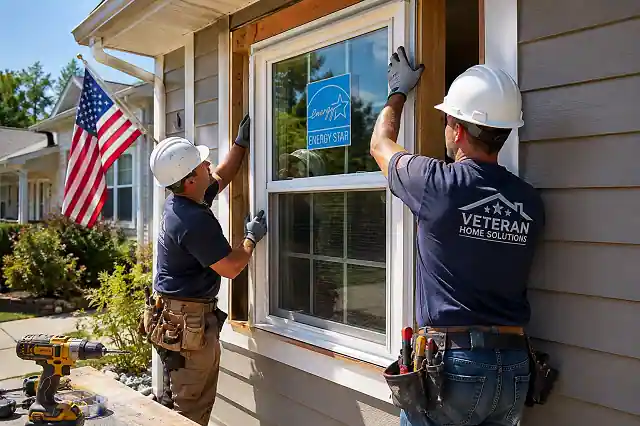
Professional contractors installing ENERGY STAR energy-efficient window replacement in a veteran’s suburban home during daytime renovation work

Free Window Replacement Grants For Veterans-VA & HUD Assistance

Posted on May 6, 2026August 12, 2026 by Homepropertygrants

Veterans may qualify for free or reduced-cost window replacement assistance in 2026, but there is no single federal program that automatically gives every veteran free replacement windows. The strongest option depends on the reason for the project, such as a qualifying service-connected disability, a medically necessary home modification, very low household income, rural property location, energy-efficiency needs, or a local housing rehabilitation program.

The U.S. Department of Veterans Affairs (VA) is especially important for veterans with qualifying disabilities. Other pathways include local programs using U.S. Department of Housing and Urban Development (HUD) funding, the U.S. Department of Agriculture Rural Development (USDA) Section 504 program, the U.S. Department of Energy (DOE) Weatherization Assistance Program, utility incentives, and nonprofit assistance.

Quick Answer: Can veterans get free window replacement in 2026?

Some veterans may receive full or partial help with qualifying window work through VA housing adaptation benefits, local HUD-funded rehabilitation, USDA Section 504, weatherization, utility programs, or nonprofit assistance. Veteran status alone does not guarantee free windows. Eligibility depends on disability, income, property location, homeownership, the condition of the windows, and the rules of the program.

For the broader national topic, see our window replacement grants for low-income homeowners guide. This veteran-focused article concentrates on how veterans should evaluate VA, HUD, USDA, weatherization, and other assistance without confusing a general home-repair program with a veteran-specific benefit.

Important distinction: A program can help with home rehabilitation without promising to replace every old window. Before applying, identify the actual reason for the window project and ask the administering agency whether the specific work is eligible.

Post Contents

Toggle
  • Which Window Assistance Programs Should Veterans Check First?
  • Why Veterans May Need Window Replacement Assistance
  • VA Window Replacement Assistance for Veterans
    • VA Specially Adapted Housing Grant
    • Can SAH Pay for Replacement Windows?
    • VA Special Home Adaptation Grant
    • VA Temporary Residence Adaptation Grant
  • VA HISA and Window-Related Home Modifications
  • VA Window Assistance: What Is Actually Different for Disabled Veterans?
  • HUD-Funded Window Replacement Assistance for Veterans
  • USDA Section 504 for Low-Income Rural Veterans
  • Weatherization Assistance for Veteran Households
  • Utility Rebates for Veterans Replacing Energy-Efficient Windows
  • Nonprofit Window Replacement Assistance for Veterans
    • Habitat for Humanity
    • Rebuilding Together
  • State and Local Window Assistance for Veterans
    • Texas: Weatherization and Disability-Related Home Modifications
    • Florida: Weatherization Assistance for Low-Income Veteran Households
    • Georgia: Home Rehabilitation and Disaster-Related Assistance
    • How Veterans in Other States Should Search
  • What Type of Window Problem Are You Trying to Solve?
  • Window Replacement Eligibility Checklist for Veterans
  • Documents Veterans Should Prepare
  • How to Apply for Window Replacement Assistance as a Veteran
  • Can Veterans Combine Different Assistance Programs?
  • Which Program Should a Veteran Check First?
  • Window Replacement Cost Factors Veterans Should Document
  • Common Reasons Window Assistance Applications Are Denied
  • Frequently Asked Questions About Window Replacement Grants for Veterans
    • Can veterans get completely free window replacement in 2026?
    • Does the VA pay for replacement windows?
    • Can disabled veterans get window replacement assistance?
    • How much are VA housing grants in 2026?
    • Can HISA pay for replacement windows?
    • Can low-income veterans use USDA or WAP?
    • Where should a veteran start?
  • Veteran Window Replacement Application Checklist
  • Official Government Sources Veterans Should Check
  • How This Veteran Window Replacement Guide Is Different
  • Why This Guide Is Reliable
  • Conclusion
    • Related

Which Window Assistance Programs Should Veterans Check First?

Assistance sourceWho may benefitWindow-related possibility
VA Specially Adapted Housing (SAH)Veterans with qualifying service-connected disabilitiesMay help with an approved home adaptation; ordinary window replacement is not automatically covered
VA Special Home Adaptation (SHA)Veterans with qualifying service-connected disabilitiesMay support an approved adaptation when the proposed work fits the program
VA Temporary Residence Adaptation (TRA)Eligible veterans temporarily living in a qualifying family member’s homeSupports qualifying adaptations to the temporary residence
VA Home Improvements and Structural Alterations (HISA)Veterans with qualifying medically necessary home-modification needsCan cover certain medically necessary alterations; ordinary window replacement is not a standard benefit
HUD-funded local rehabilitationEligible homeowners in participating communitiesLocal programs may fund residential rehabilitation and energy-efficiency improvements
USDA Section 504Very-low-income homeowners in eligible rural areasEligible repair, improvement, modernization, and health or safety work may include qualifying window projects
Weatherization Assistance Program (WAP)Eligible low-income householdsLocal weatherization providers determine which energy-efficiency measures are appropriate
Utility incentivesHomeowners meeting local energy-program requirementsMay reduce the cost of qualifying energy-efficient windows
Nonprofit assistanceVeterans and other homeowners meeting local criteriaSome local organizations provide repairs, materials, labor, or referrals

The key point is that these programs do not have identical purposes. VA programs are primarily connected to qualifying disability-related housing adaptations, while HUD, USDA, WAP, utility, and nonprofit programs have broader eligibility rules.

Why Veterans May Need Window Replacement Assistance

Old windows are not always eligible for assistance simply because they are outdated. The reason for replacement matters.

A veteran may have a stronger case when the windows have a documented safety, health, accessibility, weatherproofing, or energy-efficiency problem. Examples include broken glass, severe frame deterioration, water intrusion, failed seals, unsafe locks, significant air leakage, or a documented disability-related difficulty using the windows.

  • Broken or cracked glass creates a safety concern.
  • Severely damaged frames may allow water into the home.
  • Rot or deterioration can create additional structural problems.
  • Failed window seals can reduce insulating performance.
  • Drafts can increase heating and cooling costs.
  • Windows that are difficult to operate may create accessibility problems.
  • Some disability-related adaptations may require changes to window height, operation, shading, or surrounding areas.
  • Disaster-damaged windows may qualify under a separate disaster-recovery program when applicable.

If frame deterioration is the main problem, see our window frame rot repair and replacement grants guide.

For failed insulated-glass seals and condensation between panes, see our foggy double-pane window replacement grants guide.

Documentation tip: Photograph the windows before removing them. A contractor estimate should identify the existing condition, proposed replacement work, labor, materials, permits, and any structural repairs separately.

Professional contractors installing ENERGY STAR energy-efficient window replacement in a veteran’s suburban home during daytime renovation work

VA Window Replacement Assistance for Veterans

The U.S. Department of Veterans Affairs (VA) provides disability housing grants to eligible veterans and service members with certain service-connected disabilities. These benefits are intended to help qualifying applicants buy, build, or modify a home to meet their needs and live more independently.

That is important for anyone searching for a VA window replacement grant. The VA does not operate a general program that pays for ordinary replacement windows simply because someone is a veteran.

VA warning: Do not assume that SAH, SHA, TRA, or HISA automatically pays for replacement windows. The proposed work must fit the applicable program and, where required, be connected to the veteran’s qualifying disability or medical need.

VA Specially Adapted Housing Grant

The Specially Adapted Housing (SAH) grant helps certain eligible veterans and service members buy, build, or change a permanent home when they have qualifying service-connected disabilities.

For fiscal year 2026, the maximum SAH grant is $126,526. This is the total maximum benefit permitted under the program, not a guaranteed $126,526 payment for windows.

VA housing benefitFY 2026 maximumWhat it is designed for
SAH$126,526Qualifying adaptations to a permanent home
SHA$25,350Qualifying adaptations for eligible disabilities
TRA for SAH-eligible veterans$50,961Qualifying adaptations to an eligible temporary family residence
TRA for SHA-eligible veterans$9,100Qualifying adaptations to an eligible temporary family residence

The VA allows eligible applicants to use SAH or SHA benefits for qualifying home adaptations over their lifetime, subject to the applicable program rules. The amount actually used depends on the eligible project and available benefit.

Can SAH Pay for Replacement Windows?

The safest answer is: do not assume that ordinary window replacement is covered.

SAH is a housing adaptation benefit. If a window-related modification is genuinely part of an approved disability-related adaptation, the veteran should ask the VA whether that specific work and cost are eligible.

For example, the question may be different when a window needs to be modified to address a documented accessibility problem than when a homeowner simply wants to replace old, inefficient windows.

The VA should make the final eligibility determination before the veteran commits to the work.

VA Special Home Adaptation Grant

The Special Home Adaptation (SHA) grant is another disability housing benefit for qualifying veterans and service members.

The FY 2026 maximum SHA amount is $25,350. The VA lists qualifying disability categories that include certain loss or loss of use of both hands, certain severe burns, and certain respiratory or breathing injuries.

As with SAH, the maximum amount should not be presented as a window replacement award. The veteran must meet the program requirements and the proposed home modification must qualify.

VA Temporary Residence Adaptation Grant

The Temporary Residence Adaptation (TRA) grant can help eligible veterans adapt a family member’s home when the veteran is temporarily living there and qualifies for SAH or SHA.

For FY 2026, the maximum TRA amount is $50,961 for SAH-eligible veterans and $9,100 for SHA-eligible veterans.

TRA is therefore relevant when the veteran’s housing situation involves a temporary family residence rather than an ordinary homeowner window replacement project.

VA HISA and Window-Related Home Modifications

The Home Improvements and Structural Alterations (HISA) benefit provides assistance for medically necessary improvements and structural alterations to a veteran’s or service member’s primary residence.

Official HISA guidance identifies qualifying purposes such as improving entrance or exit, access to essential facilities, permanent ramping, and certain plumbing or electrical changes required because of medical equipment.

VA guidance also identifies certain window-related modifications, including lowering windows and window tinting or shading, within the scope of HISA examples. That is different from saying that HISA routinely pays for replacing old windows.

HISA warning: HISA should not be marketed as a general replacement-window grant. If a veteran needs a window altered because of a documented medical or accessibility need, ask the local VA Prosthetic and Sensory Aids Service whether the proposed alteration is eligible.

Current VA information lists lifetime HISA benefits of up to $6,800 for specified qualifying situations and up to $2,000 for other covered disability situations. HISA projects must be medically justified.

Veterans can review the Veterans Application for Assistance in Acquiring Home Improvements and Structural Alterations using VA Form 10-0103.

For SAH or SHA applications, the Application in Acquiring Specially Adapted Housing or Special Home Adaptation Grant is available as VA Form 26-4555.

VA Window Assistance: What Is Actually Different for Disabled Veterans?

A service-connected disability can change which assistance pathway makes sense, but it does not turn every home repair into a VA-eligible expense.

SituationPotential VA directionImportant qualification
Major disability-related home adaptationSAH or SHAVeteran must meet the qualifying disability and housing requirements
Temporary family residence requires adaptationTRAVeteran must qualify for SAH or SHA
Medically necessary accessibility alterationHISAWork must be medically justified and within HISA scope
Old windows with no disability connectionUsually look beyond VA disability grantsConsider WAP, HUD-funded rehabilitation, USDA, utilities, or local programs
Energy-efficient window upgradeWAP or local energy programEligibility depends on household, property, and program requirements

Disabled homeowners can also review our window replacement grants for disabled homeowners guide for the broader disability-related assistance landscape.

HUD-Funded Window Replacement Assistance for Veterans

The U.S. Department of Housing and Urban Development (HUD) does not operate a nationwide veteran-specific window replacement grant.

Instead, HUD provides funding through programs such as the Community Development Block Grant (CDBG), which is administered through eligible state and local entities. CDBG-eligible activities can include rehabilitation of residential structures and energy-conservation activities.

This means a veteran may find assistance through a city, county, or other local housing rehabilitation program that uses HUD funding. The local administrator decides which activities it funds within applicable federal requirements.

HUD-related routeWhere to askWhat to ask about
CDBG homeowner rehabilitationCity or county housing departmentWhether windows are an eligible rehabilitation expense
Energy-efficiency rehabilitationLocal housing or community development agencyWhether qualifying window upgrades are included
Accessibility rehabilitationLocal housing rehabilitation administratorWhether disability-related window modifications qualify
Emergency housing rehabilitationLocal housing agencyWhether broken or unsafe windows qualify under the local rules

HUD application tip: Do not search only for a national “HUD window replacement grant for veterans.” Contact your city or county housing department and ask whether it operates a homeowner rehabilitation program using CDBG, HOME, or another housing funding source.

USDA Section 504 for Low-Income Rural Veterans

The Section 504 Home Repair Loans and Grants program from the U.S. Department of Agriculture Rural Development (USDA) is not veteran-specific.

However, an eligible veteran may use the program if the property, household income, ownership, occupancy, and other requirements are met.

The program provides loans to very-low-income rural homeowners for repairs, improvements, or modernization. The grant portion is generally for eligible homeowners age 62 or older who need to remove health or safety hazards.

Section 504 assistanceMaximum amountImportant rule
Repair loanUp to $40,000For eligible very-low-income rural homeowners
Repair grantUp to $10,000Generally for qualifying homeowners age 62 or older who need health or safety repairs
Combined loan and grantUp to $50,000Applicant must qualify for both forms of assistance
Disaster-related grantUp to $15,000Applies to qualifying homes damaged in a presidentially declared disaster area

For a veteran, Section 504 can be especially useful when income and rural location are more important to the project than military status.

For senior homeowners, our window replacement grants for senior citizens guide covers additional age-based assistance categories.

USDA warning: Section 504 is not a veteran grant. A veteran must independently meet the USDA program requirements, and the local USDA Rural Development office determines whether the proposed repair is eligible.

Weatherization Assistance for Veteran Households

The Weatherization Assistance Program (WAP) from the U.S. Department of Energy helps eligible low-income households improve energy efficiency while addressing health and safety considerations.

Veterans do not receive WAP automatically because of military service. Eligibility is based primarily on household and program requirements established through the federal and state weatherization system.

The U.S. Department of Energy (DOE) explains that WAP is administered through state and local programs. Federal rules generally allow eligibility based on household income at or below 200% of the federal poverty guidelines, as well as certain categorical eligibility pathways such as Supplemental Security Income. Applicants should confirm the current rules with their state or local weatherization provider.

DOE WAP statisticReported figure
Homes receiving weatherization services each year using DOE fundsApproximately 32,000
Average annual household savings$372 or more
Families served since the program beganMore than 7.2 million
Jobs supportedApproximately 8,500

DOE has also issued Program Year 2026 Weatherization Program Notices covering grant applications and grantee allocations.

Weatherization note: WAP is not a guaranteed window replacement program. A local provider evaluates the home and determines which measures are appropriate. Windows may be considered, but another measure may be selected if it provides a better fit under the program’s rules.

For broader energy-efficiency information, see our energy-efficient windows and doors assistance guide.

For a detailed discussion of energy-efficient window costs and assistance, see our energy-efficient window replacement costs and grants guide.

Utility Rebates for Veterans Replacing Energy-Efficient Windows

Utility rebates can sometimes reduce the cost of qualifying energy-efficient windows. These programs are usually not veteran-specific, but a veteran can use them if the household and product meet the utility’s rules.

Before purchasing windows, ask the utility whether the program requires:

  • Pre-approval before installation
  • An energy assessment
  • Specific window performance ratings
  • ENERGY STAR certification
  • Installation by an approved contractor
  • Receipts, invoices, or product documentation
  • A deadline for submitting the rebate application

The ENERGY STAR (ENERGY STAR) program provides information about energy-efficient products and performance requirements. ENERGY STAR eligibility by itself does not guarantee that a local utility will provide a rebate.

Nonprofit Window Replacement Assistance for Veterans

Nonprofit organizations can provide another route when government funding is unavailable or does not cover the entire project. Assistance can take the form of volunteer labor, donated materials, critical repairs, referrals, or partnerships with local housing programs.

Availability varies by location, income, household situation, and the organization’s current funding.

Our nonprofit window replacement grants guide provides a broader overview of nonprofit assistance.

Habitat for Humanity

Some local Habitat for Humanity affiliates operate home preservation or repair programs. Veterans should contact the local affiliate and ask whether window repair or replacement is currently an eligible project.

Rebuilding Together

Some local Rebuilding Together affiliates provide critical home repairs and accessibility improvements. Veterans should verify the local affiliate’s service area, current application period, income rules, and eligible repairs.

Nonprofit tip: Do not assume that a national nonprofit automatically pays for replacement windows. The local affiliate or chapter determines what assistance is available in its service area.

State and Local Window Assistance for Veterans

Veterans should not limit their search to national VA programs. State housing agencies, weatherization offices, local governments, and state veterans agencies can provide additional pathways to home repair or energy-efficiency assistance. These programs are usually not veteran-only benefits, so the veteran must meet the separate income, property, disability, location, or program requirements.

The best state-level strategy is to check three places at the same time: the state’s veteran services agency, the state housing or community development agency, and the state weatherization program. Local city and county housing departments may also administer homeowner rehabilitation programs.

State search tip: A state program does not need to mention veterans to be useful to a veteran homeowner. If the program is based on income, disability, energy efficiency, rural location, property condition, or another qualifying factor, a veteran may be eligible under the same rules as other homeowners.

Texas: Weatherization and Disability-Related Home Modifications

Texas veterans should check the Texas Department of Housing and Community Affairs (TDHCA) for Weatherization Assistance Program services. TDHCA states that its weatherization program serves low-income households through local subrecipients covering all 254 Texas counties. Eligible weatherization work can include energy audits, air sealing, weather-stripping, insulation, building-envelope repairs, and certain heating and cooling improvements. Window replacement should not be assumed to be automatic; the local provider determines which measures are appropriate for the home.

Texas also has a separate disability-related pathway through the Amy Young Barrier Removal Program (AYBR). TDHCA says the program provides one-time grants of up to $22,500 for reasonable accommodations that allow a household member with a disability to fully access the home. Veterans with disabilities may therefore want to ask whether a proposed window-related accessibility modification fits the program’s current requirements.

Texas pathwayWho should check itWindow-related question to ask
Weatherization Assistance Program (WAP)Eligible low-income Texas householdsCould window or envelope work be included after the home’s energy assessment?
Amy Young Barrier Removal Program (AYBR)Eligible low-income households with a person with a disabilityCould a window-related accessibility modification qualify as a reasonable accommodation?
Local housing assistanceHomeowners needing rehabilitation or other housing helpDoes the city or county have a homeowner repair program accepting applications?

Texas homeowners can also use the state’s Help for Texans resource to identify local providers and assistance based on their city or county.

For the veteran-specific Texas window article on this site, see our Texas window replacement grants and assistance guide.

Florida: Weatherization Assistance for Low-Income Veteran Households

Florida veterans should check the Florida Department of Commerce Weatherization Assistance Program (WAP). The state program provides grant funds to community action agencies, local governments, Indian tribes, and nonprofit agencies serving low-income Florida households.

FloridaCommerce states that household income generally must not exceed 200% of the federal poverty level, with preference given to certain households, including elderly residents, people with physical disabilities, families with young children, and households with a high energy burden. The program can support weatherization improvements designed to reduce energy costs. The specific work available is determined through the local program and available funding.

Florida veteran tip: Veteran status does not automatically qualify a homeowner for Florida WAP. Ask the local provider about income eligibility, disability or age preferences, energy burden, property eligibility, and which weatherization measures are currently available.

Florida veterans can also contact their local housing or community development office to ask whether homeowner rehabilitation or energy-efficiency assistance is available in their county or city.

For the veteran-specific Florida resource on this site, see our Florida window replacement assistance for veterans guide.

Georgia: Home Rehabilitation and Disaster-Related Assistance

Georgia veterans should check the Georgia Department of Community Affairs (DCA) and their local housing agencies for homeowner rehabilitation opportunities. Georgia’s Homeowner Rehabilitation and Reconstruction Program (HRRP) provides assistance to eligible homeowners whose homes were damaged by a federally declared disaster. The program can support rehabilitation or reconstruction to address safety, energy, and code requirements.

HRRP is not a veteran-only program and does not guarantee window replacement. A veteran homeowner should ask whether the home’s window damage is an eligible part of the rehabilitation project and whether the program is currently accepting applications in the affected area.

Georgia pathwayPotentially relevant situationWhat to verify
Homeowner Rehabilitation and Reconstruction Program (HRRP)Eligible disaster-damaged homesWhether window damage is included in the approved rehabilitation scope
Local housing rehabilitationHomeowners needing repair assistanceWhether the city or county has an active homeowner rehabilitation program
Local weatherization providerEligible low-income households with energy-efficiency needsWhether the home qualifies and which measures are available

For the veteran-specific Georgia resource on this site, see our Georgia window replacement grants for veterans guide.

How Veterans in Other States Should Search

Veterans outside Texas, Florida, and Georgia should use the same three-part process rather than searching only for a program called a “veteran window replacement grant.”

  1. Check the state veterans agency. Ask whether the state has veteran housing assistance, disability resources, or referrals to local home-repair programs.
  2. Check the state housing agency. Ask about homeowner rehabilitation, accessibility, energy-efficiency, disaster recovery, and community development programs.
  3. Check the state weatherization program. Ask whether the household qualifies and whether windows or related building-envelope work can be considered.
  4. Check the city or county housing department. Local governments may administer rehabilitation programs using federal, state, or local funds.
  5. Check the utility company. Ask about current rebates for qualifying energy-efficient windows before purchasing the products.

The U.S. Department of Veterans Affairs (VA) maintains a nationwide directory that can help veterans locate VA facilities and offices by state. Veterans can use their state information as a starting point for finding the appropriate local VA contact.

State-level resourceWhat to ask aboutWhy it matters
State veterans agencyVeteran housing benefits, referrals, disability resources, and local assistanceMay identify state or local resources that are not advertised as window grants
State housing agencyHomeowner rehabilitation, accessibility, energy, and disaster programsMay administer or fund repair programs
State weatherization agencyWAP eligibility and available measuresCan identify the local provider responsible for the home
City or county housing departmentCDBG, HOME, rehabilitation, emergency repair, or accessibility programsLocal programs may have different priorities and application periods
Utility providerWindow rebates and energy-efficiency incentivesMay reduce the homeowner’s remaining project cost

Important: State programs open and close based on funding, annual allocations, application periods, and local priorities. A program mentioned in this guide should not be treated as a guaranteed window replacement benefit. Confirm current funding, eligibility, and eligible work with the administering agency before applying or starting repairs.

What Type of Window Problem Are You Trying to Solve?

Window problemAssistance path to investigateWhat to document
Broken glassLocal rehabilitation, emergency repair, nonprofit, or other applicable programPhotographs and repair estimate
Rotten window frameLocal rehabilitation, USDA, WAP, or other qualifying repair programPhotos, inspection, and itemized estimate
Foggy double-pane glassEnergy-efficiency or window rehabilitation programsEvidence of seal failure and energy impact
Drafty windowsWAP and local energy-efficiency programsEnergy assessment or documented air leakage when available
Accessibility problemVA housing adaptation or HISA when applicableMedical or functional need and proposed modification
Very-low-income rural homeownerUSDA Section 504Income, ownership, occupancy, and rural eligibility
General rehabilitation needLocal housing rehabilitation programProperty condition and contractor estimate
Manufactured-home windowsPrograms that accept manufactured-home repairsHome type, window specifications, and installation requirements

Veterans living in manufactured homes can see our mobile home window replacement grants guide.

Window Replacement Eligibility Checklist for Veterans

Before applying, check each item:

  • ☐ I know exactly why the windows need to be repaired or replaced.
  • ☐ I have photographs showing the condition of the windows.
  • ☐ I have documented any safety, water, accessibility, or energy-efficiency problem.
  • ☐ I have proof of veteran status when required.
  • ☐ I have VA disability documentation if applying for disability-related assistance.
  • ☐ I have proof of homeownership or occupancy when required.
  • ☐ I have household income documents for income-tested programs.
  • ☐ I have checked rural eligibility if applying through USDA.
  • ☐ I have obtained a detailed contractor estimate.
  • ☐ I know whether the program requires an inspection or energy assessment.
  • ☐ I know whether prior written approval is required.
  • ☐ I have asked whether other grants or rebates can be combined with the assistance.

Documents Veterans Should Prepare

Different programs request different documents, but preparing a basic file can make the application process easier.

  • Government-issued identification
  • Proof of veteran or military status when required
  • VA disability documentation when applicable
  • Proof of homeownership or occupancy
  • Household income documentation
  • Recent utility information when requested
  • Photographs of damaged or inefficient windows
  • Inspection reports when available
  • Detailed contractor estimates
  • Window product specifications for energy programs
  • Medical documentation for disability-related projects
  • Permits or property records when applicable

How to Apply for Window Replacement Assistance as a Veteran

  1. Identify the main reason for replacement. Decide whether the project is primarily related to disability access, medical need, safety, energy efficiency, rural housing repair, disaster damage, or general rehabilitation.
  2. Document the existing windows. Take photographs and write down which windows have damage or problems.
  3. Check VA programs when the project is disability-related. Review SAH, SHA, TRA, and HISA requirements.
  4. Ask the VA about the exact proposed work. Do not assume that the phrase “home modification” automatically makes window replacement eligible.
  5. Check USDA Section 504 if you are a very-low-income rural homeowner. Confirm income, ownership, occupancy, and rural eligibility.
  6. Contact the local weatherization provider. Ask whether the household qualifies and whether windows could be considered during the home assessment.
  7. Contact the city or county housing department. Ask about CDBG, HOME, rehabilitation, accessibility, and emergency repair programs.
  8. Check utility incentives. Confirm product requirements and pre-approval rules before purchasing windows.
  9. Research local nonprofit assistance. Ask whether window repair or replacement is currently available.
  10. Get a detailed estimate. Separate window materials, labor, frame repairs, structural work, permits, and disposal.
  11. Apply before beginning work when required. Some programs will not reimburse work started without prior authorization.
  12. Keep every document. Save applications, estimates, inspection reports, approval letters, invoices, receipts, and correspondence.

Do not start work too early: Before ordering windows or signing a construction contract, ask the funding agency whether written approval, an inspection, an energy assessment, an approved contractor, or other authorization is required.

Can Veterans Combine Different Assistance Programs?

A veteran can research multiple assistance sources, but that does not mean the same expense can automatically be paid by several programs.

For example, a veteran might investigate a VA housing adaptation benefit for an eligible disability-related modification while separately checking a utility rebate for a qualifying energy-efficiency improvement. Whether both sources can be used depends on the rules of the programs involved.

Funding situationWhat to do
Two programs may cover the same windowsAsk both administrators whether duplicate assistance is permitted
Government assistance plus utility rebateConfirm whether the primary program permits the rebate
Government assistance plus nonprofit laborAsk how donated labor or materials must be reported
Two programs cover different parts of the projectAsk whether separate project costs can be funded

Funding warning: Never submit the same invoice or expense to two programs without confirming that it is allowed. Disclose other assistance whenever the program requires it.

Which Program Should a Veteran Check First?

Your situationStart hereWhy
Qualifying service-connected disability and major home adaptationVA SAH or SHAThese programs are designed around qualifying disability-related housing adaptations
Temporary residence with a family memberVA TRATRA addresses qualifying adaptations to an eligible temporary family residence
Medically necessary home alterationVA HISAHISA addresses medically necessary improvements and structural alterations within its scope
Very-low-income rural homeownerUSDA Section 504Provides qualifying repair loans and grants based on rural and income requirements
Low-income household with energy-efficiency problemsWAPLocal weatherization providers assess the home and select eligible measures
General rehabilitation needCity or county housing agencyLocal programs may use HUD or other funding for homeowner rehabilitation
Energy-efficient window purchaseUtility or state energy programLocal rebates may reduce the cost of qualifying products
Funding gap or volunteer repair needLocal nonprofitSome organizations provide labor, materials, repairs, or referrals

Window Replacement Cost Factors Veterans Should Document

There is no single national price that determines eligibility for assistance. Project costs vary according to the number of windows, size, material, frame condition, glass specifications, labor, installation difficulty, permits, and structural repairs.

Cost factorWhy it affects the project
Number of windowsMore units increase material and installation costs
Window sizeLarger units generally require more materials and labor
Frame conditionRot or structural damage can require additional work
Window materialVinyl, wood, fiberglass, and other materials have different prices
Glass specificationsEnergy-performance requirements can affect product cost
Installation difficultyUpper floors, restricted access, and structural modifications can increase labor
Permits and disposalLocal requirements can add project expenses

Veterans should use a written estimate that separates materials, labor, structural repairs, accessibility work, permits, disposal, and other costs.

Common Reasons Window Assistance Applications Are Denied

  • The applicant does not meet the program’s income requirements.
  • The property is outside the program’s service area.
  • The applicant does not meet ownership or occupancy requirements.
  • The proposed window work is not an eligible expense.
  • Required disability or medical documentation is missing.
  • The application is incomplete.
  • The contractor or product does not meet program requirements.
  • The homeowner started work before required approval.
  • Program funding is unavailable at the time of application.
  • The project is primarily cosmetic rather than a documented repair, safety, accessibility, or energy-efficiency need.

Frequently Asked Questions About Window Replacement Grants for Veterans

Can veterans get completely free window replacement in 2026?

Some eligible veterans may receive full assistance for qualifying work, but there is no universal federal program guaranteeing free replacement windows to every veteran. The project must meet the requirements of the particular assistance program.

Does the VA pay for replacement windows?

The VA does not provide a general window replacement grant for every veteran. Window-related work may be considered when it is part of an eligible disability-related housing adaptation or medically necessary alteration, but the VA must determine whether the specific work qualifies.

Can disabled veterans get window replacement assistance?

Possibly. Veterans with qualifying service-connected disabilities may qualify for SAH or SHA, while HISA may help with certain medically necessary home modifications. Ordinary replacement windows are not automatically covered simply because a veteran has a disability.

How much are VA housing grants in 2026?

For FY 2026, the maximum SAH grant is $126,526 and the maximum SHA grant is $25,350. TRA maximums are $50,961 for SAH-eligible veterans and $9,100 for SHA-eligible veterans. These are program maximums, not guaranteed window replacement awards.

Can HISA pay for replacement windows?

HISA is designed for medically necessary improvements and structural alterations within its program scope. VA guidance includes certain window-related modifications such as lowering windows and window tinting or shading, but HISA should not be treated as a general replacement-window grant.

Can low-income veterans use USDA or WAP?

Yes, when they meet the applicable requirements. USDA Section 504 is designed for eligible very-low-income rural homeowners, while WAP serves qualifying low-income households. Neither program is automatically available because of veteran status.

Where should a veteran start?

Start with the reason for the project. Check VA benefits first when the work is genuinely connected to a qualifying disability or medical need. Otherwise, investigate local HUD-funded rehabilitation, USDA Section 504 if the property is rural and the household qualifies, WAP for low-income weatherization needs, utility rebates, and local nonprofit assistance.

Veteran Window Replacement Application Checklist

Before submitting an application:

  • ☐ Identify exactly why the windows need replacement.
  • ☐ Photograph the existing windows.
  • ☐ Document safety, water, accessibility, or energy-efficiency problems.
  • ☐ Gather veteran and VA records when applicable.
  • ☐ Gather medical documentation for a disability-related project.
  • ☐ Gather household income documents for income-tested programs.
  • ☐ Confirm rural eligibility for USDA.
  • ☐ Obtain a detailed contractor estimate.
  • ☐ Check whether an inspection or energy assessment is required.
  • ☐ Check whether prior approval is required.
  • ☐ Ask whether other assistance can be combined.
  • ☐ Keep copies of everything submitted.

Official Government Sources Veterans Should Check

Official sourceWhat to verify
U.S. Department of Veterans Affairs (VA)SAH, SHA, TRA eligibility, FY 2026 maximums, and housing adaptation requirements
Veterans Application for Assistance in Acquiring Home Improvements and Structural Alterations (VA Form 10-0103)HISA application information
Application in Acquiring Specially Adapted Housing or Special Home Adaptation Grant (VA Form 26-4555)SAH and SHA application information
U.S. Department of Housing and Urban Development (HUD)CDBG rehabilitation, energy conservation, and local program structure
U.S. Department of Agriculture Rural Development (USDA)Section 504 income, rural, ownership, repair, loan, and grant requirements
U.S. Department of Energy Weatherization Assistance Program (DOE WAP)Program purpose, statistics, and current weatherization guidance
Weatherization Assistance Program Application Guidance (DOE WAP Application)State administrators and application process
ENERGY STAR (ENERGY STAR)Energy-efficient product and performance information

How This Veteran Window Replacement Guide Is Different

This page is designed as the VA and HUD-focused veteran window assistance guide. It does not treat every federal home-repair program as a veteran grant and does not claim that ordinary replacement windows are automatically covered by VA benefits.

The article separates:

  • VA disability housing grants
  • VA medically necessary home modifications
  • HUD-funded local rehabilitation
  • USDA rural repair assistance
  • DOE weatherization
  • Utility rebates
  • Nonprofit assistance

This distinction is important because the same veteran may qualify for one program but not another. It also prevents a general home-repair program from being presented as a veteran-specific window grant.

Why This Guide Is Reliable

Last Updated: August 2026

Reviewed by: homepropertygrants.com Editorial Team

Research Method: This guide was reviewed against current information published by the U.S. Department of Veterans Affairs, U.S. Department of Housing and Urban Development, U.S. Department of Agriculture Rural Development, U.S. Department of Energy, and ENERGY STAR.

  • VA disability housing grants are separated from general window replacement assistance.
  • SAH, SHA, and TRA are presented as disability-related housing adaptation benefits.
  • HISA is presented as a medically necessary home-modification benefit rather than a general replacement-window grant.
  • USDA Section 504 is presented as a rural, income-based repair program rather than a veteran-specific benefit.
  • WAP is presented as a low-income weatherization program administered through state and local providers.
  • HUD CDBG is presented as a locally administered funding source rather than a direct national homeowner window grant.
  • Program maximums are clearly identified as maximum benefits rather than guaranteed window awards.
  • Veterans are advised to verify current eligibility, funding, and eligible project costs before beginning work.

Final verification reminder: Federal and local assistance rules can change. Always confirm the current requirements with the agency administering the program before relying on a grant, loan, rebate, or home-modification benefit.

Conclusion

Veterans may have several ways to reduce the cost of replacing damaged, unsafe, inefficient, or difficult-to-use windows in 2026, but the right funding source depends on the reason for the project.

Veterans with qualifying service-connected disabilities should investigate VA housing adaptation programs when the window-related work is genuinely part of an eligible adaptation. Veterans with medically necessary accessibility needs should ask the VA about HISA when the proposed modification falls within its scope.

Veterans with very low income who live in eligible rural areas should investigate USDA Section 504. Low-income households should also contact their local Weatherization Assistance Program provider, while homeowners needing broader rehabilitation should ask their city or county housing department about HUD-funded programs.

Utility rebates and nonprofit assistance can provide additional ways to reduce the cost, but they should be treated as separate assistance pathways rather than guaranteed veteran benefits.

The strongest application is specific and documented: explain the actual window problem, photograph the condition, obtain a detailed estimate, match the project to the correct program, provide the required records, and obtain approval before work begins whenever the program requires it.

Share this:

  • Share on Facebook (Opens in new window) Facebook
  • Share on X (Opens in new window) X

Related

1 thought on “Free Window Replacement Grants For Veterans-VA & HUD Assistance”

  1. Richard says:
    January 5, 2026 at 6:45 am

    Senior Looking for a grant for new roof

    Reply

Leave a ReplyCancel reply

  • Heating Repair Assistance For SeniorsHeating Repair Assistance For Seniors-Grants 2026 Update
  • HUD Housing Grants For Low Income FamiliesBest 4 HUD Housing Grants For Low Income Families
  • Low-income Texas family discussing roof replacement grant assistance with contractor outside damaged homeTexas Roof Replacement Grants For Low Income Families
  • Low-income Texas family standing proudly outside their first newly purchased home using home buyer grants assistance in 2026Texas First-Time Home Buyer Grants for Low-Income Families
  • Double Pane Door Glass Replacement CostDouble Pane Door Glass Replacement Cost and Grants

Archives

  • About Us
  • Contact Us
  • Disclaimer
  • Privacy Policy
  • Terms and Conditions

©2026 Home Property Grants and Finance | Design: Newspaperly WordPress Theme