
Healthcare workers who need a roof repair or full roof replacement may be able to reduce the cost through existing housing rehabilitation, rural repair, disaster assistance, weatherization, nonprofit, state, local, utility, or employer programs. There is no nationwide federal roof replacement grant reserved exclusively for healthcare workers. In most cases, eligibility depends on household income, homeownership, property location, roof condition, disaster damage, age, disability, veteran status, or the rules of the individual program.
This guide focuses on the options that matter most to nurses, physicians, EMTs, paramedics, therapists, technicians, home healthcare workers, and other healthcare professionals. For the broader roofing landscape, start with our Roof Repair and Roof Replacement Grants for Homeowners 2026 pillar.
Why Roof Replacement Assistance Matters for Healthcare Workers
A failing roof can become much more expensive when small problems are allowed to continue. Our guide to the cost of delayed home repairs explains how postponing necessary work can increase the financial impact of a problem. Water intrusion can damage ceilings, insulation, framing, electrical components, and interior finishes.
Roof assistance programs generally focus on the condition of the home rather than the homeowner’s occupation. That means a healthcare worker may qualify because the roof creates a health or safety hazard, the household has limited income, the property is in an eligible rural area, or the roof was damaged by a qualifying disaster.
For a broad overview of federal, state, local, and nonprofit roofing assistance, see our federal and state roof replacement grants guide. If you are looking for a current general roof-replacement resource, our roof replacement grants 2026 guide can provide another starting point.
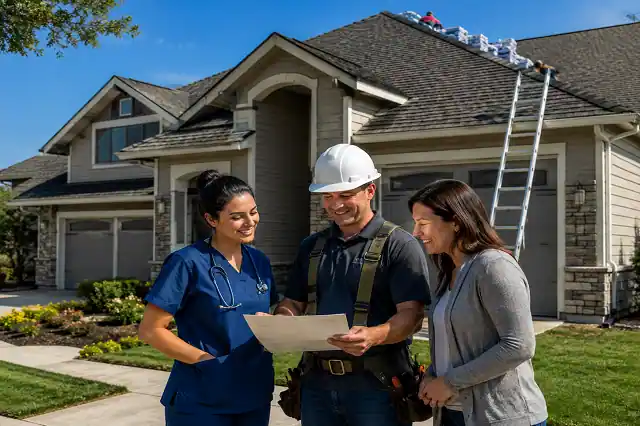
Who May Qualify for Roof Replacement Assistance in 2026?
Programs use different eligibility rules, but common factors include homeownership, primary-residence status, household income, property location, the severity of the roof problem, and whether the work is necessary for health, safety, structural stability, energy performance, or disaster recovery.
| Eligibility factor | Why it matters |
|---|---|
| Homeownership | Many homeowner-rehabilitation programs require the applicant to own and occupy the property. |
| Primary residence | Programs often focus on the home where the household normally lives. |
| Household income | Many programs prioritize low- and very-low-income households. |
| Roof condition | Serious leaks, structural deterioration, water intrusion, or safety hazards can receive priority. |
| Property location | USDA programs require eligible rural areas, while state and local programs use their own service areas. |
| Age or disability | Some programs provide additional assistance to older adults or homeowners with disabilities. |
| Disaster damage | A qualifying declared disaster can open access to disaster-specific assistance. |
Healthcare workers may include registered nurses, licensed practical nurses, nurse practitioners, physicians, physician assistants, EMTs, paramedics, respiratory therapists, physical and occupational therapists, behavioral health professionals, laboratory personnel, radiology technologists, home healthcare workers, and other medical professionals. These job titles should not be treated as independent proof of grant eligibility.
If income is the main issue, our roof replacement grants for low-income homeowners resource is more directly relevant. Healthcare workers who are older adults can also review roof replacement grants for seniors. Veterans can review federal and state roof replacement grants for veterans, while disabled homeowners can review roof replacement grants for disabled homeowners.
Federal Programs Healthcare Workers Should Check First
There is no single federal application for a free roof replacement based on healthcare employment. Instead, several federal programs can support rural home repairs, local housing rehabilitation, weatherization, or disaster recovery. The actual homeowner application is often handled by a state, county, city, housing agency, nonprofit, or other local provider.
| Program | Potential roofing relevance | Who should investigate it |
|---|---|---|
| USDA Section 504 | Home repair, improvement, modernization, and removal of health and safety hazards for eligible rural homeowners. | Very-low-income rural homeowners; grants have additional age requirements. |
| HUD CDBG | Local CDBG programs can fund eligible residential rehabilitation. | Homeowners served by participating cities, counties, or state programs. |
| HUD HOME | Participating jurisdictions can use HOME funds for eligible affordable-housing rehabilitation. | Homeowners served by local HOME programs. |
| DOE WAP | Energy-efficiency and health-and-safety weatherization work; not a general roof replacement grant. | Eligible low-income households served by local weatherization providers. |
| FEMA Individual Assistance | May provide eligible disaster-related home repair assistance, including certain roof damage. | Eligible homeowners in declared disaster areas. |
USDA Section 504 Home Repair Loans and Grants
USDA’s Section 504 Home Repair program is especially important for healthcare workers who own homes in eligible rural areas. USDA says the program provides loans to very-low-income homeowners to repair, improve, or modernize their homes and grants to elderly very-low-income homeowners to remove health and safety hazards.
USDA’s current program page states that applicants must own and occupy the home, be unable to obtain affordable credit elsewhere, and meet the applicable very-low-income limit for the county. The grant portion is for homeowners age 62 or older and is intended for removing health and safety hazards.
| USDA Section 504 assistance | Current maximum |
|---|---|
| Home repair loan | Up to $40,000 |
| Standard repair grant | Up to $10,000 |
| Grant for qualifying presidentially declared disaster damage | Up to $15,000 |
| Combined loan and grant assistance | Up to $50,000 |
| Combined loan and grant assistance in presidentially declared disaster areas | Up to $55,000 |
USDA currently lists Section 504 repair loans with a fixed 1% interest rate and a 20-year term. The program also places lifetime limits on grants, so the published maximum should not be treated as an amount every applicant can receive.
For a roofing-specific explanation of the program, see our USDA Section 504 roof safety grants guide.
HUD Community Development Block Grant Programs
HUD’s Community Development Block Grant program provides formula funding to states, cities, and counties. HUD lists rehabilitation of residential structures as an eligible activity, but CDBG is not one nationwide homeowner roof grant with a standard award amount. Local governments decide which eligible activities they fund and how homeowner-rehabilitation programs operate.
A healthcare worker should therefore contact the city, county, or state housing agency and ask whether it operates a CDBG-funded owner-occupied rehabilitation, emergency repair, housing preservation, or similar program that can cover roofing.
HUD HOME Investment Partnerships Program
HUD’s HOME program provides funding to participating states and local governments for affordable-housing activities. Participating jurisdictions can use HOME funds for eligible owner-occupied rehabilitation, but the local program determines how homeowner assistance is structured and which repair costs are eligible.
Ask your local participating jurisdiction whether HOME-funded owner-occupied rehabilitation is available and whether roofing is an eligible cost under the current local program.
DOE Weatherization Assistance Program
The Department of Energy’s Weatherization Assistance Program helps eligible low-income households improve energy efficiency while protecting health and safety. DOE reports that WAP provides weatherization services to approximately 32,000 homes every year using DOE funds and supports about 8,500 jobs. Participating households save an average of $372 or more every year according to a national evaluation.
WAP should not be presented as a standard roof replacement grant. A leaking or structurally unsound roof can affect whether other weatherization work can proceed, but the local provider determines which measures are eligible.
Healthcare workers interested in energy-focused roofing can also review our energy-efficient roof replacement costs, grants, and programs guide.
FEMA Home Repair Assistance After a Disaster
FEMA may provide home repair assistance when an eligible homeowner’s home is damaged by a qualifying declared disaster. FEMA guidance identifies damaged roofs among examples of home components that may qualify for repair assistance when the disaster caused the damage, a FEMA inspection confirms the need for repairs, the home meets the applicable eligibility requirements, and the damage is not covered by insurance.
If a storm has exposed your roof and you need temporary protection before a permanent repair, review the roof repair and roof replacement grants guide for disaster-related and emergency roofing options. Keep inspection reports, photographs, insurance records, contractor estimates, and disaster documentation together.
State and Local Roof Replacement Programs
State and local housing agencies can be more useful than a broad national search because they administer many rehabilitation programs close to the homeowner. A city, county, housing authority, or state housing agency may offer owner-occupied rehabilitation, emergency repair, housing preservation, disaster recovery, or forgivable-loan programs.
| Where to search | What to ask for |
|---|---|
| State housing agency | Owner-occupied rehabilitation, emergency roof repair, housing preservation, and disaster-recovery programs. |
| County housing department | Roof repair, roof replacement, emergency rehabilitation, and deferred-payment assistance. |
| City housing department | CDBG- or HOME-funded owner-occupied rehabilitation. |
| Housing authority | Local homeowner rehabilitation or preservation programs. |
| Community Action Agency | Weatherization and other low-income household assistance. |
| Emergency-management office | Disaster recovery and storm-damage assistance. |
Do not rely on a generic nationwide dollar range when evaluating a local program. Award limits, income rules, eligible repairs, contractor requirements, liens, repayment terms, and application windows can vary significantly.
Texas Roof Replacement Assistance
Healthcare workers living in Texas can use the state’s local and federal housing resources when they meet the applicable rules. Our Texas roof replacement grants for low-income families guide is useful when the property is in Texas and the household needs roof-specific assistance.
Other State Programs
For other states, begin with the state housing finance agency, state housing department, county housing office, and city rehabilitation department. The site’s Roof Replacement Grants category can also help you locate roof-focused articles before you narrow the search to your state.
If you need a broader national roof directory, use the Roof Replacement Grants 2026 guide rather than relying on unrelated general home-repair pages.
Roof Replacement Assistance for Healthcare Workers With Special Circumstances
A healthcare worker may have more than one qualifying circumstance. For example, a nurse may be a senior homeowner, a veteran, a low-income rural homeowner, or a person with a disability. The important step is to match each circumstance with a program that actually recognizes it.
Older healthcare workers can compare the senior roof replacement assistance available through relevant programs. Veterans can review the veteran roof replacement guide. Disabled homeowners can use the disabled homeowner roof replacement guide to identify programs that may recognize disability-related needs.
Low-income homeowners can also review the low-income roof replacement guide because income-based programs often have clearer eligibility rules than occupation-based searches.
Can Multiple Roof Assistance Sources Be Combined?
Sometimes. However, applicants should not assume that grants, insurance payments, rebates, loans, and employer benefits can always be stacked. Each program has its own rules about eligible costs, duplication of benefits, insurance proceeds, and maximum assistance.
| Potential source | What to verify before combining it |
|---|---|
| USDA Section 504 | USDA eligibility, eligible repair costs, and treatment of other assistance. |
| Local HUD-funded rehabilitation | Local program rules, liens, repayment terms, and eligible costs. |
| State or local assistance | Whether other grants or insurance proceeds must be disclosed. |
| Weatherization | Whether the roof condition must be addressed before weatherization work. |
| Insurance | Covered damage and how insurance payments affect other assistance. |
| Employer assistance | Whether the benefit can legally be used for home repairs. |
For homeowners who are deciding whether a repair is urgent or whether a larger project should be funded in stages, our roof replacement planning guide provides additional background.

Employer Housing and Hardship Assistance for Healthcare Workers
Healthcare employers may offer housing, hardship, relocation, employee-relief, or community-benefit programs, but these are employer-specific rather than nationwide government roof grants. A hospital system may offer a benefit that another healthcare employer does not.
Ask Human Resources or the employee-benefits department whether the employer has an emergency hardship fund, employee relief fund, housing benefit, homeownership assistance, or disaster assistance. Request written rules before assuming that roof replacement is an eligible expense.
Nonprofit Roof Repair and Replacement Assistance
Nonprofits can provide another route when a homeowner has a serious repair need and limited resources. Eligibility usually depends on the organization’s service area and criteria rather than healthcare occupation.
| Organization or source | What to investigate |
|---|---|
| Habitat for Humanity | Local critical-repair and home-preservation programs. |
| Rebuilding Together | Local programs focused on safe and healthy homes. |
| Community Action Agencies | Weatherization and local household assistance. |
| Local charitable organizations | Emergency repair funds, referrals, or volunteer labor. |
| Faith-based organizations | Local repair projects and emergency support. |
Before applying, confirm that the organization serves your area and accepts applications for owner-occupied roof work. National nonprofits often operate through local affiliates, so local rules matter.
Energy-Efficient Roof Replacement and 2026 Tax-Credit Caution
Energy efficiency can be part of a roof project, but homeowners should separate weatherization assistance, utility rebates, and tax incentives. A roofing material does not automatically qualify for a federal tax credit simply because it is marketed as energy efficient.
The IRS states that the Residential Clean Energy Credit is not available for qualifying expenditures made after December 31, 2025. Traditional roofing materials and structural components generally do not qualify, although qualifying solar roofing tiles and solar shingles can qualify because they generate clean energy. Verify the current IRS rules for the exact product and installation date before including a tax credit in your project budget.
Roof Types and Specialized Projects
Not every roof project has the same cost or funding pathway. The type of roof, the extent of damage, the property’s use, and the reason for the work can affect which assistance is relevant.
For example, homeowners dealing with a flat roof can review our flat roof replacement costs and grants guide. Healthcare workers should still treat the main home roof as the priority when applying for homeowner assistance because specialized structures such as detached garages may not qualify under the same housing program.
How to Apply for Roof Replacement Assistance
The strongest application starts with a documented roof problem and a clear connection between the project and the program’s eligibility rules.
- Inspect the roof and obtain a professional written report.
- Photograph leaks, missing shingles, structural deterioration, storm damage, and interior water damage.
- Obtain written estimates from qualified roofing contractors.
- Gather proof of ownership, primary residence, income, insurance, property taxes, and other requested documents.
- Check the city, county, state, USDA, disaster, nonprofit, and employer sources that match your circumstances.
- Submit complete applications before deadlines and before starting work when prior approval is required.
- Respond quickly to requests for additional documentation.
- Keep copies of every application, inspection report, estimate, insurance document, and approval letter.
| Document | Why it may be needed |
|---|---|
| Government-issued ID | Identity verification. |
| Proof of ownership | Confirms property ownership. |
| Proof of occupancy | Shows the property is the primary residence when required. |
| Income records | Determines eligibility under income-based programs. |
| Roof inspection report | Documents the repair need. |
| Contractor estimates | Shows expected project cost. |
| Insurance information | Identifies available coverage and possible duplication-of-benefits issues. |
| Disaster documentation | Supports a disaster-related application when applicable. |
Common Mistakes Healthcare Workers Should Avoid
- Assuming a healthcare occupation automatically creates grant eligibility.
- Using an unsupported national grant range as though it applies to every local program.
- Starting roof work before receiving required approval.
- Failing to disclose insurance proceeds or other assistance when required.
- Submitting incomplete income or ownership documents.
- Ignoring city and county housing-rehabilitation programs.
- Using a contractor who does not meet a program’s licensing or insurance rules.
- Paying an upfront fee to someone who promises guaranteed government grant approval.
Frequently Asked Questions
Are there roof replacement grants exclusively for healthcare workers?
There is no nationwide federal roof replacement grant reserved exclusively for healthcare workers. Healthcare professionals may qualify for general housing rehabilitation, rural repair, disaster, weatherization, nonprofit, state, local, or employer programs when they meet the applicable requirements.
How much assistance can a healthcare worker receive?
There is no single national award amount. For USDA Section 504, the current maximum is $40,000 for a repair loan and $10,000 for a standard grant. A qualifying presidentially declared disaster can raise the grant maximum to $15,000, and loans and grants can be combined up to $50,000, or up to $55,000 in qualifying presidentially declared disaster areas. These are program maximums, not guaranteed awards.
Can USDA Section 504 help with a roof?
USDA Section 504 can support eligible repairs, improvements, modernization, and removal of health and safety hazards for qualifying rural homeowners. A roof project must meet the program’s requirements and the homeowner must qualify.
Do I need to live in a rural area?
No. Rural location is important for USDA Section 504, but city, county, state, HUD-funded, nonprofit, and disaster programs can serve homeowners in other locations.
Can FEMA help with a damaged roof?
FEMA may provide eligible home repair assistance after a qualifying declared disaster when the homeowner and property meet FEMA requirements. FEMA’s current guidance identifies damaged roofs among potentially eligible disaster-damaged home components.
Can I combine grants, insurance, and other assistance?
Sometimes. Each program has its own rules, and disaster assistance can be affected by insurance and other benefits. Applicants should disclose other assistance whenever required.
Where should healthcare workers start?
Start with the county or city housing department, state housing agency, USDA Rural Development if applicable, FEMA if the damage followed a declared disaster, your employer’s Human Resources department, and reputable nonprofit organizations serving your area.
Tips to Avoid Roof Grant Application Problems
- Document the roof problem before it becomes more severe.
- Separate urgent health and safety work from optional cosmetic upgrades.
- Search federal, state, county, city, nonprofit, employer, and utility sources.
- Confirm exact income, geographic, ownership, and repair rules before applying.
- Get multiple written estimates when the program allows or requires them.
- Ask each program whether insurance or another award affects eligible costs.
- Keep all application records organized in one file.
- Do not begin work until you know whether written approval is required.
Roof Replacement Grants for Healthcare Workers: Final Takeaway
Healthcare workers generally do not receive roof replacement assistance simply because they work in healthcare. The strongest opportunities usually come from programs based on household income, rural location, home condition, disaster damage, age, disability, veteran status, or another recognized housing need.
Start by matching your circumstances to USDA, HUD-funded local rehabilitation, DOE Weatherization, FEMA disaster assistance, state and local programs, nonprofits, and any verified employer benefits.
Always verify current eligibility, funding availability, deadlines, contractor rules, and eligible repair costs with the administering agency before signing a roofing contract.
Why You Can Trust This Guide
Last Updated: August 2026
Reviewed By: Home Property Grants Editorial Research Team
- Official-source approach: Federal program information is based on publicly available USDA Rural Development, HUD, U.S. Department of Energy, FEMA, and IRS information where applicable.
- Program-specific limits: Published dollar amounts are used only when an official source supports them. Local programs are described as variable rather than being assigned unsupported national award ranges.
- Healthcare-worker focus: The guide explains how healthcare workers can use general homeowner programs without incorrectly implying that occupation alone creates federal eligibility.
- Independent information: Home Property Grants is an informational resource and does not guarantee approval, charge government application fees, or endorse a particular contractor.
- Verify before applying: Program rules, funding, deadlines, and local priorities can change, so applicants should confirm details with the administering agency before making financial decisions.
Conclusion
A major roof replacement can be difficult to afford even for a household with steady employment. Healthcare workers should therefore search beyond occupation-based grants and focus on the housing factors that government and nonprofit programs actually use to determine eligibility.
A documented roof problem, complete financial records, a qualified contractor estimate, and a careful review of USDA, HUD-funded local programs, disaster assistance, weatherization, state and local rehabilitation, nonprofit help, and verified employer benefits can create a stronger funding strategy.
Before signing a roofing contract, verify the current rules directly with the administering agency and confirm whether prior approval is required. That approach helps healthcare workers avoid preventable application problems while keeping the article’s focus on legitimate roof-replacement assistance.