
Maintaining a home on a tight family budget is challenging, but ignoring small warning signs often turns minor fixes into financial disasters. Understanding the true cost of delayed home repairs helps property owners decide which issues to tackle first, how to avoid emergency contractor rates, and where to secure real public funding. When an unresolved roof leak drips into an attic, a slow plumbing drip rots floor joists, or a small foundation hairline crack widens, repair bills quickly jump from a few hundred dollars to tens of thousands. Acting early protects your household budget and preserves your hard-earned home equity before safety hazards force you out of your house.
The financial damage of postponing maintenance spreads far beyond the original breakdown. Small leaks invite toxic black mold colonies, ruin blown-in attic insulation, corrode copper pipes, and rot solid timber framing. Beyond physical damage, untreated maintenance defects drive up monthly heating and cooling bills and cause insurance carriers to cancel policies. Rather than waiting until an urgent crisis forces you into expensive high-interest credit cards or personal loans, exploring verified home repair grant programs connects qualifying homeowners with non-repayable government assistance to fix hazardous living conditions safely.
Public housing preservation programs prioritize urgent structural hazards, energy waste, and physical health threats. Programs like federal weatherization assistance, local city block grants, and rural housing repairs step in to replace failing roofs, modernise dangerous electrical panels, and install high-efficiency heating systems. Knowing how local agencies evaluate property damage and income limits ensures your application moves quickly through municipal reviews.
Download Official HUD Form 52580 Inspection Checklist (PDF)
Why Delayed Home Repairs Can Become More Expensive
The housing inventory across the United States is aging rapidly, with over half of all residential structures built before 1980. Older homes experience compounding wear where roofing materials, mechanical plumbing, electrical insulation, and perimeter foundations reach the end of their useful lifespans at the same time. When limited household budgets cause families to delay basic maintenance, small, localized problems quietly trigger widespread secondary damage behind walls and under floors.
Water intrusion is the single most destructive force in residential construction. A missing five-dollar asphalt shingle allows rain to penetrate roofing felt, rotting structural plywood decking, soaking fiberglass batt insulation, ruining ceiling drywall, and sparking dangerous electrical short circuits. By the time a brown stain appears on your living room ceiling, a repair that once required simple patching has turned into a major reconstruction project costing upwards of $8,000. Homeowners seeking ways to pay for urgent fixes before costs spiral out of control can explore our emergency home repair grants guide for fast-track public assistance.
| Initial Minor Defect | Concealed Secondary Damage | Delayed Escalation Cost | Immediate Preventive Cost |
| Loose Flashing / Shingle | Rotted roof rafters, soaked insulation, ceiling drywall collapse | $6,500 – $14,000 (Tear-off) | $250 – $550 (Seal & Patch) |
| Slow Drain Pipe Drip | Subfloor wood rot, mold remediation, structural framing failure | $4,000 – $11,000 (Rebuild) | $150 – $350 (P-Trap Repair) |
| Foundation Hairline Crack | Water seepage, bowing basement walls, drywall shearing | $7,500 – $22,000 (Piering) | $400 – $900 (Epoxy Injection) |
| Drafty Window / Door | Continuous HVAC strain, moisture rot in wall studs, high power bills | $3,200 – $7,000 (Framing) | $75 – $200 (Weatherstrip) |
| Flickering Breaker | Melted wire insulation, panel failure, electrical attic fire | $4,500 – $15,000+ (Rewire) | $200 – $450 (Breaker Swap) |

What Official U.S. Housing Data Shows About Repair Costs
Official housing data confirms that deferred maintenance is a nationwide challenge. The U.S. Census Bureau tracks housing health, physical structural flaws, and home improvement spending through the American Housing Survey Table Creator. National housing survey reports show that American homeowners spend billions of dollars annually repairing avoidable structural deterioration caused by water leaks, bad drainage, and failing heating equipment.
The data highlights a clear economic lesson: families who invest small amounts in continuous upkeep save thousands compared to those who defer basic maintenance. When a home suffers from deferred maintenance, the market appraisal value drops significantly, insurance carriers issue mandatory repair notices under threat of policy non-renewal, and city building inspectors may issue code citations based on HUD Housing Quality Standards (HQS). When an aging structure requires multiple critical safety upgrades at once, securing public aid through municipal housing rehabilitation programs helps eliminate dangerous living conditions without exhausting personal savings.
The Ripple Effect: How Minor Defects Multiply Over Time
Structural damage rarely stays isolated in one spot. When one building system fails, it places heavy mechanical stress on surrounding materials. Evaluating the actual cost of delayed home repairs requires examining how common household problems compound over time:
Roof Degradation and Framing Decay
Roofing assemblies are your home’s primary protective barrier. When high winds tear away ridge caps or freeze-thaw cycles crack chimney flashing, water enters the attic cavity. Soaked attic insulation completely loses its R-value, forcing your furnace to run continuously. Over several months, trapped moisture rots solid timber trusses, promotes fungal spores, and causes plaster ceilings to buckle. If roof deterioration threatens your home, review our complete roof repair and replacement grants guide for funding opportunities.
Plumbing Leaks and Mold Infestation
Unlike sudden pipe bursts, hairline plumbing pinholes and leaky toilet wax rings often go unnoticed for months. Water seeping through subfloors rots bathroom framing, ruins finished flooring, and creates ideal growing conditions for toxic mold. The Environmental Protection Agency warns in its EPA Mold Remediation Guide that unresolved moisture issues spread mold spores through ductwork within 24 to 48 hours. Remediating toxic mold requires specialized containment barriers, air scrubbers, and destructive drywall removal, turning a simple plumbing fix into an expensive environmental hazard remediation project.
Foundation Shifts and Structural Settlement
Clogged gutters and broken downspouts dump roof runoff directly against foundation walls. Water saturates surrounding perimeter soil, causing expansive clay soils to swell and press inward against basement walls. Over time, horizontal cracks develop, door frames fall out of square, and windows jam shut. Stabilizing a displaced foundation with hydraulic steel piers requires heavy equipment, costing five to ten times more than installing clean gutters and regrading topsoil away from your foundation.
Higher Utility Bills: The Invisible Cost of Postponing Repairs
Not every delayed maintenance issue causes visible structural destruction. Many maintenance problems quietly drain household finances through inflated monthly power and heating invoices. The Department of Energy outlines in its Energy Saver Air Sealing Guide that missing attic insulation, drafty windows, failing exterior doors, and aging HVAC units account for up to 30% of average residential energy waste.
When an exterior door sags on its hinges or glazing putty falls away from single-pane windows, winter drafts pour directly into primary living spaces. Families respond by cranking thermostats higher or running dangerous portable space heaters, driving electric bills over $300 a month. Upgrading to Energy Star double-pane windows and weatherstripping exterior doors stops air leaks and stabilizes monthly living expenses. Homeowners looking to lower power bills can read our resource on window replacement grants and our directory of door replacement grants.
Federal Home Repair Programs That Help Prevent Compounding Damage
Homeowners often delay necessary work because private contractor estimates seem completely out of reach. However, several statutory federal assistance programs provide free grants and low-interest loans to help low-income property owners, seniors, and disabled residents fix safety hazards before disaster strikes:
1. Department of Energy Weatherization Assistance Program (WAP)
Administered through regional Community Action Agencies under 10 CFR Part 440, the Weatherization Assistance Program focuses on building envelope stabilization and energy efficiency. Certified energy workers test your home using infrared cameras and calibrated blower-door depressurization equipment. If testing reveals severe air infiltration or mechanical heating failure, WAP pays 100% of material and contractor installation costs for dense attic insulation, duct sealing, and high-efficiency furnace replacements.
2. USDA Section 504 Rural Home Repair Program
Operating under federal housing regulations (7 CFR Part 3550), the USDA Section 504 program provides vital financial relief to homeowners in qualifying rural areas and towns with populations under 35,000. Homeowners aged 62 and older earning below 50% of the county Area Median Income can receive non-repayable lifetime grants up to $10,000 to remove health and safety hazards. For younger homeowners, the program offers 20-year fixed loans up to $40,000 at a 1.0% statutory interest rate, making monthly payments as low as $184. Review complete guidelines in our dedicated Section 504 home repair grants manual.
3. HUD Community Development Block Grants (CDBG)
The U.S. Department of Housing and Urban Development distributes annual funds under Title I of the Housing and Community Development Act directly to municipal housing authorities and county community development divisions. Local housing offices use these funds to run single-family housing rehabilitation programs. Assistance is typically structured as a deferred forgivable loan up to $25,000 with zero monthly payments. The balance is gradually forgiven for each year you remain in the home as your primary residence, turning into a completely free grant after 5 to 10 years.
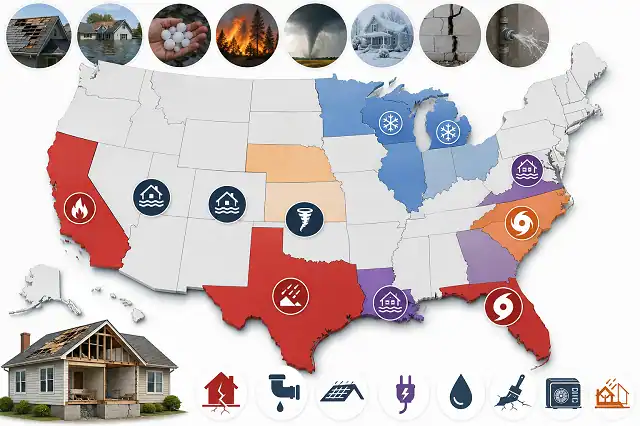
Regional Climate Hazards and Local Assistance Options
The physical breakdown of residential housing varies dramatically across geographic regions. Understanding your state’s climate risks helps you prioritize repairs before seasonal weather extremes cause catastrophic damage:
| Geographic Region | Primary Environmental Threat | High-Risk Home Component | Key Assistance Delivery Channel |
| Gulf Coast & Southeast | Hurricanes, heavy rainfall, high humidity | Roof uplift, mold growth, siding rot | State Housing Finance Agencies & CDBG-DR |
| Northern & Midwest | Heavy snow loads, ice dams, sub-zero freezes | Burst plumbing pipes, collapsed roof decks | DOE Weatherization & LIHEAP Emergency Aid |
| Southwest & Texas | Severe hailstorms, flash floods, clay soil shifts | Cracked slab foundations, punctured roofing | USDA Rural Development & Texas Trust Fund |
| Western States | Wildfires, seismic activity, extreme drought | Attic vent ember intrusion, timber decay | Cal OES Home Hardening & Local Block Grants |
In northern states, uninsulated crawlspaces and drafty foundation vents cause interior domestic water pipes to freeze and burst during sub-zero cold snaps. Emergency plumbing services and structural water extraction during a winter freeze routinely exceed $10,000. Conversely, in humid coastal environments like Florida and Louisiana, a small roof leak creates widespread black mold within 48 hours. Homeowners facing severe regional weather challenges can review our guide on home repair grants for rural homeowners to locate county-level resources.
Seasonal Maintenance Checklist to Stop Small Issues Early
Implementing a routine inspection schedule is the most effective way to protect your personal finances. Walking your property twice a year and immediately after major weather events allows you to catch minor maintenance issues before they require full structural replacement:
- Spring Roof and Gutter Inspection: Clear leaves and gravel sediment from gutters and downspout extensions. Ensure water discharges at least five feet away from foundation walls. Check for missing asphalt shingles, curled edges, and damaged valley flashing.
- Summer Attic Ventilation and Cooling Check: Inspect attic rafters for white water staining, mildew smells, or compressed insulation. Verify that soffit intake vents and roof ridge vents remain clear of obstructions to prevent heat buildup.
- Fall Weatherstripping and Heating Servicing: Replace worn rubber door sweeps and window weatherstripping. Replace furnace air filters and hire a licensed technician to service heat exchangers and test carbon monoxide alarms before cold weather arrives.
- Winter Pipe Insulation and Crawlspace Prep: Wrap exposed copper and PVC water lines in unheated crawlspaces and basements with foam insulation sleeves. Disconnect outside garden hoses and close interior shut-off valves for outdoor spigots.
Prioritizing Repairs: Health, Safety, and Accessibility First
When multiple areas of your home need work, knowing where to direct your money is essential. Not all repairs carry the same urgency. Home improvement projects should always be triaged based on safety hazards, structural stability, and water intrusion:
- Level 1 (Life-Safety Emergencies): Active gas leaks, sparking 60-amp electrical panels, collapsed sewer laterals, and inoperable heating units in sub-freezing temperatures demand immediate action. These conditions threaten human life and can cause total home loss.
- Level 2 (Active Structural Water Leaks): Active roof leaks, missing flashing, broken supply pipes, and backing-up drainage systems require urgent attention to stop water from rotting timber studs and spawning mold colonies.
- Level 3 (Accessibility and Mobility Hazards): Crumbling porch steps, broken handrails, and narrow doorways create immediate fall hazards for seniors and disabled residents. Programs funding home repair grants for disabled homeowners provide free ramps and walk-in shower conversions.
- Level 4 (Cosmetic and Non-Urgent Upgrades): Peeling paint, dated cabinetry, worn carpet, and decorative trim should always be postponed until all structural and weatherization needs are completely resolved.
How to Apply for Public Repair Assistance Step-by-Step
Securing public funds through government repair programs requires organized documentation and patience. Following this proven roadmap prevents application delays and ensures your paperwork moves smoothly through program reviews:
- Photograph and Document All Damage: Take date-stamped, close-up pictures of water leaks, cracked drywall, rotted timber framing, leaking pipes, and rusted electrical panels. Create a detailed written log noting when the issue started.
- Check Your County Income Limits: Review published limits on the HUD Income Limits Documentation System or Federal Poverty Guidelines to verify your family qualifies for non-repayable grant assistance.
- Locate Your Local Administering Office: Submit intake packets directly to your county Community Action Agency for weatherization, your city community development department for CDBG grants, or your county USDA Rural Development office for rural repairs.
- Assemble Financial and Property Records: Gather your last two years of signed federal tax returns, two months of recent pay stubs or Social Security award letters, three months of bank statements, your recorded property deed, and recent utility invoices.
- Complete the Agency Home Inspection: Allow an authorized municipal or agency inspector to evaluate structural defects, test building air leakage, and test for lead-based paint on pre-1978 properties under EPA lead-safety standards.
- Review Licensed Contractor Bids: Work with agency staff to collect competitive bids from licensed, insured general contractors registered in the federal System for Award Management (SAM.gov) database.
- Sign Agreements and Await Authorization: Sign your formal grant contract or deferred promissory note. Never permit a builder to begin work until the agency issues an official Written Notice to Proceed.
- Pass Final Code Walkthrough: Once repairs are finished, a municipal building inspector confirms all work meets building codes before the administering office releases final payment to the contractor.
You can read our comprehensive procedural instructions in our how to apply for home repair grants walkthrough.
Frequently Asked Questions About Delayed Home Repairs
How much more expensive can delayed home repairs become?
The cost of delaying home repairs can increase substantially when a small problem causes secondary damage, although there is no single percentage or dollar amount that applies to every home. A roof leak may damage insulation, drywall, flooring, or framing, while a plumbing leak can lead to mold or wood rot. The actual increase depends on the repair type, location, materials, labor costs, property condition, and how long the problem remains unresolved.
Can government assistance help prevent delayed home repairs from becoming more expensive?
Yes. Depending on eligibility and location, homeowners may find federal, state, local, utility, disaster, or nonprofit programs that help with eligible repairs or home improvements. Program rules vary, so homeowners should verify current requirements before applying.
Which home repairs should homeowners address first?
Repairs involving immediate safety hazards, active water intrusion, structural problems, electrical hazards, gas-related concerns, major plumbing leaks, and conditions that can quickly cause additional damage should generally receive the highest priority.
Why do small home repairs become more expensive when delayed?
A small problem can spread to other parts of a home. For example, a minor roof or plumbing leak can lead to damaged insulation, ceilings, flooring, framing, mold-related concerns, or other secondary repairs when it remains unresolved.
Can delayed home repairs increase energy costs?
Yes. Problems such as air leaks, inadequate insulation, damaged windows, or inefficient equipment can increase energy use. Addressing these issues may improve comfort and reduce unnecessary energy consumption, depending on the home and the repair.
How can homeowners reduce the cost of future home repairs?
Homeowners can reduce future repair costs by addressing small problems early, performing regular inspections, maintaining roofs and drainage systems, checking plumbing and electrical systems, improving weatherization where appropriate, and keeping a home-repair reserve when possible.
Can homeowners combine different funding sources for a major repair?
In some situations, homeowners may be able to combine different eligible funding sources, such as grants, loans, rebates, utility programs, or nonprofit assistance. Whether programs can be combined depends on the specific program rules and the repair being funded.
Why You Can Trust This Guide
Last Updated: September 27, 2026
Reviewed By: HomePropertyGrants.com Editorial Team
Experience: Our editorial research team has analyzed federal housing rehabilitation statutes, Title 7 CFR Section 504 regulations, and municipal preservation programs across all 50 states for over a decade.
Expertise: All funding thresholds, income limits, and construction standards come directly from Title 42 of the United States Code, Department of Energy 10 CFR Part 440 rules, and published HUD housing manuals.
Authority: All Fiscal Year 2026 funding caps ($10,000 for USDA 504, 200% FPL for WAP, 80% AMI for CDBG) are verified against official Federal Register publications.
Trust: HomePropertyGrants.com is an independent consumer research desk. We accept no fees, kickbacks, or sponsored placements from private window manufacturers, roofing companies, or mortgage lenders.
Helpful Decision Support: We explain complex federal rules in plain, accessible American English with direct links to official .gov applications and directories.
Next Steps: Take Action Before Small Problems Multiply
Delaying essential home repairs might seem like a way to save money in the short term, but unresolved issues quietly trigger secondary structural damage, inflated utility bills, and dangerous living conditions. Evaluating the cost of delayed home repairs clearly demonstrates that early intervention protects your home and family at a fraction of emergency replacement costs.
Start by walking your property with our seasonal maintenance checklist, gathering repair estimates from licensed contractors, and checking your family income against county assistance caps. Contact your local Community Action Agency for weatherization help, reach out to your municipal housing office for CDBG funds, or submit USDA Form RD 410-4 if you reside in a rural district. Protecting your housing investment today ensures a safe, secure, and affordable home for years to come.

Arthur Pendelton is a senior housing policy researcher and public welfare analyst with over eight years of experience tracking federal, state, and non-profit residential repair programs. He specializes in statutory grant frameworks, including USDA Section 504 Rural Housing, the Department of Energy’s Weatherization Assistance Program (WAP), and municipal HUD Community Development Block Grants (CDBG). Arthur systematically audits Federal Register publications and Title 7/42 CFR regulatory updates to provide low-income homeowners, seniors, and military veterans with accurate, barrier-free application guidance.