
When your furnace stops working in winter, it is not just uncomfortable. It can become dangerous within hours. Indoor temperatures can drop quickly, especially in homes with seniors, children, or disabled residents. Repair costs often range from $300 to $1,500. Full replacement can cost $3,000 to $8,000 or more. For families already struggling with rent, food, and utilities, that cost feels impossible.
Cold indoor temperatures can also trigger respiratory illness, increase fire risks from unsafe space heaters, and lead to burst pipes that cause thousands of dollars in water damage. What begins as a heating problem can quickly turn into a financial crisis for already vulnerable households.
The good news is that real funding exists. Federal and state agencies provide low-income heating assistance programs that include furnace repair and replacement support. If you are searching for how to get free furnace repair grants for low-income families or trying to apply for furnace repair grants near me, this guide explains exactly how funding works, how contractors are paid, who qualifies, and how to improve your approval chances.
These programs are part of long-standing federal energy safety initiatives designed to prevent winter emergencies. They operate under strict eligibility rules and public funding oversight to ensure assistance reaches those who need it most.
This is not guesswork. These are structured programs with defined funding limits, contractor requirements, and documented approval processes.
They are backed by federal appropriations and administered through state agencies that must follow compliance and reporting standards.
What are furnace repair grants for low-income families?
Furnace repair grants are government-funded programs that help low-income households fix or replace broken heating systems. Programs like LIHEAP, Weatherization Assistance Program, and USDA Section 504 Program provide financial support. These programs pay approved contractors directly, cover repair or replacement costs, and prioritize seniors, disabled individuals, and families with children.
Understanding How Furnace Repair Grants Actually Work
Furnace repair grants are not random giveaways. They are structured public benefit programs funded by federal allocations and administered by state agencies.
Funding flows from federal departments to state offices, and then to local Community Action Agencies that process applications and coordinate repairs. This multi-level system ensures oversight while allowing local flexibility.
The three main federal sources of funding are:
LIHEAP furnace repair assistance
Weatherization Assistance Program furnace repair support
Section 504 home repair loans and grants
Each program operates differently.
LIHEAP primarily provides heating bill assistance and emergency crisis funds. Some states allocate part of their LIHEAP budget toward furnace repair or replacement in crisis situations.
This is especially common in colder states where heating failures present immediate safety concerns during the winter months.
The Weatherization Assistance Program (WAP) focuses on long-term energy efficiency. Furnace replacement is approved when the existing unit is unsafe, nonfunctional, or extremely inefficient.
WAP decisions are based on energy audits that measure cost-effectiveness, ensuring that public funds produce long-term savings for households.
Section 504, administered through USDA Rural Development, provides assistance up to $10,000 for eligible homeowners aged 62+ in rural areas to remove health and safety hazards like failed heating systems.
This program is particularly important in rural communities where contractor access may be limited, and repair costs may be higher due to travel and service fees.
These are part of broader federal home energy assistance programs designed to prevent energy poverty and protect public health.
They exist not just to reduce bills, but to stabilize housing and prevent displacement during extreme weather.
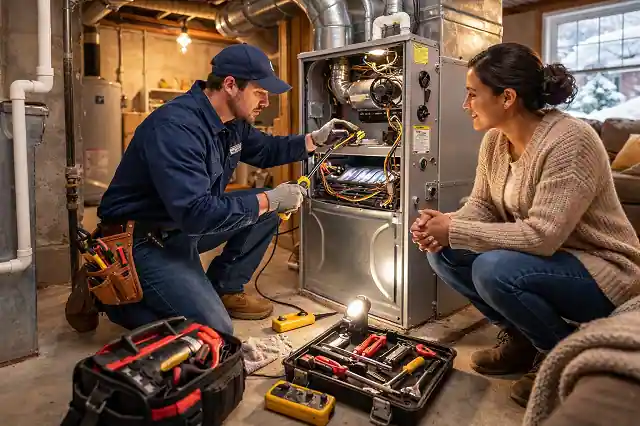
Funding Amounts You Can Expect in 2026
Understanding real numbers builds confidence.
LIHEAP heating grants in many states typically range from $174 to $1,000, depending on income, household size, and fuel type. Crisis assistance for heating emergencies may provide higher amounts when available.
Some states issue one-time seasonal grants, while others allow additional crisis payments if a furnace fails mid-season.
Weatherization Assistance Program upgrades often total several thousand dollars per household in combined improvements. Furnace replacements under WAP commonly fall within the $3,000 to $7,000 range, fully covered when approved.
In many cases, WAP improvements also include insulation and air sealing, further increasing the total value of assistance provided.
Read- Free Grants For Weatherproofing Older Homes- Maximizing Energy Savings
USDA Section 504 home repair grants provide up to $10,000 for eligible seniors. Low-interest loans can increase total available funding beyond that amount.
Loan repayment terms are designed to be affordable, often extending over 20 years to reduce the monthly burden.
Local state heating assistance programs and nonprofit emergency funds may add supplemental funding ranging from a few hundred dollars to several thousand, depending on availability.
Layering multiple programs can significantly reduce or eliminate out-of-pocket expenses.
Emotional Reality: Why These Programs Matter
A broken furnace during winter is not just an inconvenience. Families wrap themselves in blankets. Parents worry about frozen pipes. Seniors face serious health risks. Children sleep in coats.
Many households also fear eviction if heating systems violate lease agreements or housing codes. Stress increases quickly when warmth becomes uncertain.
That emotional stress is exactly why emergency heating repair grants exist.
These programs are built around crisis prevention. When applying, explaining urgency clearly can help agencies prioritize your case under emergency guidelines.
Agencies are trained to assess vulnerability, and medical or age-related risk factors can elevate priority status.
Read- Emergency Home Repair Grants-Critical Home Improvements
Who Qualifies for Furnace Repair Assistance Programs
Eligibility is income-based.
Most programs require income below 60% of the state median income or 150–200% of the federal poverty level. Household size directly impacts eligibility limits.
For example, a household of four may qualify at a higher income threshold than a single applicant due to federal poverty scale adjustments.
Priority groups include:
Seniors
Disabled individuals
Families with children
Veterans
Households facing utility disconnection
Applicants searching for how to qualify for furnace repair assistance programs should check local income charts through their state LIHEAP office.
Income verification typically requires recent pay stubs, Social Security statements, or benefit award letters.
Homeownership matters for replacement approval. Renters may qualify for heating assistance but need landlord authorization for system repairs.
Some states also require written landlord consent before approving equipment replacement.
Read- Energy Efficient Upgrades by HUD Home Improvement Grants
Federal Contracting & How Contractors Get Paid
Many applicants worry: “Do I get the money directly?”
In most cases, no.
Under government programs that pay for furnace repair, funds are paid directly to approved contractors. This prevents fraud and ensures certified work.
This system also ensures contractors meet licensing standards and comply with state building codes.
Here is how it works:
Application is approved.
An energy audit or inspection is scheduled.
The agency selects or approves a licensed contractor.
The contractor performs the repair or replacement.
The agency pays the contractor directly.
Weatherization programs require contractors to meet federal standards and carry proper licensing, insurance, and bonding.
Read- Drafty Front Door Replacement Grants For Low-Income Families
Some states also require background checks and compliance reporting for contractors working under public funding.
This system protects both the homeowner and the funding agency.
Certification Process and Energy Audit Clarity
Under the Weatherization Assistance Program, homes must undergo an energy audit before furnace replacement is approved.
The audit checks:
System efficiency
Safety hazards
Carbon monoxide risks
Overall home insulation levels
These evaluations are often conducted by certified energy auditors trained under Department of Energy guidelines.
Furnace replacement is approved when:
The system is unsafe
Repair costs exceed replacement value
Efficiency is extremely low
Parts are unavailable
This ensures energy-efficient furnace replacement grants are used responsibly and reduce long-term heating costs.
It also ensures that taxpayer-funded upgrades produce measurable energy savings.
How to Apply for Furnace Repair Grants
Step 1: Gather documentation including photo ID, proof of income, heating bill, and address proof.
Step 2: Contact your state LIHEAP office and ask about furnace repair or crisis assistance.
Step 3: Reach out to your local Community Action Agency for application support.
Step 4: If you are rural and 62+, contact USDA for Section 504 grants.
Step 5: Request emergency status if your furnace is not working.
Step 6: Complete all application forms accurately.
Step 7: Follow up within 7–10 days to track your application status.
Nonprofit & Utility Company Assistance
In addition to federal funding, many families qualify for:
Nonprofit heating repair assistance
Church-based emergency funds
Utility hardship programs
Local emergency home repair funds
Utility providers often operate hardship funds funded through customer donations or regulatory programs.
While these may not cover full replacement costs, they can supplement federal aid and close funding gaps.
Searching for state furnace repair assistance programs near me can uncover additional local options.
Community Action Agencies often maintain updated referral lists.
When Full Furnace Replacement Is Approved
Replacement is typically approved when repair is not cost-effective.
Programs may approve free HVAC repair programs for low-income homeowners when:
The furnace is over 15–20 years old
The heat exchanger is cracked
Safety risk is documented
Efficiency is extremely low
WAP prioritizes replacement when long-term energy savings justify the cost.
Older systems that exceed repair thresholds are often flagged during audits.
Combining Programs for Maximum Coverage
Many households do not realize they can combine programs.
For example:
LIHEAP covers immediate heating crisis.
WAP funds long-term efficiency upgrades.
Section 504 adds rural grant support.
Local nonprofits fill funding gaps.
Layering these resources increases total assistance and reduces out-of-pocket costs.
This strategy is common among experienced Community Action caseworkers.
Approval Tips From Agencies
Apply before the winter peak season.
Be honest and complete.
Provide medical documentation if applicable.
Respond quickly to calls or inspection scheduling.
Keep copies of everything.
Agencies processing home repair grants for low-income families prioritize organized applications.
Being responsive often determines whether repairs are scheduled quickly.
Frequently Asked Questions
1. What are furnace repair grants for low-income families?
Furnace repair grants are government-funded programs that help low-income households fix or replace broken heating systems.
2. Which programs provide furnace repair assistance?
The main programs are LIHEAP, Weatherization Assistance Program, and USDA Section 504 home repair grants.
3. How much financial help can I get?
Assistance can range from $174 to $7,000 or more depending on the program and situation.
4. Do I receive the money directly?
No, most programs pay approved contractors directly to complete the repair or replacement.
5. Who qualifies for furnace repair grants?
Low-income households, seniors, disabled individuals, families with children, and veterans may qualify.
6. Can renters apply for furnace repair assistance?
Yes, but landlord approval is usually required for repairs or replacement.
7. Can I combine multiple programs?
Yes, combining LIHEAP, WAP, and local assistance programs can reduce or eliminate out-of-pocket costs.
Why This Information Is Trusted
Last Updated: April 2026
Reviewed By: Home Energy Assistance Research Team
- This content is based on verified federal programs like LIHEAP, WAP, and USDA Section 504.
- Information reflects real funding ranges, eligibility rules, and contractor payment systems.
- Sources include government agencies and structured public benefit programs.
- Content is written to match actual application processes used by Community Action Agencies.
- Regular updates ensure accuracy with current 2026 funding guidelines.
Conclusion
If you are searching for how to get a free furnace repair for low-income families, structured federal and state funding programs exist to help.
LIHEAP may provide several hundred to $1,000+ in heating assistance.
Weatherization programs may cover $3,000–$7,000 furnace replacements.
USDA Section 504 grants can provide up to $10,000 for eligible rural seniors.
These are not marketing claims. They are documented public benefit programs with defined funding limits and contractor oversight.
The key is acting quickly, understanding eligibility, and following the structured application process.
If your furnace has failed, do not wait. Contact your local LIHEAP office and Community Action Agency today. Heating safety is not optional, and financial help is available.