
Replacing old windows in a mobile or manufactured home can improve comfort, reduce drafts, limit moisture problems, and lower energy waste. But there is an important distinction: there is no single national program that gives every low-income mobile-home owner a fixed “free window” grant.
Instead, assistance usually comes through programs that fund weatherization, health and safety repairs, housing rehabilitation, or locally administered home improvement work. The best option depends on your income, the type and location of your home, whether you own the home and land, the condition of the windows, and the rules of the agency serving your area.
For the broader window-replacement funding picture, see Free Window Replacement Grants For Low Income Homeowners 2026. This article is narrower: it focuses on the special eligibility, ownership, inspection, and installation issues that can affect mobile and manufactured homes.
Mobile Home Window Replacement Assistance: What Actually Pays for the Work
For a mobile or manufactured home, the most realistic funding paths are usually weatherization services, rural home-repair assistance, local housing rehabilitation programs, and state or utility incentives. Some programs provide a grant, while others pay an approved contractor directly or provide a deferred loan.
| Funding source | What it may provide | Best fit | Important limitation |
| USDA Section 504 | Repair loans and qualifying grants | Very-low-income rural homeowners | Grant funds are for health and safety hazards; mobile/manufactured-home rules apply |
| Weatherization Assistance Program | Grant-funded weatherization services | Eligible low-income households | An assessment determines which measures are cost-effective and approved |
| HUD CDBG-funded local rehabilitation | Local repair or rehabilitation assistance | Eligible households in participating jurisdictions | HUD does not issue a universal window grant directly to homeowners |
| State or county rehabilitation programs | Grants, forgivable loans, deferred loans, or contracted repairs | Homeowners meeting local rules | Availability and property rules vary by location |
| Utility or energy programs | Rebates or incentives | Customers installing qualifying efficiency measures | Product, contractor, income, and installation requirements may apply |
Why Manufactured-Home Windows Need a Different Funding Strategy
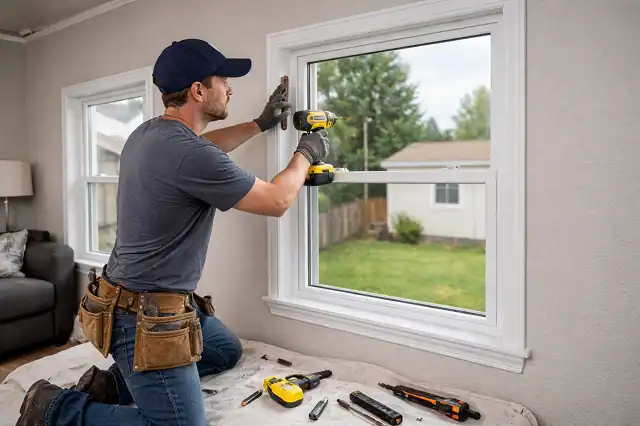
Manufactured homes are not simply smaller versions of site-built houses. Window dimensions, wall assemblies, framing, installation methods, skirting, anchoring, and energy systems can differ. A replacement project may therefore involve more than removing an old window and installing a standard residential unit.
The U.S. Department of Energy specifically maintains weatherization resources for manufactured housing, including single-wide and double-wide homes. Its guidance recognizes manufactured housing as a distinct housing type for energy audits and weatherization work.
Manufactured housing is also an important low-cost housing source. DOE has reported that about 17 million Americans live in mobile homes and that manufactured-home residents can face significant energy-cost burdens. That makes energy-focused assistance especially relevant when inefficient windows are part of a larger weatherization problem.
If your project involves more than windows, you can also review home improvement grants for mobile homes and trailers.
Who Is Most Likely to Qualify
There is no universal mobile-home window grant income limit. Each program uses its own eligibility rules. Some use federal poverty guidelines, while others use area median income, state income limits, county limits, or program-specific standards.
Income and household size
Income is one of the most common screening factors. The Department of Energy says households at or below 200% of the federal poverty guidelines, or households receiving Supplemental Security Income, are considered eligible under DOE WAP guidelines, although states may use other approved criteria.
| Eligibility factor | Why it matters |
| Household income | Determines whether the household falls within the program’s income standard |
| Household size | Income thresholds often change with family size |
| Homeownership | Many repair programs require the applicant to own the home |
| Primary residence | Some programs are limited to owner-occupied housing |
| Home location | USDA requires an eligible rural area; local programs have defined service areas |
| Window condition | The work may need to address energy loss, health, safety, moisture, or another eligible need |
| Available funding | Meeting the rules does not guarantee an award when local funding is limited |
For a wider explanation of income, ownership, and program screening, see who qualifies for free home repair grants.
Homeownership, lot ownership, and mobile-home parks
Owning the manufactured home does not always mean you own the land beneath it. Some residents own the home but rent a site in a mobile-home community. Others live on leased rural land or in resident-owned communities.
This distinction matters because different programs treat the home and land differently. USDA Section 504 has specific property requirements for mobile or manufactured homes. DOE weatherization rules can be different because WAP is an energy-efficiency program administered through state and local providers.
If you live in a park, ask the administering agency these questions before applying:
- Does the program accept manufactured homes in leased-lot communities?
- Must the applicant own the land?
- Is a permanent foundation required?
- Does the park owner need to approve the work?
- Will the program weatherize the home if the applicant does not own the site?
Rural location and property condition
USDA Section 504 is limited to eligible rural areas and has a separate set of income and property rules. Other programs, such as local CDBG-funded rehabilitation, can apply in urban, suburban, and rural communities depending on the local program.
For urgent problems, you can also review emergency home repair assistance when damaged windows are part of a broader safety or weather emergency.
The Federal Programs to Check First
Federal assistance is often the starting point, but the application may not go directly to the federal agency. USDA accepts Section 504 applications through Rural Development offices, WAP is administered through state and local providers, and CDBG funds are administered by eligible local governments and other grantees.
USDA Section 504 Home Repair Loans and Grants
The U.S. Department of Agriculture Single Family Housing Repair Loans & Grants program, commonly called Section 504, is one of the most relevant federal options for qualifying rural homeowners.
Current USDA program information lists loans of up to $40,000 and regular grants of up to $10,000. Loans have a 1% fixed interest rate and a 20-year repayment period. The grant component is generally for homeowners age 62 or older who meet the program’s other requirements and need assistance removing health and safety hazards.
| Section 504 feature | Current rule |
| Maximum loan | $40,000 |
| Regular maximum grant | $10,000 lifetime limit |
| Disaster-related grant | Up to $15,000 lifetime limit in qualifying presidentially declared disaster situations |
| Loan interest rate | 1% fixed |
| Loan term | 20 years |
| Grant age requirement | Generally 62 or older |
| Grant purpose | Removal of health and safety hazards |
| Location | Eligible rural area |
USDA’s official handbook states that Section 504 funds can repair mobile or manufactured homes when the applicant owns the home and site, occupied the home before applying, the repairs are needed to remove health or safety hazards, and the home is on a permanent foundation or will be placed on one with Section 504 funds.
Weatherization Assistance Program (WAP)
The U.S. Department of Energy Weatherization Assistance Program (WAP) is often more relevant when the window problem is primarily an energy-efficiency issue.
WAP does not normally hand a homeowner a cash check for windows. State and local weatherization providers assess the home and determine which approved measures are cost-effective and allowed under program rules.
DOE reports that WAP has helped more than 7.2 million families since the program began, provides weatherization services to approximately 32,000 homes each year using DOE funds, supports about 8,500 jobs, and produces average annual household energy savings of $372 or more according to a national evaluation.
| WAP fact | Official figure |
| Families helped since 1976 | More than 7.2 million |
| Homes weatherized each year with DOE funds | Approximately 32,000 |
| Jobs supported | Approximately 8,500 |
| Average annual household energy savings | $372 or more |
These are program-wide statistics, not a promise that every household will receive replacement windows. DOE’s manufactured-home guidance confirms that manufactured housing is included in WAP energy-audit and weatherization procedures.
HUD Community Development Block Grant (CDBG)
The U.S. Department of Housing and Urban Development Community Development Block Grant Program (CDBG) provides federal funding to eligible states, cities, counties, and other jurisdictions.
For homeowners, the key point is that HUD does not operate a single nationwide application for free windows. A local government or other eligible grantee decides which housing rehabilitation activities it will fund and which residents qualify.
HUD states that, over a selected one-, two-, or three-year period, at least 70% of CDBG funds generally must be used for activities benefiting low- and moderate-income persons. Local rules determine how homeowners can participate.
HUD HOME Investment Partnerships Program
The U.S. Department of Housing and Urban Development HOME Investment Partnerships Program (HOME) can support eligible affordable-housing activities through states and local jurisdictions. A community may use HOME-related funding for housing rehabilitation, but a homeowner should never assume that every HOME-funded program pays for windows.
Ask the local housing department whether its current owner-occupied rehabilitation program covers manufactured homes and whether window replacement is an eligible component.
What USDA Section 504 Means for Mobile and Manufactured Homes
Manufactured-home applicants should pay special attention to the property rules because Section 504 is not structured as a general mobile-home improvement program.
Permanent-foundation requirement
USDA’s handbook says mobile or manufactured-home repairs can be supported when the applicant owns the home and site, occupies the home, the repairs remove health or safety hazards, and the home is on a permanent foundation or will be placed on one using Section 504 funds.
This means the common statement “you only need to own the mobile home” is too broad for Section 504. Land ownership and foundation status can be decisive.
Health and safety purpose
The grant portion is intended to remove health and safety hazards. A window that is broken, allows water intrusion, creates a security problem, or contributes to a documented health or safety issue may fit more naturally into that purpose than a purely cosmetic upgrade.
The loan component is broader and can be used to repair, improve, or modernize eligible homes. If you need several repairs, ask USDA whether a loan, grant, or combination is appropriate.
How WAP Can Help With Manufactured-Home Windows
Why the energy assessment matters
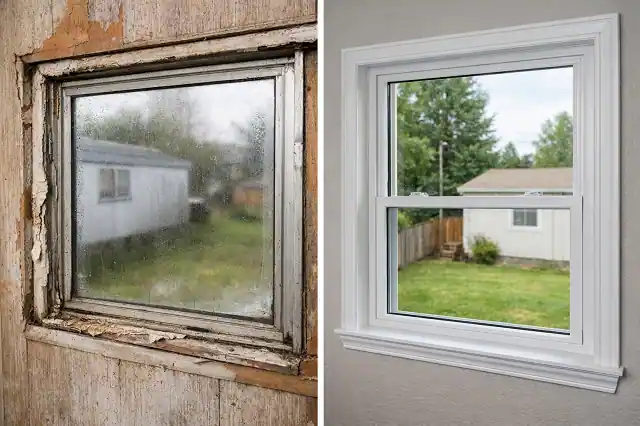
WAP uses energy audits and approved procedures to identify cost-effective improvements. The assessment may show that air sealing, insulation, duct work, moisture correction, or another measure produces greater savings than replacing every window.
DOE also maintains a Manufactured Home Energy Audit tool within the Weatherization Assistant system. This supports the program’s use of housing-specific evaluation rather than treating every home as identical.
If your windows are inefficient but still structurally sound, the provider may recommend another measure. If the windows are severely inefficient or damaged and replacement is justified under local rules, replacement may be considered.
Manufactured-home eligibility and approved measures
DOE guidance specifically recognizes single-wide and double-wide manufactured homes within weatherization procedures. However, each state and local provider controls application processing, prioritization, inspections, and the measures ultimately approved within the program’s rules.
Before hiring a contractor, ask the weatherization provider whether the exact window replacement you want is an approved measure. Do not sign a contract based only on a contractor’s claim that “WAP will pay for it.”
For energy-focused alternatives, see energy-efficient window replacement options that can reduce energy bills and assistance for single-pane window replacement.
State and Local Assistance Worth Checking
State and local programs can be especially important when USDA does not fit because of geography, ownership structure, income rules, or foundation requirements. The safest approach is to describe these programs as possible funding pathways rather than promise a specific window award.
California
California’s Department of Housing and Community Development says its CalHome program can support owner-occupied rehabilitation and manufactured-home rehabilitation through eligible local public agencies and nonprofit organizations. CalHome does not lend directly to individual homeowners, so the local administering organization matters.
For current program information, see the California Department of Housing and Community Development CalHome program (CalHome).
Texas
Texas homeowners can check local weatherization, housing rehabilitation, rural repair, and utility programs. Rural homeowners should also verify USDA eligibility. The state-specific Texas home repair grants assistance resource can help you identify related options.
Florida
Florida homeowners should check local housing rehabilitation, weatherization, disaster-repair, and utility programs. State and local funding can change by jurisdiction, so verify the current program administrator before assuming that manufactured-home windows are covered.
You can also review energy-efficient window assistance in Florida for additional context.
New York
New York homeowners can check local housing rehabilitation programs and energy-efficiency assistance. The administering agency should confirm whether a manufactured home is eligible and whether the proposed window product meets program requirements.
North Carolina
The North Carolina Housing Finance Agency funds local government and nonprofit partners that provide repair and rehabilitation assistance. Its current Essential Single-Family Rehabilitation program serves qualifying homeowners who are elderly or have disabilities and have incomes at or below 80% of area median income. Approved assistance can take the form of a deferred, interest-free, forgivable loan for necessary repairs.
See the North Carolina Housing Finance Agency rehabilitation program (ESFR) for current rules and local partners.
For additional state-specific research, see window replacement assistance in North Carolina.
How Much Assistance Can You Really Receive
There is no national standard amount for mobile-home window replacement. The amount depends on the funding source, the household, the property, the approved scope of work, and available local funds.
| Program type | Potential assistance | What determines the benefit |
| USDA Section 504 grant | Up to $10,000 regular lifetime grant limit | Age, income, rural location, health/safety need, property rules, funding |
| USDA Section 504 loan | Up to $40,000 | Eligibility, repayment ability, approved repair scope |
| WAP | Grant-funded weatherization services | Energy assessment, cost effectiveness, local rules, available funding |
| CDBG-funded local rehabilitation | Varies by community | Local program design, income, property condition, funding |
| State or local rehabilitation | Varies | Program rules, income, location, property type, approved work |
| Utility incentive | Varies by utility | Customer status, product specifications, contractor and installation rules |
If you need to understand the broader cost-and-funding landscape, see home window replacement assistance.
What Documents to Prepare
Preparing documentation before you contact an agency can reduce delays. The exact list varies, but manufactured-home applicants should be ready to prove both household eligibility and the home’s ownership or occupancy status.
- Government-issued photo ID
- Recent income records for household members
- Benefit statements, when applicable
- Proof that the home is your primary residence
- Manufactured-home title, deed, or other ownership record
- Land ownership or site agreement, if relevant to the program
- Recent utility bills
- Photos showing window damage, drafts, water intrusion, or other problems
- Window or contractor estimate if the program requests one
- Information about the home’s foundation and installation
- Insurance or disaster documentation when the project is disaster-related
Do not send sensitive documents to a contractor or private website merely because an advertisement says “government grant.” First identify the actual program administrator.
How to Apply Without Wasting Time
Start with the program that best matches your situation
Use the following order instead of submitting random applications:
- Check whether your manufactured home is in a USDA-eligible rural area.
- If you are very-low-income and the repair is health or safety related, ask USDA about Section 504.
- If energy loss is the main problem, contact your state or local WAP provider.
- Contact your city or county housing department about owner-occupied rehabilitation funded through CDBG, HOME, or local sources.
- Check your state housing and energy agencies.
- Check your electric or gas utility for current rebates or low-income efficiency programs.
- Ask whether multiple sources can legally be combined before accepting or spending funds.
For more application tips, see how to apply for home repair grants without getting rejected.
Document the actual window problem
Instead of writing only “I need new windows,” explain the problem. For example: a window has broken glass, cannot close, allows water inside, has severe air leakage, has a deteriorated frame, or contributes to a documented energy-efficiency problem.
Do not start work too early
When a Window Project May Not Qualify
A homeowner can meet an income guideline and still be denied. Common reasons include:
| Possible problem | Why it can matter |
| Home is outside the program’s service area | Federal, state, county, and utility programs have geographic limits |
| USDA rural requirement is not met | Section 504 is a rural housing program |
| Home does not meet a program’s manufactured-home requirements | Foundation, ownership, title, or other property rules may apply |
| Window replacement is cosmetic | Some grants focus on health, safety, energy efficiency, or urgent repairs |
| Project began before approval | Pre-approval may be required |
| Funding is exhausted | Eligibility does not guarantee an award |
| Requested product is not approved | Programs may specify efficiency, installation, or contractor requirements |
If the issue is rotten or deteriorated framing around the window, review window frame rot repair assistance instead of treating the project as a simple glass replacement.
How to Combine Grants, Weatherization, Rebates, and Other Help
Funding can sometimes be combined, but there is no universal right to “stack” programs. Each funding source can have rules about duplicate benefits, eligible costs, contractor payments, and the order in which assistance is used.
A safer strategy is to ask each administering agency:
- Can this assistance be combined with a utility rebate?
- Can another program pay for a different part of the same project?
- Does receiving one award reduce the amount of another award?
- Is written approval required before using another funding source?
- Can the same invoice be submitted to more than one program?
Do not assume that a tax credit is available simply because an older article mentions it. For 2026 projects, the IRS states that the Section 25C Energy Efficient Home Improvement Credit does not apply to property placed in service after December 31, 2025.
For comparison shopping between grants and rebates, see energy-efficient window grants and programs.
How to Avoid Window Grant Scams
“Free government windows” is an attractive phrase for scammers because legitimate programs can be difficult to navigate. A real program should identify the administering agency, service area, eligibility rules, application process, and funding source.
- You are asked to pay an application fee before the program is identified.
- A salesperson promises a guaranteed government grant.
- You are told to provide your Social Security number immediately through an unknown website.
- The company refuses to identify the government agency funding the work.
- You are pressured to sign a window contract before an inspection.
- The advertisement promises a fixed amount to every homeowner.
- The contractor says you must use a particular lender or pay cash immediately.
Verify the program through the official agency, not only through the contractor selling the windows.
For additional legitimate funding sources, see nonprofit window replacement assistance.
Frequently Asked Questions
Can I get free windows for my mobile home?
Possibly, but there is no universal federal “free windows” benefit. A qualifying household may receive weatherization services, a home-repair grant, a local rehabilitation award, or another form of assistance that can reduce or eliminate an approved window-replacement cost. Eligibility and the approved work depend on the program.
Can I get help if my mobile home is in a park?
Possibly. WAP and some local programs may serve households in manufactured-home communities, but the rules are program-specific. USDA Section 504 has stricter property requirements, including ownership of the home and site and a permanent-foundation requirement for mobile or manufactured-home repairs.
Do I have to own the land?
Not for every program, but you should not assume that land ownership is irrelevant. USDA Section 504 specifically has a home-and-site ownership requirement for mobile or manufactured-home repairs. Other programs can have different rules.
Can USDA Section 504 pay for windows?
A window project may be considered when it fits an eligible repair purpose, particularly removal of a health or safety hazard, and the manufactured-home property meets USDA requirements. The program does not guarantee a $10,000 window grant.
Can WAP replace my windows?
Potentially. WAP evaluates the home and determines which weatherization measures are cost-effective and allowed under program rules. Window replacement is not guaranteed simply because a household qualifies for weatherization.
What if my income is above the limit?
Check other state, local, utility, disaster, or nonprofit programs. Different programs use different income standards. Some may also offer loans or rebates instead of grants.
How much money can I receive?
There is no standard national award. USDA Section 504 currently lists up to $10,000 for the regular grant component and up to $40,000 for loans, while WAP and local programs use different funding structures. Your actual benefit depends on eligibility, approved work, and available funds.
Why This Information Is Trusted
Last Updated: August 2026
Reviewed By: Home Property Grants Research Team
Final Takeaway
Mobile and manufactured-home owners can find meaningful help with window replacement, but the strongest strategy is to match the repair to the program instead of searching for a single national “free window grant.” Rural homeowners should investigate USDA Section 504. Households with energy-efficiency problems should contact their state or local WAP provider. Homeowners outside those pathways should check local CDBG- or HOME-funded rehabilitation programs, state housing agencies, utilities, and reputable nonprofits.
The most important eligibility issues are income, ownership, location, foundation status, the reason for the repair, and whether the program approves the exact work before it begins. Manufactured-home residents should also clarify whether they own the land, rent a lot, live in a resident-owned community, or have another site arrangement.
Finally, do not rely on outdated claims about a 30% federal window tax credit for 2026. That credit ended for property placed in service after December 31, 2025. Use current government sources to verify every funding claim before spending money.
If you need broader options beyond windows, explore home repair grants for low-income families and state home repair assistance.

Arthur Pendelton is a senior housing policy researcher and public welfare analyst with over eight years of experience tracking federal, state, and non-profit residential repair programs. He specializes in statutory grant frameworks, including USDA Section 504 Rural Housing, the Department of Energy’s Weatherization Assistance Program (WAP), and municipal HUD Community Development Block Grants (CDBG). Arthur systematically audits Federal Register publications and Title 7/42 CFR regulatory updates to provide low-income homeowners, seniors, and military veterans with accurate, barrier-free application guidance.