
Who qualifies for free home repair grants in 2026? Eligibility depends on the specific program, but common requirements include household income, homeownership, primary residence status, property location, property condition, the type of repair needed, age, disability, veteran status, rural eligibility, and other program rules. Meeting one requirement does not automatically guarantee funding.
Home repair assistance can help eligible homeowners address serious health and safety problems, structural concerns, accessibility needs, energy-efficiency improvements, disaster damage, and other approved repairs. Funding may come from federal agencies, state and local governments, housing authorities, tribal programs, utilities, or nonprofit organizations.
This guide focuses specifically on who qualifies for home repair assistance in 2026 and how eligibility is determined. It explains income requirements, ownership and occupancy rules, property eligibility, location requirements, special circumstances, documents, program-specific rules, and practical steps you can take before applying.
Quick answer: You may qualify for home repair assistance if you own and occupy an eligible home, meet the program’s income requirements, live in an eligible location, and need a repair that the program is designed to fund. Some programs also prioritize seniors, disabled homeowners, veterans, rural households, disaster survivors, or other eligible groups.
Important: There is no single nationwide income limit or qualification rule for every home repair grant. Eligibility, funding, application procedures, and repair limits can vary by program and location. Always verify the current rules with the organization administering the assistance.
What Are Home Repair Grants?
Home repair grants are forms of financial assistance that can help eligible homeowners pay for approved repairs or improvements. Depending on the program, assistance may be provided as a grant, forgivable loan, deferred loan, low-interest loan, direct repair service, or another form of housing assistance.
A true grant generally does not require repayment when the homeowner follows all program conditions. However, homeowners should not assume that every program advertised as a grant is completely unrestricted or permanently free. Some assistance can include occupancy requirements, resale restrictions, or repayment provisions if specific conditions are not met.
For example, the Single Family Housing Repair Loans and Grants program administered by the U.S. Department of Agriculture Rural Development (USDA) provides loans to eligible very-low-income rural homeowners and grants to qualifying elderly homeowners for removing health and safety hazards. USDA currently lists a maximum Section 504 loan of $40,000, a maximum grant of $10,000, and a maximum grant of $15,000 when repairing a home damaged in a presidentially declared disaster area.
For the broader range of federal, state, local, and nonprofit assistance, see our complete Home Repair Grants 2026. This article has a narrower purpose: helping you determine whether you may qualify.

How Home Repair Grant Eligibility Works
Home repair eligibility is usually determined by matching the homeowner and property to the rules of a specific program. The agency may examine household income, ownership, occupancy, location, property condition, repair type, household circumstances, and available funding.
For example, the U.S. Department of Housing and Urban Development’s Community Development Block Grant program (CDBG) provides funding to eligible state and local governments. CDBG can support eligible residential rehabilitation, but local governments establish their own programs and priorities within federal requirements.
This means a homeowner should not search only for the phrase “free government home repair grant.” A better approach is to identify the repair, location, household situation, property type, and likely funding source, then check the eligibility requirements for that specific program.
Eligibility warning: Being low-income, being a senior, receiving SSI, being a veteran, or living in a rural area can be relevant to eligibility, but none of these factors automatically guarantees a home repair grant. You must still meet the complete requirements of the program.
Basic Eligibility Requirements for Home Repair Grants
Most home repair assistance programs evaluate several core factors before approving an application. The exact rules differ, but the following requirements are among the most common.
| Eligibility factor | What the program may check | Why it matters |
| Homeownership | Deed, title, property records, mortgage records, or another accepted ownership document | Many programs are designed specifically for homeowners |
| Primary residence | Whether you normally live in the property | Owner-occupied programs may exclude vacation or investment properties |
| Household income | Income of household members under the program’s rules | Many programs prioritize low- or very-low-income households |
| Property location | State, county, city, rural area, tribal area, disaster area, or service territory | Some programs operate only in specific geographic areas |
| Property condition | Health, safety, structural, accessibility, energy, or habitability problems | Programs generally fund approved needs rather than any desired improvement |
| Repair type | Roof, plumbing, electrical, heating, accessibility, weatherization, disaster repair, or other approved work | The repair must match the program’s funding purpose |
| Available funding | Whether money is currently available | Meeting eligibility rules does not guarantee an award |
Homeownership Requirements
Many home repair programs require the applicant to own the property that needs assistance. The agency may ask for a deed, property tax record, mortgage document, title document, or another form of ownership verification.
Ownership can become more complicated when a home has been inherited, is jointly owned, is held in a trust, or involves a manufactured-home arrangement. These situations do not automatically mean that you are ineligible, but the program may require additional documentation.
If you have an unusual ownership situation, contact the administering agency before submitting an application. Ask exactly what document it accepts as proof of ownership and whether every owner must sign the application.
Primary Residence Requirements
Many owner-occupied home repair programs require the property to be your primary residence. In simple terms, this generally means it is the home where you normally live rather than a vacation home, second home, rental property, or investment property.
The exact definition can vary. Some programs may have special rules for temporary relocation, inherited properties, or disaster situations. Do not assume that a property qualifies simply because you own it.
Property Location Requirements
Where your home is located can directly affect eligibility. Some programs operate nationwide, while others are limited to a state, county, city, tribal area, rural community, disaster area, or utility service territory.
USDA Section 504, for example, requires an eligible rural location in addition to its income, ownership, occupancy, and other requirements. USDA provides an address-based eligibility system that can help applicants determine whether a property falls within an eligible rural area.
If you live in a rural area, see our Federal and State Home Repair Grants for Rural Homeowners for additional information.
Property Condition Requirements
Many programs focus on repairs that address health, safety, structural, accessibility, energy-efficiency, or habitability problems. Examples can include serious roof damage, unsafe electrical conditions, plumbing failures, heating problems, structural deterioration, accessibility barriers, and certain weatherization needs.
A repair does not automatically qualify simply because it is expensive or necessary. The requested work normally has to fit the purpose and rules of the program.
Income Limits for Home Repair Grants in 2026
Household income is one of the most important eligibility factors used by many home repair assistance programs. However, there is no single income number that makes a homeowner eligible for every program.
Income rules can depend on household size, geographic area, annual income, adjusted income, the type of program, and the funding source. Some programs use federal poverty guidelines, while housing programs may use Area Median Income or another income definition.
For homeowners who need a deeper explanation of income-focused assistance, see our Home Repair Grants for Low-Income Families.
Best practice: Never copy an income limit from an old article and assume it still applies. Check the current income rules published by the agency or local organization administering the program.
How Low-Income Eligibility Is Determined
Housing programs may classify households according to income categories such as extremely low income, very low income, or low income. These terms do not always mean exactly the same thing across every program.
Household size also matters. A household with one person may have a different applicable income limit than a household with four people living in the same county. Location can also change the income threshold.
This is why simply saying “you must earn less than $50,000” is usually not accurate enough for a nationwide eligibility article.
Area Median Income and Home Repair Assistance
Area Median Income, commonly called AMI, is a measure used by many housing programs to compare household income with income levels in a particular geographic area.
Different programs can use different percentages of AMI and different methods for calculating household income. A homeowner therefore should not assume that one AMI threshold applies to every home repair program.
When a local housing program uses AMI, check the current income limit for your county or metropolitan area and household size before deciding whether you qualify.
How Income Is Verified
Programs may ask for tax records, pay statements, pension information, Social Security records, benefit statements, bank or asset information, or other financial documents.
The program may also have its own rules about which household members must be included and which types of income count. Provide complete and accurate information because missing or inconsistent documents can delay an application.
Who May Receive Priority for Home Repair Assistance?
Some programs prioritize households that have limited financial resources, serious housing problems, or circumstances that make it difficult to complete necessary repairs without assistance. Priority does not always mean automatic approval.
| Homeowner group | Why the group may receive attention | Important eligibility point |
| Low-income homeowners | Limited ability to pay for essential repairs | Income rules still vary by program |
| Senior homeowners | Fixed or limited income and health or safety concerns | Some programs have specific age requirements |
| Disabled homeowners | Accessibility and safety needs | Proof of disability or a qualifying condition may be required |
| Veterans | Special housing adaptation and veteran-focused programs | Specific VA benefits may require qualifying service-connected disabilities |
| SSI recipients | May demonstrate limited income or financial need | SSI alone does not guarantee repair assistance |
| Rural homeowners | Some federal rural housing programs are location-specific | The actual property must meet applicable rural rules |
| Disaster survivors | Emergency repair and recovery needs | Federal disaster assistance requires specific disaster-related eligibility |
Low-Income Homeowners
Low-income homeowners are commonly prioritized by housing rehabilitation and repair programs because they may have limited resources available for major repairs. Income-based programs can help with serious roof, plumbing, electrical, heating, accessibility, and other approved repair needs.
For homeowners who need a broader overview of programs specifically aimed at limited-income households, see our Home Repair Grants for Low-Income Families.
Senior Homeowners
Some programs specifically assist older homeowners, particularly when they have limited income and serious health or safety repair needs.
USDA Section 504 is an important example. The grant component is designed for eligible very-low-income homeowners age 62 or older who need assistance removing health and safety hazards and meet the other program requirements.
USDA example: USDA currently lists a maximum Section 504 grant of $10,000. A maximum of $15,000 can apply when repairing a home damaged in a presidentially declared disaster area. USDA also states that grants can have repayment conditions if the property is sold within three years.
For a broader discussion of senior-focused assistance, see our Home Repair Grants for Seniors.
Veterans
Veterans may qualify for general home repair programs as well as specialized housing assistance through the Department of Veterans Affairs. Eligibility depends on the particular benefit and the veteran’s circumstances.
The U.S. Department of Veterans Affairs (VA) provides housing adaptation benefits for eligible veterans and service members with certain service-connected disabilities. For fiscal year 2026, VA lists a maximum Specially Adapted Housing grant of $126,526. These benefits are designed for qualifying housing modifications rather than general repair grants for every veteran.
For a broader explanation of veteran-focused assistance, see our Home Repair Grants for Veterans guide.
Disabled Homeowners
Disabled homeowners may qualify for assistance that supports accessibility, mobility, safety, or essential home repairs. Depending on the program, accessibility work may include ramps, accessible bathrooms, wider doorways, mobility modifications, or other improvements that help a person safely use the home.
Disability status does not automatically qualify a homeowner for every repair program. Some programs require proof of a qualifying disability, while others focus on income, property condition, accessibility needs, or a combination of these factors.
Homeowners researching disability-focused assistance can also review our Home Improvement Grants for Disabled People 2026.
Homeowners who specifically need accessibility improvements in a bathroom can also review our Free Bathroom Accessibility Grants for Disabled Homeowners.
SSI Recipients
Receiving Supplemental Security Income can be relevant to income-based assistance, but SSI status alone does not guarantee eligibility for a home repair grant.
The Social Security Administration (SSA) lists the 2026 federal SSI payment standard at $994 per month for an eligible individual and $1,491 per month for an eligible couple. These are federal SSI payment standards, not universal home repair income limits.
Actual SSI payments can differ based on individual circumstances, and each home repair program determines how SSI and other household income are counted.
For homeowners receiving SSI, our Home Repair Grants for SSI Recipients provides additional information.
Rural Homeowners
Rural homeowners may qualify for programs that are not available in the same form in urban areas. USDA programs can include specific rural-location, income, ownership, occupancy, and repair requirements.
The actual property location matters. A homeowner should not assume that every home in a community described as rural will automatically qualify.
Special Circumstances That Can Affect Eligibility
Some homeowners have circumstances that require additional documentation or program-specific rules. These may include inherited properties, jointly owned homes, manufactured homes, disability-related modifications, veteran status, rural properties, or disaster damage.
If your situation is unusual, explain it to the administering agency before applying. It is better to confirm eligibility requirements before submitting an application than to discover later that the property or documentation does not meet the program rules.
Emergency and Disaster Repairs
Homeowners facing urgent health or safety problems should investigate emergency assistance quickly. Emergency programs can have different eligibility standards from regular housing rehabilitation programs.
Our Emergency Home Repair Grants explains options for homeowners dealing with urgent roof, plumbing, heating, electrical, safety, or disaster-related problems.
When storm damage leaves a roof exposed, homeowners can also review our Emergency Roof Tarp Grants After Storm Damage for information about temporary roof-protection assistance.
Disaster warning: Federal Emergency Management Agency (FEMA) assistance is tied to eligible disaster situations and specific federal requirements. FEMA’s Individual Assistance program can help eligible disaster survivors with certain necessary expenses and home repair needs when the applicable requirements are met.
Nonprofit Assistance
Nonprofit organizations can provide another source of repair assistance. Their eligibility rules can be different from government programs and may depend on household income, location, property condition, age, disability, veteran status, volunteer capacity, or local funding.
Homeowners who have difficulty qualifying for government programs can review our Nonprofit Home Repair Grants 2026 for additional options.
Manufactured and Mobile Homes
Some assistance programs allow manufactured or mobile homes, but additional requirements may apply. These can involve ownership of the home, land ownership or control, permanent installation, occupancy, property condition, and the type of repair requested.
For homeowners whose main repair need involves a manufactured-home window project, our Mobile Home Window Replacement Grants provides more specific information.
What Types of Repairs May Qualify?
Repair eligibility depends on the purpose of the funding. Many programs focus on work that addresses health, safety, structural, accessibility, energy-efficiency, weatherization, or disaster-recovery needs.
| Repair need | Why it may qualify | What to verify |
| Roof repair | May address water intrusion, structural damage, or safety hazards | Whether roofing work is an approved use of the specific program |
| Electrical repairs | May correct fire or electrical safety hazards | Whether the program covers electrical rehabilitation |
| Plumbing repairs | May address sanitation, leaks, or unsafe water systems | Whether the requested plumbing work is eligible |
| Heating repairs | May address health and safety or energy-efficiency problems | Whether replacement or repair is allowed |
| Accessibility modifications | May improve safe movement and independent living | Whether disability-related documentation is required |
| Weatherization | May improve energy efficiency and health and safety | Whether WAP or another energy program applies |
| Disaster repairs | May restore safety or functionality after an eligible disaster | Whether the property and damage meet disaster-assistance rules |
A homeowner’s need for a repair does not automatically mean that the repair will qualify. The work normally must match the purpose of the funding.
Homeowners specifically researching roof assistance can see our Roof Repair and Roof Replacement Grants.
For water damage affecting interior walls and ceilings, our Water-Damaged Walls and Ceilings Repair Grants covers that more specialized repair situation.
For low-income homeowners dealing with a failed or unsafe heating system, our Furnace Repair Grants for Low-Income Homeowners covers a more specific repair situation.
Weatherization Assistance Is Different From a General Repair Grant
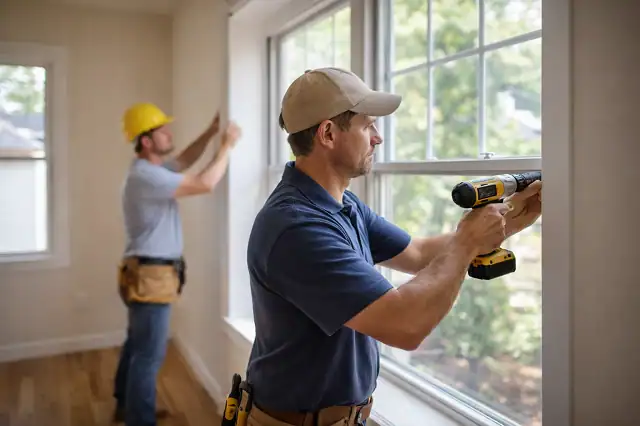
The U.S. Department of Energy Weatherization Assistance Program (WAP) is designed to reduce energy costs for low-income households by improving energy efficiency while addressing health and safety concerns. DOE reports that WAP provides weatherization services to approximately 32,000 homes each year using DOE funds and has helped more than 7.2 million families since 1976.
DOE also reports average annual household energy savings of $372 or more from weatherization improvements. WAP is focused on approved weatherization work rather than providing homeowners with unrestricted cash for any home improvement.
For homeowners researching energy-related assistance, our Attic Insulation Installation Grants explains one type of improvement that may be connected to weatherization assistance.
Good to know: WAP can serve qualifying owner-occupied and renter-occupied housing when household, building, and program requirements are satisfied. It is therefore different from many homeowner-only repair programs.
Federal Programs and What Their Eligibility Looks Like
Federal programs demonstrate why there is no single definition of a “qualified homeowner.” Different agencies serve different purposes and use different eligibility rules.
| Program | Main eligibility focus | Important point |
| USDA Section 504 Home Repair | Very-low-income rural homeowners | Grant eligibility generally includes age 62 or older plus other requirements |
| HUD CDBG | Local housing and community development needs | Administered through eligible state and local governments |
| HUD HOME | Affordable housing activities through participating jurisdictions | Local implementation determines available homeowner assistance |
| DOE Weatherization Assistance Program | Eligible low-income households and qualifying dwellings | Focuses on energy efficiency and health and safety |
| VA housing adaptation programs | Veterans and service members with qualifying disabilities | Designed for qualifying accessibility and housing modifications |
| FEMA Individual Assistance | Eligible disaster survivors | Requires a qualifying disaster and other eligibility conditions |
USDA Section 504 Home Repair Program
USDA Section 504 is one of the clearest examples of a program where multiple eligibility factors must be satisfied at the same time.
USDA states that applicants must meet applicable ownership, occupancy, income, rural-location, and other program requirements. The grant portion is intended for eligible homeowners age 62 or older who cannot afford the required repairs and cannot obtain affordable credit for the work.
USDA currently lists a maximum grant of $10,000. A maximum grant of $15,000 can apply when repairing a home damaged in a presidentially declared disaster area. Loans and combined loan-and-grant assistance have separate limits and conditions.
Homeowners who want to understand the wider range of federal renovation assistance can also see our Government Grants for Home Renovations.
HUD Community Development Block Grant Program
The Community Development Block Grant program (CDBG) provides funding to eligible state and local governments for community development activities, including eligible housing rehabilitation. Local governments establish priorities and programs within applicable federal requirements.
One important distinction is that CDBG is not normally a single nationwide homeowner grant that an individual applies for directly through HUD. Local governments and other eligible recipients determine how eligible funds are used and establish local program requirements.
HOME Investment Partnerships Program
The HOME Investment Partnerships Program (HOME) provides formula grants to states and local participating jurisdictions. HUD states that HOME funds can support affordable housing activities, including rehabilitation of affordable housing and owner-occupied rehabilitation through local programs.
Because HOME is implemented locally, homeowners should contact the participating jurisdiction or local housing organization to determine whether HOME-funded repair assistance is available and what requirements apply.
VA Housing Adaptation Benefits
The U.S. Department of Veterans Affairs (VA) provides specialized housing adaptation benefits for eligible veterans and service members with certain service-connected disabilities. These benefits are designed to help qualifying applicants buy, build, or modify a home to meet disability-related needs.
These benefits are not general grants for every veteran who needs a roof, plumbing repair, or routine home improvement. The qualifying disability and purpose of the requested modification matter.
For a more specialized explanation of assistance for veterans with disabilities, see our Home Repair Grants for Disabled Veterans.
FEMA Home Repair Assistance
The Federal Emergency Management Agency’s Individual Assistance program (FEMA) can provide eligible disaster survivors with assistance after qualifying federally declared disasters.
FEMA states that Housing Assistance can include help repairing or replacing an owner-occupied home after disaster damage when the applicable requirements are met. Eligibility can involve identity, disaster location, ownership, occupancy, insurance, the cause of the damage, and other conditions.
Do I Qualify for a Home Repair Grant?
You may be a stronger candidate for home repair assistance when several important factors line up. You may own and occupy the home, meet the program’s income requirements, live in the eligible geographic area, need an approved repair, and have documentation that proves your circumstances.
Your circumstances may also receive priority when you are a senior, disabled homeowner, eligible veteran, rural homeowner, low-income household, or disaster survivor and the program specifically serves or prioritizes that group.
However, the final decision belongs to the organization administering the program. A general eligibility checklist can help you identify potential programs, but it cannot replace an official eligibility determination.
Quick eligibility checklist
- ☐ I own the property or have an ownership interest accepted by the program.
- ☐ I live in the property as my primary residence if owner occupancy is required.
- ☐ My household income fits the program’s current income rules.
- ☐ My property is located inside the program’s eligible service area.
- ☐ My property type is accepted by the program.
- ☐ The repair I need is an approved use of the funding.
- ☐ I can provide proof of ownership and income.
- ☐ I can document the repair need if required.
- ☐ The program is currently accepting applications.
- ☐ Funding is currently available or the program has an active waiting list.
How to Check Your Eligibility Before Applying
The safest way to check eligibility is to work through the requirements in a specific order. Start with your household and property, then match those facts to the program.
First, confirm that you meet the ownership and occupancy rules. Next, check household income, property location, property type, and the type of repair that the program allows.
If you are researching a specific repair, use the relevant guide only after confirming the broader eligibility requirements. For example, homeowners dealing with damaged windows can review our Window Replacement Grants for Low-Income Homeowners, while homeowners dealing with rotted frames can see our Window Frame Rot Repair Grants.
After that, confirm that the program is currently accepting applications and that funding is available. A program can have published eligibility requirements but still have limited or temporarily unavailable funding in a particular location.
Finally, gather documents that prove the information you provided. These may include proof of ownership, income records, identification, benefit statements, property information, repair estimates, photographs, or inspection records.
Check Your Homeownership Status
Verify that you own the property or have the type of ownership interest accepted by the program. If the home is inherited, jointly owned, held in a trust, or connected to a manufactured-home arrangement, ask the agency what additional documentation is required.
Check Your Household Income
Use the current income definition and household-size rules published by the administering agency. Do not rely on an income figure copied from an old article because program limits can change.
Check Your Property Address
Confirm that the actual property address falls within the program’s service area. This is especially important for rural USDA programs and locally funded repair programs.
Check the Repair
Describe the repair precisely. Instead of saying “I need home improvements,” identify the actual problem, such as a leaking roof, unsafe electrical wiring, failed heating system, accessibility barrier, water-damaged wall, or broken window.
Check Funding Availability
Eligibility and funding are two different things. You can satisfy the published requirements and still face a waiting list, local funding shortage, application period, or temporary program closure.
Documents You May Need
Application documents vary by program, but homeowners may be asked for identification, proof of ownership, income records, property information, benefit statements, repair estimates, photographs, inspection reports, insurance information, or other documents.
| Document | Why it may be needed |
| Government-issued identification | To verify the applicant’s identity |
| Deed or ownership record | To establish ownership or an accepted ownership interest |
| Income documentation | To determine household income eligibility |
| Benefit statements | To document Social Security, SSI, pension, disability, or other benefits |
| Property information | To verify address, property type, and occupancy |
| Repair estimates | To document the scope and expected cost of requested work |
| Photographs | To show visible damage or repair conditions when required |
| Inspection report | To document health, safety, structural, or other property problems |
| Insurance information | To determine whether another source should cover disaster-related damage |
Do not assume that every program requires every document listed above. The administering agency’s current application instructions should be treated as the final authority.
Document warning: Make sure your income, ownership, occupancy, property address, and repair information are consistent throughout the application. Conflicting information can create delays or additional verification requests.
Common Eligibility Mistakes to Avoid
Many homeowners make mistakes because they assume that all home repair grants follow the same rules. They do not.
| Mistake | Why it can cause problems | Better approach |
| Assuming low income guarantees a grant | Other requirements may apply | Check income, property, location, repair, and occupancy rules together |
| Using an old income limit | Income limits can change | Use current agency information |
| Assuming every grant is completely free | Some assistance has repayment or occupancy conditions | Read the full program terms |
| Applying for an unapproved repair | The requested work may fall outside the funding purpose | Confirm eligible repairs before applying |
| Ignoring local rules | Federal funding may be administered locally | Contact the local administering agency |
| Submitting incomplete documents | Missing information can delay processing | Use the agency’s application checklist |
| Assuming funding is guaranteed | Programs can have limited funding or waiting lists | Confirm current funding availability |
| Assuming senior, veteran, or disability status is enough | Special programs have additional rules | Check the complete eligibility requirements |
Another common mistake is applying to a program simply because the homeowner belongs to a group that the program serves. Being a senior, veteran, disabled homeowner, SSI recipient, or low-income homeowner may be relevant, but applicants still need to satisfy the complete eligibility requirements of the specific program.
How to Avoid Eligibility Problems Before Applying
The best way to avoid eligibility problems is to choose programs that closely match your household circumstances, property, location, and repair need. Do not apply simply because a website says that a program provides home repair assistance. First, confirm that the program serves your location and situation.
Prepare complete and accurate documentation, describe the repair problem clearly, and make sure the information about household income, property ownership, occupancy, and requested repairs is consistent.
If the repair involves water damage, roof failure, or another urgent problem, investigate specialized assistance before the condition becomes worse. The Water-Damaged Walls and Ceilings Repair Grants guide provides information about one specialized repair situation.
For homeowners who are considering broader improvements rather than one essential repair, our Home Improvement Grants for Homeowners provides a wider overview.
How State and Local Rules Can Affect Eligibility
State and local home repair programs can use eligibility rules that differ from federal programs. A homeowner may qualify for assistance in one county or city but not qualify for a similar program in another location.
Local programs may consider household income, property value, location, ownership, occupancy, age, disability, veteran status, property condition, repair type, or local residency.
Start with our State Home Repair Grants 2026 to find potential state and local assistance. Once you identify a program, check the actual agency administering the funding.
Location rule to remember: Living in a particular state does not automatically make you eligible for every home repair program in that state. Eligibility is usually determined at the program level and may depend on the county, city, household income, property, repair, and available funding.
Additional Repair Situations That May Affect Eligibility
The type of repair can influence which programs are worth investigating. Homeowners should avoid applying to a general program when a more specialized housing-repair program may be a better match.
Roof Repairs
Roof problems can create water intrusion, structural deterioration, and safety hazards. Programs that fund essential housing rehabilitation may allow roof work when the repair meets their rules.
For detailed roofing eligibility and assistance options, see our Roof Repair and Roof Replacement Grants guide.
Exterior Home Repairs
Exterior problems such as damaged siding, unsafe porches, deteriorated walls, and accessibility barriers can sometimes qualify when they affect safety, habitability, or structural integrity.
Our Exterior Home Improvement Grants 2026 covers these more specific repair needs.
Window and Energy Improvements
Window replacement may qualify under certain energy-efficiency, weatherization, housing rehabilitation, or nonprofit programs. Eligibility can depend on income, property condition, location, and whether the work meets the program’s energy or housing objectives.
Homeowners can review our Free Window Replacement Grants when window replacement is the main repair need.
For homes with damaged wooden window frames, our Window Frame Rot Repair Grants focuses on that specific problem.
Door Replacement
Door replacement may be relevant when an entry door creates a serious safety, accessibility, weatherization, or energy-efficiency problem. Some programs may treat door work as part of a larger weatherization or rehabilitation project rather than as a standalone grant.
Homeowners researching this type of assistance can review our Front Door Replacement Grants.
How to Find the Right Program Before You Apply
Finding the right program is more important than applying to as many programs as possible. Start with your strongest eligibility factor, then narrow the search by property location, repair type, household income, property condition, and program purpose.
| Your situation | Best starting point |
| Very-low-income homeowner | Income-based housing rehabilitation and USDA programs where applicable |
| Homeowner age 62 or older | Senior-focused programs and USDA Section 504 where applicable |
| Veteran with qualifying disability | VA housing adaptation programs and veteran-focused assistance |
| Disabled homeowner | Accessibility, housing rehabilitation, and disability-focused programs |
| Rural homeowner | USDA Rural Development and local rural housing programs |
| Urgent safety problem | Emergency repair, local housing, nonprofit, and disaster assistance where applicable |
| Specific repair such as roof or windows | Programs that specifically allow the requested repair |
If you are unsure where to begin, our Home Repair Program Finder can be used as a starting point for identifying possible assistance.
If you are ready to submit an application, our guide to applying for home repair grants explains how to prepare documentation and avoid common application problems.
Frequently Asked Questions
Who qualifies for free home repair grants in 2026?
Homeowners may qualify when they meet the specific program’s requirements for household income, homeownership, primary residence status, property location, property condition, repair type, and other factors. Some programs also prioritize seniors, veterans, disabled homeowners, rural households, or disaster survivors.
What income qualifies you for home repair assistance?
There is no single income limit for every home repair program. Income limits can depend on household size, location, funding source, and program rules. Always check the current income requirements published by the agency administering the program.
Do home repair grants need to be repaid?
Some grants do not require repayment when the homeowner follows all program conditions. However, some programs can include repayment requirements, resale restrictions, occupancy requirements, or other conditions. USDA Section 504, for example, states that grants must be repaid if the property is sold within three years, subject to the program’s rules.
Can seniors receive home repair grants?
Yes. Some programs specifically assist eligible senior homeowners. USDA Section 504 is one example because its grant component is available to eligible very-low-income homeowners age 62 or older who meet the program’s other requirements.
Can disabled homeowners qualify for repair assistance?
Yes. Some programs provide assistance for accessibility improvements and essential repairs for eligible homeowners with disabilities. The exact requirements depend on the program and may include proof of disability, income, ownership, occupancy, location, and the type of modification.
Can SSI recipients qualify for home repair assistance?
SSI can be relevant to income-based eligibility, but receiving SSI does not automatically qualify a homeowner for a repair grant. Other requirements such as ownership, occupancy, property eligibility, location, and the approved repair may still apply.
Do mobile homes qualify for home repair grants?
Some programs allow manufactured or mobile homes, but additional requirements may apply. These can involve ownership of the home, land ownership or control, permanent installation, occupancy, property condition, and the type of repair requested.
Why This Eligibility Guide Is Trustworthy
Last Updated: August 2026
Reviewed By: Housing Assistance Research Team
This guide focuses on explaining eligibility rather than promising that a homeowner will receive funding.
Program information is checked against official sources including the U.S. Department of Agriculture Rural Development, U.S. Department of Housing and Urban Development, U.S. Department of Energy, U.S. Department of Veterans Affairs, Social Security Administration, and Federal Emergency Management Agency.
Because income limits, funding availability, local rules, and program requirements can change, applicants should verify current requirements with the agency administering the assistance before applying.
Conclusion
There is no single qualification rule for every free home repair grant in 2026. Eligibility can depend on household income, homeownership, primary residence status, property location, property condition, repair type, age, disability, veteran status, rural eligibility, disaster circumstances, and available funding.
The safest approach is to identify the repair you need, confirm that you own and occupy an eligible property, check the current income requirements, verify the property’s location, make sure the requested repair is allowed, gather the required documents, and confirm that the program is currently accepting applications.
If you need the broader picture of available assistance, start with our complete Home Repair Grants guide. If your situation involves a particular homeowner group or repair need, use the relevant specialized guide rather than assuming that one program’s eligibility rules apply everywhere.
Final takeaway: The strongest way to find home repair assistance is not to ask whether you qualify for “a free grant” in general. Instead, identify the specific program that matches your income, homeownership, location, property, household circumstances, and repair need, then verify its current eligibility and funding rules with the administering agency.

Arthur Pendelton is a senior housing policy researcher and public welfare analyst with over eight years of experience tracking federal, state, and non-profit residential repair programs. He specializes in statutory grant frameworks, including USDA Section 504 Rural Housing, the Department of Energy’s Weatherization Assistance Program (WAP), and municipal HUD Community Development Block Grants (CDBG). Arthur systematically audits Federal Register publications and Title 7/42 CFR regulatory updates to provide low-income homeowners, seniors, and military veterans with accurate, barrier-free application guidance.