
Home Repair Grants for Native American Homeowners in 2026 can help eligible American Indian and Alaska Native households address unsafe or deteriorating housing through Tribal Housing Authorities, the Bureau of Indian Affairs, USDA Rural Development, weatherization programs, and other housing assistance. Key programs include the Housing Improvement Program (HIP), USDA Section 504, and Tribal housing rehabilitation funded through HUD programs such as IHBG and ICDBG. Eligibility, funding amounts, and application procedures vary by program and location.
Owning a safe, healthy, and well-maintained home is essential for every family, yet many Native American homeowners continue to face significant repair challenges in 2026. Aging homes, severe weather, rising construction costs, limited contractor availability in rural Tribal communities, and aging infrastructure have made essential repairs increasingly expensive. Roof leaks, unsafe electrical systems, failing plumbing, deteriorating foundations, accessibility barriers, and inefficient heating systems are among the most common problems affecting homes on Tribal lands and in Alaska Native villages.
| Major 2026 Program | Typical Assistance | Primary Purpose |
| HUD Indian Housing Block Grant (IHBG) | Tribal/TDHE administered | Major home rehabilitation |
| Indian Community Development Block Grant (ICDBG) | Project-based | Community housing improvements |
| Housing Improvement Program (HIP) | Varies by project | Critical repairs and replacement housing |
| USDA Section 504 | Up to $50,000 | Essential rural home repairs |
Who Qualifies for Native American Home Repair Grants?
Eligibility requirements vary because each Tribal Housing Authority and federal agency administers its own funding program. However, most assistance is intended for homeowners who need repairs that improve structural safety, accessibility, sanitation, or long-term housing stability. Seniors caring for older homes may also benefit from roof replacement assistance for senior homeowners when separate eligibility requirements are met.
You may qualify if you:
- Are an enrolled member of a federally recognized American Indian Tribe or eligible to the Alaska Native community.
- Own and occupy the home as your primary residence.
- Live on Tribal trust land, reservation land, or within an approved Tribal service area.
- Meet household income requirements established by the administering agency.
- Need repairs that address health, safety, accessibility, or structural deficiencies.
- Can provide proof of Tribal enrollment, ownership, income, and required supporting documents.
Most Tribal Housing Authorities prioritize homeowners facing the greatest housing challenges. Priority is often given to seniors, people with disabilities, veterans, families with children, and households living in homes with unsafe electrical systems, leaking roofs, structural damage, failing plumbing, or other critical housing deficiencies. If your household includes a disabled family member, additional accessibility funding may also be available through bathroom upgradation grants for disabled homeowners.
Expert Insight: One of the most common reasons applications are delayed is incomplete documentation. Before applying, gather proof of Tribal enrollment, property ownership records, recent income documentation, contractor estimates, photographs of damaged areas, and any previous inspection reports. Well-prepared applications generally move through the review process more efficiently than incomplete submissions.
HUD Indian Housing Block Grant (IHBG): Tribal and TDHE Housing Rehabilitation Funding
The Indian Housing Block Grant (IHBG), administered by the U.S. Department of Housing and Urban Development (HUD), is the federal government’s primary source of Indian housing assistance. IHBG funds are awarded to eligible federally recognized Tribes and Tribally Designated Housing Entities (TDHEs), which use the funding for eligible housing activities, including rehabilitation. Individual homeowners generally access IHBG-funded repair assistance through their Tribal housing organization rather than applying to HUD as individual grant applicants.
This Tribal-led approach gives each Housing Authority the flexibility to prioritize repairs that have the greatest impact on public health and housing preservation. Depending on local policies, IHBG funds may be used for major rehabilitation, accessibility improvements, infrastructure upgrades, emergency repairs, and energy-efficiency improvements. Homeowners with aging bathrooms may also qualify for additional assistance through bathroom upgradation grants for seniors, particularly when accessibility improvements are part of a larger rehabilitation project.
Common repairs funded through IHBG include:
- Complete roof replacement
- Foundation stabilization
- Structural rehabilitation
- Electrical rewiring and panel replacement
- Plumbing and septic system repairs
- Heating and cooling system upgrades
- Accessibility improvements for elderly or disabled residents
- Lead-based paint removal and mold remediation
- Insulation and weatherization improvements
- Emergency repairs that eliminate immediate safety hazards
There is no single nationwide homeowner award amount for IHBG-funded rehabilitation. The amount and type of assistance available to an individual household depend on the Tribe or TDHE administering the housing program, the approved activity, available funding, local construction costs, and program rules. Some Tribal housing programs may combine IHBG-funded rehabilitation with other approved assistance when duplicate reimbursement for the same repair costs is avoided.
| IHBG Eligible Repair | Typical Benefit |
| Roof replacement | Protects against long-term structural damage |
| Electrical modernization | Improves household safety and code compliance |
| Foundation repair | Preserves structural stability |
| Accessibility modifications | Supports independent living for seniors and disabled residents |
| Energy-efficiency upgrades | Lowers long-term utility costs |
Professional Insight: Every Tribal Housing Authority establishes its own waiting list, funding priorities, and application schedule. Because annual funding is limited, homeowners with documented health and safety hazards, accessibility needs, or severe structural damage often receive priority consideration.
Before submitting an application, contact your local TDHE to confirm documentation requirements, inspection procedures, contractor rules, and annual application deadlines. Some Tribes require pre-construction inspections or environmental reviews before repair work can begin.
If your rehabilitation project includes replacing older windows or improving energy efficiency, additional assistance may be available through window replacement grants for low-income homeowners. Homeowners with aging bathrooms may also benefit from bathroom repair grants for low-income homeowners, while eligible veteran households replacing inefficient windows should review home window grants for veterans. Using complementary programs can reduce overall renovation costs while creating a safer, healthier, and more energy-efficient home.
Indian Community Development Block Grant (ICDBG): Tribal Housing Rehabilitation Funding
The Indian Community Development Block Grant (ICDBG) program continues to play a vital role in improving housing conditions across Tribal communities in 2026. Administered by the U.S. Department of Housing and Urban Development (HUD), ICDBG provides competitive funding to federally recognized Tribal governments and eligible Alaska Native villages for housing rehabilitation, infrastructure improvements, and community development projects.
For homeowners, this means the best first step is usually to ask the Tribal Housing Authority or TDHE whether an ICDBG-funded rehabilitation project is available in the community and whether your home can be included.
Depending on Tribal priorities, ICDBG assistance may help fund:
- Major structural rehabilitation
- Roof replacement and leak prevention
- Foundation stabilization
- Electrical modernization
- Plumbing and septic system repairs
- Accessibility improvements
- Lead paint and mold remediation
- Water and wastewater improvements
- Emergency housing rehabilitation
- Energy-efficiency upgrades
ICDBG does not provide a standard nationwide repair amount for individual homeowners. Funding is awarded to eligible Tribal governments and organizations through HUD’s program, and the amount available for housing rehabilitation depends on the approved project, the applicable funding opportunity, and the Tribe’s allocation or award.
Homeowners whose Tribal community receives ICDBG funding should ask the Tribal Housing Authority whether their home can be included in an approved rehabilitation project.
| ICDBG Assistance | Typical Benefit |
| Major rehabilitation | Project-based; no standard homeowner amount |
| Structural repairs | Improves long-term housing stability |
| Accessibility upgrades | Supports aging in place |
| Infrastructure improvements | Safer water and sanitation systems |
| Emergency rehabilitation | Repairs disaster-damaged homes |
Expert Tip: Many Tribal governments coordinate ICDBG with IHBG funding to complete larger rehabilitation projects. Ask your Tribal Housing Authority whether multiple funding sources can legally be layered for your project before obtaining contractor bids.
USDA Section 504 Home Repair Program for Rural Native American Homeowners
The USDA Section 504 Home Repair Program remains one of the best options for eligible Native American homeowners living in USDA-designated rural communities. The program helps preserve affordable owner-occupied housing by removing health and safety hazards and financing essential repairs.
For 2026, eligible applicants may receive:
- Grant: Up to $10,000 for homeowners aged 62 or older who cannot repay a loan.
- Low-interest loan: Up to $40,000.
- Total combined assistance: Up to $50,000.
Approved repairs commonly include roof replacement, electrical rewiring, plumbing replacement, foundation stabilization, HVAC replacement, insulation improvements, accessibility modifications, and other repairs that eliminate serious health or safety hazards. Families planning broader energy upgrades should also explore window replacement grants guide to identify programs that improve home efficiency while reducing utility costs.
| USDA Section 504 | Maximum 2026 Assistance |
| Grant | Up to $10,000 |
| Loan | Up to $40,000 |
| Combined Assistance | Up to $50,000 |
| Primary Purpose | Health and safety home repairs |
Professional Insight: USDA funding is limited each year. Applying early, providing complete documentation, and submitting accurate contractor estimates can improve approval timelines and reduce delays. Homeowners replacing aging windows may also qualify for assistance through nonprofit window replacement grants, depending on local program availability.
Housing Improvement Program (HIP): Exclusive Federal Assistance for Tribal Members
The Housing Improvement Program (HIP), administered by the Bureau of Indian Affairs (BIA), is one of the few federal housing programs created exclusively for eligible American Indian and Alaska Native households. The program focuses on correcting serious housing deficiencies and ensuring families have access to safe, sanitary, and functional homes.
HIP may assist with interim improvements, repairs and renovations, and replacement housing when an existing home cannot be brought up to applicable building standards. BIA currently describes interim improvements of up to $7,500 for health and safety conditions and repairs and renovations of up to $60,000. Replacement housing is available when a home cannot be economically repaired, subject to program eligibility and available funding.
Because demand often exceeds available funding, applications are prioritized based on household income, housing conditions, occupancy, disability status, and the severity of structural deficiencies. Homeowners living in states with additional housing initiatives should also review state home repair grant programs to determine whether state assistance can supplement Tribal funding.
Application Recommendation: Keep all supporting documents—including proof of Tribal enrollment, ownership records, photographs, inspection reports, and contractor estimates—organized before applying. Well-documented applications generally move through Tribal review more efficiently and improve the likelihood of funding approval.
Weatherization Assistance Program (WAP): Lower Energy Costs While Improving Home Comfort
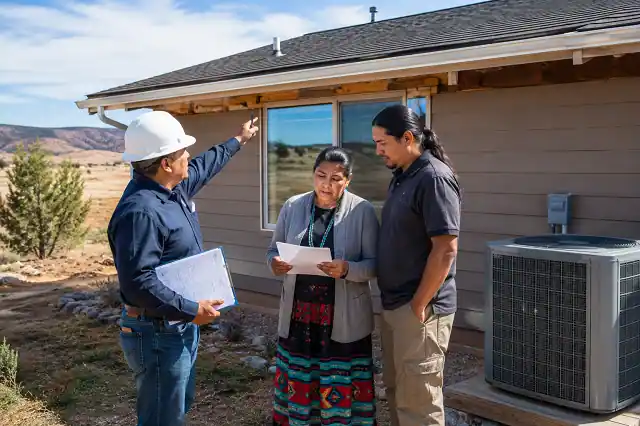
For many Native American homeowners, reducing monthly utility bills is just as important as repairing structural damage. The Weatherization Assistance Program (WAP), administered by the U.S. Department of Energy, continues helping eligible low-income households—including many Tribal communities—improve energy efficiency while making homes healthier and safer. Weatherization projects are often coordinated through Tribal governments, Community Action Agencies, or state weatherization offices.
Before any work begins, trained energy auditors inspect the home to identify improvements that will provide the greatest long-term savings. Homes with poor insulation, aging heating systems, or excessive air leakage typically receive higher priority. Native American seniors living in older homes should also review home repair grants for senior citizens, as combining housing rehabilitation with weatherization can significantly reduce future maintenance and energy expenses.
Typical weatherization improvements include:
- Attic, wall, and floor insulation
- Air sealing around doors and windows
- Heating system repair or replacement
- Duct sealing and ventilation improvements
- Energy-efficient lighting upgrades
- Health and safety inspections
- Smoke and carbon monoxide detector installation
- Minor repairs required before weatherization work begins
| Weatherization Upgrade | Primary Benefit |
| Insulation | Lower heating and cooling costs |
| Air sealing | Reduces energy loss |
| HVAC improvements | Improves energy efficiency |
| Ventilation upgrades | Healthier indoor air quality |
| Safety inspections | Identifies hidden household hazards |
Most weatherization projects are valued between $5,000 and $15,000, although funding varies by location and property condition. Homeowners replacing aging windows as part of an energy-efficiency project should ask their local weatherization provider whether window improvements are eligible under the available program.
State and Tribal Housing Programs That Complement Federal Assistance
Federal grants are only one part of the assistance available to Native American homeowners. Many Tribal governments supplement federal funding with state housing initiatives, infrastructure grants, and locally administered rehabilitation programs. These partnerships help expand available funding and reduce waiting lists for essential repairs.
States such as Arizona, New Mexico, Oklahoma, Alaska, Montana, Washington, North Dakota, South Dakota, Oregon, Minnesota, Wisconsin, and Michigan continue working closely with Tribal governments to improve housing quality, preserve affordable homeownership, and strengthen community infrastructure. Homeowners should also investigate state-specific housing rehabilitation opportunities because many states administer their own programs.
Depending on the Tribal Housing Authority, local assistance may include:
- Roof replacement
- Foundation stabilization
- Electrical modernization
- Water and sewer improvements
- Accessibility modifications
- Heating system replacement
- Storm and wildfire recovery repairs
- Housing preservation projects
| Housing Partner | Typical Assistance |
| Tribal Housing Authority (TDHE) | Major rehabilitation and modernization |
| State Housing Agency | Supplemental repair funding |
| Community Development Programs | Infrastructure and housing improvements |
| Emergency Management Programs | Disaster recovery assistance |
| Local Nonprofit Organizations | Housing counseling and repair support |
Expert Tip: Ask your Tribal Housing Authority whether state-funded rehabilitation programs can be combined with federal assistance. Coordinating multiple funding sources often allows homeowners to complete larger repair projects without increasing personal expenses.
Native Community Development Financial Institutions (Native CDFIs) and Nonprofit Assistance
Native Community Development Financial Institutions (Native CDFIs) continue expanding housing opportunities throughout Tribal communities by providing affordable financing, financial education, housing counseling, and grant application assistance. Although many Native CDFIs do not award direct repair grants, they frequently help homeowners secure additional federal, Tribal, and nonprofit funding.
Housing counselors can help applicants organize documentation, compare contractor estimates, improve credit readiness, and identify repair priorities before submitting grant applications. This preparation often increases approval rates while reducing delays caused by incomplete paperwork.
Many organizations also provide:
- Affordable rehabilitation loans
- Emergency repair financing
- Grant application assistance
- Financial literacy education
- Construction planning support
- Referrals to qualified contractors
- Homeownership counseling
- Budget planning for major repairs
Homeowners planning larger rehabilitation projects should also monitor future funding opportunities similar to state senior home repair grant programs, since many states periodically introduce new initiatives that complement federal and Tribal assistance.
Can You Combine Multiple Home Repair Grants?
In many cases, yes. Native American homeowners may legally combine multiple funding sources provided each program pays for different eligible expenses, and all grant requirements are followed. For example, a homeowner might receive structural rehabilitation through a Tribal Housing Authority, weatherization improvements through WAP, and accessibility modifications through another approved assistance program.
Professional Recommendation: Always discuss your complete repair plan with your Tribal Housing Authority before accepting funding from multiple programs. Housing staff can explain which grants may be combined, prevent duplicate reimbursement issues, and help maximize the total financial assistance available for your home rehabilitation project.
Common Mistakes That Prevent Native American Home Repair Grant Approval
Even homeowners who qualify for Tribal housing assistance may experience delays or application denials because of avoidable mistakes. Since annual funding is limited, Tribal Housing Authorities carefully review every application to ensure assistance reaches households with the greatest housing needs.
The most common application mistakes include:
- Submitting incomplete income verification.
- Missing proof of Tribal enrollment or homeownership.
- Beginning repairs before receiving written approval.
- Providing inaccurate contractor estimates.
- Failing to respond to requests for additional documentation.
- Applying after annual funding allocations have already been exhausted.
- Not reporting insurance proceeds or previous repair assistance.
| Common Mistake | How to Avoid It |
| Incomplete documentation | Submit every required ownership, income, and Tribal enrollment document. |
| Missing contractor estimates | Obtain written estimates from approved contractors when required. |
| Starting repairs too early | Wait until your grant has been officially approved. |
| Late application | Apply as early as possible during each funding cycle. |
| Poor communication | Respond promptly to all requests from your Tribal Housing Authority. |
Homeowners whose rehabilitation projects include outdated electrical systems should also review grants to replace electrical panels, since electrical safety improvements are frequently eligible under multiple housing assistance programs.
Future Housing Opportunities for Tribal Homeowners
Federal and Tribal housing programs continue evolving to address changing housing conditions throughout Indian Country. In addition to preserving existing homes, many future funding opportunities are expected to emphasize energy-efficient construction, climate resilience, wildfire mitigation, flood protection, accessibility improvements, and modernization of older housing stock.
Many Tribal governments are also expanding partnerships with state housing agencies and nonprofit organizations to improve access to affordable rehabilitation funding. Homeowners who stay in regular contact with their Tribal Housing Authority are often among the first to learn about newly available grants and supplemental funding opportunities.
Families planning major modernization projects may also find additional assistance through HUD home improvement grants, particularly when rehabilitation projects address long-term housing preservation and community development goals.
Frequently Asked Questions
1. Can Native American homeowners receive grants instead of loans?
Yes. Many Tribal housing programs provide grants that do not require repayment when eligibility requirements are satisfied. Some programs also combine grants with affordable loans for larger rehabilitation projects.
2. What is the largest home repair grant available in 2026?
There is no single nationwide maximum home repair grant for Native American homeowners. Assistance depends on the program. For example, BIA’s Housing Improvement Program currently provides up to $60,000 for repairs and renovations, while USDA Section 504 can provide up to $10,000 in grants to eligible homeowners. Tribal programs may have different limits and funding rules.
3. Can I qualify if I live outside Tribal land?
Eligibility varies by program. Some assistance is limited to Tribal service areas, while other federal programs serve eligible Native American homeowners living in rural communities.
4. Are emergency repairs given priority?
Yes. Homes with severe structural damage, unsafe electrical systems, accessibility barriers, sanitation problems, or other immediate health and safety hazards generally receive higher priority.
5. Can I combine multiple home repair grants?
Often yes. Different funding sources may be combined when each program covers separate eligible expenses and all program rules are followed.
6. How long does the approval process take?
Approval times vary depending on available funding, inspections, application volume, and documentation. Complete applications usually move through the review process more quickly.
7. Where should I apply first?
Your local Tribal Housing Authority or Tribally Designated Housing Entity (TDHE) should usually be your first point of contact because many federal housing programs are administered locally.
How to Apply for Native American Home Repair Grants in 2026
Step 1: Contact Your Tribal Housing Authority
Request information about current Tribal, federal, and state-funded rehabilitation programs.
Step 2: Verify Eligibility
Confirm Tribal enrollment, income limits, property ownership, and service area requirements.
Step 3: Gather Supporting Documents
Prepare ownership records, income verification, contractor estimates, inspection reports, and photographs of damaged areas.
Step 4: Submit a Complete Application
Carefully complete every section and attach all required supporting documents.
Step 5: Complete Required Inspections
Participate in any inspections requested before repairs are approved.
Step 6: Wait for Written Approval
Do not begin major repairs until your Tribal Housing Authority or funding agency authorizes the project.
Step 7: Complete the Approved Rehabilitation Project
Use approved contractors where required, retain all documentation, and comply with every program requirement until final project completion.
Why You Can Trust This Guide
Last Updated: July 2026
Reviewed By: Home Property Grants Editorial Team
- Current for 2026: Updated using the latest publicly available federal and Tribal housing guidance.
- Trusted Sources: Information references HUD, USDA Rural Development, the Bureau of Indian Affairs, and the U.S. Department of Energy.
- Expert Editorial Review: Every section has been reviewed for accuracy, readability, and practical homeowner guidance.
- AI-Optimized Content: Organized using structured headings, concise explanations, practical tables, and clear answers for AI summaries and featured snippets.
- Committed to Accuracy: This guide is reviewed regularly to reflect future housing program updates and funding changes.
Conclusion
For eligible Native American homeowners, home repair grants can provide life-changing financial assistance by making homes safer, healthier, and more affordable to maintain. By understanding available programs, preparing documentation early, and working closely with Tribal Housing Authorities, homeowners can maximize their opportunities to secure funding and protect their homes for years to come.