
Outdated electrical panels and fuse boxes can create serious safety, reliability, and modernization problems. If your home has an old fuse box, an obsolete breaker panel, damaged electrical equipment, or an undersized service, you may be looking for grants to replace an electrical panel or fuse box.
There is no universal federal grant that automatically pays for every electrical panel replacement. However, eligible homeowners may find help through USDA home repair assistance, HUD-funded local rehabilitation programs, Weatherization Assistance, Home Energy Rebates, LIHEAP in some states, local housing programs, nonprofit repair organizations, and other state or utility programs.
The best funding source depends on why the panel needs replacement, household income, home location, age, disability status, veteran status, the condition of the electrical system, and the rules of the program.
Quick Answer: Can you get a grant to replace an old electrical panel or fuse box?
Some homeowners may receive full or partial assistance for an electrical panel or fuse-box replacement, but there is no universal federal grant that guarantees a free upgrade. USDA Section 504, HUD-funded local rehabilitation programs, DOE energy programs, state and local housing assistance, and nonprofit organizations may help when the project meets their eligibility and funding rules.
Before applying, determine whether the project is primarily a health and safety repair, rural home repair, energy-efficiency upgrade, electrification project, emergency repair, or accessibility-related improvement. That classification can determine which funding sources are worth pursuing.
Important: An outdated panel, Federal Pacific Electric panel, Zinsco panel, fuse box, or failed electrical inspection does not automatically qualify a homeowner for a grant. The electrical problem may strengthen the documented need for repair, but each funding program makes its own eligibility and funding decisions.
For a broader overview of home repair funding, see our Home Repair Grants 2026 guide.
Electrical Panel Replacement Assistance at a Glance
| Funding Source | Best Potential Fit | How It May Relate to an Electrical Panel |
| USDA Section 504 | Very-low-income rural homeowners | Eligible repairs and removal of health and safety hazards |
| HUD-funded local rehabilitation | Eligible low- and moderate-income households in participating communities | Local residential rehabilitation and safety repairs |
| Weatherization Assistance Program | Eligible low-income households | Eligible energy-efficiency and health-and-safety work identified through weatherization |
| Home Energy Rebates | Homeowners in participating states, territories, and Tribal programs | Electrical wiring and load-service upgrades when tied to eligible electrification or energy projects |
| LIHEAP | Eligible low-income households with energy needs | Some state programs may support minor energy-related home repairs or crisis services |
| State and local housing programs | Homeowners meeting local requirements | Emergency, rehabilitation, safety, or code-related repairs where allowed |
| Nonprofit assistance | Homeowners with qualifying financial or safety needs | Labor, materials, referrals, or critical home repair assistance |
| Utility programs | Customers in participating service territories | Some utilities offer incentives for electrification or service upgrades |
These categories should be treated as potential funding paths, not guaranteed electrical-panel grants. Always verify whether the specific program will pay for the proposed panel, fuse-box, wiring, service, or electrical-safety work.
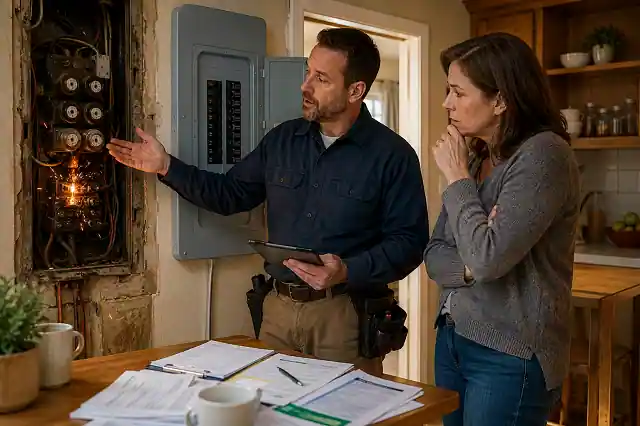
Why Replacing an Outdated Electrical Panel or Fuse Box Matters
Electrical systems must safely handle the loads placed on them. Older homes may have electrical equipment that was designed for a much smaller level of electricity use than a modern household requires.
Modern homes may use heat pumps, air conditioners, electric ranges, water heaters, computers, home offices, electric vehicle chargers, and other high-demand equipment. A qualified electrician should determine whether the existing panel and service are suitable for the home’s actual electrical load.
Common warning signs can include:
- Frequently tripping breakers or blowing fuses.
- Burning or unusual odors near the electrical panel.
- Buzzing, crackling, or unusual sounds.
- Visible scorching, melting, corrosion, or water damage.
- Warm or discolored electrical equipment.
- Repeated electrical failures.
- A fuse-based system that is no longer suitable for the home’s needs.
- An electrical inspection identifying unsafe conditions.
- Electrical service that cannot safely support a planned modernization project.
Warning: If you see smoke, sparks, severe burning, active arcing, or signs of an electrical fire, do not attempt to repair the panel yourself. Leave the area if necessary and contact a qualified electrical professional or emergency service as appropriate.
Electrical Fire Statistics
Electrical safety is not simply a cosmetic home-improvement issue. Recent national fire data show why electrical problems deserve careful attention.
| Home Electrical Fire Measure | 2024 Estimate |
| Home electrical fires | 48,757 |
| Civilian deaths | 594 |
| Civilian injuries | 1,583 |
| Direct property damage | $2.632 billion |
National Fire Protection Association (NFPA) research estimates that U.S. homes experienced 48,757 electrical fires in 2024, resulting in 594 civilian deaths, 1,583 civilian injuries, and approximately $2.632 billion in direct property damage. These figures cover home electrical fires broadly and do not mean that outdated panels alone caused the fires.
How Much Does Electrical Panel or Fuse Box Replacement Cost?
The cost of replacing an electrical panel or fuse box varies widely. The final price can depend on the service size, panel type, wiring condition, meter equipment, utility requirements, permits, grounding, accessibility, labor rates, and whether the home requires additional electrical work.
| Project | Factors That Can Increase Cost |
| Fuse-box replacement | New panel, wiring corrections, grounding, labor, permits, and inspection |
| Electrical panel replacement | Panel size, breakers, wiring, labor, permits, and code-related corrections |
| Service upgrade | Meter base, service conductors, utility requirements, panel, and permits |
| Panel plus rewiring | Panel, branch circuits, removal of obsolete wiring, labor, and wall repairs |
| Electrification-related upgrade | Panel/service capacity, wiring, new equipment, permits, and electrical design |
Cost tip: Ask the electrician to separate the estimate into panel or fuse-box work, service upgrades, wiring corrections, permits, inspection fees, and any optional improvements. This makes it easier to show a grant or rebate administrator exactly what the requested funding would pay for.
If you are planning several repairs at the same time, our guide to funding a $10,000 home repair project explains how homeowners can organize different potential funding sources.
You can also compare the financial impact of delaying needed work in our cost of delayed home repairs guide.
USDA Section 504 for Electrical Panel and Fuse-Box Repairs
The Single Family Housing Repair Loans and Grants program, commonly called Section 504, is one of the most relevant federal programs for certain rural homeowners with serious home repair needs.
The U.S. Department of Agriculture Rural Development (USDA) states that Section 504 provides loans to very-low-income homeowners to repair, improve, or modernize their homes. Grants are available to qualifying elderly very-low-income homeowners for removing health and safety hazards.
An electrical panel or fuse-box problem may be relevant when it is part of an eligible repair or creates a health and safety hazard. USDA, however, determines whether the particular project qualifies.
USDA Section 504 Assistance Limits
| Section 504 Assistance | Maximum | General Purpose |
| Repair loan | $40,000 | Repair, improve, modernize, or address eligible home problems |
| Repair grant | $10,000 lifetime maximum | Remove health and safety hazards for qualifying elderly homeowners |
| Combined loan and grant | Up to $50,000 | Eligible repair needs when program requirements are met |
| Disaster-area grant | Up to $15,000 | Eligible health and safety repairs for qualifying homes damaged in a presidentially declared disaster area |
| Combined disaster-area assistance | Up to $55,000 | Maximum combined loan and grant assistance in qualifying presidentially declared disaster areas |
Current U.S. Department of Agriculture Rural Development (USDA) program information lists a maximum $40,000 loan and $10,000 lifetime grant under Section 504. The maximum grant can be $15,000 for qualifying repairs to homes damaged in presidentially declared disaster areas. USDA states that loans and grants can be combined for up to $50,000 in standard cases or up to $55,000 in qualifying presidentially declared disaster areas.
USDA eligibility note: Section 504 is not a veteran-only or senior-only program. The grant has additional age requirements, while the program also considers rural location, income, homeownership, occupancy, and ability to obtain affordable credit.
Homeowners who want a broader explanation of rural assistance can read our federal and state home repair grants for rural homeowners.
Older homeowners can also compare our Section 504 home repair grants for seniors guide.
How a Panel Problem Could Fit Section 504
A panel or fuse-box project may be worth discussing with USDA when an inspection identifies a serious health or safety problem, when the system needs repair as part of an eligible rehabilitation project, or when electrical deficiencies prevent the home from being safely maintained.
Do not assume that the age of the panel alone establishes eligibility. A written inspection and detailed contractor estimate can help explain the actual condition and requested work.
HUD-Funded Local Home Rehabilitation Programs
The U.S. Department of Housing and Urban Development (HUD) administers the Community Development Block Grant program, but homeowners generally do not submit a nationwide CDBG application directly to HUD for an electrical panel replacement.
CDBG funds are awarded to eligible states, cities, and counties, which develop local programs and priorities. HUD says CDBG funds can support rehabilitation of residential structures and activities that meet the program’s national objectives.
That means a homeowner may find an electrical repair program through a city housing department, county community development office, housing rehabilitation program, or other local administrator using HUD funding.
What Local HUD-Funded Programs May Look For
- Low or moderate household income.
- Homeownership and owner occupancy.
- A qualifying property condition.
- Health or safety hazards.
- Code or rehabilitation needs.
- Participation in a local housing rehabilitation program.
- Available local funding.
HUD note: CDBG is a funding framework for local community development. A local government may choose to operate a homeowner repair program, but the exact income limits, eligible repairs, application process, and funding amounts are local.
For more information about the broader category, see our HUD home improvement grants guide.
You can also review our government grants for home renovations guide when the electrical work is part of a larger rehabilitation project.
Weatherization Assistance Program and Electrical Safety
The Weatherization Assistance Program (WAP) is another potential path for eligible low-income households, but it should not be described as a general electrical-panel replacement grant.
The U.S. Department of Energy (DOE) says WAP reduces energy costs by improving residential energy efficiency while ensuring health and safety. The program is administered through state and local organizations.
A WAP energy audit examines the home and identifies potential energy improvements and health and safety issues. Whether electrical work is performed depends on the program’s requirements, the home’s assessment, and the local provider’s approved scope of work.
WAP warning: Do not assume that WAP will pay for a standalone electrical-panel replacement. The local weatherization provider determines which measures are eligible and appropriate after evaluating the home.
Weatherization Statistics
| DOE WAP Measure | Reported Figure |
| Homes receiving weatherization services each year using DOE funds | Approximately 32,000 |
| Average annual household savings | $372 or more |
| Families helped since the program began | More than 7.2 million |
The U.S. Department of Energy reports that WAP provides services to approximately 32,000 homes each year using DOE funds and that participating households save an average of $372 or more annually. DOE also reports that more than 7.2 million families have benefited since the program began.
Home Energy Rebates for Electrical Panel or Service Upgrades
Home Energy Rebates are different from traditional home repair grants. They are energy-related rebates administered through participating states, territories, and Tribal programs.
The U.S. Department of Energy (DOE) says the High-Efficiency Electric Home Rebate (HEEHR) program can support eligible electric upgrades, including electrical wiring and load-service-center upgrades. DOE’s current homeowner information indicates that an eligible electrical panel upgrade may receive up to $4,000, subject to the applicable program requirements and the availability of the rebate in the homeowner’s jurisdiction.
Energy rebate opportunity: A panel or service upgrade can be particularly relevant when it is needed to support qualifying electrification equipment, such as a heat pump or other eligible electric technology. The actual rebate depends on the program offered in your state, territory, or Tribal jurisdiction.
| Home Energy Rebate | Potential Electrical Connection | Important Condition |
| HEEHR | Electrical panel or load-service upgrade | Must meet the applicable program rules and be offered in the homeowner’s jurisdiction |
| HOMES | Whole-home energy upgrade | Based on qualifying whole-home energy savings and local program design |
DOE states that Home Energy Rebates are currently available in select states and that state, territory, and Tribal administrators determine program details and eligibility.
Homeowners should check their state energy office before assuming that a panel replacement is currently eligible.
Those planning a broader clean-energy project can also review our solar panel rebates and grants guide.
LIHEAP and Minor Energy-Related Home Repairs
The Low Income Home Energy Assistance Program (LIHEAP) primarily helps eligible households with home energy costs and energy crises. However, federal LIHEAP information also allows states, territories, and Tribes to use funds for certain weatherization and minor energy-related home repairs.
The U.S. Department of Health and Human Services (HHS) explains that LIHEAP can help with energy bills, energy crises, weatherization, and minor energy-related home repairs.
Whether a specific electrical repair is eligible is determined by the state, territory, or Tribal LIHEAP program. Therefore, LIHEAP should be treated as a possible secondary funding path, not a guaranteed electrical-panel replacement program.
LIHEAP Statistics
| FY2024 LIHEAP Measure | Reported Figure |
| Total households served | Approximately 1.9 million |
| Households receiving crisis assistance | Approximately 200,000 |
| Households receiving weatherization assistance | Approximately 7,000 |
HHS reported that approximately 1.9 million households were served by LIHEAP in FY2024, including about 200,000 households receiving crisis assistance and about 7,000 receiving weatherization assistance. These are FY2024 statistics, not a claim about the number of households receiving assistance in 2026.
State and Local Electrical Panel Assistance
State and local programs can be important because many home rehabilitation programs are administered below the federal level. The exact programs vary significantly by location.
Instead of assuming that every state has a dedicated “electrical panel grant,” homeowners should search for programs using terms such as:
- Home rehabilitation assistance.
- Emergency home repair.
- Electrical safety repair.
- Housing rehabilitation.
- Code correction assistance.
- Healthy homes programs.
- Energy-efficiency rebates.
- Electrification incentives.
- Low-income home repair assistance.
Our State Home Repair Grants 2026 guide can help you identify the appropriate state and local starting point.
Homeowners who cannot find a program through a state website can also read our guide on how to find hidden home repair grants in your state.
Texas, New York, and Florida Homeowners
State-specific articles can be useful when a local program is more important than a federal program. Start with the appropriate state or local housing agency rather than assuming that a program available in one location is available nationwide.
State-program note: Do not assume that a program available in one state, county, or city is available everywhere. Local income limits, funding cycles, eligible repairs, ownership rules, and application procedures can be very different.
Electrical Panel Assistance for Seniors, Veterans, and Disabled Homeowners
Demographic characteristics can affect eligibility for some repair programs, but they do not automatically create a grant entitlement.
Seniors
Older homeowners may have access to programs designed around aging in place, health and safety, or low-income home rehabilitation. For USDA Section 504, the grant component specifically has an age requirement in addition to other eligibility conditions.
Homeowners can compare our accessibility home modification grants for senior citizens guide for related assistance.
Veterans
Veteran status may open additional housing assistance opportunities, but there is no universal VA benefit that pays for every electrical panel replacement.
Veterans can review our home repair grants for veterans guide, and our home repair grants for disabled veterans guide when disability or veteran-specific housing assistance is relevant.
Disabled Homeowners
A panel or electrical service upgrade may become relevant when an accessibility project, medical equipment, or other disability-related home modification creates a legitimate electrical requirement. The funding source must still authorize the proposed work.
SSI Recipients and Other Low-Income Homeowners
Receiving SSI does not automatically guarantee an electrical-panel grant, but low income can be an important eligibility factor for several home repair and energy programs.
See our home repair grants for SSI recipients guide for a broader discussion of assistance options.
Low-income homeowners can also review our home repair grants for low-income families guide.
Which Electrical Panels or Fuse Boxes May Need Replacement?
There is no universal list of panel brands or fuse boxes that automatically qualify for financial assistance. However, a qualified electrician may identify conditions that justify replacement or repair.
- Severely damaged or corroded electrical panels.
- Panels showing evidence of overheating or fire damage.
- Electrical equipment with visible scorching or melting.
- Fuse systems that are no longer appropriate for the home’s electrical demands.
- Panels with serious code or inspection deficiencies.
- Electrical service that cannot safely support a planned qualifying upgrade.
- Unsafe wiring or grounding associated with the panel.
- Electrical equipment that presents a documented health or safety hazard.
Important distinction: Federal Pacific Electric and Zinsco equipment are often discussed because of documented safety concerns, but the presence of a particular brand does not automatically make a homeowner eligible for a grant. Funding decisions depend on the individual program.
If the electrical panel is part of a larger collection of household hazards, see our home hazard removal grants guide.
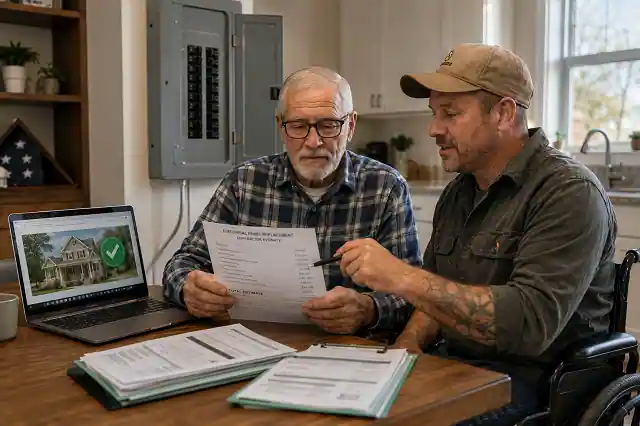
Who Is Most Likely to Qualify for Electrical Repair Assistance?
Eligibility varies by program, but several factors commonly matter:
- Household income.
- Homeownership and occupancy.
- Property location.
- Rural eligibility for USDA programs.
- Age for certain senior programs.
- Disability status for some accessibility programs.
- Veteran status for veteran-specific programs.
- Documented health and safety hazards.
- Energy-efficiency or electrification purpose.
- Available funding in the applicant’s area.
Our home repair grants eligibility guide explains the broader eligibility factors homeowners should review before applying.
Documents That May Be Required
Electrical panel assistance checklist
- Proof of homeownership.
- Proof of household income.
- Government-issued identification.
- Recent electrical inspection report.
- Licensed electrician’s written estimate.
- Photographs of the existing panel or fuse box.
- Documentation of code violations when applicable.
- Proof of veteran or disability status when required.
- Property tax or mortgage records when required.
- Permits or utility documentation when applicable.
Keep the inspection report and estimate specific. A statement such as “old panel” is less useful than a professional explanation describing the actual hazard, service limitation, code issue, or electrical work required.
How to Apply for Electrical Panel Replacement Assistance
1. Get a Professional Electrical Inspection
Start with a qualified electrician who can determine whether the panel actually needs replacement or whether a less expensive repair is sufficient.
2. Get a Detailed Written Estimate
Ask the electrician to separate the panel, service upgrade, wiring, grounding, permits, inspection, and other costs.
3. Document the Safety Problem
Take photographs of visible damage and keep copies of inspection reports. If a local authority has issued a code violation or failed inspection, keep that documentation.
4. Determine Which Funding Category Fits
Ask whether the project is primarily a health and safety repair, rural repair, energy-efficiency project, electrification upgrade, emergency repair, or accessibility-related modification.
If you need help organizing the application process, see our guide to applying for home repair grants without getting rejected.
5. Check Federal and Local Programs
Check USDA Section 504 if the property is rural and the household meets the requirements. Check the local housing agency for rehabilitation programs. Check WAP for eligible weatherization and health-and-safety work. Check the state energy office for Home Energy Rebates.
6. Check Nonprofit and Utility Assistance
Nonprofit organizations and utilities may have additional assistance, but their programs are local and eligibility varies.
7. Apply Before Starting Work When Required
Warning: Do not assume that a program will reimburse work you completed before approval. Ask the program administrator whether prior approval, inspection, contractor selection, or other authorization is required before signing a contract or starting construction.
8. Keep Every Record
Save applications, estimates, photographs, inspection reports, approval letters, receipts, permits, and correspondence.
Can You Combine Grants, Rebates, Loans, and Other Assistance?
Sometimes, but never assume that two programs can pay the same expense.
Some programs may be designed to work alongside other funding sources, while others contain duplication-of-benefits or cost-sharing restrictions. The U.S. Department of Energy specifically notes that Home Energy Rebates can be integrated with existing programs but that legal restrictions can limit how different funding sources are combined.
Funding rule: You can check several programs, but disclose other applications or awards when required. Before using two sources for the same project, ask both administrators whether the costs can legally be combined.
A safer strategy is to identify all possible funding sources first, then determine which source can pay each eligible part of the project.
Nonprofit and Community Assistance
Nonprofits can sometimes help when a homeowner cannot obtain enough government assistance to complete a critical repair. Assistance may involve volunteer labor, donated materials, contractor coordination, referrals, or limited financial support.
Habitat for Humanity and Rebuilding Together operate local programs, but availability varies by affiliate or local organization. Homeowners should contact the local organization and ask whether electrical safety work is included in its current repair scope.
Our nonprofit home repair grants guide provides a broader list of nonprofit assistance categories.
Homeowners with broader renovation needs can also review our home improvement grants guide.
Utility Programs and Electrical Service Upgrades
Some electric utilities offer incentives for electrification, service upgrades, energy efficiency, or electric vehicle readiness. However, utility programs are specific to the service territory and can change frequently.
A utility incentive may be more relevant when the panel upgrade is required to install an eligible heat pump, electric appliance, solar system, or other qualifying equipment.
Utility tip: Ask your electric utility whether it offers incentives for panel upgrades, service upgrades, electrification readiness, heat pumps, EV charging, or other qualifying energy projects. Do not assume that a utility incentive will cover a standalone replacement of an old panel.
What If You Cannot Afford the Entire Electrical Repair?
If no single program covers the full project, separate the work into eligible categories and ask each administrator what it can fund.
For example, one program may address a qualifying health and safety repair, another may provide an energy rebate for an eligible electrification upgrade, and a nonprofit may provide labor or materials. This does not mean that the programs can automatically be combined; each administrator must confirm the arrangement.
Homeowners facing a wider emergency can also review our emergency home repair grants guide.
What If the Electrical Panel Is in a Mobile Home?
Manufactured and mobile homes can have different repair and ownership requirements. Before applying, confirm whether the funding program allows the type of property you own and whether the applicant owns the land, the home, or both.
See our mobile home improvement grants guide for assistance categories specific to manufactured and mobile homes.
Electrical Panel Upgrades as Part of a Larger Home Project
An electrical panel replacement is sometimes only one component of a larger rehabilitation project. For example, an older home may need electrical work along with insulation, heating equipment, water damage repair, or other safety improvements.
In that situation, a broader home repair or renovation program may be more useful than searching only for an “electrical panel grant.”
What to Do If Your Application Is Denied
A denial from one program does not necessarily mean that the project cannot receive assistance elsewhere.
First, identify the reason for the denial. Common reasons can include income limits, property location, incomplete documentation, ineligible work, lack of funding, or a mismatch between the project and the program’s purpose.
Then ask whether you can correct the application, provide additional documentation, reapply during a new funding cycle, or contact another administrator.
Where Should You Start?
| Your Situation | Best Starting Point |
| Very-low-income homeowner in an eligible rural area | USDA Section 504 |
| Older rural homeowner with a health or safety hazard | USDA Section 504 grant review |
| Low-income homeowner in a participating city or county | Local housing rehabilitation office |
| Low-income household with broader weatherization needs | Local WAP provider |
| Panel needed for qualifying electrification work | State Home Energy Rebates program |
| Energy crisis or minor energy-related repair | State LIHEAP program |
| Emergency safety problem | Local emergency home repair program |
| Funding gap after government programs | Local nonprofit or community organization |
For a broader decision-making tool, use our Home Repair Program Finder 2026.
Frequently Asked Questions About Electrical Panel Replacement Grants
Can I get a free electrical panel replacement?
Possibly, but there is no universal federal program that guarantees a free replacement. Some eligible homeowners may receive full or partial assistance through USDA, local housing rehabilitation programs, energy rebates, WAP, LIHEAP-related services, nonprofits, or other programs.
Does USDA Section 504 pay for electrical panel replacement?
A panel replacement may be considered when it is part of an eligible repair or removal of a health and safety hazard. USDA determines whether the specific homeowner, property, and project qualify.
Can seniors get help replacing an old fuse box?
Some seniors may qualify for assistance through programs that address health and safety hazards. USDA Section 504 grants are one possible source for qualifying elderly very-low-income rural homeowners. Other assistance depends on local program rules.
Does WAP pay for electrical panels?
WAP is primarily an energy-efficiency program. Electrical work may be considered when it is necessary under the applicable weatherization and health-and-safety requirements, but WAP should not be treated as a guaranteed standalone electrical-panel replacement program.
Can Home Energy Rebates pay for an electrical panel?
DOE’s Home Energy Rebates information identifies electrical panel or load-service upgrades as potentially eligible under the High-Efficiency Electric Home Rebate program. Availability and eligibility depend on the state, territory, or Tribal program and the qualifying project.
Can low-income homeowners get electrical repair assistance?
Yes, some programs target low-income households. Potential sources include USDA Section 504, local housing rehabilitation programs, WAP, LIHEAP-related services, and other state or nonprofit assistance. Eligibility varies by program.
Can veterans get help replacing an electrical panel?
Veteran status alone does not guarantee electrical-panel assistance. Veterans may investigate general home repair programs as well as veteran-specific housing assistance when the project meets the applicable requirements.
Can disabled homeowners get electrical upgrades?
Possibly. An electrical upgrade may be relevant when it is connected to a qualifying accessibility, medical, or home-modification project. The funding source must authorize the proposed work.
Can I combine a grant with an energy rebate?
Sometimes. Some programs are designed to work with other funding sources, but legal and program restrictions can apply. Always ask the administrators whether the same project costs can be combined before accepting multiple sources of assistance.
How long does electrical-panel assistance take?
There is no universal processing time. USDA states that approval depends on funding availability in the applicant’s area, while local housing and energy programs can have their own application cycles, inspections, and waiting lists.
Why This Electrical Panel Assistance Guide Is Reliable
Last Updated: August 2026
Reviewed By: Homepropertygrants.com Editorial Team
- Federal programs are distinguished from state, local, utility, and nonprofit assistance.
- USDA Section 504 is presented according to its actual rural home repair and health-and-safety purpose.
- HUD CDBG is explained as a local funding mechanism rather than a direct nationwide homeowner grant.
- WAP is presented as an energy-efficiency and health-and-safety program rather than a guaranteed panel-replacement benefit.
- Home Energy Rebates are presented as jurisdiction-specific rebates rather than universal grants.
- Electrical hazards are distinguished from automatic grant eligibility.
- Statistics are identified by their reporting year where the latest official data are not for 2026.
- Readers are encouraged to verify current eligibility, funding, and prior-approval requirements before beginning work.
Verification note: Federal and local programs can change their income limits, funding availability, eligible measures, application procedures, and deadlines. Always confirm the current requirements with the administering agency before relying on a program or signing a construction contract.
Conclusion
There is no single federal grant that guarantees free electrical panel or fuse-box replacement for every homeowner. However, homeowners with a documented safety problem, low income, rural property, qualifying energy project, emergency need, or other eligible circumstance may have several ways to reduce the cost.
The strongest starting points are usually the program that best matches the actual reason for the project: USDA Section 504 for qualifying rural repair needs, local housing rehabilitation programs for eligible community repairs, WAP for eligible weatherization work, Home Energy Rebates for qualifying electrification projects, and state or nonprofit assistance for other needs.
Start with a professional inspection, obtain a detailed written estimate, document the safety problem, determine which funding category fits, and check the applicable program before starting work.

Arthur Pendelton is a senior housing policy researcher and public welfare analyst with over eight years of experience tracking federal, state, and non-profit residential repair programs. He specializes in statutory grant frameworks, including USDA Section 504 Rural Housing, the Department of Energy’s Weatherization Assistance Program (WAP), and municipal HUD Community Development Block Grants (CDBG). Arthur systematically audits Federal Register publications and Title 7/42 CFR regulatory updates to provide low-income homeowners, seniors, and military veterans with accurate, barrier-free application guidance.