
Free Home Hazard Removal Grants for Homeowners in 2026 can help eligible homeowners address serious health, safety, accessibility, environmental, and structural problems. Depending on the program, assistance may support roof repairs, unsafe electrical systems, lead hazards, mold and moisture problems, accessibility modifications, heating issues, structural stabilization, and certain disaster-related repairs.
Unlike cosmetic remodeling assistance, home hazard removal grants are generally designed to correct conditions that can threaten occupants or make a property unsafe. Assistance may come through federal programs, state and local housing agencies, tribal organizations, nonprofits, utilities, and community development programs.
Not every program provides cash directly to the homeowner. Assistance may instead be provided as a grant, forgivable loan, deferred-payment loan, rehabilitation assistance, or direct payment to an approved contractor.
Important: There is no single nationwide application for free home hazard removal grants. Many federal programs send funding to states, local governments, tribes, or nonprofit organizations that operate the actual homeowner assistance program. Always verify the current application process with the agency administering the program in your area.
Homeowners who need broader assistance can also review our Home Repair Grants 2026 guide before narrowing the search to hazard-specific programs.
What Are Free Home Hazard Removal Grants?
Free home hazard removal grants are assistance programs designed to help eligible homeowners correct dangerous conditions that affect health, safety, accessibility, environmental quality, or the structural condition of a home.
The key difference between hazard removal and ordinary home improvement is the reason for the work. A program may be interested in repairing a leaking roof because it is allowing water into the home, but it may not pay for a new roof simply because the existing roof looks old.
Similarly, an accessibility program may help install a ramp because an occupant cannot safely enter the home, while a general remodeling program may not cover the same project.
Some programs provide full grants, while others combine grants with loans or other forms of assistance. The homeowner’s income, age, disability status, veteran status, location, property condition, and type of hazard can all affect eligibility.
Common Home Hazards That May Qualify
- Leaking or seriously damaged roofs
- Unsafe electrical wiring or electrical panels
- Lead-based paint hazards
- Mold and moisture problems
- Unsafe heating systems
- Carbon monoxide risks
- Structural instability
- Unsafe stairs and fall hazards
- Accessibility barriers
- Damaged plumbing
- Eligible septic or water-system problems
- Flood-related damage
- Storm-related structural damage
- Other documented health and safety hazards
Homeowners with several serious repair needs may need to compare different funding sources because separate programs can address different parts of a project.
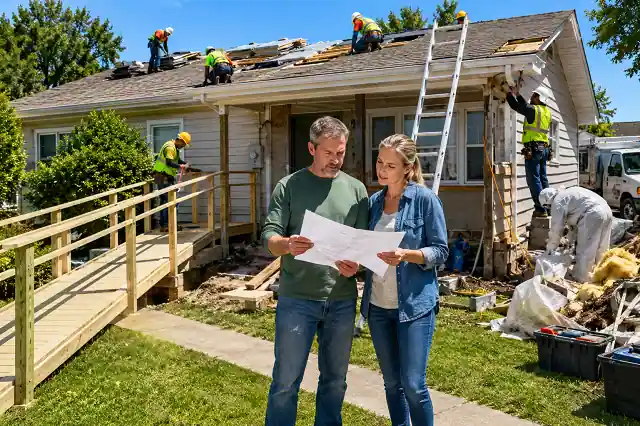
Why Hazard Removal Is Different From Cosmetic Repairs
Government and nonprofit housing programs generally give greater importance to repairs that protect health and safety. Fixing exposed wiring, repairing a serious roof leak, removing a documented lead hazard, or installing an accessibility modification can have a stronger connection to program goals than replacing decorative flooring or upgrading a kitchen for appearance.
Many programs also require evidence showing why the repair is necessary. Photographs, inspection reports, contractor estimates, and other documentation can help demonstrate that the project addresses a genuine hazard.
Delaying serious hazards can allow relatively small problems to become more expensive repairs. Our guide to the cost of delayed home repairs explains why addressing documented problems early can matter.
Best strategy: Describe the problem in terms of the hazard it creates. Instead of simply saying “I need a new roof,” explain that the roof is leaking, causing interior water damage, creating moisture problems, or threatening the safety of the structure if those conditions are documented.
Dangerous Home Hazards That May Qualify for Grant Assistance
| Hazard | Potential Risk | Possible Assistance Source |
|---|---|---|
| Roof failure | Water intrusion, interior damage, mold, structural deterioration | USDA, local rehabilitation programs, state programs |
| Unsafe electrical wiring | Fire and electrical shock hazards | Housing rehabilitation and local safety programs |
| Lead-based paint | Exposure to lead-containing paint and dust | HUD-funded lead hazard programs |
| Mold and moisture | Indoor environmental problems and building damage | Healthy Homes and local programs |
| Structural damage | Instability and potential injury | Housing rehabilitation programs |
| Accessibility barriers | Falls and difficulty entering or using the home safely | USDA, VA, state and local programs |
| Heating problems | Loss of safe heating and potential health or safety risks | Weatherization and local assistance programs |
| Disaster damage | Flood, storm, wildfire, or other disaster risks | FEMA-related and local mitigation programs |
Lead-Based Paint Hazard Removal Assistance
Lead-based paint is an important housing hazard, particularly in older homes. Homes built before 1978 are more likely to contain lead-based paint, and deteriorating paint or renovation activity can create lead-containing dust and chips.
Homeowners should not assume that simply having an older home guarantees grant eligibility. Programs may consider the condition of the paint, household circumstances, location, property requirements, and whether the home meets the program’s target population.
Warning: Do not sand, scrape, demolish, or otherwise disturb suspected lead-based paint without understanding applicable safety requirements. Older homes may require lead-safe renovation practices when painted surfaces are disturbed.
HUD supports programs that help communities identify and reduce lead-based paint hazards in older housing. Homeowners looking for this type of assistance should check with their local or state housing agency about current programs rather than assuming there is a direct nationwide homeowner application. HUD Healthy Homes provides information about these housing-health programs.
If lead hazards are part of a larger repair project, homeowners should document the condition before work begins and keep copies of inspection reports, photographs, and contractor information.
Mold and Moisture Hazard Assistance
Mold is often connected to an underlying moisture problem. Roof leaks, plumbing failures, flooding, condensation, poor ventilation, and drainage problems can all contribute to excessive moisture.
A strong application should identify the source of the moisture whenever possible. Repairing a roof leak, plumbing failure, or ventilation problem may be more important than treating visible mold alone because the underlying cause needs to be addressed.
HUD’s Healthy Homes programs address housing conditions that can affect indoor health, including moisture and other environmental hazards.
Homeowners should not assume that every mold-remediation project qualifies for federal assistance. Eligibility depends on the funding source, property, household, location, and specific program rules.
Unsafe Electrical Systems and Fire Hazards
Electrical problems can create serious fire and shock hazards. Examples may include damaged wiring, overloaded circuits, exposed conductors, deteriorated outlets, and unsafe electrical panels.
When the problem is serious, homeowners should obtain a qualified electrical evaluation rather than attempting dangerous repairs themselves. A written assessment can also help document the need for assistance when a housing program requires supporting evidence.
Electrical safety checklist:
- Photograph visible electrical damage.
- Do not attempt dangerous electrical repairs yourself.
- Obtain a qualified inspection when appropriate.
- Keep written repair estimates.
- Ask the housing agency whether the repair is eligible.
- Wait for required approval before starting grant-funded work.
Roof and Structural Hazards
A seriously damaged roof can allow water into the home and contribute to damaged ceilings, moisture problems, mold, electrical damage, and structural deterioration.
Other serious hazards can include unstable stairs, foundation movement, deteriorated structural components, damaged walls, and other conditions that threaten the safety of the building.
A roof replacement is not automatically a free grant project. The repair normally has to meet the purpose and eligibility requirements of the particular program.
For example, eligible rural homeowners may find health and safety assistance through USDA Section 504. The program can provide grants to qualifying elderly very-low-income homeowners for removing health and safety hazards. USDA Section 504 explains the program’s current eligibility and assistance rules.
Homeowners comparing several funding sources can organize their search by matching each repair to the program that specifically covers that type of hazard.
Accessibility Hazards and Home Modifications
Accessibility problems can become serious safety hazards for older adults and people with disabilities. A home may be structurally sound but still unsafe if an occupant cannot enter, leave, bathe, or move through the property safely.
Common accessibility improvements include:
- Wheelchair ramps
- Grab bars
- Handrails
- Accessible showers
- Wider doorways
- Safer entrances
- Non-slip surfaces
- Other approved accessibility modifications
Some programs specifically fund accessibility improvements, while others may treat them as eligible health and safety repairs.
Veterans and service members with qualifying service-connected disabilities may have access to specialized housing adaptation assistance through the VA. VA housing grants explain the current disability-related housing programs.
For broader disability-related home assistance, see our guide to home repair grants for disabled homeowners.
Major Federal Home Hazard Removal Programs in 2026
Federal agencies support several programs that may help address health, safety, accessibility, energy, environmental, and disaster-related housing problems. However, the application pathway differs from one program to another.
Some federal funding reaches homeowners through state or local agencies. Others are administered through local providers or eligible organizations. Understanding this distinction can prevent homeowners from wasting time looking for a direct federal application that does not exist.
USDA Section 504 Home Repair Program
The USDA Section 504 program helps eligible very-low-income rural homeowners repair, improve, or modernize their homes. It also provides grants to qualifying elderly homeowners for removing health and safety hazards.
The program may be relevant when a homeowner needs assistance with eligible work such as:
- Health and safety repairs
- Accessibility improvements
- Roof-related repairs
- Electrical repairs
- Heating improvements
- Other eligible housing hazards
Because the program has specific income, age, property, rural-area, and repayment requirements, homeowners should review the current USDA rules before applying.
Homeowners in eligible rural areas can also review our home repair grants for rural homeowners guide.
HUD Community Development Block Grant Assistance
HUD’s Community Development Block Grant program provides funding to eligible state and local governments for community development activities. Depending on the local program, CDBG funds may support housing rehabilitation and other eligible improvements.
Potential local activities can include:
- Owner-occupied housing rehabilitation
- Emergency repairs
- Accessibility improvements
- Lead hazard work
- Structural rehabilitation
- Neighborhood housing improvements
Because CDBG funding is administered locally, homeowners should contact their city, county, or state housing agency to determine whether a current homeowner rehabilitation program exists. HUD’s CDBG information explains the broader federal program.
Weatherization Assistance Program
The Department of Energy’s Weatherization Assistance Program helps eligible low-income households improve energy efficiency while addressing certain health and safety conditions connected with weatherization work.
Depending on the local provider and the home’s needs, weatherization work may involve:
- Insulation
- Air sealing
- Ventilation improvements
- Heating and cooling improvements
- Health and safety measures identified during the assessment
WAP is administered through states, territories, tribes, and local service providers rather than through one nationwide homeowner application. Homeowners can use the DOE application guidance to find the provider serving their area.
HUD Healthy Homes and Lead Hazard Programs
HUD’s Healthy Homes work addresses multiple housing-related hazards rather than focusing only on one type of repair. Potential concerns include lead, moisture, mold, indoor environmental conditions, injury risks, and other housing hazards.
Many HUD hazard-reduction grants are awarded to eligible state and local governments, tribal organizations, nonprofits, and other entities that operate local programs.
That means a homeowner searching for assistance should generally look for a local or state program connected with HUD funding instead of assuming that HUD sends a direct check to every eligible homeowner. HUD provides information about its current healthy-homes and lead-hazard grant activities.
FEMA Hazard Mitigation Assistance
FEMA supports programs designed to reduce future disaster losses. Depending on the program and project, mitigation activities may involve flood-risk reduction, elevation, structural improvements, drainage, wildfire mitigation, safe rooms, or other eligible resilience measures.
Important FEMA rule: Do not assume that every FEMA mitigation program accepts direct applications from individual homeowners. The application process depends on the specific program and eligible applicant. Start with your state or local emergency-management agency and then review the applicable FEMA requirements.
Homeowners can review current FEMA mitigation information when determining which type of disaster assistance may apply.
VA Housing Adaptation Assistance
Veterans and service members with qualifying service-connected disabilities may qualify for specialized VA housing adaptation benefits. These programs are designed around specific eligibility requirements and should not be treated as general free home repair grants for every veteran.
Potential assistance can include modifications that improve accessibility and independent living when the applicant and project satisfy VA requirements.
For broader assistance options, see our home repair grants for veterans guide.
State and Local Home Hazard Removal Programs
Many homeowners receive assistance through state housing agencies, county housing departments, city rehabilitation offices, tribal programs, and local community development organizations.
Homeowners facing an urgent safety problem can also review emergency home repair grants to see whether urgent assistance is available in their area.
Local programs may use federal funding, state funding, or a combination of sources. This means that two homeowners with identical repair problems can face different eligibility rules depending on where they live.
Common State and Local Programs
- Emergency home repair assistance
- Owner-occupied rehabilitation
- Healthy Homes programs
- Lead hazard control
- Accessibility modifications
- Housing preservation
- Disaster recovery repairs
- Flood mitigation
- Weatherization assistance
- Septic and well assistance
For state-specific assistance, our state home repair grants guide can help you identify the type of agency to contact.
Do not assume that a program is available simply because another state offers similar assistance. Check whether applications are open, whether funds remain available, and which repairs qualify.
Healthy Homes and Environmental Hazard Removal
Some dangerous housing conditions are difficult to see. Moisture behind walls, poor ventilation, lead dust, carbon monoxide risks, pests, radon, and other environmental conditions can affect the safety and health of occupants.
Healthy Homes programs take a broader approach by addressing multiple housing conditions that can create health risks.
Common Environmental Hazards
- Lead-based paint
- Lead-contaminated dust
- Mold and excess moisture
- Poor ventilation
- Carbon monoxide risks
- Radon
- Pest-related hazards
- Unsafe water conditions
- Potentially hazardous building materials
Homeowners should obtain appropriate professional guidance when a project involves hazardous materials or conditions that cannot be safely handled through ordinary home maintenance.
Asbestos and Hazardous Building Materials
Older homes can contain asbestos in insulation, flooring, pipe coverings, roofing products, and other building materials. Damaged or disturbed asbestos-containing materials can create serious exposure risks.
Homeowners should not assume that a general home repair grant automatically covers asbestos removal. Some local rehabilitation programs may address hazardous materials when removal is necessary for an approved project, but eligibility depends on the program.
Disaster Recovery, Resilience, and Hazard Mitigation
Floods, hurricanes, tornadoes, wildfires, earthquakes, and severe storms can create immediate home hazards as well as long-term risks.
Disaster recovery assistance generally focuses on repairing eligible damage, while hazard mitigation focuses on reducing the chance of future damage.
Potential mitigation work may include:
- Flood-risk reduction
- Elevation projects
- Drainage improvements
- Structural reinforcement
- Storm-resistance improvements
- Wildfire mitigation
- Other eligible resilience measures
Homeowners should document disaster damage with photographs, preserve insurance records, and contact the appropriate state or local agency before assuming that a particular FEMA program will pay for the work.
Disaster documentation checklist:
- Photograph the damage when it is safe to do so.
- Keep insurance claim information.
- Keep receipts and repair records.
- Document the date and cause of the damage.
- Contact the local or state disaster-recovery agency.
- Ask whether mitigation assistance is available.
- Confirm approval requirements before beginning funded work.
Utility Programs That May Help With Home Safety
Some electric and gas utilities operate programs that improve energy efficiency and may address health or safety conditions connected with energy upgrades.
Depending on the utility, assistance may include:
- Weatherization
- Insulation
- Air sealing
- Heating or cooling improvements
- Energy audits
- Other eligible energy-efficiency measures
Utility assistance varies by location, so homeowners should contact their utility directly and ask about current residential energy-efficiency or weatherization programs.
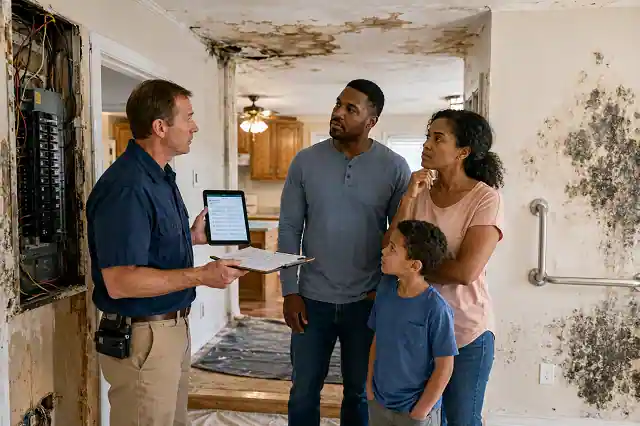
Nonprofit Organizations That May Help With Home Hazards
Nonprofit organizations can provide another source of assistance, especially for critical repairs, accessibility work, volunteer labor, or home rehabilitation.
Habitat for Humanity operates local affiliates that may provide repair or housing assistance depending on the community, while Rebuilding Together works with local partners on critical home repairs in eligible communities.
Other potential sources include Community Action Agencies, Area Agencies on Aging, faith-based housing organizations, and local community development groups.
For a broader overview, see our nonprofit home repair grants guide.
Who Qualifies for Free Home Hazard Removal Grants?
Eligibility varies by program. There is no universal income limit, age requirement, property requirement, or hazard list that applies to every home hazard assistance program.
Programs may consider:
- Household income
- Homeownership
- Primary-residence status
- Property location
- Age
- Disability
- Veteran status
- Household composition
- Severity of the hazard
- Disaster status
- Availability of program funding
For a detailed explanation of common qualification requirements, see our home repair grant eligibility guide.
Applicants Who May Receive Priority
| Applicant Group | Why It May Matter |
|---|---|
| Low-income homeowners | Many rehabilitation programs use household income limits. |
| Senior homeowners | Some programs prioritize older homeowners for health, safety, or accessibility work. |
| People with disabilities | Accessibility programs may address barriers that affect safe independent living. |
| Veterans | Specialized housing benefits may be available to veterans who meet program requirements. |
| Rural homeowners | USDA operates housing repair assistance for eligible rural properties. |
| Families with children | Some lead and healthy-homes programs prioritize homes where children face environmental hazards. |
| Disaster survivors | Additional recovery or mitigation programs may become available after qualifying disasters. |
Income Requirements
Many housing programs use income limits, but the method varies. Some programs use HUD income limits, while others use program-specific definitions of low or very-low income.
Depending on the program, applicants may need to document:
- Employment income
- Social Security benefits
- Pensions
- Retirement income
- Disability benefits
- Other household income
Do not assume that being below a single national income number guarantees eligibility. Local programs may use household size and location-specific income limits.
Documents You May Need Before Applying
Preparing documentation before applications open can reduce delays. Requirements vary, but homeowners should be prepared to provide some combination of the following:
Home hazard grant application checklist:
- Government-issued identification
- Proof of homeownership
- Property tax records
- Mortgage information when applicable
- Homeowners insurance information when applicable
- Household income documentation
- Tax documents when required
- Photographs of hazardous conditions
- Inspection reports
- Contractor estimates
- Disaster documentation when applicable
- Medical documentation when a program specifically requires it
Medical Documentation
Some accessibility or health-related programs may request documentation showing how a housing condition affects a household member.
For example, a program may require supporting documentation when an accessibility modification is necessary because of a disability or when a health-related housing hazard is part of the eligibility determination.
Medical documentation is not required for every home hazard program, so applicants should only provide what the specific program requests.
Property Inspection Reports
Many housing agencies conduct their own inspections before approving assistance. An inspection can help identify eligible hazards and establish the scope of work.
Potential inspection areas include:
- Roof condition
- Electrical systems
- Structural components
- Plumbing
- Heating systems
- Accessibility needs
- Lead hazards
- Moisture problems
- HVAC systems
Home Hazard Assistance for Specific Groups
Senior Homeowners
Older homeowners may face a combination of aging homes, fixed incomes, accessibility needs, and expensive repair requirements.
Potentially relevant repairs can include:
- Roof repairs
- Heating improvements
- Electrical safety work
- Accessibility modifications
- Bathroom safety improvements
- Trip-hazard removal
For broader assistance, see our guide to home repair grants for senior citizens.
Veterans
Veterans may qualify for specialized housing assistance when they meet the requirements of a particular program. VA housing adaptation benefits are especially relevant to veterans and service members with qualifying disabilities.
Veterans should first check whether they qualify for a specialized VA housing benefit or a state or local home rehabilitation program.
Homeowners With Disabilities
Homeowners with disabilities may need modifications that make the property safer and easier to use.
- Accessible entrances
- Ramps
- Grab bars
- Roll-in showers
- Handrails
- Door widening
- Other approved accessibility modifications
Homeowners with disabilities should also check whether local housing agencies offer accessibility-focused rehabilitation assistance.
Low-Income Families
Many home rehabilitation programs prioritize households with limited income because essential repairs can be difficult to afford without assistance.
Low-income homeowners should compare federal, state, local, nonprofit, and utility programs rather than relying on a single source.
Our home repair grants for low-income families guide provides a broader overview of this type of assistance.
Common Reasons Home Hazard Grant Applications Are Delayed or Denied
| Common Problem | Why It Causes Problems | Better Approach |
|---|---|---|
| Missing documents | The agency cannot fully verify eligibility. | Prepare the complete document package before applying. |
| Starting work too early | Some programs do not cover work started before approval. | Wait for written authorization. |
| Requesting cosmetic work | The project may not address an eligible hazard. | Focus on the documented health or safety problem. |
| Incomplete contractor estimate | The agency may not be able to determine project cost. | Provide a detailed estimate when required. |
| Ignoring inspection requests | The agency may be unable to complete the application. | Respond promptly and schedule inspections. |
| Incomplete income documentation | Eligibility cannot be confirmed. | Provide current financial records. |
| Applying to the wrong program | The repair may not match the program’s purpose. | Match the hazard to the funding source. |
Understanding the eligibility rules can help homeowners avoid applying for programs that do not match their circumstances.
How to Apply for Free Home Hazard Removal Grants in 2026
The exact application process differs by program, but most homeowners can follow a similar sequence when searching for assistance.
Step 1: Identify All Major Hazards
Walk through the home and create a detailed list of health, safety, accessibility, environmental, and structural problems.
Photograph visible damage and keep notes about when the problem began, how serious it is, and whether it is getting worse.
- Roof leaks
- Unsafe wiring
- Broken stairs
- Mold or moisture
- Lead-based paint
- Foundation problems
- Heating problems
- Water damage
- Accessibility barriers
Step 2: Gather Your Documents
Collect proof of ownership, identification, income documentation, property records, photographs, estimates, and inspection reports before submitting applications.
Step 3: Match the Hazard to the Right Program
Do not search only for a general “free home repair grant.” Match the problem to the type of assistance that normally addresses it.
For example, rural health and safety repairs may point toward USDA, lead hazards may point toward local HUD-funded programs, weatherization needs may point toward DOE-funded providers, and disaster mitigation may require a state or local emergency-management agency.
Our Home Repair Program Finder can help you organize the search before contacting individual agencies.
Step 4: Submit Complete Applications
Review every application before submitting it. Missing ownership records, income documents, signatures, photographs, or required estimates can delay processing.
Step 5: Complete Required Inspections
If the program requires an inspection, make the property available and respond promptly to requests for additional information.
Inspectors may evaluate the roof, electrical system, structure, plumbing, heating equipment, accessibility needs, lead hazards, moisture conditions, or other issues relevant to the program.
Step 6: Wait for Written Approval
Do not start grant-funded work too early. Some programs will not pay for work that begins before required approval. Obtain written authorization before signing contracts or paying contractors when the program requires prior approval.
Step 7: Keep Complete Project Records
Keep copies of approval letters, contracts, invoices, inspection reports, receipts, permits, and before-and-after photographs.
These records can be important for final inspections, reimbursement, compliance reviews, and future questions about the project.
How to Improve Your Chances of Approval
- Document every major hazard clearly.
- Apply to programs that match your specific repair.
- Check the current income and property requirements.
- Prepare your paperwork before applying.
- Respond quickly to agency requests.
- Use qualified contractors when required.
- Do not start funded work without required approval.
- Keep copies of every application.
- Ask local housing agencies about additional programs.
Funding strategy: A large project may involve several different hazards. Ask each relevant agency whether separate programs can address different eligible parts of the project. Never assume that assistance can be combined until the administering agencies confirm their rules.
When one assistance source cannot cover the full cost of a major project, our guide on funding a $10,000 home repair project explains how homeowners can evaluate different potential funding sources.
Homeowners who need help with the application process can also read our guide on how to apply for home repair grants.
Where Should Homeowners Search First?
The best starting point depends on the hazard, household circumstances, property location, and type of assistance needed.
| Situation | Good Starting Point |
|---|---|
| Very-low-income rural senior homeowner | USDA Section 504 |
| Lead hazard in an older home | Local or state lead-hazard program |
| Weatherization or energy-related safety needs | Local WAP provider |
| Qualifying service-connected disability | VA housing adaptation programs |
| Disaster-related mitigation | State or local emergency-management agency |
| General owner-occupied rehabilitation | City, county, or state housing program |
| Critical nonprofit repair assistance | Local nonprofit or community organization |
If you are unsure which program to investigate first, start by matching the type of hazard to the agency or program that normally handles that type of repair.
Frequently Asked Questions About Home Hazard Removal Grants
Are home hazard removal grants really free?
Some programs provide grants that do not have to be repaid when the homeowner follows all program requirements. Other programs use forgivable loans, deferred-payment loans, or other forms of assistance. Always confirm the type of assistance before accepting an award.
What types of hazards are usually covered?
Potentially eligible hazards can include roof problems, unsafe electrical systems, lead-based paint, moisture and mold, structural problems, accessibility barriers, heating issues, and certain disaster-related conditions. The exact repair list depends on the program.
Can I receive more than one type of assistance?
Possibly. Different programs may address different portions of a project, but assistance cannot automatically be combined. Ask each administering agency whether its funding can be coordinated with other assistance.
Do I need to be low income to qualify?
Many housing rehabilitation programs use income limits, but not every program has the same financial requirements. Certain veteran, accessibility, disaster, and local programs may use different eligibility standards.
Will grants pay for cosmetic remodeling?
Usually not. Hazard-removal programs generally focus on documented health, safety, accessibility, environmental, energy, or disaster-related needs rather than purely cosmetic improvements.
How long does the application process take?
There is no universal timeline. Processing can depend on the program, funding availability, inspections, documentation, contractor requirements, and local workload.
Where should I begin looking for assistance?
Start by identifying the hazard and then contact the agency that normally handles that type of assistance. Depending on your situation, this may include USDA, a local HUD-funded housing program, a state or county housing agency, a weatherization provider, a disaster-management agency, or a qualified nonprofit.
Experience, Expertise, Authoritativeness & Trust
Last Updated: August 2026
Reviewed By: Home Property Grants Editorial Review Team — Housing Assistance and Government Benefits Research
Our Editorial Standards
This guide explains home hazard assistance in simple language and distinguishes federal programs from state, local, nonprofit, tribal, and utility assistance. Program requirements can change, so homeowners should verify current information with the agency administering the program.
How We Verify Program Information
Federal program information is checked against official government resources whenever possible. Local program requirements may change more frequently than federal program rules, so applicants should confirm current eligibility, funding availability, and application procedures before making financial or construction decisions.
Why Official Sources Matter
Federal agencies frequently provide funding to state and local organizations rather than directly to homeowners. Checking the actual administering agency helps applicants avoid outdated information and fraudulent grant offers.
Important Reminder
Grant availability, income limits, funding amounts, property requirements, and application deadlines vary by program and location. Always confirm the current rules with the official program administrator before signing a contract, beginning construction, or making a financial decision.
Conclusion
Free home hazard removal grants can help eligible homeowners address serious conditions that affect health, safety, accessibility, environmental quality, or structural stability. Depending on the situation, assistance may come through USDA, HUD-funded local programs, DOE weatherization providers, FEMA-related mitigation programs, VA housing benefits, state and local housing agencies, utilities, or nonprofit organizations.
The most effective approach is to identify the hazard first, match it to the appropriate program, verify your eligibility, prepare your documents, and contact the actual administering agency.
Do not assume that every federal program provides a direct homeowner grant, and do not begin grant-funded work before receiving the required approval.
If your home has a serious safety or health hazard, start the search early. Document the condition carefully, compare programs that actually match your repair needs, and keep complete records throughout the application and repair process.

Arthur Pendelton is a senior housing policy researcher and public welfare analyst with over eight years of experience tracking federal, state, and non-profit residential repair programs. He specializes in statutory grant frameworks, including USDA Section 504 Rural Housing, the Department of Energy’s Weatherization Assistance Program (WAP), and municipal HUD Community Development Block Grants (CDBG). Arthur systematically audits Federal Register publications and Title 7/42 CFR regulatory updates to provide low-income homeowners, seniors, and military veterans with accurate, barrier-free application guidance.
1 thought on “Free Home Hazard Removal Grants For Homeowners in 2026”