
Accessibility home modification grants for senior citizens in 2026 can help eligible older homeowners pay for safety and mobility improvements such as wheelchair ramps, grab bars, walk-in or roll-in showers, handrails, widened doorways, improved lighting, and other accessibility upgrades. Assistance may come through USDA Rural Development, HUD-funded local programs, VA housing adaptation grants, state and local agencies, and nonprofit organizations.
These projects are different from ordinary cosmetic remodeling. Assistance programs generally focus on work that addresses a health or safety problem, improves accessibility, removes a mobility barrier, or helps an eligible homeowner remain safely in a primary residence.
For a broader overview of federal, state, and nonprofit assistance, see our Home Repair Grants 2026 guide. This article focuses specifically on accessibility modifications for senior citizens.
Depending on the program, assistance may be provided as a grant, forgivable loan, deferred-payment loan, low-interest financing, rehabilitation assistance, or other forms of support. The exact type of assistance depends on the administering agency and the homeowner’s circumstances.
USA.gov explains that home repair assistance can depend on factors such as income, age, property type, and location. It also warns homeowners about websites that promise unrestricted “free government money.”
Best starting points: If you need an accessibility modification, check USDA Rural Development if you live in an eligible rural area, contact your local Area Agency on Aging, check your city or county housing agency, and review VA housing adaptation programs if you are an eligible veteran.
Why Accessibility Home Modifications Matter for Senior Citizens
Home accessibility becomes increasingly important when an older adult has difficulty walking, climbing stairs, entering a bathtub, using narrow doorways, or moving safely around the home.
The Administration for Community Living identifies common aging-in-place modifications such as entry ramps, bathroom grab bars, walk-in or roll-in showers, lever-style handles, improved lighting, handrails, wider doorways, and stairway chair lifts. These changes can make a home safer and help an older adult remain at home longer. ACL aging-in-place guidance
Falls are a major reason home accessibility matters. CDC data published in 2026 states that more than one in four adults age 65 and older falls each year, with about 3 million emergency department visits related to older-adult falls annually.
2026 fall-prevention statistic: CDC reports that more than one in four older adults falls each year and that about 3 million emergency department visits occur annually because of older-adult falls. Home safety modifications are one part of a broader fall-prevention strategy.
ACL also recommends contacting the local Area Agency on Aging to learn about home modification and repair resources available in the community. Some local programs may provide assistance directly, while others provide referrals to housing agencies or nonprofit organizations.
What Are Accessibility Home Modification Grants?
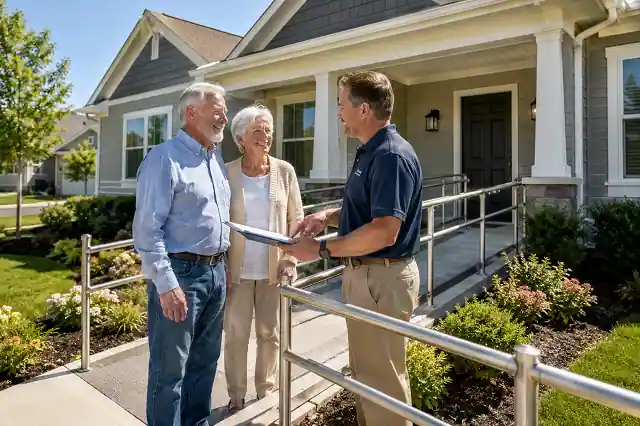
Accessibility home modification grants are financial assistance programs designed to help eligible homeowners make changes that improve safety, mobility, access, or independent living.
Not every program uses the word “grant.” A senior homeowner may instead receive a forgivable loan, deferred loan, low-interest loan, rehabilitation assistance, donated materials, volunteer labor, or another form of support.
The exact modification that qualifies depends on the program. A ramp may qualify under one program but not another. A bathroom modification may qualify when it addresses a mobility or safety barrier but not when it is primarily cosmetic.
Warning about “free government money”: Be cautious of websites promising guaranteed government grants simply because you are a senior. USA.gov states that the federal government does not offer unrestricted “free money” to individuals for personal home repairs, and websites making such claims can be scams.
Which Home Modifications May Qualify?
Eligible projects vary by program, but accessibility-focused assistance commonly considers improvements that remove physical barriers or address health and safety concerns.
- Wheelchair ramps
- Exterior handrails
- Interior handrails
- Bathroom grab bars
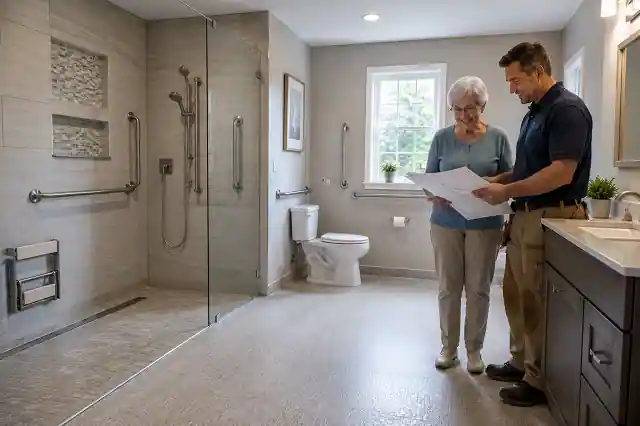
- Walk-in showers
- Roll-in showers
- Accessible bathroom modifications
- Widened doorways
- Threshold removal
- Lever-style door hardware
- Improved lighting
- Non-slip flooring
- Accessible entrances
- Stairway chair lifts
- Platform lifts where program rules allow
- Accessible sinks and bathroom fixtures
- Other modifications approved under the applicable program
ACL specifically identifies ramps, bathroom safety bars, walk-in or roll-in showers, improved lighting, handrails, wider doorways, and stairway chair lifts as examples of modifications that can help older adults remain safely at home.
| Modification | Primary Purpose | Potential Funding Fit |
|---|---|---|
| Wheelchair ramp | Improves entry and exit access | Accessibility and rehabilitation programs |
| Grab bars | Improves bathroom safety | Home-safety and accessibility programs |
| Walk-in or roll-in shower | Reduces difficulty entering a shower | Accessibility rehabilitation programs |
| Widened doorway | Improves wheelchair or walker access | Home modification programs |
| Handrails | Improves stability | Safety and rehabilitation programs |
| Improved lighting | Improves visibility | Home-safety programs |
| Stair lift | Improves access between floors | Program-specific accessibility assistance |
Senior homeowners whose primary project is an accessible bathroom can also review our Bathroom Upgradation Grants for Seniors guide for additional bathroom-focused assistance information.
USDA Section 504 Home Repair Grants for Seniors
USDA Rural Development’s Section 504 Home Repair program is one of the most important federal options for qualifying senior homeowners who live in eligible rural areas.
The program provides loans to very-low-income homeowners for repairs, improvements, modernization, or removal of health and safety hazards. Homeowners age 62 or older may qualify for the grant portion when they meet the program requirements and cannot afford to repay a loan.
USDA currently lists a maximum Section 504 loan of $40,000 and a maximum grant of $10,000. USDA also identifies special disaster-related grant provisions for qualifying situations.
Accessibility work may be considered when it addresses an eligible health or safety hazard. However, homeowners should not assume that every ramp, bathroom modification, stair lift, or accessibility project automatically qualifies.
USDA Section 504 quick facts:
- The homeowner must meet the program’s applicable income requirements.
- The property must meet the applicable rural-area requirements.
- The applicant generally must own and occupy the home.
- Grant eligibility generally applies to homeowners age 62 or older.
- The grant is intended to remove health and safety hazards.
- The current maximum grant is $10,000.
- The current maximum loan is $40,000.
Use the official USDA Rural Development Single-Family Housing Programs information to check current eligibility and application requirements.
For detailed program information, our Section 504 Home Repair Grants guide covers the program in greater depth.
Rural homeowners who need broader assistance can also review our Federal and State Home Repair Grants for Rural Homeowners guide.
HUD-Funded Local Accessibility Rehabilitation Programs
HUD’s Community Development Block Grant program can support residential rehabilitation through eligible state and local governments. HUD identifies rehabilitation of residential structures as an eligible CDBG activity when the activity meets applicable program objectives.
CDBG is not a single nationwide application that every senior homeowner submits directly to HUD. Instead, eligible communities and other grantees administer programs using CDBG funding according to federal requirements and local priorities.
A city, county, state, or local organization may therefore operate a homeowner rehabilitation program that includes accessibility work. Eligible activities and application requirements vary by community.
The official HUD Community Development Block Grant Program page explains the federal funding framework.
Senior homeowners who need broader eligibility information can also review our Home Repair Grants Eligibility Guide.
Key distinction: HUD may provide the funding source, but a local agency generally handles the homeowner application, property inspection, eligible work, income requirements, and project administration.
VA Housing Adaptation Grants for Senior Veterans
Senior veterans with qualifying service-connected disabilities may have access to specialized housing adaptation assistance through the U.S. Department of Veterans Affairs.
VA’s major disability housing programs include Specially Adapted Housing and Special Housing Adaptation. These programs help eligible veterans adapt a home to accommodate qualifying disabilities.
For fiscal year 2026, VA lists a maximum Specially Adapted Housing grant of $126,526. VA also provides Special Housing Adaptation assistance for veterans who meet its specific eligibility requirements.
These are not general senior home-improvement grants. Eligibility depends on qualifying service-connected disabilities and the requirements of the specific VA housing adaptation program.
| VA Program | Purpose | FY 2026 Information |
|---|---|---|
| Specially Adapted Housing | Helps qualifying veterans adapt, build, or acquire an accessible home | Up to $126,526 |
| Special Housing Adaptation | Helps certain qualifying veterans adapt or acquire a home | Program-specific maximum |
| Temporary Residence Adaptation | May help certain eligible veterans adapt a family member’s home | Program-specific maximum |
Check the official VA Disability Housing Grants page for current eligibility and application information.
Veterans who need broader repair assistance can also review our Federal Home Repair Grants for Veterans guide.
Area Agencies on Aging and Local Home Modification Assistance
Federal programs are only one part of the funding picture. Local aging agencies can be particularly useful for seniors who need smaller accessibility modifications or referrals to programs in their community.
The Administration for Community Living recommends contacting the Area Agency on Aging to learn what services are available locally. Depending on the community, assistance may include home modification referrals, safety assessments, aging-in-place resources, minor repairs, or connections to other organizations.
The Eldercare Locator can help older adults find local aging services and Area Agencies on Aging.
Local search tip: Ask the Area Agency on Aging specifically about home modification assistance, fall-prevention programs, aging-in-place services, accessibility repairs, minor home repairs, and housing rehabilitation referrals.
State and Local Home Rehabilitation Programs
States, counties, and cities may operate housing rehabilitation programs using federal, state, or local funding. These programs can differ substantially from one location to another.
One community may provide assistance for ramps and bathroom modifications, while another may focus on emergency repairs, structural rehabilitation, or broader housing safety improvements.
Some programs provide grants. Others may use forgivable loans, deferred-payment loans, low-interest loans, or other forms of assistance.
Homeowners should verify the current program with the state housing agency, county housing department, city housing office, or administering organization rather than relying on an old funding amount.
Our State Home Repair Grants 2026 guide can help you identify the appropriate state-level starting point.
Nonprofit Assistance for Senior Home Modifications
Nonprofit organizations can sometimes help homeowners who do not qualify for a government program or who need additional assistance after receiving a partial award.
Depending on the organization and location, assistance may include volunteer labor, donated materials, minor accessibility repairs, safety assessments, contractor referrals, or other community services.
Availability is highly local, so seniors should contact organizations directly and confirm that an accessibility program is currently operating in their area.
For a broader overview of nonprofit assistance, see our Nonprofit Home Repair Grants 2026 guide.
Which Accessibility Projects May Qualify?
There is no universal federal ranking that guarantees funding for one accessibility project over another. Programs generally evaluate whether the requested work fits their purpose and whether it addresses an eligible health, safety, mobility, or accessibility need.
| Project | Problem Addressed | Potential Program Fit |
|---|---|---|
| Wheelchair ramp | Unsafe or inaccessible entry | Accessibility rehabilitation |
| Grab bars | Difficulty maintaining balance | Home-safety programs |
| Walk-in shower | Difficulty stepping into a bathtub | Accessibility rehabilitation |
| Widened doorway | Wheelchair or walker access | Accessibility programs |
| Handrails | Difficulty navigating stairs or walkways | Safety modifications |
| Improved lighting | Poor visibility | Safety-focused programs |
| Stair lift | Difficulty using stairs | Program-specific accessibility assistance |
The strongest application connects the requested modification to a specific barrier rather than presenting the work as a general remodeling project.
How to Document an Accessibility Need
A strong application should explain what prevents the homeowner from safely using the home and how the requested modification would address that problem.
Depending on the program, supporting evidence may include photographs, an inspection report, medical documentation, an occupational therapy assessment, or a contractor estimate.
Better application wording: Instead of writing “I need a bathroom remodel,” explain the accessibility problem, such as difficulty stepping over a bathtub wall or safely transferring in and out of the shower. Then explain how the proposed modification addresses that barrier.
Who May Qualify for Accessibility Home Modification Grants?
There is no single eligibility standard for all accessibility programs. Different programs may prioritize senior citizens, low-income homeowners, rural homeowners, people with disabilities, veterans, or households facing specific health and safety concerns.
| Eligibility Factor | What the Agency May Review |
|---|---|
| Age | Whether the applicant meets the program’s age requirement |
| Income | Household income compared with applicable program limits |
| Homeownership | Whether the applicant owns the property |
| Occupancy | Whether the property is the primary residence |
| Location | Whether the home is within the program’s service area |
| Accessibility need | Whether the requested work addresses a qualifying barrier |
| Property condition | Whether the home meets the program’s rehabilitation requirements |
Receiving Social Security or Medicare does not automatically make a homeowner eligible for an accessibility grant. The homeowner must meet the requirements of the specific program.
For a detailed explanation of common eligibility requirements, see our Who Qualifies for Free Home Repair Grants guide.
Low-income senior homeowners can also review our Home Repair Grants for Low-Income Families guide when income is a major part of their eligibility.
Income Limits and Financial Qualifications
Income is an important factor in many needs-based housing programs. The way income is calculated can differ between federal, state, and local programs.
Some HUD-funded programs use HUD income limits or locally determined standards. USDA uses its own income eligibility requirements for Section 504.
Applicants should prepare information about household income and benefits requested by the administering agency. Depending on the program, this may include Social Security, retirement income, pensions, wages, disability income, or other sources.
The official HUD Income Limits resource can help homeowners understand the income-limit framework used by HUD programs.
Documents to Prepare Before Applying
Preparing documents in advance can make the application process easier. Exact requirements vary, so the agency’s current checklist should always be treated as the final authority.
Senior accessibility grant checklist
- Government-issued identification
- Proof of homeownership
- Property records if requested
- Income documentation
- Social Security or pension documentation when applicable
- Medical or disability documentation when requested
- Photographs showing the accessibility problem
- Contractor estimates when required
- Insurance or property information when requested
- Completed program application forms
How to Apply for Accessibility Home Modification Grants in 2026
The exact application process varies by program, but senior homeowners can generally follow a similar sequence.
- Identify the accessibility problem and the modification needed.
- Find programs that match your age, income, location, disability, or veteran status.
- Confirm the program’s current eligibility and eligible improvements.
- Gather ownership, income, medical, and other required documents.
- Obtain contractor estimates or inspections if required.
- Submit the complete application and respond promptly to agency requests.
- Wait for written approval before beginning work when prior authorization is required.
For broader application guidance, our How to Apply for Home Repair Grants guide explains common documentation and application issues.
Do not start construction too early: Always ask the administering agency whether written approval is required before work begins. Starting construction before approval can affect eligibility under some rehabilitation programs.
How to Improve Your Application
No strategy guarantees approval, especially when funding is limited. However, a complete application that clearly explains the accessibility need can make it easier for an agency to evaluate the request.
- Apply as early as possible.
- Explain the accessibility barrier clearly.
- Describe how the requested modification solves the problem.
- Submit every required document.
- Provide contractor estimates when requested.
- Provide medical or occupational therapy documentation when required.
- Keep copies of the application and supporting records.
- Respond promptly to agency questions.
- Ask whether a waiting list exists if funding is currently unavailable.
Common Reasons Accessibility Applications May Be Denied
| Potential Problem | How to Reduce the Risk |
|---|---|
| Income is above the program limit | Check the current income rules before applying |
| Property is outside the service area | Confirm location eligibility first |
| Requested work is not eligible | Ask whether the specific modification qualifies |
| Application is incomplete | Use the agency checklist before submitting |
| Missing ownership documents | Prepare current property records |
| Accessibility need is unclear | Clearly explain the barrier and requested solution |
| Funding is exhausted | Ask about future funding cycles or waiting lists |
| Work started before approval | Confirm whether prior written approval is required |
Can Medicare Pay for Home Accessibility Modifications?
Original Medicare generally should not be treated as a home-remodeling grant program. Medicare Part B covers medically necessary durable medical equipment when coverage requirements are met, including equipment such as walkers and wheelchairs.
Equipment coverage is different from paying for permanent structural modifications such as widening a doorway, installing a ramp, or remodeling a bathroom.
Seniors who need permanent home modifications should therefore investigate housing assistance, aging services, Medicaid programs where applicable, VA benefits, USDA assistance, local rehabilitation programs, and nonprofit resources.
Where Should Senior Homeowners Apply First?
The best starting point depends on the homeowner’s circumstances.
| Homeowner Situation | Recommended Starting Point |
|---|---|
| Age 62+ and very-low income in an eligible rural area | USDA Rural Development Section 504 |
| Veteran with a qualifying service-connected disability | VA housing adaptation programs |
| Low-income senior needing local rehabilitation | City, county, or state housing agency |
| Senior looking for aging services | Area Agency on Aging through Eldercare Locator |
| Homeowner who does not qualify for a federal program | Local nonprofit and community programs |
If you are unsure which program to investigate first, our Home Repair Program Finder 2026 can help organize the search around your circumstances and repair needs.
USA.gov also provides a current home repair assistance guide for federal, state, and local programs.
Official Government Resources for Senior Home Modifications
- USDA Rural Development Single-Family Housing Programs
- HUD Community Development Block Grant Program
- VA Disability Housing Grants
- ACL Eldercare Locator
- ACL Aging-in-Place Resources
- CDC Older Adult Fall Prevention
- HUD Income Limits
- USA.gov Home Repair Assistance
- Medicare Durable Medical Equipment Coverage
Final safety check: Confirm the official agency, current eligibility rules, funding availability, application process, inspection requirements, and contractor requirements before committing money to a project.
Accessibility Grant Application Checklist
Before submitting your application:
- Identify the exact accessibility problem.
- Identify the modification needed.
- Confirm that you meet the program’s age requirement.
- Check income eligibility.
- Confirm ownership and occupancy requirements.
- Confirm location eligibility.
- Gather identification and ownership documents.
- Gather income and benefit documentation.
- Obtain medical documentation if requested.
- Get contractor estimates if required.
- Ask whether a property inspection is required.
- Submit the complete application.
- Keep copies of all submitted documents.
- Wait for written approval when required before starting construction.
Frequently Asked Questions
Can senior citizens get accessibility home modification grants?
Yes. Some federal, state, local, aging, veteran, and nonprofit programs provide grants or other financial assistance for eligible accessibility improvements. Eligibility depends on the specific program.
What accessibility improvements are commonly supported?
Common modifications include wheelchair ramps, grab bars, walk-in or roll-in showers, handrails, widened doorways, improved lighting, accessible entrances, and other changes that address mobility or safety barriers.
How much can a senior receive for accessibility modifications?
There is no single nationwide amount. USDA Section 504 currently has a maximum $10,000 grant for qualifying applicants, while eligible veterans may qualify for substantially larger VA housing adaptation assistance. State, local, and nonprofit programs have separate limits.
Can seniors receive USDA Section 504 grants?
Eligible homeowners age 62 or older may qualify for the grant portion of USDA Section 504 if they meet the program’s income, ownership, occupancy, rural-area, and other requirements.
Can senior veterans receive accessibility grants?
Yes. Eligible veterans with qualifying service-connected disabilities may qualify for VA housing adaptation grants. Eligibility is based on the applicable disability and housing requirements rather than age alone.
Will Medicare pay for a wheelchair ramp or bathroom remodel?
Original Medicare generally does not serve as a home-remodeling grant program. It may cover certain medically necessary durable medical equipment, but permanent structural home modifications are a separate issue.
Where can seniors find local home modification assistance?
The Eldercare Locator can help seniors identify local aging resources and Area Agencies on Aging. City, county, and state housing agencies may also administer rehabilitation or accessibility programs.
EEAT Review
Last Updated: August 2026
Reviewed By: Home Property Grants Research Team
Experience: This guide addresses the practical questions senior homeowners face when searching for accessibility and aging-in-place assistance, including identifying modifications, documenting needs, preparing applications, and finding local resources.
Expertise: Federal program information is checked against official resources from USDA Rural Development, the U.S. Department of Housing and Urban Development, the U.S. Department of Veterans Affairs, the Administration for Community Living, the Centers for Disease Control and Prevention, Medicare, and USA.gov.
Authoritativeness: Government program information is linked to the administering agency whenever an official source is available. Local programs may have separate eligibility rules, application procedures, funding limits, and waiting lists.
Trustworthiness: Grant amounts, income limits, funding availability, deadlines, and eligible repairs can change. Homeowners should verify current requirements directly with the administering agency before signing contracts, paying for work, or making financial decisions.
Conclusion
Accessibility home modification grants can help eligible senior homeowners make their homes safer and easier to use. The best funding source depends on the homeowner’s age, income, location, accessibility needs, veteran status, and type of modification.
Start by identifying the exact barrier in the home and the modification needed to address it. Then check USDA Section 504 if you live in an eligible rural area, VA housing adaptation programs if you are an eligible veteran, local housing rehabilitation programs, and aging services through the Area Agency on Aging.
Do not assume that one program will pay for the entire project. A federal program, local housing agency, aging organization, or nonprofit may each provide a different type of assistance. Most importantly, verify eligibility and obtain any required approval before beginning construction.

Arthur Pendelton is a senior housing policy researcher and public welfare analyst with over eight years of experience tracking federal, state, and non-profit residential repair programs. He specializes in statutory grant frameworks, including USDA Section 504 Rural Housing, the Department of Energy’s Weatherization Assistance Program (WAP), and municipal HUD Community Development Block Grants (CDBG). Arthur systematically audits Federal Register publications and Title 7/42 CFR regulatory updates to provide low-income homeowners, seniors, and military veterans with accurate, barrier-free application guidance.