
Free Bathroom Upgrade Grants For Fixed-Income Homeowners in 2026
Unsafe bathrooms cause bad falls every day for older adults and disabled people. Real bathroom upgrade grants for fixed-income homeowners give you free public money. These grants fix dangerous house hazards without giving you a bad bank loan. Homeowners can read the main home repair grants guide to compare programs before picking a builder. Public programs give away between $1,500 and $25,000. This money pays for flat roll-in showers, strong metal grab bars, and wider doorways. Families can fix daily safety hazards while keeping their monthly checks safe.
Getting a fixed-income check does not mean you get a direct check to fix your house. But, getting a fixed monthly check proves your family makes very little money. This proof helps you qualify for federal and city repair programs. USDA Section 504 rules protect country homeowners using Title 7 rules. Cities run urban repair programs using Title 24 rules. Veteran upgrades follow Title 38 rules. All these programs must check your house deed, your benefit letter, and the real damage in your home.
For 2026, fixed-income people pass the HUD income checks automatically. The USDA gives free grants up to $10,000 for country seniors. City emergency programs give up to $25,000 in loans that slowly go away. Local offices check files four times a year until the access money runs out.
Internet ads often promise free government tickets for money. Real public help follows strict legal rules. Housing offices must check your income, your deed, and the moving hazards in your house. Families who qualify can use the eligibility screening tools in the home repair program finder. Following official steps protects your house while helping you get the grant money.
City housing offices often put a hold on your house deed. If you sell your house or change your mortgage before 5 to 10 years, you must pay the grant money back. Always ask the office for the written rules about your deed before you sign anything with a builder.
Approved project plans cover important repairs after an inspector finds a real safety hazard. Licensed builders take out slippery floors and put down waterproof shower edges. Workers can make narrow bathroom doors wider, put up strong grab bars, and make floors flat. These safety upgrades fix living hazards and help disabled people stay in their homes safely.
Disabled military veterans asking for home changes must get a real note from their doctor. You can Download Official VA Form 10-0103 HISA Application (PDF) and send it to the medical desk at your local VA hospital.
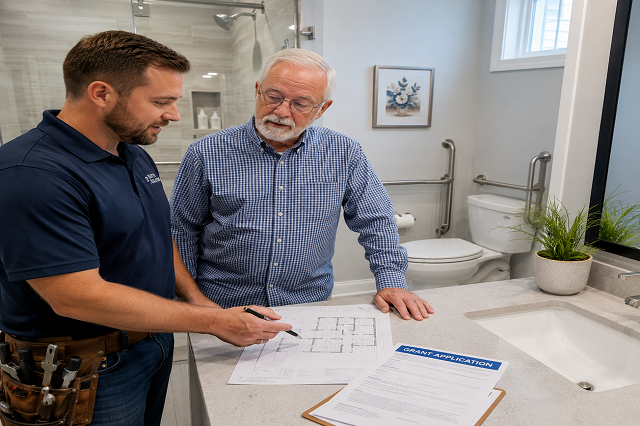
Why Bathroom Help Matters for Fixed-Income Families
Fixed-income checks help older and disabled people pay for basic needs. The monthly money covers food and power bills. Very little cash is left over to pay for huge home repairs.
This problem gets worse as people get older. Old houses have slippery floors, narrow doorways, and tall bathtubs that are hard to step over. Remodeling a bathroom costs way more money than an SSI recipient makes in a whole year.
Public programs pay for repairs based on health and safety, not on making the house look pretty. Review boards will say no if you ask for nice tile or new cabinets. Public money focuses on removing fast safety dangers.
| Repair Need | Health and Safety Impact | Primary Public Program | Maximum Assistance |
|---|---|---|---|
| Flat Walk-in Shower | Stops dangerous slip and fall injuries | USDA 504 / CDBG | $10k Grant / $25k Loan |
| Grab Bars & Handrails | Helps keep balance during daily routines | City Housing Rehab | Pays the Full Cost |
| Making Doors Wider | Allows wheelchairs and walkers to fit | State Access Programs | $5k-$15k Grant |
| Leaking Water Pipes | Brings back clean water and stops mold | Emergency Housing Grants | $2.5k-$7.5k |
| Easy Lever Sink Handles | Helps people with bad arthritis pain | VA HISA Grant | Up to $6,800 Grant |
People planning to make walking easier can check the legal standards in the home repair grants eligibility guide. Knowing the federal rules early stops your form from getting delayed.
Understanding 2026 Income Rules for Fixed-Income Homeowners
Applying for bathroom upgrade grants for fixed-income homeowners means you must pass the program’s income rules. Offices check your household pay, your deed, and how badly your house needs fixing. Checking the local rules early stops your form from getting delayed.
Most housing repair programs use the Area Median Income charts from HUD. Federal programs set limits based on how many people live with you and what county you are in. Two people getting the exact same monthly check might qualify for different programs just because they live in different counties.
| Household Size | Extremely Low (30% AMI) | Very Low (50% AMI) | Low Income (80% AMI) | Typical Program Fit |
|---|---|---|---|---|
| 1 Person | $21,750 | $36,250 | $58,000 | USDA 504 / CDBG |
| 2 People | $24,850 | $41,400 | $66,250 | USDA 504 / CDBG |
| 3 People | $27,950 | $46,600 | $74,550 | Full House Repair |
| 4 People | $31,050 | $51,750 | $82,800 | Full House Repair |
Families fixing broken pipes can review sanitation relief through bathroom upgrade grants for seniors. Mixing safety fixes with big wood repairs helps your grant get approved faster. Securing bathroom upgrade grants for fixed-income families lets people keep their house value without taking out a bad loan.
USDA Section 504: The Best Country Home Repair Program
The U.S. Department of Agriculture runs the Section 504 repair program under Title 7 rules. This federal program gives free grants and low-cost home repair loans to country families who make very little money. Homeowners can read all the rules through official government websites.
Section 504 gives you three ways to get money:
- Free Lifetime Grants: Seniors aged 62 and older can get up to $10,000 in free money. You must prove you do not make enough money to pay back a loan. The money is 100% free if you stay in your house for three full years.
- Cheap 1% Repair Loans: Low-income homeowners of any age can borrow up to $40,000 for 20 years at a tiny 1.0% interest rate. A $10,000 loan means you pay about $46 a month.
- Mixed Grant and Loan Deals: Country seniors who can pay a little bit each month can mix a free $10,000 grant with a $40,000 loan for big home fixes.
| Section 504 Part | Most Money You Can Get | Repayment Rules | Approved Work | Main Rule to Meet |
|---|---|---|---|---|
| Section 504 Grant | Up to $10,000 in your life | Totally free if you stay 3 years | Fixing bad health and safety dangers | Age 62+; income under 50% of county limit |
| Section 504 Loan | Up to $40,000 total | 1.0% interest rate over 20 years | Wood framing, water wells, septic tanks | Income below 50% of county limit |
| Mixed Package | Up to $50,000 total | Grant is free; loan is at 1.0% | Total home repair | Seniors who can pay a little each month |
You must prove your family income is less than half of what the county usually makes. You must also prove a normal bank will not give you a loan. Local USDA offices take forms all year long.
How HUD City Money Pays for Home Repairs
The U.S. Department of Housing and Urban Development gives money to local cities and counties. This money is called Community Development Block Grants under Title 24 rules. City housing offices use this money to run home repair programs for lower-income families.
You cannot apply for this money on the big national HUD website. HUD gives the money to your local city hall or county office. Your local office runs the waiting list, checks your income, and looks at your house before paying the builder.
City repair money is usually given as a special loan with 0% interest, between $5,000 and $25,000. The city puts a hold on your house deed. The loan slowly goes away if you stay in the house for 5 to 10 years. If bad dangers hurt your family’s health, you can check out municipal rehabilitation allocations in HUD home improvement grants to ask them to move fast.
When you call your local city housing office, ask these important questions:
1. Is your office taking forms for home repairs right now?
2. What is the exact income limit for the number of people in my house?
3. Do you give free grants or loans that I have to pay back?
4. Do you pick the builder, or do I have to find the builder myself?
VA Housing Grants for Disabled Veterans
Military veterans living with injuries from their service can get special housing money. The Department of Veterans Affairs runs these programs under federal Title 38 rules. These grants pay for house changes that help disabled veterans live safely on their own.
The Home Improvements and Structural Alterations (HISA) grant is an easy VA benefit to get. Veterans do not need to prove their injury came from their service to get some help. Veterans with other injuries can get up to $2,000. Veterans with service injuries can get free lifetime grants up to $6,800. HISA pays for flat roll-in showers, lower kitchen sinks, and strong metal ramps.
Veterans with permanent service injuries can get Specially Adapted Housing grants up to $126,526. Special Home Adaptation grants give up to $25,350 to veterans with bad vision or lung problems. Veterans needing these changes can check targeted accessibility funds in bathroom upgrade grants for veterans. Getting bathroom upgrade grants for fixed-income homeowners makes sure your safety fixes are done by a real builder.
Country vs. City Grants: Why Your Address Matters
Where your house sits decides which public program you can use. Two people making the exact same fixed income can get different grants just because of their ZIP code. Applying at the correct office saves you from waiting for months.
Federal housing money moves through different offices based on how many people live in your town. Country homeowners get direct grants through the USDA Rural office network. City families apply through municipal housing desks paid for by HUD.
Local housing offices set their own grant limits and builder rules. Country homeowners use Section 504 to fix septic tanks and water wells. City programs focus on fixing broken housing codes. Older people can look at state housing rehabilitation pools in the state home repair grants guide. Using these public grants helps fix country and city homes alike.
| Geographic Location | Primary Administering Agency | Governing Statute | Typical Priority Projects | Financing Structure |
|---|---|---|---|---|
| Rural Communities | USDA Rural Development | Title 7 Federal Rules | Roofs, cracked floors, water wells | Free grant up to $10,000 / 1% loan |
| Metropolitan Cities | City Housing Authority | Title 24 Federal Rules | Code violations, electric boxes | Loan up to $25,000 that goes away |
| Suburban Counties | County Housing Office | Title 24 Federal Rules | Water pipes, heating systems | 0% interest loan that goes away |
| State Preservation Zones | State Housing Office | State Housing Laws | Walking access and sealing drafts | Direct grant matching money |
Easy Walking Changes Get Approved First
For disabled people on a fixed income, a safe house means easy walking and moving. Housing offices put access upgrades first because they stop bad falls and keep people out of nursing homes. Office workers see these changes as super important health fixes.
Approved access fixes include cement wheelchair ramps, wider doors, and flat walk-in showers. Homeowners can check out barrier-free modification funding in home accessibility grants for seniors. Public programs also pay for easy lever door handles so you can live on your own safely.
Office workers give higher scores to forms that include a real letter from a doctor saying you need the change. Getting public access grants keeps you moving safely in your own home.
Big Mistakes That Delay or Ruin Your Grant
Many fixed-income people get denied because they miss a paper or break a rule. Giving the office a perfect stack of papers makes sure your file moves fast. Avoid these common traps:
- Starting Work Too Early: Public programs never pay for work started before you sign the final papers. Hiring a private builder early cancels your grant right away.
- Messy Builder Prices: Office workers demand clear prices that break down the cost of labor, parts, and city permits. A sloppy price written on one line stops your file cold.
- Hiding House Income: Housing offices count the money made by every adult living in the house. Forgetting to list someone’s wages or pension check brings a fast denial.
- Hiring Random Handymen: Public programs demand you use real, licensed builders listed on SAM.gov. Random workers without insurance cannot get public grant money.
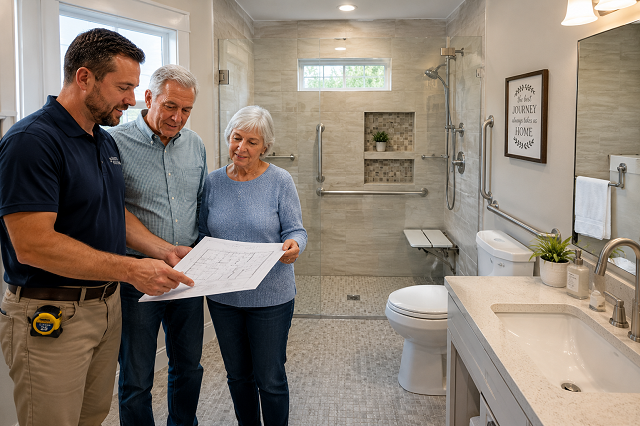
What Happens After You Send Your Form
Once you send in your form, office workers check your papers. They look at your house deed, your benefit letter, and your tax records. If you forgot a paper, the office will call you before they visit your house.
The physical house check proves the damage is real and sets up the repair list. City inspectors check electrical boxes and test for lead paint. The inspector writes a real report that tells the builder what to fix. Asking for bathroom upgrade grants for fixed-income homeowners makes sure your access fixes are paid for correctly.
| Application Stage | Administrative Action | Estimated Timeline |
|---|---|---|
| Initial Submission | Office workers log your papers | 1-3 Days |
| Income Review | Workers check your benefit letters and tax forms | 2-4 Weeks |
| Property Inspection | Inspector checks for structural dangers | 1-3 Weeks |
| Contractor Selection | Office checks prices from licensed builders | 2-4 Weeks |
| Construction Phase | Builders do the approved repair work | 2-8 Weeks |
Step-by-Step: How to Apply the Right Way
Follow these eight steps to keep your file moving fast:
- Take Photos of House Dangers: Take photos with dates showing narrow doorways, high tubs, and slippery floors. Write a short note telling why this hurts your safety.
- Print Your Benefit Letter: Print your newest benefit letter from your online federal account. This letter proves your low income to the office.
- Find the Housing Office: Call your city housing office, local Community Action Agency, or the closest USDA Rural Development office.
- Get Your House Papers: Find your house deed, your latest property tax bill, and your home insurance papers.
- Ask Builders for Prices: Get written prices from builders who have a real license, insurance, and are listed in the federal SAM.gov database.
- Fill Out the Forms: Fill out the real program forms, like USDA Form RD 410-4 or your local city CDBG forms.
- Let Them Check the House: Let city inspectors check your house to prove the damage is real and approve the repair list.
- Sign the Grant Papers: Wait for a real written letter from the office before you let any builder start working. Starting early cancels your grant.
Struggling homeowners can use these public programs to fix bad safety dangers without bad bank loans. Families replacing bad windows can check out structural aid in home repair grants for disabled homeowners to get matching money.
Public home repair programs follow strict federal laws like Title 7, Title 24, and Title 10. Real government housing offices never charge a fee to apply. Homeowners must stay away from companies that ask for cash to fill out a grant form.
Common Questions
Does getting a fixed pension automatically give me a home repair grant?
No. Getting fixed income just proves you have a low income. This helps you pass the income rules for public housing programs.
Can a fixed-income person get more than one repair grant?
Yes. Homeowners can mix public programs if each money source pays for a totally different fix on the house.
Do I have to pay back bathroom upgrade grants for fixed-income homeowners?
Free grants do not make you pay them back. But, some city programs use special loans that go away if you stay in the house for 5 to 10 years.
What house repairs do offices pay for first?
Top jobs include fixing a leaking roof, putting in safe electrical wiring, fixing broken heaters, and building flat wheelchair ramps.
Can younger disabled people on a fixed income get a repair grant?
Yes. While USDA grants want you to be 62, city CDBG and access programs help disabled homeowners of any age.
How long does the review and approval take?
Normal forms take 30 to 90 days. Fast emergency programs for active leaks or broken heaters say yes in 7 to 14 days.
Will getting a home repair grant make my monthly check smaller?
No. Public grants that pay builders straight from the office are treated as welfare help. The government does not count this as income.
Next Steps: Get Your Home Repair Form Ready
Qualifying for bathroom upgrade grants for fixed-income homeowners gives you direct public money. Start today by getting your real benefit letter from your online federal account. Take photos with dates showing the damage and find your house deed. People in the country should call their USDA Rural office to ask for Form RD 410-4. City families should call their city housing office to check CDBG dates. Sending your form early gets you in line before the yearly money runs out.
Why You Can Trust This Guide
Last Updated: October 2026
Reviewed By: Arthur Pendelton, Senior Public Housing Policy Analyst
Experience: Our research team has studied federal housing laws and city grant programs in all 50 states for over ten years.
Expertise: All dollar limits and income rules come straight from real federal laws, like Title 7 and Title 24.
Authority: All 2026 money limits ($10,000 for USDA grants, $25,000 for CDBG awards, $8,000 for WAP) are checked against the real Federal Register prints and official office rules.
Trustworthiness: HomePropertyGrants.com works completely alone. We never take money, favor builders, or get paid by machine makers or banks.
Helpful Decision Support: We explain hard housing rules in simple American English, helping families get real public help safely.

Arthur Pendelton is a senior housing policy researcher and public welfare analyst with over eight years of experience tracking federal, state, and non-profit residential repair programs. He specializes in statutory grant frameworks, including USDA Section 504 Rural Housing, the Department of Energy’s Weatherization Assistance Program (WAP), and municipal HUD Community Development Block Grants (CDBG). Arthur systematically audits Federal Register publications and Title 7/42 CFR regulatory updates to provide low-income homeowners, seniors, and military veterans with accurate, barrier-free application guidance.