
Free roof replacement grants for disabled homeowners in 2026 can come through several federal, state, local, veteran, disaster, weatherization, and nonprofit housing programs. The best opportunity depends on your age, household income, home location, ownership status, disability, veteran status, and the reason your roof needs repair or replacement.
This article answers one practical question: Which roof replacement grants and home-repair funding options should a disabled homeowner check first? It takes a situation-first approach so you can identify the strongest program, understand what that program is designed to cover, prepare the right documents, and take the correct next step without relying on unsupported grant amounts.
Quick answer: Disabled homeowners may find roof funding through USDA Section 504, HUD-funded local rehabilitation programs, FEMA Home Repair Assistance after qualifying disasters, the Weatherization Assistance Program, VA housing grants for qualifying disabled veterans, state and local housing programs, and nonprofits. Eligibility depends on the specific program’s income, age, location, ownership, disability, disaster, veteran, and project requirements.
For the broader homeowner market, start with the roof repair and roof replacement grants guide. This article goes deeper into the disability-specific decision points, program boundaries, and application strategy.
The fastest way to narrow your options is to match the reason for the roof work with the program’s purpose. A health or safety problem may point toward USDA or local rehabilitation funding, disaster damage may point toward FEMA, weatherization needs may point toward WAP, and qualifying disabled veterans should review VA housing-adaptation programs.
Which Roof Replacement Grant Should a Disabled Homeowner Check First?
The right starting point depends on what is happening with your roof. A rural homeowner age 62 or older may have a strong USDA pathway. A homeowner whose roof was damaged by a qualifying disaster may need FEMA. A low-income household receiving SSI may want to contact its local weatherization provider. A qualifying disabled veteran should examine VA housing-adaptation grants. Other homeowners may find the best route through local rehabilitation or nonprofit programs.
| Your Situation | First Program to Check | Why It May Fit | Key Requirement |
| Very-low-income rural homeowner age 62 or older | USDA Section 504 | Eligible grants can remove health and safety hazards. | Ownership, occupancy, income, rural-area and other USDA requirements apply. |
| Low-income homeowner in a participating city or county | Local CDBG or HOME rehabilitation program | Local housing programs can fund eligible owner-occupied rehabilitation. | The local administrator sets the application and project rules. |
| Roof damaged by a qualifying declared disaster | FEMA Home Repair Assistance | Qualifying disaster-related roof damage may receive consideration. | The property, homeowner, and disaster damage must satisfy FEMA requirements. |
| Low-income household needing weatherization | Weatherization Assistance Program | WAP gives priority to households with people with disabilities. | The local provider determines the approved weatherization scope. |
| Veteran with a qualifying service-connected disability | VA SAH or SHA | These grants support qualifying disability-related home adaptations. | The proposed work must fit the VA adaptation requirements. |
| Homeowner served by a state or local repair program | State, county or city housing agency | Local programs may prioritize health, safety, accessibility, or low-income households. | Funding and eligible repairs vary by jurisdiction. |
| Homeowner without a suitable government route | Qualified nonprofit housing program | Some nonprofits provide repair labor, materials, or other housing support. | Service area, funding, eligibility, and project scope vary. |
Start with these facts: Write down your age, household income, property address, ownership status, disability or veteran documentation, and the reason the roof needs work. Those details will make conversations with program administrators much more productive.
Who Can Qualify for Roof Grants When They Have a Disability?
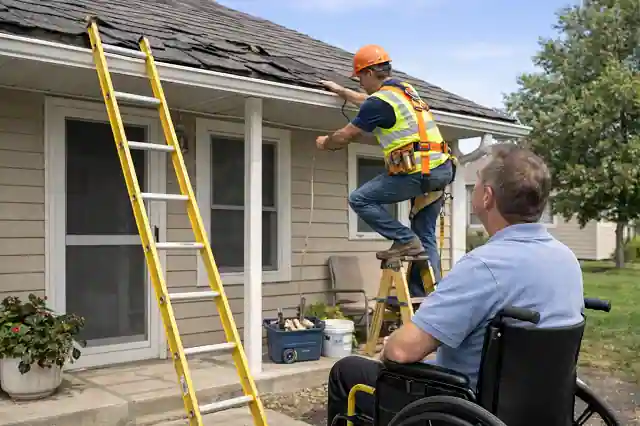
Disability can be an important eligibility or priority factor, but it does not create one universal federal roof replacement grant. Each program may also consider household income, age, homeownership, occupancy, location, disaster damage, service-connected disability, or the specific purpose of the proposed repair.
For example, the U.S. Department of Agriculture (USDA) requires Section 504 grant applicants to be age 62 or older. The U.S. Department of Energy (DOE) gives priority to households with a member with a disability under WAP. The U.S. Department of Veterans Affairs (VA) requires specific qualifying service-connected disabilities for its housing-adaptation grants.
| Eligibility Factor | Why It Matters | Documents to Prepare |
| Disability | Some programs prioritize or specifically serve households with disabilities. | Only the disability documentation requested by the program. |
| Age | Age can determine eligibility for specific grant programs. | Government-issued identification. |
| Income | Many housing-repair programs target low- or very-low-income households. | Benefit statements, tax records, pay records or other accepted documents. |
| Homeownership | Owner-occupied rehabilitation programs commonly require ownership. | Deed, title record or other accepted proof. |
| Primary residence | Many homeowner programs require the property to be your residence. | Utility bill, identification, tax record or other accepted proof. |
| Location | USDA, state, local and disaster programs have geographic requirements. | Property address and property records. |
| Roof condition | The agency needs evidence showing why the work is necessary. | Photos, inspection report and repair scope. |
| Disaster connection | FEMA assistance depends on qualifying disaster-related damage. | Photos, inspection information, insurance records, and disaster documents. |
If you receive SSI, you can also review home repair grants for SSI recipients because SSI status can be relevant to certain low-income housing and weatherization programs.
For the broader eligibility picture, see who qualifies for home repair grants.
How Can USDA Section 504 Help With a Disabled Homeowner’s Roof?
USDA Section 504 is one of the most important federal programs to investigate when the homeowner is rural, very low income, owns and occupies the property, and meets the other program requirements.
The program provides loans to very-low-income homeowners for eligible repairs, improvements, and modernization. It also provides grants to eligible elderly very-low-income homeowners to remove health and safety hazards. For the grant component, the homeowner must be age 62 or older. The official U.S. Department of Agriculture (USDA) program page provides the current eligibility and program details.
USDA Section 504 published maximums:
- Maximum loan: $40,000
- Maximum standard grant: $10,000
- Maximum grant for certain homes damaged in a presidentially declared disaster area: $15,000
- Maximum combined loan and grant: $50,000
- Maximum combined amount in qualifying presidentially declared disaster situations: $55,000
- Loan interest rate: 1%
- Loan term: 20 years
These are published program maximums rather than guaranteed awards. USDA determines eligibility and the amount of funding available for an individual project based on the applicant, property, repair needs, program requirements, and available funding.
USDA says Section 504 grants must be used to remove health and safety hazards. A seriously deteriorated roof can therefore be relevant when the roof work satisfies USDA’s program requirements.
USDA also published a June 2026 success story about a New Jersey family that received a $10,000 grant and a $6,460 loan to fully repair a failing roof. This is a documented example of a qualifying roofing project receiving Section 504 support, not a promised award for every applicant.
For a more focused explanation of this program, see USDA Section 504 home repair grants.
A useful related resource is home improvement loan options for low-income seniors when a homeowner qualifies for a loan rather than a grant.
What Should a Disabled Homeowner Check Before Applying to USDA?
| USDA Requirement | What to Verify |
| Ownership | You own and occupy the home. |
| Income | Household income does not exceed the applicable very-low-income limit. |
| Credit | You cannot obtain affordable credit elsewhere under the program rules. |
| Location | The property is in an eligible rural area. |
| Grant age requirement | You are age 62 or older when seeking the grant component. |
| Repair purpose | The grant project addresses an eligible health or safety hazard. |
Important distinction: A disability does not replace USDA’s age requirement for the Section 504 grant. A disabled homeowner under 62 can still investigate the Section 504 loan when eligible, but the grant component has its own age requirement.
How Can HUD-Funded Rehabilitation Programs Help Disabled Homeowners?
The U.S. Department of Housing and Urban Development (HUD) supports housing programs administered through states, cities, counties, and participating organizations. That makes local housing agencies an important part of a disabled homeowner’s roof-funding search.
Community Development Block Grant (CDBG) funds can support eligible housing rehabilitation activities. HUD’s owner-occupied housing rehabilitation checklist specifically includes roof work among the types of rehabilitation requested and tracks inspections, cost estimates, bids, contractor licensing, construction monitoring, and final inspection.
The HOME Investment Partnerships Program can also support eligible affordable-housing activities administered through participating jurisdictions.
Ask your local housing agency: “I own and occupy my home, I have a documented disability, and I need roof repair or replacement. Does your owner-occupied rehabilitation or critical-repair program fund roofing, and what income, property and application requirements apply?”
For another broad federal and state roofing resource, see federal and state roof replacement grants.
You can also review emergency home repair grants when the roof problem is part of a larger urgent home-safety project.
What Does a Local HUD-Funded Program Usually Need?
| Application Stage | Typical Evidence |
| Eligibility | Completed application, income information and ownership documentation. |
| Property review | Inspection report, photographs and property-condition information. |
| Project design | Written specifications and repair scope. |
| Cost review | Cost estimate and required bids. |
| Contractor review | Required licensing and insurance documentation. |
| Construction | Permits, inspections and progress documentation when required. |
| Closeout | Final inspection, completion photographs and final documents. |
When Can FEMA Help With a Disabled Homeowner’s Roof?
The Federal Emergency Management Agency (FEMA) can become relevant when a qualifying disaster damages the roof and the homeowner meets the applicable Individual Assistance requirements.
FEMA Home Repair Assistance is designed around eligible disaster-related housing damage. A homeowner should therefore document the connection between the disaster and the roof condition.
| FEMA Question | Evidence to Prepare |
| Was the roof damaged by the disaster? | Photographs, inspection findings and disaster-related records. |
| Is the property your primary residence? | Ownership and occupancy documentation. |
| Was the property in the declared disaster area? | Property address and disaster information. |
| Was insurance involved? | Insurance policy, claim and settlement documents. |
| Does the home need eligible repairs? | Inspection results and repair information. |
Best FEMA strategy: Photograph the roof damage as soon as it is safe, keep insurance and inspection records, and follow the official disaster-assistance process. FEMA should be approached as a disaster-recovery route rather than a general program for ordinary roof aging.
For smaller roofing problems, see grants to fix small roof leaks.
For broader low-income roofing research, see roof replacement grants for low-income families.
How Can the Weatherization Assistance Program Help?
The U.S. Department of Energy (DOE) Weatherization Assistance Program (WAP) can be valuable when a low-income household needs weatherization and includes a person with a disability.
The U.S. Department of Energy (DOE) states that households at or below 200% of the federal poverty guidelines, or households receiving Supplemental Security Income, may qualify under federal WAP guidelines. States and territories administer the program through local providers, and the local provider determines eligibility, priority, and the specific weatherization work that can be completed.
WAP is primarily an energy-efficiency and weatherization program. A roof condition can affect whether weatherization work can proceed effectively, so the local provider should determine whether roof-related readiness work is appropriate or whether another repair program should address the roof first.
Best WAP question: “My household qualifies for weatherization and includes a person with a disability. The roof condition affects the home’s weatherization readiness. Does your provider have a roof-related readiness pathway, or can you refer me to a program that can address the roof first?”
What Does WAP Not Automatically Cover?
WAP eligibility does not mean that every applicant receives a complete roof replacement. The local weatherization provider determines the approved work based on the property’s assessment and the program’s rules.
For disability-related improvements elsewhere in the home, see window replacement grants for disabled homeowners.
Can Disabled Veterans Use VA Housing Grants for Roof Work?
The U.S. Department of Veterans Affairs (VA) offers Specially Adapted Housing (SAH) and Special Home Adaptation (SHA) grants for veterans and service members with qualifying service-connected disabilities.
| VA Program | FY 2026 Maximum | Main Purpose | Roof Consideration |
| Specially Adapted Housing (SAH) | $126,526 | Qualifying major home adaptations for eligible veterans or service members. | A roofing component must fit the approved adaptation purpose. |
| Special Home Adaptation (SHA) | $25,350 | Qualifying home adaptations for eligible veterans or service members. | The proposed work must satisfy VA’s adaptation requirements. |
These are FY2026 maximum grant amounts, not guaranteed roof-replacement awards. VA evaluates the veteran’s qualifying disability and proposed adaptation.
Disabled veterans can also compare roof replacement grants for veterans and home repair grants for disabled veterans.
For a broader veteran-focused resource, see federal home repair grants for veterans.
What Does VA SAH or SHA Not Automatically Cover?
A qualifying service-connected disability does not automatically make ordinary roofing work eligible. VA housing grants are designed around qualifying home adaptations. A veteran should discuss the proposed project with VA before treating roofing work as part of an SAH or SHA application.
What State and Local Roof Grants Should Disabled Homeowners Check?
State, county and city housing agencies can operate programs for owner-occupied rehabilitation, critical repairs, emergency repairs, accessibility modifications and other housing needs. These programs may use federal, state or local funding.
| Program Type | Question to Ask | Useful Evidence |
| Owner-occupied rehabilitation | Does the program fund roof repair or replacement? | Ownership, income and roof inspection. |
| Critical home repair | Does a failing roof qualify as a health or safety problem? | Photos and professional inspection. |
| Emergency home repair | Can urgent roof damage be addressed? | Repair estimate and evidence of urgency. |
| Disability modification | Does disability create an eligibility or priority category? | Requested disability documentation. |
| Housing rehabilitation | Are CDBG, HOME, or state funds available for owner-occupied repairs? | Income, ownership and property information. |
| Roof rehabilitation | Is roof repair or replacement specifically listed as an eligible repair? | Roof scope and estimate. |
Texas homeowners can explore Texas accessibility modification grants when disability-related home improvements are also needed.
California homeowners can review California home repair grants for disabled homeowners for a state-specific research path.
What Can These Programs Potentially Cover?
The answer depends on the program’s purpose. A health-and-safety program, disaster program, weatherization program and disability-adaptation program can evaluate the same roof differently.
| Roof Need | Potential Funding Route | Evidence That Helps |
| Roof creating a documented health or safety hazard | USDA Section 504 or local rehabilitation | Inspection report, photographs and repair scope. |
| Roof damaged by a qualifying disaster | FEMA and applicable disaster programs | Disaster records, photographs, inspection and insurance documents. |
| Roof condition affecting weatherization | WAP and coordinated local funding | Weatherization assessment and roof documentation. |
| Roof work connected to a qualifying veteran adaptation | VA SAH/SHA review | VA disability documentation and adaptation plan. |
| Roof included in a local rehabilitation project | CDBG, HOME, state or local housing programs | Income, ownership, inspection and project scope. |
| Emergency leak | Local emergency repair programs and applicable disaster programs | Photos, inspection and repair estimate. |
Homeowners with broader roof needs can also review roof replacement grants for additional roofing-focused information.
What Do Roof Grant Programs Not Cover?
Understanding program boundaries helps you prepare a project that fits the actual funding purpose.
Program-scope rule: The name of a repair does not determine eligibility. The administering agency decides whether the property, homeowner, repair and requested work satisfy the program’s rules.
| Program | Potentially Relevant | Program Boundary |
| USDA Section 504 | Eligible repairs and health and safety hazards. | Grant eligibility includes the age, income, rural-area and other USDA requirements. |
| CDBG | Eligible local residential rehabilitation. | Local jurisdiction determines the program design and homeowner eligibility. |
| HOME | Eligible affordable-housing rehabilitation activities. | Funding is administered through participating jurisdictions. |
| FEMA | Qualifying disaster-caused housing damage. | Ordinary aging unrelated to a qualifying disaster is a different housing-repair issue. |
| WAP | Eligible weatherization and related readiness work. | It is not an automatic full-roof replacement benefit. |
| VA SAH/SHA | Qualifying disability-related home adaptations. | Ordinary roof replacement is not automatically an eligible adaptation. |
| Local programs | Repairs specifically authorized by the local program. | Work outside the published scope requires separate eligibility. |
For homeowners who need several repairs, bathroom accessibility grants for disabled homeowners may be relevant when the roof is only one part of a larger disability-related project.
How Should a Disabled Homeowner Prepare the Application?
A strong application connects the homeowner’s eligibility, the property, the roof condition, the reason the work is necessary, and the program’s purpose.
Document the Roof Condition
Take clear photographs of leaks, missing roofing materials, damaged flashing, water intrusion, ceiling damage, sagging areas and other visible conditions. Obtain an inspection when the program requires or recommends one.
Explain the Functional Need
Describe the actual problem. Explain whether the roof affects safety, weather protection, habitability, energy performance or another purpose recognized by the program.
Prepare the Documents
Roof Grant Application Checklist
- Proof of homeownership
- Proof of primary residence
- Government-issued identification
- Current household income documents
- SSI, SSDI, VA or other benefit documents when relevant
- Disability documentation requested by the program
- Property tax records when requested
- Roof photographs
- Roof inspection report when required
- Contractor estimate or written scope when required
- Insurance information
- Disaster documentation when applicable
- Veteran documentation when using a VA route
For a broader application workflow, see how to apply for home repair grants.
Confirm Contractor Requirements Before Construction
Local rehabilitation programs may require approved contractors, competitive bids, written specifications, permits, inspections or construction monitoring. Ask the administrator what must happen before work begins.
Safety note: A disabled homeowner should not climb onto a damaged roof to inspect it personally when doing so creates a safety risk. A qualified professional can document the roof condition and prepare the required scope of work.
When Should You Apply for Roof Replacement Funding?
The best time to apply is before starting the roof project whenever the program requires prior approval, inspection, or contractor review. Start the process as soon as you know the roof needs repair or replacement so the administering agency has time to determine eligibility and explain its requirements.
For emergency situations, contact the appropriate local, state, federal, or disaster-response agency as soon as possible. If the roof damage followed a qualifying disaster, check FEMA and other disaster-specific options promptly because disaster programs follow their own application rules and deadlines.
For planned roof replacement, avoid assuming that a program will reimburse work completed before approval. Ask the administering agency when an application must be submitted, whether an inspection is required, and whether written approval is needed before hiring a contractor or beginning construction.
How Can a Disabled Homeowner Choose Between Several Programs?
| If Your Situation Is… | Start By Checking… | Your First Question |
| You are 62+, very low income, and live in an eligible rural area | USDA Section 504 | Does my roof problem qualify as an eligible health or safety hazard? |
| Your roof was damaged by a qualifying disaster | FEMA | Is my roof damage eligible disaster-related housing damage? |
| Your household needs weatherization and includes a person with a disability | Weatherization Assistance Program | Can my local provider address the roof issue or coordinate with another repair program? |
| You are a qualifying disabled veteran | VA SAH/SHA | Is the proposed roof work part of an eligible home adaptation? |
| You live in a city or county with a housing rehabilitation program | Local housing agency | Does the owner-occupied rehabilitation program cover roofing? |
| You do not qualify for the federal routes above | State, local, and nonprofit programs | Which current critical-repair or roof-rehabilitation programs serve my property? |
Seven-step decision path:
- Identify the cause of the roof problem. Decide whether it involves health and safety, ordinary deterioration, weatherization, accessibility, or disaster damage.
- Check your age. Age 62 or older can make the USDA Section 504 grant worth investigating when the other requirements are met.
- Check household income. Low-income households should investigate USDA, WAP and local rehabilitation programs.
- Check your property location. Rural properties may qualify for USDA, while cities and counties may administer HUD-funded programs.
- Check veteran status. A qualifying service-connected disability can make VA housing grants relevant.
- Match the project to the program. Ordinary roof replacement, disaster damage, weatherization readiness and disability adaptation are different funding questions.
- Confirm eligibility before construction. Ask the administering agency whether the exact work is eligible and whether written approval is required.
What Do the Latest Disability Statistics Show?
The Centers for Disease Control and Prevention (CDC) reports that 28.7% of U.S. adults reported a functional disability in 2022, representing about 70 million adults. CDC also describes disability as affecting approximately 1 in 4 U.S. adults.
| Statistic | Year | Why It Matters |
| 28.7% of U.S. adults reported a functional disability | 2022 | Shows the scale of disability among U.S. adults. |
| About 70 million adults represented the estimate | 2022 | Provides national context for disability-focused housing needs. |
| Approximately 1 in 4 adults reported a disability | 2022 | Shows the broad population that may benefit from accessible and safe housing programs. |
These figures provide national context. They do not determine whether an individual homeowner qualifies for a particular roof program.
What Other Home Repairs Can Be Combined With a Roof Project?
A roof may be only one part of a larger home-safety or accessibility project. Separating the work by purpose can help you identify additional programs without changing the primary purpose of this article.
| Additional Need | Potential Research Path | Useful Evidence |
| Energy-efficient windows | WAP and applicable energy-efficiency programs | Energy assessment and project scope. |
| Accessible bathroom | Disability home-modification programs | Accessibility assessment. |
| Veteran home modifications | VA housing grants and veteran programs | Service-connected disability and adaptation documentation. |
| Emergency home repairs | Local critical-repair programs | Inspection and evidence of urgent need. |
| Broader senior repairs | Senior home-improvement programs | Age, income and property documentation. |
Seniors can also explore home improvement grants for seniors when age-based programs are relevant.
How Can You Find Nonprofit Roof Repair Funding?
Nonprofit housing organizations can provide another pathway when their service area and eligibility requirements match your household. Look for organizations that clearly identify their service area, application process, repair purpose and contact information.
Some nonprofit programs provide labor or materials instead of a traditional cash grant. Others coordinate with government housing programs or local contractors.
For a broader nonprofit resource, see nonprofit home repair grants.
Document-security checklist:
- Verify the organization’s official website.
- Confirm its physical or official contact information.
- Verify the application process before sending documents.
- Avoid sending Social Security or banking information through an unverified form.
- Confirm whether the organization actually serves your property location.
What Are the Seven Most Important Questions Disabled Homeowners Ask?
Can disabled homeowners get free roof replacement grants?
Some disabled homeowners can qualify for grant-funded roof work, but the available route depends on the program. USDA, local rehabilitation programs, FEMA, WAP, VA, state programs and nonprofits each use their own eligibility and project rules.
Does disability automatically qualify me for a federal roof grant?
Disability can be an important eligibility or priority factor, but programs may also require specific income, age, location, ownership, disaster or service-connected disability requirements.
Can a disabled homeowner under 62 get USDA Section 504?
A homeowner under 62 can investigate the Section 504 loan if the program requirements are met. The Section 504 grant component requires the homeowner to be age 62 or older.
Can USDA Section 504 pay for a roof?
Eligible Section 504 funds can address qualifying home repairs and health and safety hazards. The specific roof project must satisfy USDA requirements and the grant component has its own eligibility conditions.
Can FEMA help with a disaster-damaged roof?
FEMA Home Repair Assistance can consider qualifying disaster-caused housing damage when the homeowner, property and damage satisfy the applicable requirements. Ordinary roof aging is a different type of repair need.
Can WAP replace a roof for a disabled homeowner?
WAP is primarily a weatherization program. A household with a person with a disability may receive priority, but the local provider determines the eligible work. A roof-related readiness issue may require coordination with another repair program.
Can a disabled veteran use VA housing grants for roof work?
Qualifying disabled veterans can review VA SAH or SHA grants for eligible home adaptations. Roofing work must fit the approved adaptation purpose rather than being assumed to qualify as ordinary roof replacement. VA’s FY2026 maximums are $126,526 for SAH and $25,350 for SHA.
How Do You Apply for Roof Replacement Funding?
Once you have identified the program that best matches your roof problem, follow that program’s official application process. Confirm eligibility first, gather the required ownership, income, property, and repair documents, complete any required inspection or assessment, and submit the application through the agency that administers the program. Keep copies of your application and supporting documents for your records.
Seven-Step Roof Grant Application Plan
- Document the roof problem. Take photographs and obtain an inspection when appropriate.
- Confirm ownership and occupancy. Gather accepted proof that you own and live in the property.
- Build your eligibility profile. Record age, income, disability, veteran status and property location.
- Choose the strongest program. Start with the route whose purpose most closely matches your roof problem.
- Prepare the application file. Collect income, ownership, disability, disaster and roof-condition documentation as applicable.
- Confirm pre-approval requirements. Ask about contractors, bids, permits, inspections and written authorization.
- Keep every project record. Save the application, approval, estimate, contract, invoices, inspections and completion documents.
What Should You Do After Approval?
Read the approval or award documents before construction begins. Confirm the exact work that was approved and follow the program’s contractor, permit, inspection and payment requirements.
- Confirm the approved roof scope.
- Confirm contractor requirements.
- Ask whether permits are required.
- Keep copies of estimates and contracts.
- Document approved change orders.
- Keep photographs of completed work.
- Save final inspection and warranty documents.
Following these steps creates a clear record of how the funded repair was completed.
Editorial Review and E-E-A-T
Last Updated: August 19, 2026
Reviewed By: Home Property Grants Editorial Research Team
Experience
The article is organized around the practical decisions a homeowner must make: identify the roof problem, establish the eligibility profile, choose the strongest program, prepare documentation, and confirm project requirements before construction.
Expertise
Federal programs are separated according to their actual purposes. USDA Section 504 is treated as a health-and-safety repair program with a specific grant age requirement. FEMA is treated as disaster-related home repair assistance. WAP is treated as weatherization. VA SAH and SHA are treated as disability-related housing adaptations.
Authoritativeness
Major federal-program information is connected to official USDA, HUD, DOE, FEMA and VA sources. Disability statistics are connected to CDC data.
Trustworthiness
Published maximums are clearly identified as maximums rather than guaranteed awards. Local programs are described as variable because local agencies determine their own funding, eligibility, application and project rules.
Source Verification
Federal program information and published figures have been checked against official agency information available for 2026. Applicants should confirm the current requirements with the administering agency before submitting documents or beginning construction.
Important limitation: Home Property Grants provides educational information. The relevant federal agency, state or local housing office, weatherization provider, disaster agency, VA office or nonprofit makes the final eligibility and funding decision.
What Is the Best Strategy for a Disabled Homeowner Seeking Roof Funding?
The strongest strategy is to match the roof problem, homeowner profile and program purpose before submitting an application.
If you are a very-low-income rural homeowner age 62 or older, investigate USDA Section 504. If your city or county operates an owner-occupied rehabilitation program, check its CDBG, HOME or local repair options. If a qualifying disaster caused the roof damage, investigate FEMA. If your household needs weatherization, contact the local WAP provider. If you are a qualifying disabled veteran, review VA housing-adaptation grants.
Then prepare one organized application folder containing proof of ownership, income information, disability or veteran documentation, roof photographs, inspection information and a clear description of the repair need.
Your next step: Contact the program administrator that best matches your situation and ask one precise question: “Does your current program fund this type of owner-occupied roof repair or replacement, and what documentation must I provide before construction begins?”
2 thoughts on “Free Roof Replacement Grants For Disabled Homeowners in 2026”