
Replacing an aging water heater can create an opportunity to lower energy use, improve household safety, and reduce the amount you pay out of pocket. In 2026, eligible homeowners may find funding through USDA housing grants, the Weatherization Assistance Program, state energy rebates, utility incentives, Home Energy Rebates, and locally administered housing rehabilitation programs.
The key question is not simply whether a “free water heater grant” exists. The better question is which funding program fits your household, property, location, and replacement project. That approach helps you focus on programs that match your circumstances and avoid purchasing equipment before confirming eligibility.
This article focuses specifically on water-heater replacement funding. It explains which programs may help, how they work, what they do not cover, which option may fit your situation, and what to do before buying a replacement unit.
Quick answer: Homeowners may reduce the cost of replacing a water heater through USDA Section 504 grants, the Weatherization Assistance Program, state Home Energy Rebates, utility incentives, and local housing programs. Eligibility depends on income, age, location, property, equipment, and program rules, so check the official program before buying.
For the broader funding picture, see home improvement grants for homeowners. That pillar covers many types of home repairs and upgrades, while this article stays focused on replacing a water heater.
What Can Pay for a Water Heater Replacement?
Water-heater funding can come in several forms. Understanding the difference between a grant, rebate, weatherization service, loan, and tax credit is important because they have different eligibility and application rules.
| Funding Type | How It Works | Who Should Check It |
| Grant | May fund approved repair work without ordinary loan repayment, subject to program conditions. | Homeowners who meet specific income, age, location, health, safety, or other requirements. |
| Rebate | Reduces the cost of qualifying equipment or energy improvements under an active program. | Homeowners purchasing eligible equipment through a qualifying state, utility, or federal program. |
| Weatherization service | A local provider assesses the home and completes approved energy-efficiency and health-and-safety measures. | Qualifying low-income households. |
| Repair loan | Provides financing that must be repaid according to the program’s terms. | Eligible homeowners who need repair funding beyond a grant or rebate. |
| Tax credit | Reduces federal tax liability when a qualifying credit is legally available. | For new 2026 water-heater installations, the former federal Section 25C credit is not available. |
2026 tax-credit warning: The federal Energy Efficient Home Improvement Credit under Section 25C is not available for qualifying property placed in service after December 31, 2025. Do not include that expired federal credit in a 2026 water-heater budget.
The Internal Revenue Service Energy Efficient Home Improvement Credit information (IRS Section 25C) confirms that the credit applied to qualifying property placed in service before the 2026 termination date.
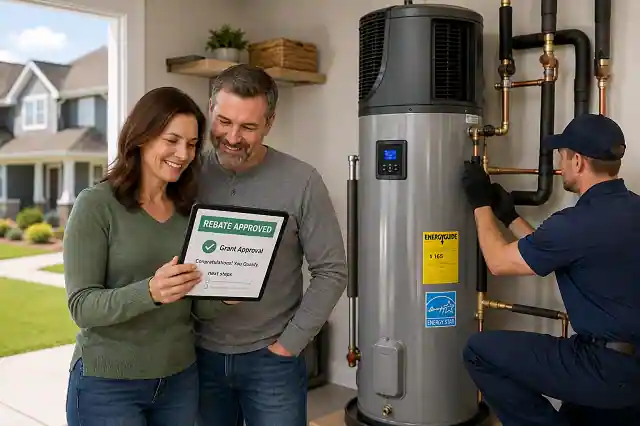
Best Program for Your Situation
The best starting point depends on why you need the replacement, your household circumstances, and where the property is located.
| Your Situation | First Program to Check | Why It May Fit |
| Age 62+, very-low income, rural homeowner, and the water heater creates a health or safety problem | USDA Section 504 | The grant component is designed for qualifying elderly very-low-income homeowners who need eligible health and safety hazards removed. |
| Low-income household with broader energy-efficiency needs | Weatherization Assistance Program | WAP evaluates the home as a whole and can include eligible water-heater work. |
| Homeowner in a state with an active Home Energy Rebates program | HOMES or HEEHR | These programs can support qualifying energy upgrades, including water-heating measures under applicable state rules. |
| Water heater is part of a larger rehabilitation project | Local housing rehabilitation | Some cities and counties use federal or local housing funds for eligible owner-occupied rehabilitation. |
| Water heater was damaged by a qualifying disaster | Disaster-related housing programs | Eligible disaster-recovery programs may address qualifying damage when household and property requirements are met. |
| Native American or Tribal homeowner | Tribal housing programs | Tribal housing organizations may offer additional repair or energy-efficiency pathways. |
If your household needs broader low-income repair funding, compare home repair grants for low-income families. Seniors can also review home repair grants for seniors for additional age-specific options.
What USDA Section 504 Can Do for a Water Heater
The U.S. Department of Agriculture’s Single Family Housing Repair Loans and Grants Program is one of the most important federal programs for eligible rural homeowners.
The U.S. Department of Agriculture Single Family Housing Repair Loans and Grants Program (USDA Section 504) provides loans to very-low-income homeowners to repair, improve, or modernize their homes. Its grant component is designed for elderly very-low-income homeowners who need eligible health and safety hazards removed.
The program’s grant is therefore different from a general appliance rebate. The proposed water-heater replacement needs to fit the program’s approved repair purpose.
Who Should Check USDA Section 504 First?
- You own and occupy the home.
- Your household meets the applicable very-low-income requirements.
- You cannot obtain affordable credit elsewhere.
- Your property is in an eligible rural area.
- You are at least 62 for the grant component.
- The proposed work addresses an eligible health or safety hazard.
USDA uses the actual property address to determine rural eligibility. Do not rely only on whether a community appears rural.
For another explanation of the program’s structure, you can also review Section 504 home repair grants.
How Much Can USDA Section 504 Provide?
USDA’s current national program information provides the following maximums.
| Section 504 Funding | Official Maximum | Repayment |
| Repair loan | $40,000 | Yes |
| Standard grant | $10,000 | Generally no, subject to program conditions |
| Grant for qualifying home damaged in a presidentially declared disaster area | $15,000 | Program conditions apply |
| Combined loan and grant | $50,000 | Loan portion must be repaid |
| Combined loan and grant in qualifying presidentially declared disaster areas | $55,000 | Loan portion must be repaid |
These are program maximums, not guaranteed water-heater awards. USDA determines the applicant’s eligibility, approved repair, funding amount, and applicable terms.
Official evidence: USDA states that loans may be used to repair, improve, or modernize homes or remove health and safety hazards, while grants must be used to remove health and safety hazards.
Can a Water Heater Fit Section 504?
Potentially, when the replacement addresses an eligible health or safety condition. For example, an inoperable primary water heater or a unit creating a documented safety problem may be considered differently from replacing a fully functional unit solely because a newer model is more efficient.
Describe the actual condition of the existing unit and ask USDA whether the proposed replacement fits the approved repair scope.
Do not promise that USDA will approve every water-heater replacement. The administering USDA Rural Development office makes the final determination.
What USDA Section 504 Does NOT Cover
- Age alone does not create grant eligibility.
- The grant is not a universal water-heater rebate.
- A functioning water heater is not automatically eligible because a newer model is more efficient.
- Cosmetic remodeling is not the purpose of the grant component.
- The $10,000 maximum is not an automatic award.
- Starting work before required approval can create eligibility problems.
Rural homeowners with several repair needs can also compare home repair grants for rural homeowners.
How the Weatherization Assistance Program Can Help
The Weatherization Assistance Program takes a whole-house approach rather than simply handing a homeowner money to buy an appliance.
The U.S. Department of Energy Weatherization Assistance Program (WAP) states that weatherization can include mechanical measures such as repairing or replacing water heaters, insulating water-heater tanks, and insulating water-heating pipes.
DOE’s 2026 Weatherization Program Notice also provides current program-year guidance for WAP administrators.
What WAP Looks At
WAP evaluates the home’s energy systems and relevant health and safety conditions. Depending on the program’s rules and the home’s assessment, measures may include:
| Home Area | Measures That May Be Included |
| Water heating | Repair or replacement of eligible water heaters. |
| Water-heater distribution | Water-heater tank and hot-water pipe insulation where appropriate. |
| Building envelope | Insulation and air-sealing measures. |
| Heating and cooling | Eligible repair or replacement measures determined through the weatherization process. |
| Health and safety | Combustion safety, ventilation, moisture, fire, and related conditions. |
DOE’s official WAP materials specifically identify water-heater repair and replacement as possible weatherization measures. In some circumstances, water-heater replacement is tied to safety or operability requirements rather than simple consumer preference.
When WAP Is a Better Starting Point
WAP may be especially useful when the water heater is only one part of a larger energy-efficiency problem. For example, a household may have an inefficient water heater along with inadequate insulation, air leakage, or other energy-related conditions.
The local weatherization provider determines the approved work after assessment and according to the applicable state plan.
Important distinction: WAP is not a general cash grant. A qualifying household may receive weatherization services and approved improvements rather than a payment that can be spent on any water heater the homeowner chooses.
If weatherization is part of your larger project, you can also compare grants for weatherproofing older homes.
What WAP Does NOT Cover
- It does not guarantee a free water heater for every low-income homeowner.
- It does not allow the homeowner to select any model without program approval.
- It does not automatically pay for unrelated remodeling.
- It does not guarantee that every repair identified by the homeowner will be included.
- The local provider determines the approved measures after assessment.
How Home Energy Rebates Can Help With a Water Heater
The federal Home Energy Rebates framework includes two major programs: HOMES and the High-Efficiency Electric Home Rebate Program.
The U.S. Department of Energy Home Energy Rebates Program (DOE Home Energy Rebates) states that HOMES can support eligible whole-home energy upgrades and specifically includes water heaters among possible measures.
| Program | Federal Framework Maximum | Water-Heater Relevance |
| HOMES | Up to $8,000 | Water heaters can be included among qualifying whole-home energy upgrades. |
| HEEHR | Up to $14,000 per household | Qualifying efficient electric equipment may receive rebates under state implementation. |
| Heat pump water heater | Up to $1,750 under the federal HEEHR framework | Actual consumer availability and requirements depend on the state program. |
Availability warning: These figures are federal program framework maximums. They are not guaranteed payments to every homeowner. DOE says Home Energy Rebates are being implemented by states and territories, so you must check the current program status where the home is located.
Why Heat Pump Water Heaters Matter
Heat pump water heaters are particularly relevant to energy-efficiency programs because they transfer heat rather than relying solely on electric resistance heating.
ENERGY STAR reports that certified heat pump water heaters use about 70% less energy than standard electric water heaters. ENERGY STAR also provides information on expected household energy savings.
Supported statistic: ENERGY STAR certified heat pump water heaters use about 70% less energy than standard electric water heaters.
These savings do not mean every heat pump water heater automatically qualifies for a rebate. Check the applicable equipment requirements before purchasing.
Can Utility Rebates Help Replace a Water Heater?
Yes, in some locations. Electric and natural-gas utilities may offer rebates for qualifying high-efficiency water heaters, including heat pump water heaters. These programs are separate from federal grants and may have their own equipment, contractor, purchase-date, and customer requirements.
Because utility programs vary by service territory, do not assume that a rebate advertised in one city or state is available at your address. Check the utility serving the property and confirm the current rebate amount and eligible equipment before purchasing.
Utility rebate tip: Ask your utility whether the rebate must be reserved before installation, whether the equipment must be ENERGY STAR certified, whether a participating contractor is required, and whether the rebate can be combined with another funding source.
What Utility Rebates May Require
| Requirement | What to Check |
| Customer status | Whether you must be an active residential customer of the utility. |
| Equipment | Whether the exact water-heater model qualifies. |
| Efficiency | Whether the unit must meet a specified efficiency standard. |
| Installation | Whether a licensed or participating contractor is required. |
| Timing | Whether preapproval or a reservation is required before installation. |
| Stacking | Whether the utility allows its rebate to be combined with another program. |
What Local HUD-Funded Programs Can Do
HUD-funded housing programs can become relevant when a water-heater replacement is part of a broader rehabilitation project.
The U.S. Department of Housing and Urban Development Community Development Block Grant Program (HUD CDBG) allows eligible activities to include rehabilitation of residential structures. HUD also explains that CDBG funds are administered through state and local governments rather than through direct homeowner applications to HUD.
That means a homeowner normally needs to contact the relevant city, county, or state housing office to determine whether a locally funded rehabilitation program can address the water heater.
For broader context on HUD-related home improvement programs, see HUD home improvement grants.
When a Local Rehabilitation Program May Fit
| Situation | Why Local Rehabilitation May Matter |
| Failed water heater plus other major repairs | The local program may evaluate the overall condition of the property. |
| Health or safety problem | Some rehabilitation programs prioritize conditions affecting safe housing. |
| Low-income owner-occupant | Many CDBG activities are designed to benefit low- and moderate-income households or communities. |
| City or county emergency repair program | The water heater may be considered within the locally defined repair scope. |
What Local HUD-Funded Programs Do NOT Cover
- HUD does not guarantee that every homeowner will receive CDBG funding.
- There is no single nationwide CDBG water-heater award amount.
- Every city and county does not offer the same rehabilitation program.
- Local income, property, occupancy, repair, and funding rules apply.
- A local program may use a grant, loan, deferred loan, direct repair service, or another funding structure.
Homeowners with plumbing problems connected to the water heater can also research water pipe replacement grants when a separate plumbing repair is needed.
What These Programs Do NOT Cover
Understanding exclusions can prevent an expensive mistake: purchasing equipment before discovering that the project does not meet the program’s rules.
| Potential Problem | Why It Can Cause Trouble | Better Approach |
| Buying the water heater before approval | Some programs require inspection, preapproval, reservation, or an approved purchase. | Ask the program administrator what must happen before purchase. |
| Using an expired federal tax credit | Section 25C does not apply to qualifying property placed in service after December 31, 2025. | Check current state, utility, USDA, WAP, local, and Home Energy Rebates options. |
| Choosing equipment before checking eligibility | Programs may restrict models, efficiency levels, certifications, or installation methods. | Confirm the exact equipment before ordering. |
| Treating a maximum as a guaranteed award | Published maximums do not mean every applicant receives that amount. | Budget using the approved award or written program calculation. |
| Describing ordinary remodeling as a safety repair | Grant programs have defined purposes. | Describe the actual condition and provide supporting documentation. |
| Assuming every state has the same rebate | Home Energy Rebates and utility programs depend on local implementation. | Check the current state or utility administrator. |
| Using an unapproved contractor | Some programs require participating or qualified contractors. | Verify contractor requirements before signing. |
Consumer protection warning: Do not pay a company simply because it promises to “unlock” a government water-heater grant. Verify the administering agency and application process before providing sensitive documents or money.
If the water heater failure is connected to broader plumbing damage, leak repair grants may be relevant for the separate plumbing problem.
If a failed unit has already caused wall or ceiling damage, grants for water-damaged walls and ceilings may provide another research path.
What Water Heater Should You Choose?
The best replacement is not always the cheapest unit. If funding depends on energy efficiency, the eligible-equipment requirements should influence the purchase decision before you order anything.
Heat Pump Water Heaters
Heat pump water heaters can be attractive for homeowners seeking lower energy consumption and potential electrification incentives. ENERGY STAR reports significant energy savings compared with standard electric water heaters.
Before choosing one, check installation space, airflow, electrical requirements, household hot-water demand, noise considerations, and applicable program equipment rules.
Standard Electric Water Heaters
Standard electric storage units may remain appropriate when installation conditions, household demand, equipment availability, or local incentives favor them. However, they may not qualify for programs designed specifically around high-efficiency electric equipment.
Gas Water Heaters
Gas water heaters may remain practical where existing gas infrastructure is available. However, a program designed to encourage electrification may use different eligibility rules. Check the funding requirements before choosing the fuel type.
Tankless Water Heaters
Tankless units can save space and provide hot water on demand, but eligibility varies. Do not assume a tankless water heater qualifies for an incentive simply because it is marketed as energy efficient.
When Should You Apply?
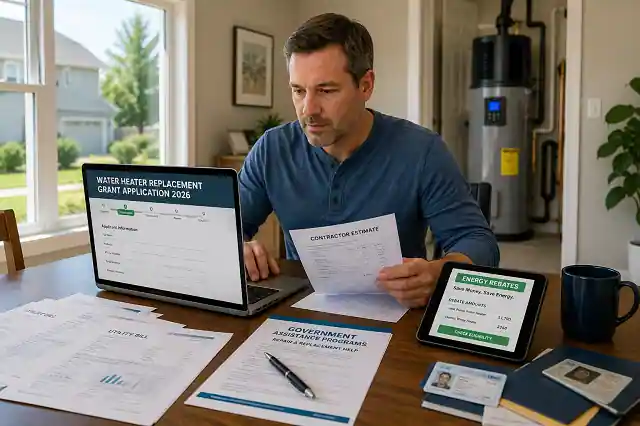
The safest sequence is to identify funding before purchasing equipment.
| Project Stage | What to Confirm |
| Before contacting programs | Age, income, ownership, location, current water-heater condition, and reason for replacement. |
| Before selecting equipment | Eligible model, efficiency requirement, certification, fuel type, and installation requirements. |
| Before purchase | Preapproval, reservation, inspection, approved contractor, and purchase-date requirements. |
| Before installation | Written approval, contractor requirements, permits, and required documentation. |
| After installation | Invoice, proof of installation, model information, photographs, and reimbursement paperwork. |
Timing rule: Never assume that a program will reimburse an installation that began before approval. Ask the administering agency whether the project must be approved, inspected, reserved, or registered before work begins.
What If the Water Heater Has Already Failed?
If the water heater has already failed, contact the potential funding administrator before replacing it whenever it is safe and practical to wait. Explain that the household has lost hot water and ask whether the program has an emergency repair process.
Ask whether an inspection, photograph, contractor estimate, or other documentation is required before replacement. If the home has an immediate health or safety problem, explain the condition clearly and ask what emergency steps the program allows.
Emergency warning: Never assume an emergency purchase will automatically be reimbursed. Some programs require approval, inspection, or other documentation before work begins.
How to Apply for Water Heater Replacement Funding
Define the Exact Repair
Write down what is wrong with the current water heater. Record whether it is leaking, unsafe, inoperable, damaged by a disaster, or creating another documented household problem.
Take photographs and keep inspection reports, contractor estimates, or other supporting documentation.
Check Your Eligibility Profile
- Homeownership
- Primary-residence status
- Household income
- Age where applicable
- Rural address where applicable
- Disability or veteran status where applicable
- Disaster-related damage where applicable
- Utility service territory
Choose the Most Relevant First Program
Start with the program whose official purpose most closely matches the project.
A rural senior with a failed water heater should investigate USDA Section 504. A low-income household with broader energy-efficiency needs should check WAP. A homeowner in a state with active Home Energy Rebates should check the state’s implementation rules. A water heater damaged by a qualifying disaster may require a disaster-specific pathway.
Veterans who need broader home repair funding can also compare home repair grants for veterans. Homeowners with disabilities can review home repair grants for disabled homeowners when disability-related eligibility is relevant.
Gather the Documents
Water Heater Funding Application Checklist
- Government-issued identification
- Proof of homeownership
- Proof of primary residence when required
- Household income documentation
- Utility account or recent utility bill when required
- Photographs of the existing water heater
- Inspection or assessment documentation when required
- Contractor estimate when required
- Exact replacement model information
- Equipment certification information when required
- Insurance or disaster documentation when applicable
Ask the Administrator Before You Buy
These questions can prevent a rejected application:
- Is my property eligible?
- Does the water-heater replacement qualify?
- Is an inspection required?
- Does the program require preapproval?
- Is there a qualified-product list?
- Must I use an approved contractor?
- Can another rebate or grant be combined with this funding?
- What purchase and installation dates are allowed?
- What happens if the water heater fails before the application is approved?
Wait for Required Approval
If the program requires written approval, inspection, reservation, or contractor authorization, complete that step before purchasing or installing the unit.
For broader application planning, see how to apply for home repair grants.
Keep Every Record
Save the application, approval notice, contractor estimate, invoice, model number, installation documentation, photographs, emails, and reimbursement forms.
What If the Replacement Requires Electrical Work?
A heat pump water heater can sometimes create an electrical-planning question, particularly in older homes. The exact electrical requirements depend on the selected model and the home’s existing service.
If the project genuinely requires an electrical-panel upgrade, investigate grants to replace outdated electrical panels separately.
Do not assume that water-heater funding automatically pays for unrelated electrical work.
State Examples: Why Location Matters
Water-heater funding can vary substantially by state because federal programs are often implemented through state agencies, while utilities and local governments may operate separate programs.
California
California provides a useful example of state-specific energy-efficiency funding.
The California Energy Commission Equitable Building Decarbonization Statewide Incentive Program (California EBD Statewide Incentive) includes heat pump water heaters among eligible efficiency measures in the program framework.
California’s 2026 program activity also demonstrates that qualifying projects can include heat pump water heaters and other efficient electric technologies.
This does not mean every California homeowner automatically receives a free water heater. Eligibility, income, community, program, equipment, and implementation requirements still apply.
Homeowners with disability-related eligibility can also compare California home repair grants for disabled homeowners.
Texas
Texas demonstrates why homeowners should verify program status before budgeting for a federal rebate.
The Texas State Energy Conservation Office currently states that its HOMES and HEAR programs are in the planning and design phase and that rebates are not currently available.
The Texas State Energy Conservation Office Inflation Reduction Act Rebates and Tax Credits information (Texas HOMES and HEAR) provides the current state status.
Texas warning: Do not sign a contract based on the assumption that a future HOMES or HEAR rebate is already available. Verify the launch status directly with Texas SECO before relying on the program.
Texas homeowners who need broader repair funding can also review Texas home repair grants for senior citizens when age and household eligibility are relevant.
Other States
For other states, start with the state energy office and the electric or gas utility serving the property. Then check local housing rehabilitation and weatherization providers.
Do not rely on a national rebate amount until the state administrator confirms that the program is active and the exact water-heater project qualifies.
How to Find Your Local Water Heater Funding Program
If you do not know which program serves your address, use this order of checks:
| Step | Where to Check | What to Ask |
| 1 | State energy office | Are Home Energy Rebates currently open in my state? |
| 2 | Electric or gas utility | Does my utility offer a water-heater rebate? |
| 3 | Local WAP provider | Can my household receive weatherization services? |
| 4 | County housing department | Are there owner-occupied home repair or rehabilitation programs? |
| 5 | City housing department | Are locally funded emergency or rehabilitation grants available? |
| 6 | USDA Rural Development | Does my property and household qualify for Section 504? |
Special Considerations for Mobile Homes
Manufactured and mobile homes can have different construction, plumbing, electrical, and installation requirements. If you own a manufactured home, confirm that the selected water heater and funding program are compatible with the property’s construction and installation rules.
The site’s mobile home improvement grants resource provides a broader starting point for homeowners with manufactured or mobile homes.
Special Considerations for Tribal Homeowners
Tribal households may have additional housing and energy programs that operate differently from state-administered programs.
If the home is located on Tribal land or the homeowner receives services through a Tribal housing organization, ask whether water-heater replacement is included in the organization’s current housing rehabilitation or energy-efficiency programs.
The site’s home repair grants for Native American homeowners resource provides a broader starting point.
How to Compare a Water Heater Funding Offer
Before accepting an offer, compare the program against the actual project rather than focusing only on the advertised maximum.
| Question | Why It Matters |
| Is the program open now? | A federal allocation does not necessarily mean homeowners can apply today. |
| Does my exact household qualify? | Income, age, property, location, and other rules may apply. |
| Does my exact water heater qualify? | Equipment lists and efficiency requirements can differ. |
| Do I need approval before purchase? | Buying early can jeopardize eligibility under some programs. |
| Who pays the contractor? | Funding may be a rebate, direct service, contractor payment, or another structure. |
| Can incentives be combined? | Stacking rules vary and should be confirmed before relying on multiple funding sources. |
| What is the actual approved amount? | A published maximum is not the same as an individual award. |
Frequently Asked Questions
Are there free water heater replacement grants in 2026?
Some eligible homeowners may receive grant-funded repair work, weatherization services, or local rehabilitation support that includes a water heater. There is no universal federal program that gives every homeowner a free replacement. Household income, property, location, repair need, and program rules determine eligibility.
Can USDA Section 504 pay for a water heater?
It can potentially cover an eligible water-heater replacement when the work addresses a qualifying health or safety hazard and the homeowner meets USDA requirements. It is not a general appliance rebate, and USDA makes the final determination.
Can WAP replace a water heater?
Yes. DOE’s WAP materials specifically identify water-heater repair and replacement as possible weatherization measures. The local provider determines whether the specific project fits the home’s assessment and applicable program requirements.
Is there a federal water heater tax credit for a 2026 installation?
No. The federal Energy Efficient Home Improvement Credit under Section 25C does not apply to qualifying property placed in service after December 31, 2025. Homeowners planning a 2026 replacement should investigate current state, utility, USDA, WAP, local, and Home Energy Rebates options instead.
Can I combine a water heater grant with a utility rebate?
Sometimes. Each program has its own stacking rules. Ask both administrators whether the same project costs can receive funding from both sources before purchasing equipment.
Do seniors have special options for water heater replacement?
Some programs prioritize or specifically serve seniors. USDA Section 504 is particularly important for eligible homeowners age 62 or older who meet its income, rural, ownership, credit, and health-and-safety requirements.
What should I do if my water heater has already failed?
Contact the applicable program administrator immediately and explain that the primary water heater has failed or is unsafe. Ask whether an emergency pathway exists and whether an inspection or other documentation is required before replacement. Do not assume an emergency purchase will automatically be reimbursed.
Water Heater Replacement Funding Checklist
Before applying
- Identify the exact water-heater problem.
- Confirm homeownership and occupancy requirements.
- Check household income requirements.
- Check rural eligibility if considering USDA.
- Determine whether the repair is health, safety, energy, accessibility, or disaster related.
- Identify the state energy office and local utility.
Before purchasing
- Confirm the program is currently open.
- Confirm the exact replacement model is eligible.
- Check whether preapproval is required.
- Check contractor requirements.
- Check purchase and installation deadlines.
- Confirm whether other incentives can be combined.
After installation
- Save the final invoice.
- Save model and certification information.
- Keep proof of installation.
- Keep photographs if requested.
- Submit required reimbursement or completion documents.
- Save approval and payment records.
Why This Article Is Different From the Home Improvement Grants Pillar
The broader Home Property Grants pillar answers the larger question of how homeowners can fund many types of home repairs and upgrades. This cluster article answers a narrower question: how can a homeowner identify and pursue funding specifically for a water-heater replacement?
| Page | Primary Topic | Search Intent |
| Home Improvement Grants pillar | Home repairs and upgrades across many categories | Which home-improvement funding programs exist? |
| This water-heater cluster | Water-heater replacement funding | How can I fund my water-heater replacement? |
| Supporting pages | Income, age, rural, state, disability, veteran, Tribal, emergency, and repair-specific situations | Which specialized pathway fits my circumstances? |
Why You Can Trust This Information
Last Updated: August 19, 2026
Reviewed By: Home Property Grants Research & Editorial Team
Evidence standard: Major federal program claims, published program limits, program purposes, tax-credit status, and current state-program information are based on official federal or state sources.
Program distinction: This article separates grants, rebates, weatherization services, loans, and tax credits so homeowners do not mistake one type of funding for another.
Dollar-amount standard: Dollar figures are included only where an official source supports them. Published maximums are identified as program maximums rather than guaranteed individual awards.
Geographic limitation: State, utility, Tribal, city, and county programs can have separate rules, funding cycles, equipment requirements, and application windows.
Important limitation: A program’s existence does not guarantee that your household, property, water heater, contractor, or purchase qualifies. Confirm the current rules with the administering agency before spending money or starting work.
Final Takeaway
Homeowners can find meaningful ways to reduce the cost of replacing a water heater in 2026, but the strongest strategy is to match the project to the program instead of searching for one universal “free water heater grant.”
A qualifying rural homeowner age 62 or older should investigate USDA Section 504 when the replacement addresses an eligible health or safety hazard. A qualifying low-income household with broader energy-efficiency needs should check WAP. Homeowners in states with active Home Energy Rebates should determine whether HOMES or HEEHR applies to the selected equipment. Local housing rehabilitation programs may also help when the water heater is part of a larger repair project.
The most important timing decision is simple: verify eligibility and funding before buying the replacement unit. Confirm the exact equipment, ask about preapproval, check contractor requirements, and keep every document.
Do not rely on the expired federal Section 25C tax credit for a new 2026 installation. Use current official sources to verify the funding actually available in your location.

Arthur Pendelton is a senior housing policy researcher and public welfare analyst with over eight years of experience tracking federal, state, and non-profit residential repair programs. He specializes in statutory grant frameworks, including USDA Section 504 Rural Housing, the Department of Energy’s Weatherization Assistance Program (WAP), and municipal HUD Community Development Block Grants (CDBG). Arthur systematically audits Federal Register publications and Title 7/42 CFR regulatory updates to provide low-income homeowners, seniors, and military veterans with accurate, barrier-free application guidance.
1 thought on “Free Water Heater Replacement Grants For Homeowners in 2026”